Elie's Grisette
Amanita eliaesyn. Amanita vaginata var. eliae, Amanitopsis eliae
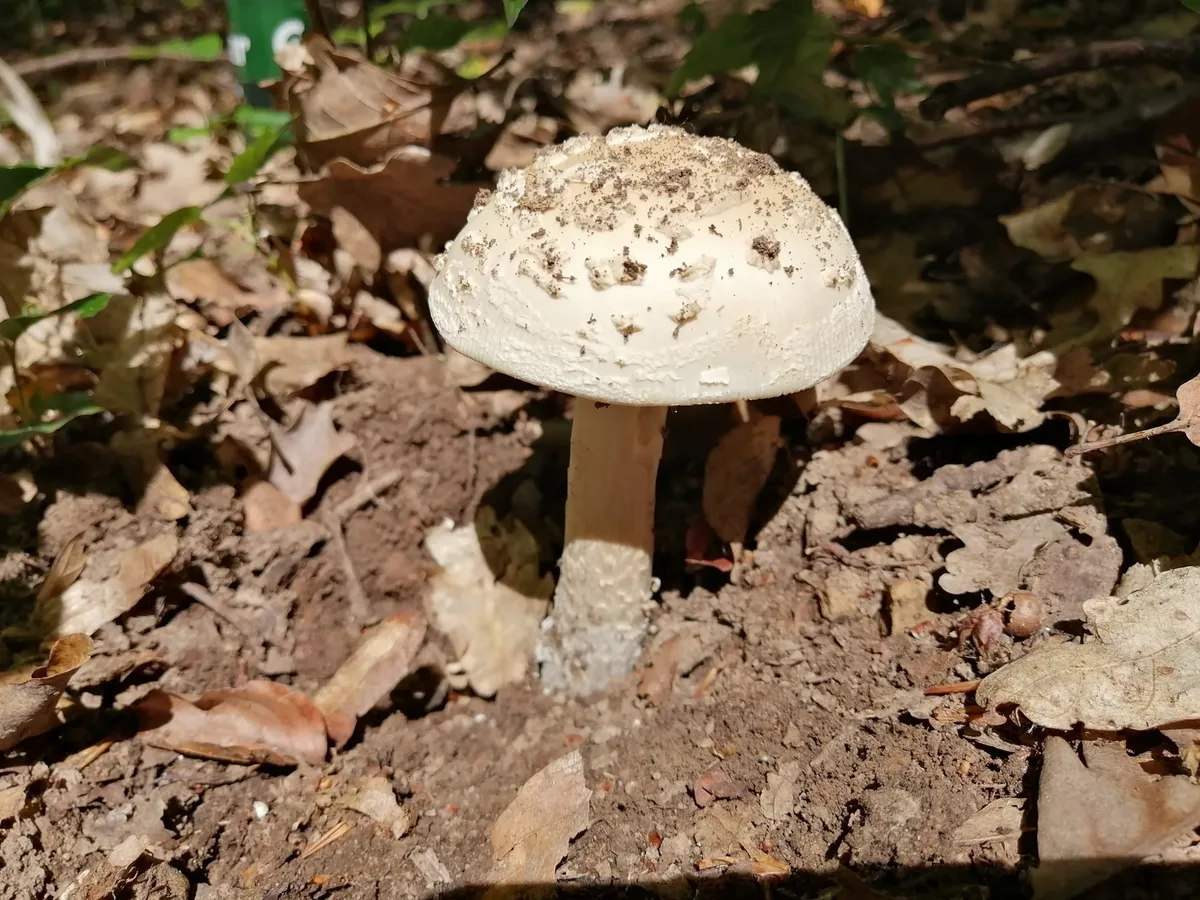 szegedigombasz (CC0)
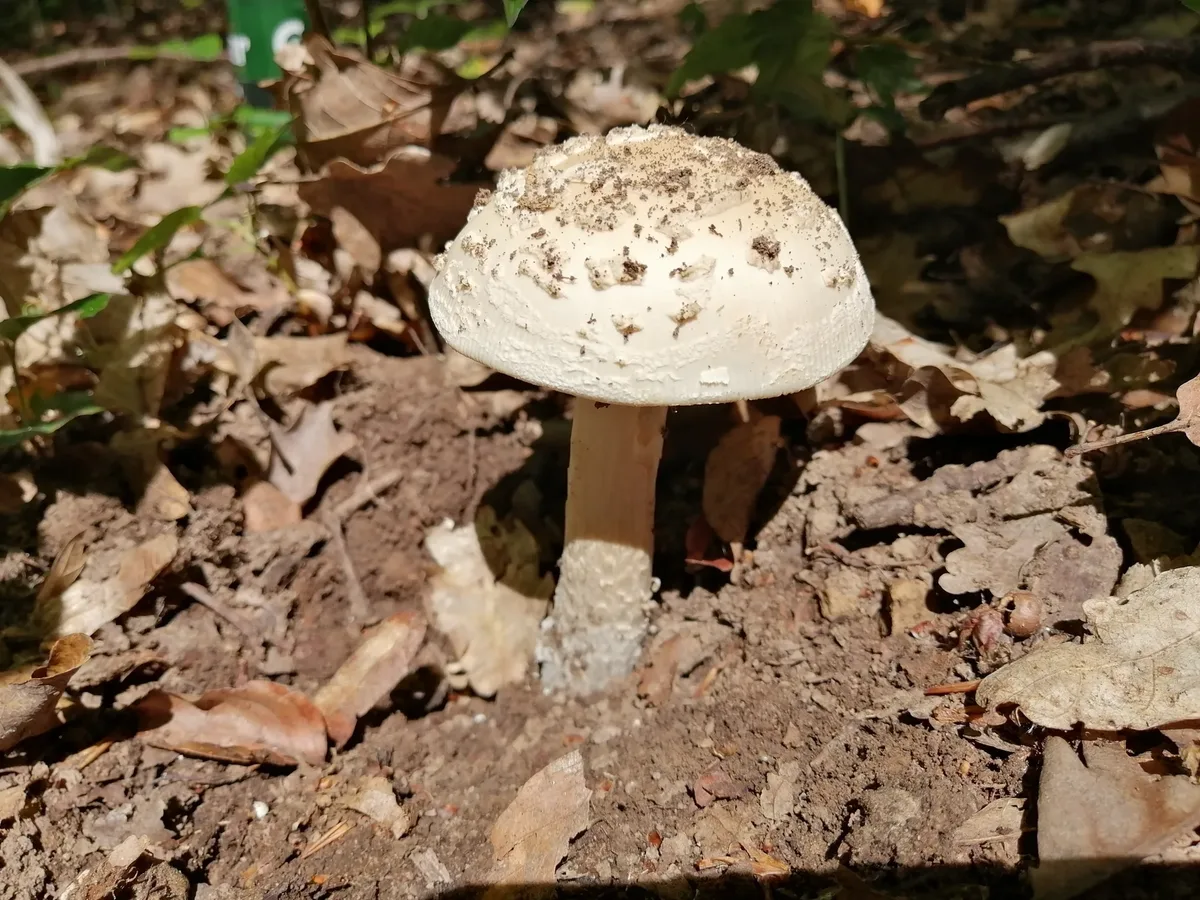 szegedigombasz (CC0)
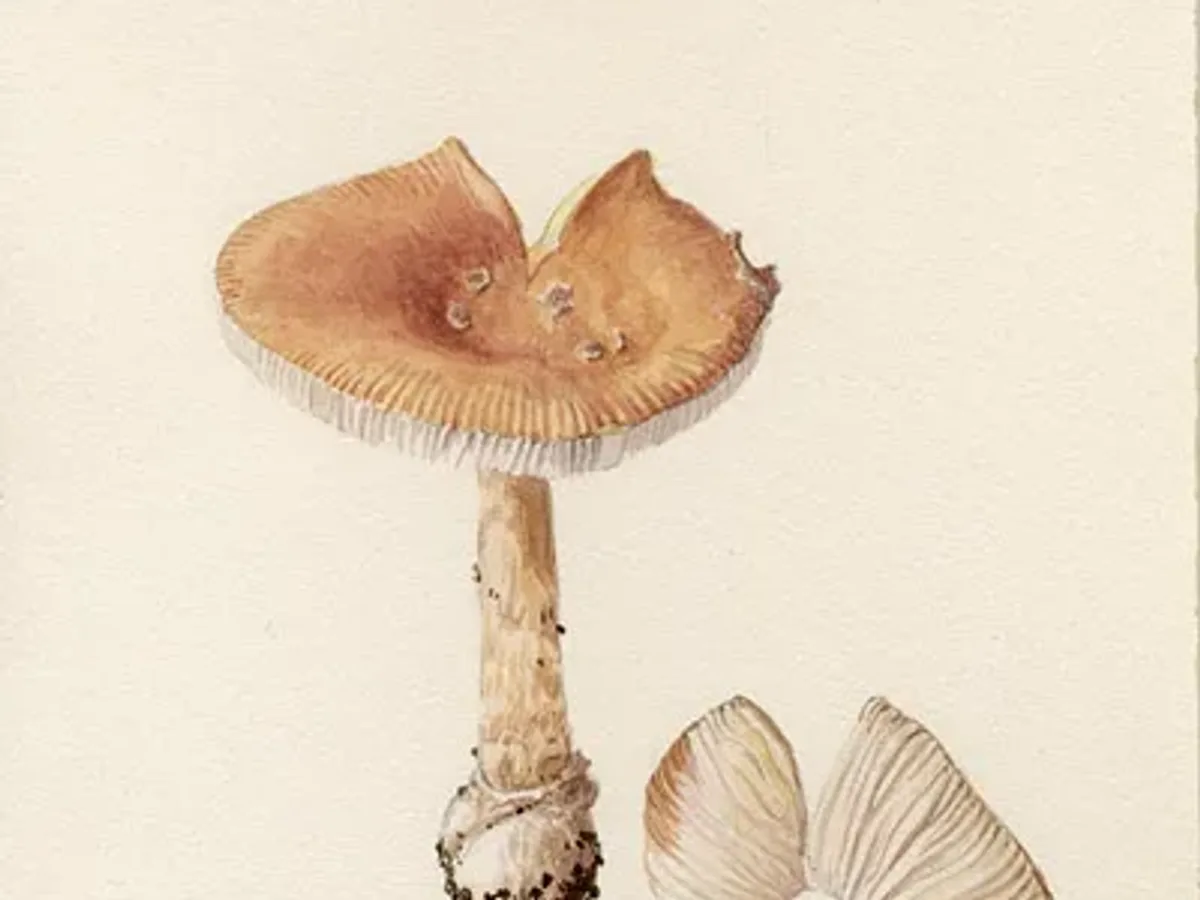 © Unknown (CC BY-SA)
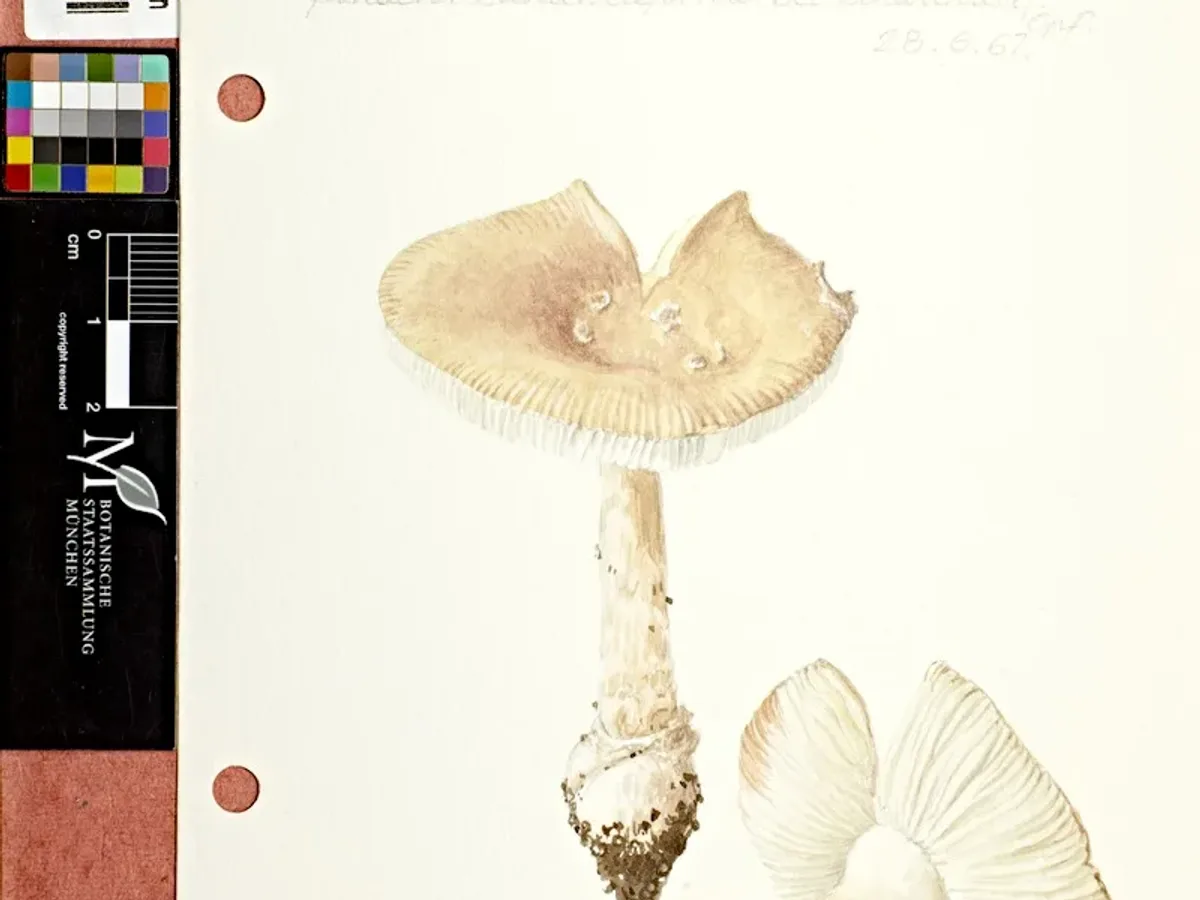 © Unknown (CC BY-SA)
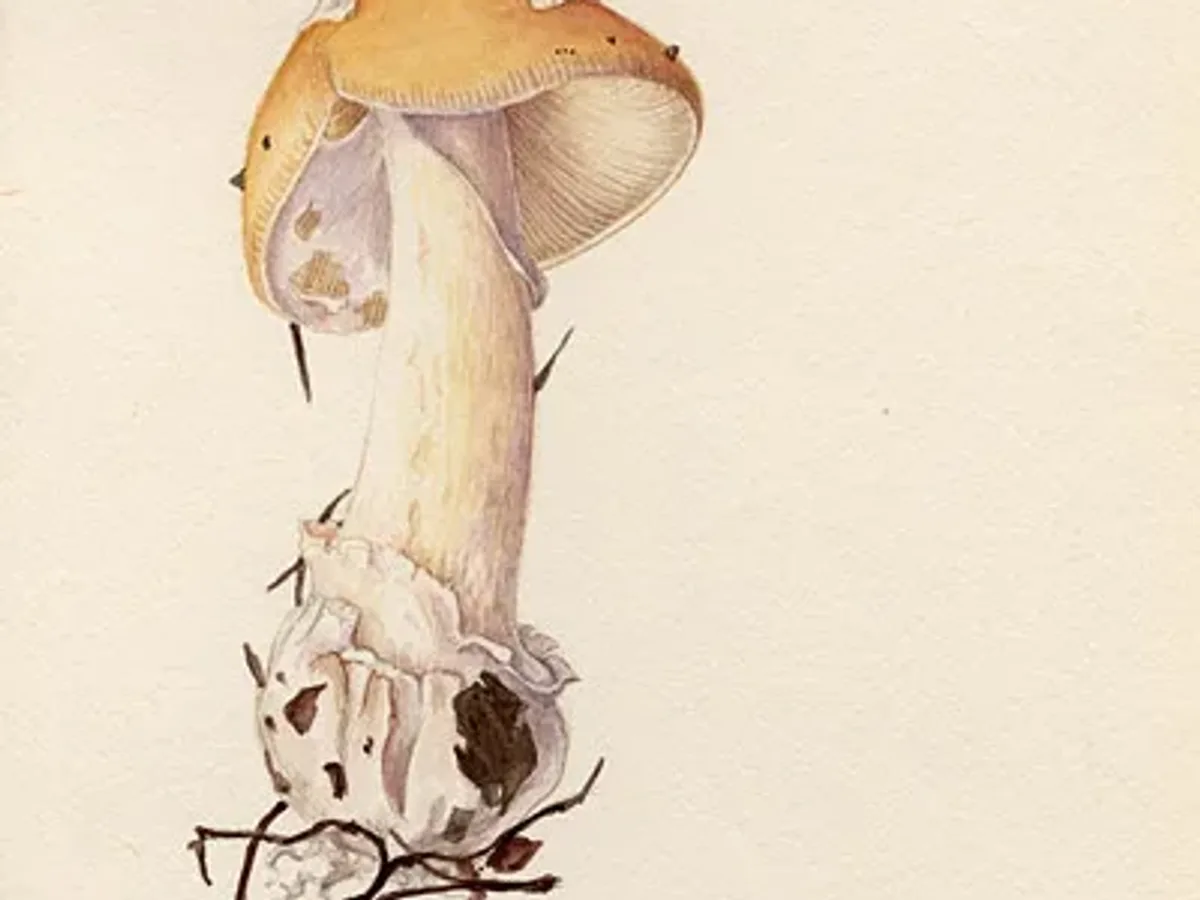 © Unknown (CC BY-SA)szegedigombasz (CC0)szegedigombasz (CC0)
Edible only with the right preparation - or safe for some people but not others. Learn the caveats first.
Never eat a mushroom you are not 100% sure of - check the look-alikes below, and always cook wild mushrooms.
How to recognise it
Cap
Elie's Grisette is a slender, ringless Amanita with a pale straw or honey-ochre cap 4-9 cm across, which opens from a narrow egg to flat with a low central bump.
The single most reliable visual trait is the strongly grooved (striate) cap margin - radial furrows that run about a quarter of the way in from the edge, giving the cap rim a ribbed or fluted look.
The cap surface is smooth and lightly greasy when damp, typically free of the white warty patches seen in ringed Amanitas.
Gills
The gills beneath are free, crowded and white, never changing colour.
Stem
The slender white stem, 8-15 cm tall, bears no ring - its absence is critical.
The base of the stem is enclosed in a tall, membranous white sac (the volva) buried in the soil; this must be excavated intact to confirm identity.
Flesh
Flesh is thin, white and breakable; odour is faint. Spore print is white.
Why it's dangerous
Amanita eliae itself is not a deadly species when correctly identified and cooked.
The grave danger is confusion with pale or white-capped forms of the death cap or the destroying angel, both of which contain amatoxins and are among the most lethal organisms on Earth.
A pale death cap in particular can have a cap colour overlapping with A. eliae's honey-ochre, and when young both emerge from a buried white universal veil.
The single most protective rule: if a ring is present anywhere on the stem, it is not a grisette and must be treated as potentially lethal.
This species carries a deadly-lookalike flag and is recommended only to foragers with solid, hands-on Amanita experience.
Toxin
The raw flesh of Amanita eliae, like other grisettes (section Vaginatae), contains heat-labile (heat-sensitive) hemolysins - proteins that can lyse red blood cells and cause gastrointestinal and systemic harm if the mushroom is eaten raw or undercooked.
These toxins are denatured by adequate cooking and pose no threat in thoroughly cooked specimens.
The species does NOT contain amatoxins (alpha-amanitin), but this cannot be assumed from appearance alone - which is exactly why species-level certainty in Amanita identification is non-negotiable.
Symptoms
Eating raw or undercooked Elie's Grisette may cause haemolytic effects (destruction of red blood cells) leading to anaemia, fatigue, and darkened urine, accompanied by gastrointestinal upset - nausea, vomiting and cramping.
The latency is relatively short (within hours of eating).
The far more serious scenario is misidentification. If a pale death cap (Amanita phalloides) or destroying angel (Amanita virosa) has been collected instead, the result is the delayed amatoxin syndrome:
- 1No symptoms for 6-24 hours
- 2Then severe gastroenteritis
- 3Followed 2-4 days later by acute liver and kidney failure that is frequently fatal
Staying safe
Elie's Grisette should be treated with the same rigorous caution applied to every Amanita.
The decisive safety check is:
- NO ring on the stem
- a TALL SAC-LIKE volva at the base (which must be excavated to confirm)
- free white gills
- a STRIATE cap margin
If even one of these features is absent or uncertain, do not eat it.
The deadly risk is not from this species when correctly identified - it is from misidentifying a pale or white-capped death cap or a pale destroying angel as this species.
Raw consumption carries a further risk: like all grisettes, the raw flesh contains heat-labile hemolysins that break down red blood cells and cause gastrointestinal harm.
These are destroyed by proper cooking, so the mushroom must always be cooked thoroughly and never eaten raw.
Beginners should not eat any Amanita.
Where & when it grows
Habitat
This is a mycorrhizal species - it lives underground in a mutual exchange of nutrients with the roots of broadleaved trees, particularly oak and sweet chestnut, and also hornbeam and beech.
It appears on the ground, never on wood, in deciduous and mixed woodland.
Unlike many acidic-soil grisettes, Amanita eliae tends toward warmer, better-drained sites and is often found in thermophilous oak or chestnut woodland, on sheltered slopes and in forest edges.
Look near the bases of mature oaks or chestnuts, in loose leaf litter or at the boundary of grassy openings.
Central and western Europe, with a strong southern component extending through Mediterranean Europe.
When
Elie's Grisette fruits primarily from late July through September, with the peak in late August and September.
In Mediterranean areas it may appear from June; in cooler parts of central Europe the season starts in late July.
Fruiting is favoured by warm, humid conditions - expect it one to two weeks after heavy summer or early autumn rain when soils remain warm.
How it grows
Fruitbodies arise singly or in small scattered groups, never in clusters.
Each begins as a white 'egg' (universal veil) partly buried in the litter, from which the slender stem emerges, tearing the upper membrane to free the cap while the lower membrane remains as the characteristic volva sac.
Development is rapid in warm, moist conditions; specimens are short-lived and the fragile flesh deteriorates quickly, so collect only young and firm examples.
Fruiting conditions
Favours warm, humid conditions; fruits most prolifically one to two weeks after significant summer or early autumn rain when soil temperatures are still high. A warm-season grisette compared to most of its relatives.
Look-alikes
Because Amanita eliae is a ringless grisette, its dangerous lookalikes are primarily the ringed, deadly Amanitas from which it must be carefully separated.
- DEATH CAP (Amanita phalloides) - the most important: it has an olive to greenish, yellowish or pallid cap (some forms are nearly white and can be confused with pale A. eliae), but it ALWAYS bears a distinct ring (skirt) on the stem and has a smooth, non-striate cap margin. Pale or white-capped forms of the death cap are especially treacherous and have been responsible for fatal poisonings when mistaken for white grisettes.
- DESTROYING ANGEL (Amanita virosa) - pure white, very slender and also has a ring and a non-striate margin.
Confusingly, young specimens of both species emerge from a partially buried white egg very similar to a grisette egg - this is why collecting unopened Amanita buttons is categorically unsafe.
Within the grisette group, Amanita eliae most closely resembles:
- GREY GRISETTE (Amanita vaginata) - grey to brownish-grey rather than ochre-buff
- TAWNY GRISETTE (Amanita fulva) - warm orange-brown
- Amanita submembranacea - a related pale grisette, very similar but typically has a smoky brownish-grey centre to the cap and more northerly distribution
All grisettes are treated as caution-class due to genus risk.
DEADLY. Pale, white-capped or yellowish-green-capped forms can closely resemble A. eliae in colour, but the death cap always has a distinct ring (skirt) on the upper stem and an ungrooved (smooth or faintly fibrillose) cap margin. A. eliae is strictly ringless and has a strongly striate margin. Any hint of a ring is an absolute stop signal.
DEADLY. Pure white throughout with a shaggy stem, a well-developed ring and a smooth, non-striate cap margin. Distinguished from A. eliae by the ring and the absence of margin striations. Both have a sac-like volva, so that feature alone is not enough.
Very closely related and similarly structured (ringless, tall volva, striate margin), but the cap is grey to lead-grey or brownish-grey rather than the pale ochre or honey-buff of A. eliae. Treat with the same caution.
Very similar pale-capped grisette, but the cap centre is typically darker smoky grey-brown while the margins are pale; distribution is more northerly and montane. Ringless and similarly structured; requires careful comparison of cap colour pattern and habitat.
Identical grisette structure - ringless, sac volva, striate margin - but warm orange-brown to tawny in colour rather than pale ochre-buff. Both are edible when cooked but should be handled with the same Amanita care.
A reference guide - never an edibility guarantee. When in doubt, leave it out.