Solitary amanita
Amanita echinocephalasyn. Agaricus echinocephalus, Amanita solitaria var. echinocephala
 © Lazar Popović (CC BY 4.0)
 © Chaym Turak (CC BY-SA)
 © Chaym Turak (CC BY-SA)
 © Chaym Turak (CC BY-SA)
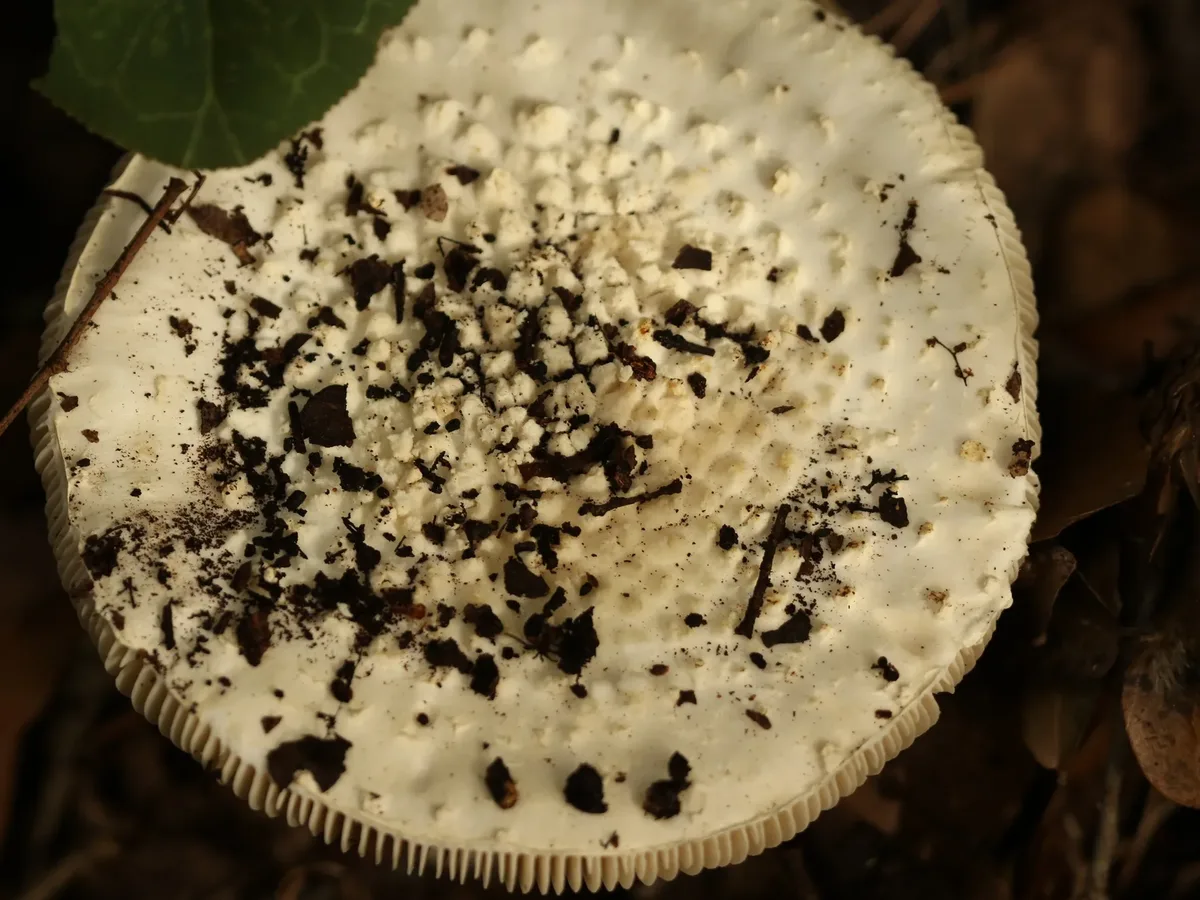 © Chaym Turak (CC BY-SA)
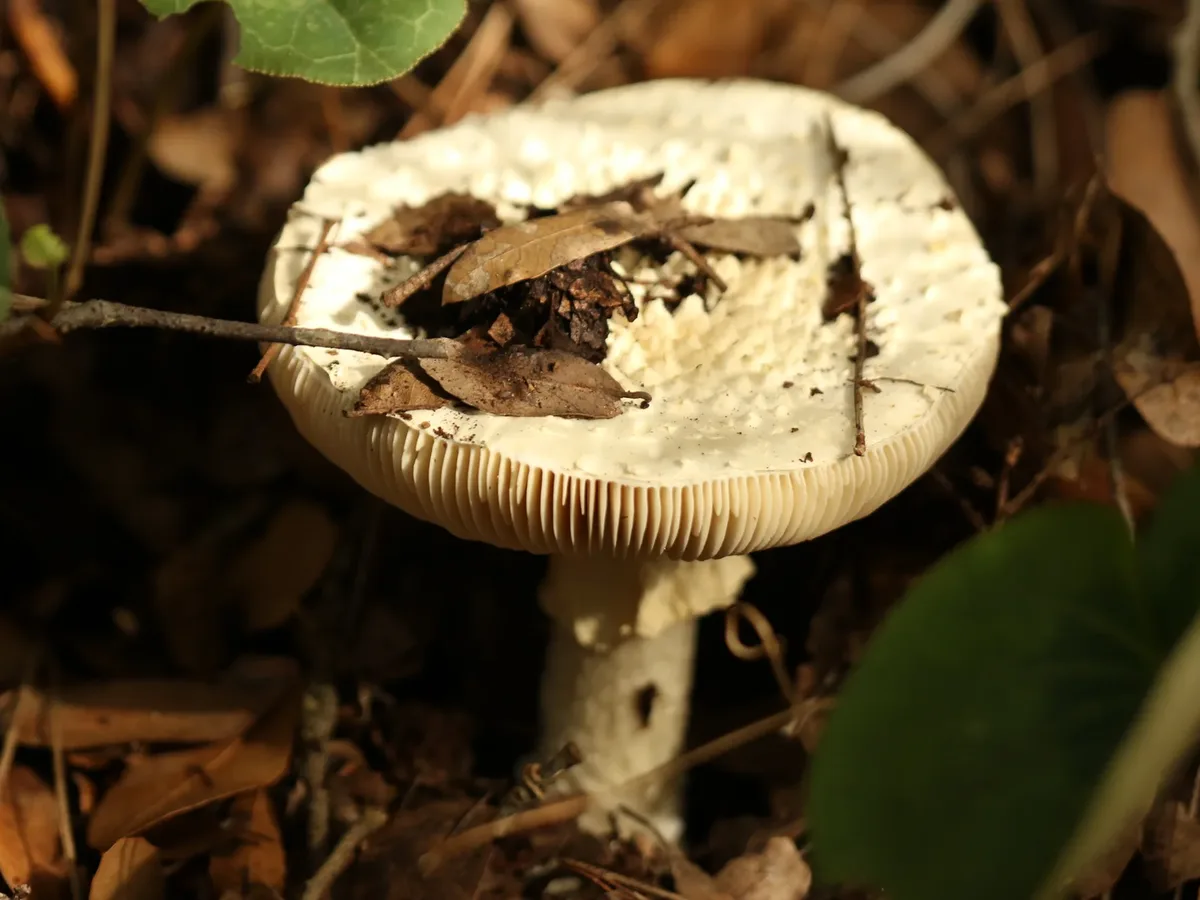 © Chaym Turak (CC BY-SA)
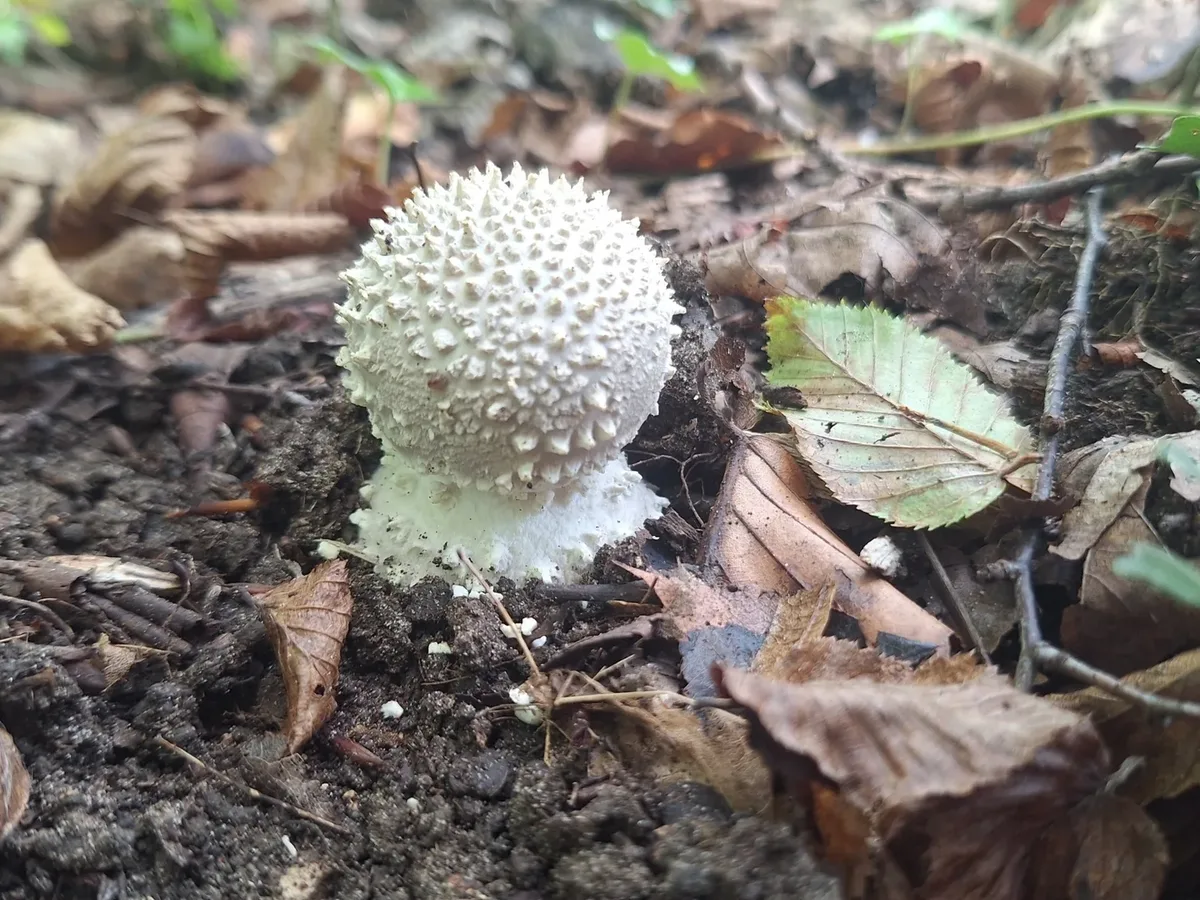 © yellowplant (CC BY)
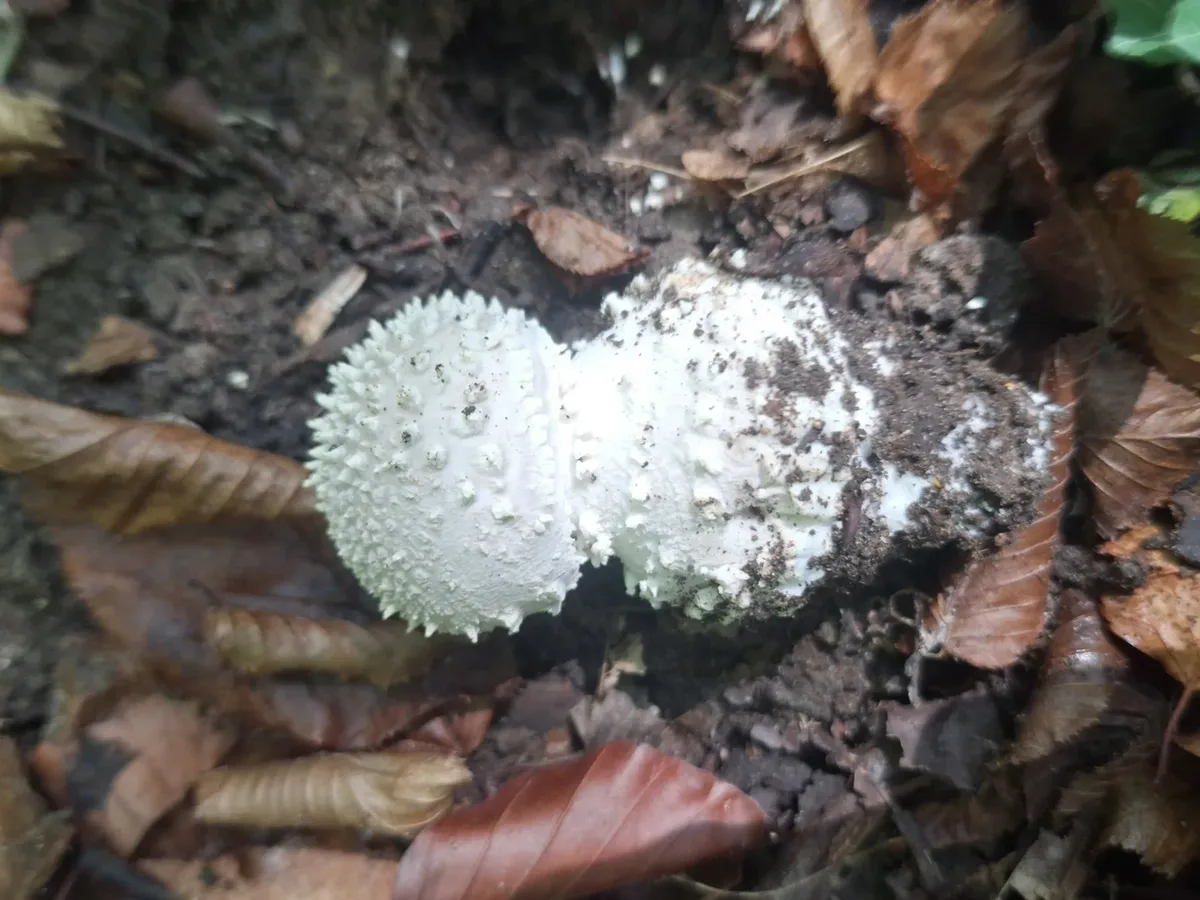 © yellowplant (CC BY)
 © yellowplant (CC BY)© Lazar Popović (CC BY 4.0)© Chaym Turak (CC BY-SA)
Edible only with the right preparation - or safe for some people but not others. Learn the caveats first.
Never eat a mushroom you are not 100% sure of - check the look-alikes below, and always cook wild mushrooms.
How to recognise it
Few European Amanitas stop you in your tracks quite like this one.
Cap
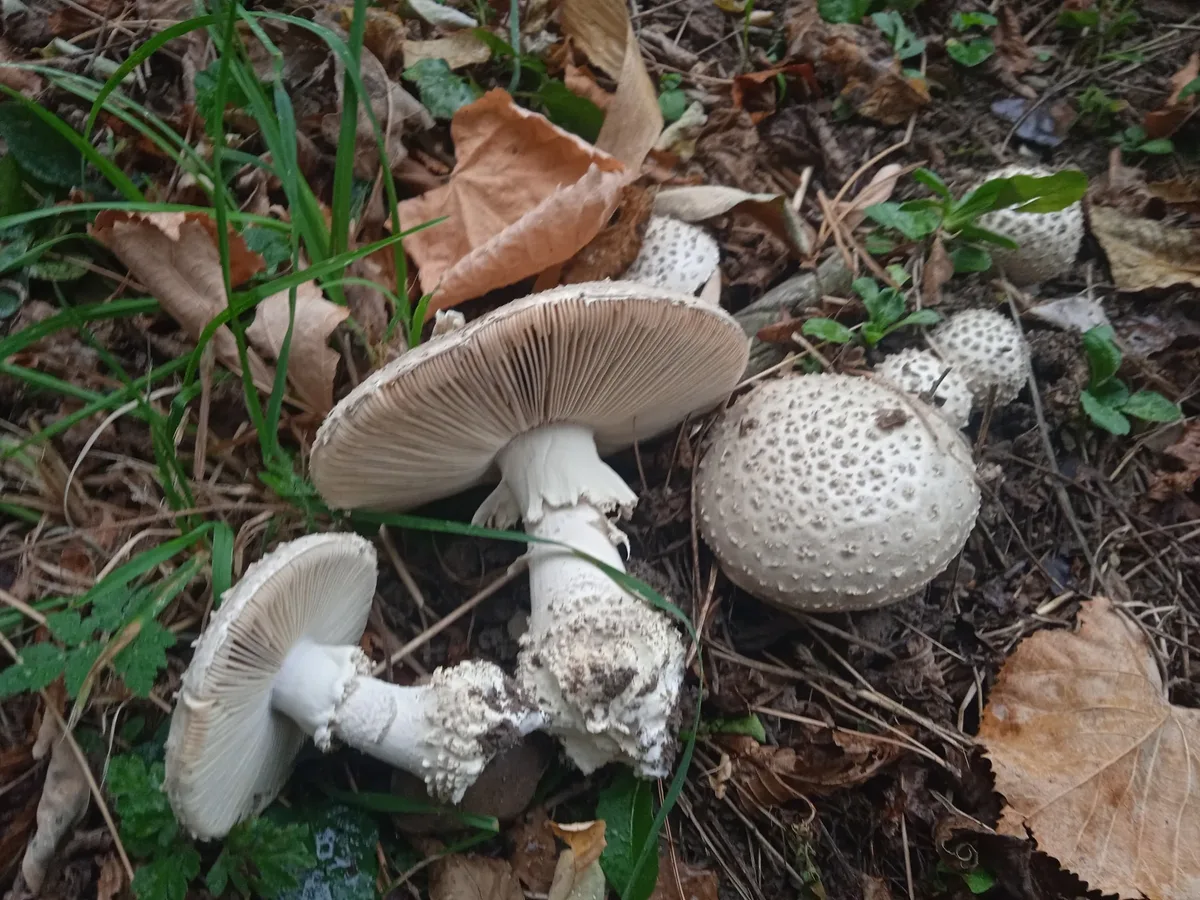
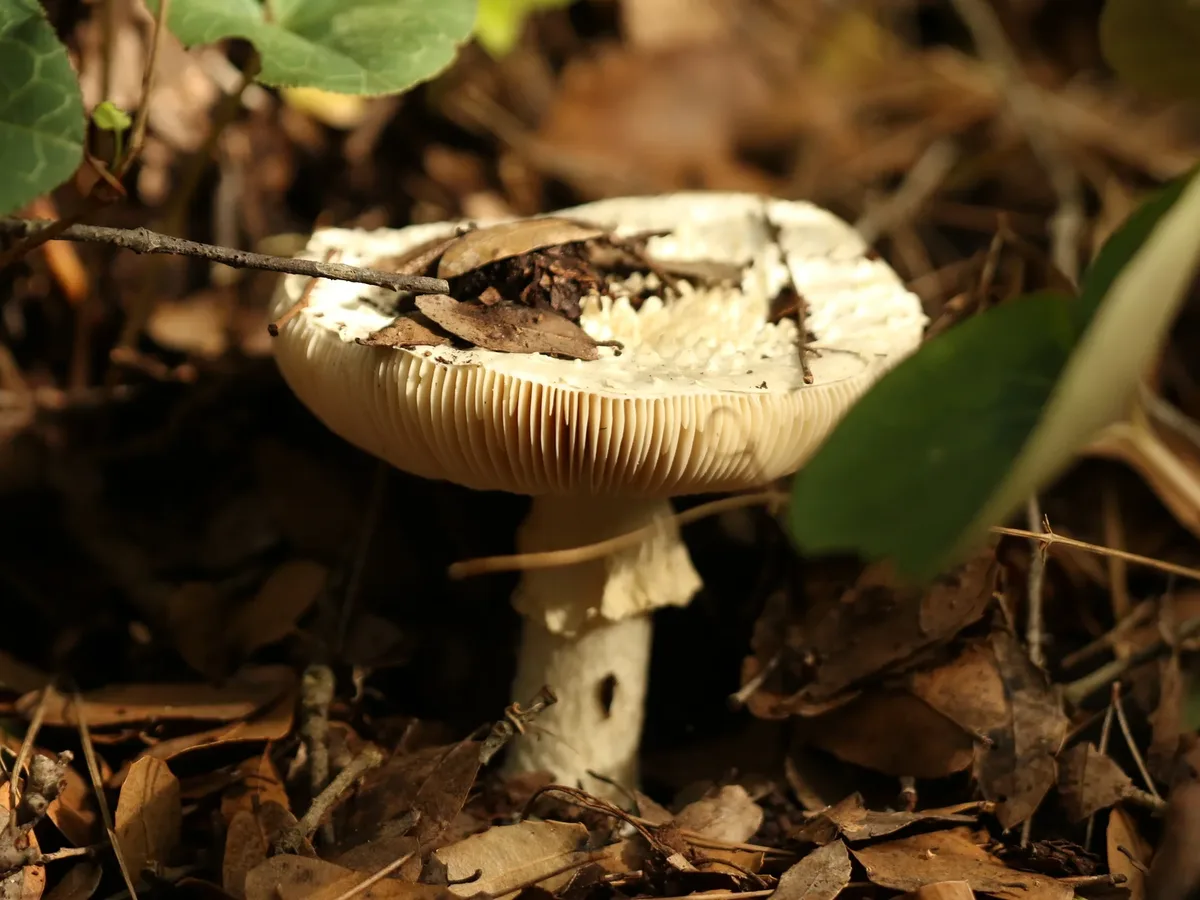
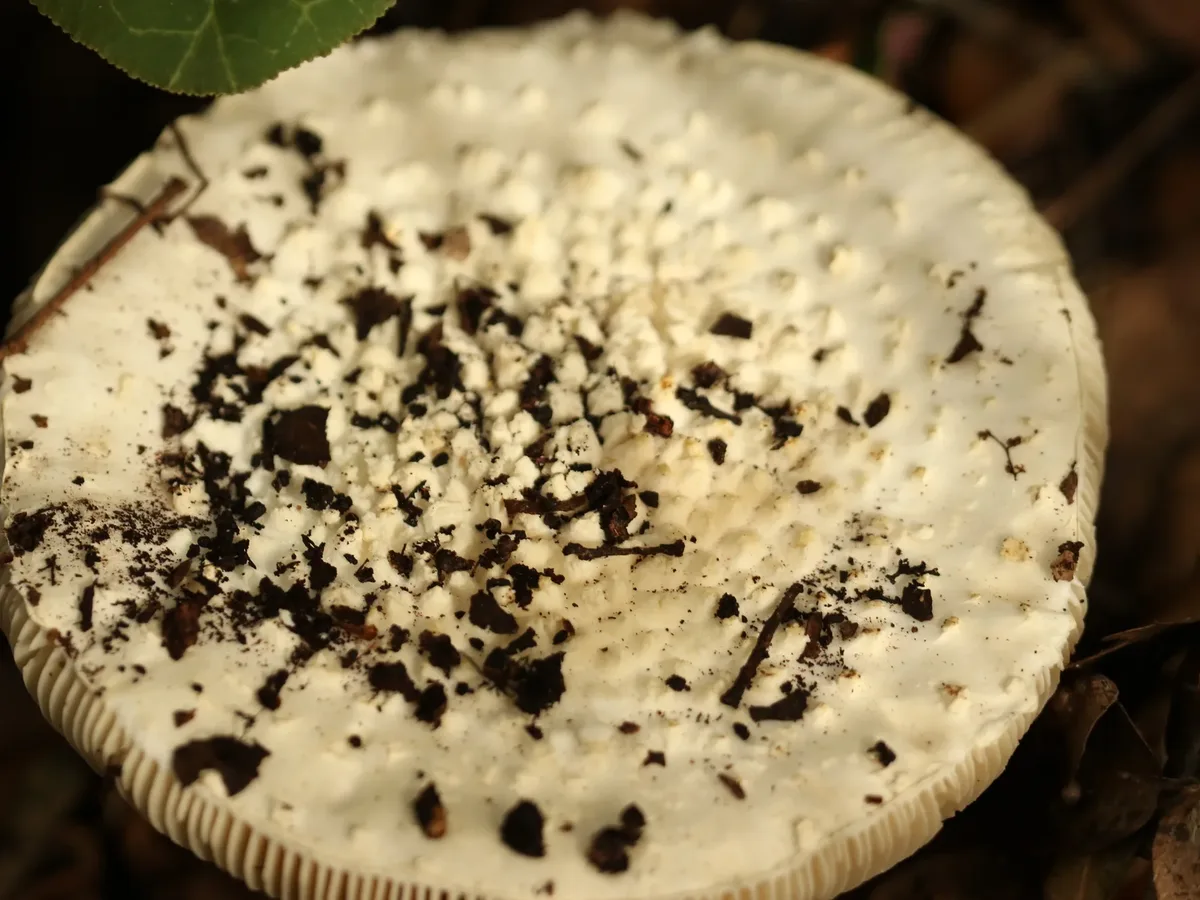
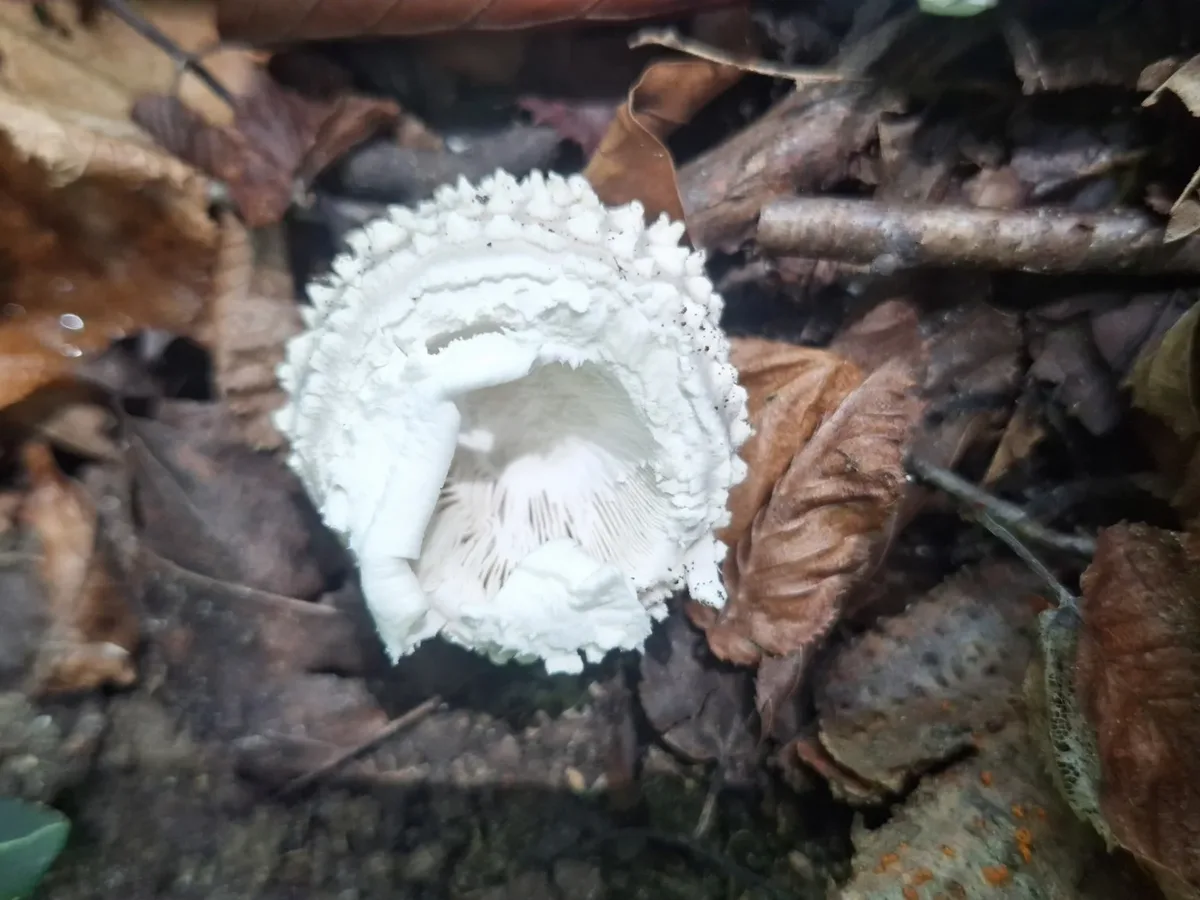
It is a large, all-white mushroom - cap 6-16 cm - whose most arresting feature is the armour of stiff, sharply pointed, pyramidal warts covering the cap from centre to edge.
These are the most angular, regularly conical warts of any Amanita in Europe: not the soft rounded bumps of many relatives, but true spines that can hold their shape even after rain.
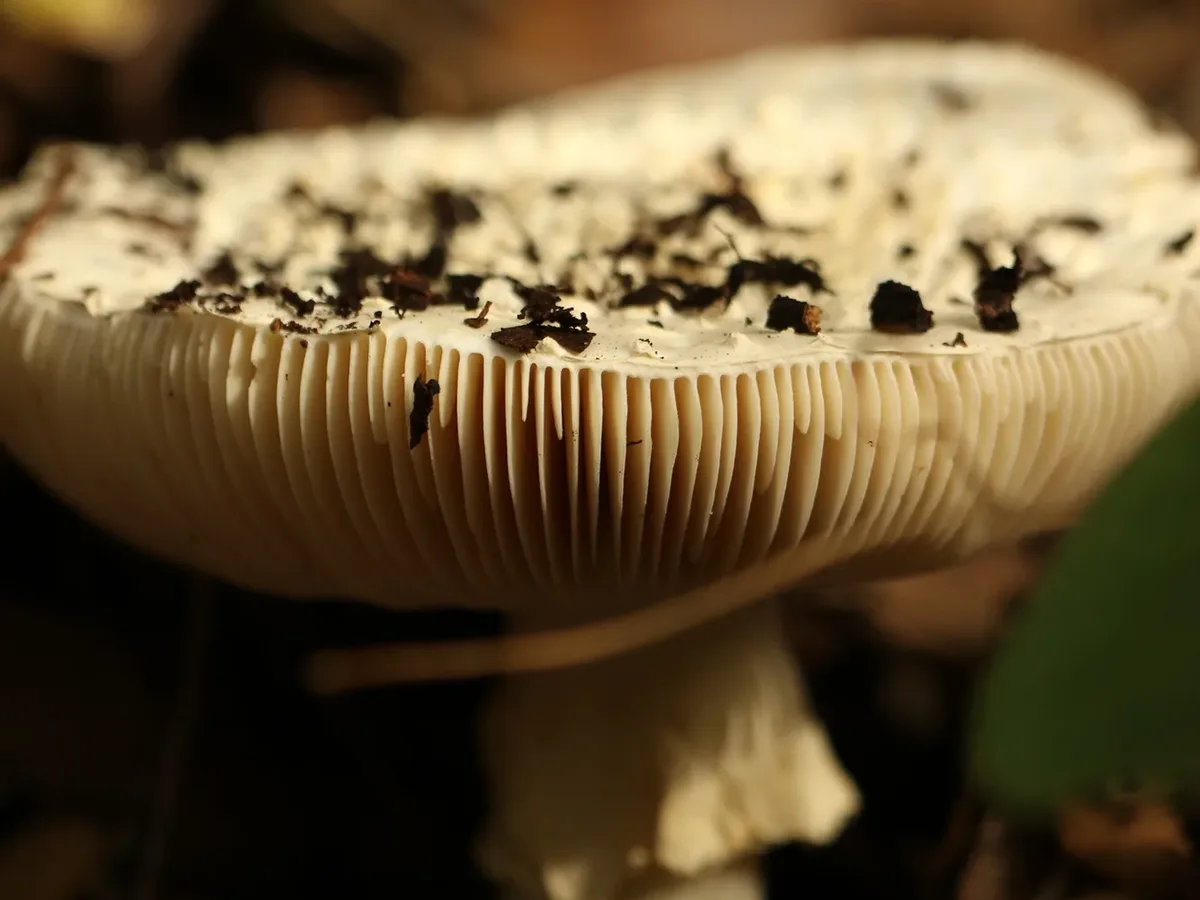
Colour is white to ivory when fresh, ageing to pale cream; the cap surface between the warts is smooth.
Gills
Gills are white, free and crowded, and may pick up a faint yellowish tinge in older specimens.
Stem
The stem (up to 18 cm tall, 1.5-3 cm thick) is stout and long, tapering downward to a rooting base that plunges deep into the soil rather than widening into a bulb or a free sac - an important distinction from the destroying angels.
The lower half of the stem carries distinct ring-like girdles or recurved scales, the broken remnants of the volva.
The ring is large, white and pendulous but fragile, and often collapses or shreds with age.
Flesh
Flesh is white throughout and does not stain on cutting.
Smell & taste
Smell is distinctive and disagreeable - earthy, radish-like or iodine-tinged - and worth registering whenever you encounter this species.
Why it's dangerous
The principal danger of encountering A. echinocephala is not the species itself but the broader identification context. It belongs to a group of large, white, warty Amanitas growing on calcareous soils, where it can be confused with:
- Amanita proxima (seriously toxic, possibly fatal via renal failure)
- the destroying angels (Amanita virosa/verna, amatoxin-containing and frequently fatal)
Any forager who cannot instantly and confidently distinguish these species from A. echinocephala - based on the volval structure, wart shape, odour and stem anatomy - should not attempt to identify or handle any of them as food.
The species merits a deadly-lookalike flag.
Toxin
The exact toxicological profile of A. echinocephala is not as well characterised as the amatoxin-containing deadly Amanitas. Reports attribute gastrointestinal-irritant compounds, and some sources list additional uncharacterised toxic components.
Amatoxins have NOT been confirmed in this species by systematic chemical screening, which distinguishes it from the destroying angels. But the safety margin is not proven, and it should never be eaten.
Symptoms
Gastrointestinal poisoning, occurring within a few hours of ingestion:
- nausea
- vomiting
- abdominal cramps
- diarrhoea
Symptoms are typically delayed gastrointestinal upset; severity varies.
The more pressing danger is misidentification. If any deadly white Amanita (A. virosa, A. proxima) is consumed in its place, symptoms may be delayed 6-24 hours and then escalate to potentially fatal liver and kidney failure.
Staying safe
Every white Amanita with a ring, volval tissue at the base, and white gills on white ground should be treated as potentially deadly until the identification is unambiguous.
Amanita echinocephala is itself a poisonous species causing gastrointestinal poisoning, and its closest look-alikes include some of the most lethal fungi in the world: the destroying angel (Amanita virosa) and Amanita proxima.
The pointed-wart pattern and rooting stem with girdles (rather than a sac-like volva) are key features, but require experience to read reliably in the field.
Unless you are an expert mycologist who can make the distinction with certainty, walk past all large white Amanitas and photograph them for later study.
Where & when it grows
Habitat
This species is a strict calcicole - it grows only where the ground is calcareous, alkaline, or base-rich.
Look for it in warm broadleaf woodland on chalk, limestone or marl, particularly under oaks, hornbeam and beech. In the Mediterranean zone it also occurs in garrigue scrubland and thermophilous evergreen-oak forest.
In central-western Europe it is genuinely scarce, turning up mostly on suitable chalk or limestone in beech and hornbeam woodland.
Solitary growth is almost always the rule - which is how it earned its name - so finding even a single specimen feels like an event.
When
Summer through early autumn is its window - July to September in the warmer south, peaking in August and September across central Europe.
It needs significant rain to flush, and the chalky, well-drained soils it favours need to be thoroughly moist before fruiting begins.
Given how rarely it appears even in suitable habitat, a solitary white spike of warts pushing up through the leaf litter after a hot summer storm is a genuine find.
How it grows
Almost always solitary, very rarely paired. It pushes up from the soil as a pale, egg-shaped button - the entire body wrapped tightly in the thick, coarsely warty universal veil.
As the cap expands and forces the veil apart, the pointed warts are left behind on the cap surface, and the broken veil tissue settles into the encircling girdles low on the stem.
The rooting base can plunge 5-10 cm or more into the subsoil, anchoring the whole structure deep in the limestone or chalk. A fully developed specimen is an imposing thing: stout, pale and bristling.
Fruiting conditions
A warm-season fruiter requiring calcareous soils to be well-moistened; flushes follow significant summer rain (25+ mm in two weeks) once soil temperatures are comfortably in the warm range. The calcicole habitat retains moisture differently from acid soils, often requiring less total rain but more even distribution. Individual fruiting bodies appear singly after a lag of 1-2 weeks.
Look-alikes
Several serious confusions are possible in each direction.
- 1DESTROYING ANGEL (Amanita virosa) and related white-destroying-angel species (Amanita verna, Amanita bisporigera in North America): also entirely white with a ring and volva, but have a distinct free, sac-like white volva at a bulbous base rather than the stem-girdles of A. echinocephala, smoother or only weakly-warted caps, a more pleasant (then sickly-sweet) odour, and flesh that is more uniformly white without the iodine/radish note. All are deadly, containing amatoxins; the distinction must be reliable before any identity decision.
- 2AMANITA PROXIMA: closely related (both belong to Amanita section Lepidella), also white and warted, found on calcareous soils in Mediterranean zones. Amanita proxima causes severe and potentially fatal poisoning (allenic norleucine nephrotoxin); it tends to be smaller, with less regularly conical warts and a more pronounced basal bulb, but the two can be very difficult to separate in the field without experience.
- 3GREY VEILED AMANITA / TALL AMANITA (Amanita excelsa / Amanita spissa): greyish-brown rather than white, with greyish-brown warts and a grooved ring; edibility also uncertain; shape can suggest A. echinocephala to a beginner.
- 4AMANITA STROBILIFORMIS: closely related and similarly large and warty; considered by some authorities as the same species or a variety; also toxic.
The rule with any large white warty Amanita on calcareous soils is to assume poisonous until proven otherwise.
Closely related and superficially similar: white, warty, on calcareous soil. Tends to be smaller (cap 5-10 cm) with less regularly conical warts and often a more pronounced basal bulb; the smell is described as slightly farinaceous or unpleasant but differs subtly. Causes severe nephrotoxic poisoning (allenic norleucine) potentially leading to acute kidney failure and death. Field separation from A. echinocephala is unreliable without experience; treat any ambiguous white warty Amanita on limestone as potentially deadly.
Also entirely white with ring and volval tissue, but the volva is a distinct free, sac-like bag (not stem girdles), the cap is smooth or only weakly adorned, and the stem tends to be shaggy-fibrous rather than girdle-scaled. Smell is initially faint, then sweetish and unpleasant. Contains amatoxins; lethal. Never confuse any white Amanita with a free sac at the base for A. echinocephala.
A very close relative - sometimes treated as a variety or synonym of A. echinocephala - that is also large, white and densely warty on calcareous soils. Generally has a more pronounced basal bulb and slightly softer warts; also considered poisonous. In practice the two may be inseparable without spore measurement or chemical analysis; treat them identically as poisonous.
Larger species with greyish-brown cap, greyish warts and a grooved ring; grows on various soil types not restricted to limestone. The grey-brown colouration separates it from the white A. echinocephala, but young or pale-form A. excelsa may approach similar colouring. Also considered inedible and of uncertain safety; do not eat.
A reference guide - never an edibility guarantee. When in doubt, leave it out.