False death cap
Amanita citrinasyn. Amanita citrina var. citrina, Amanita mappa
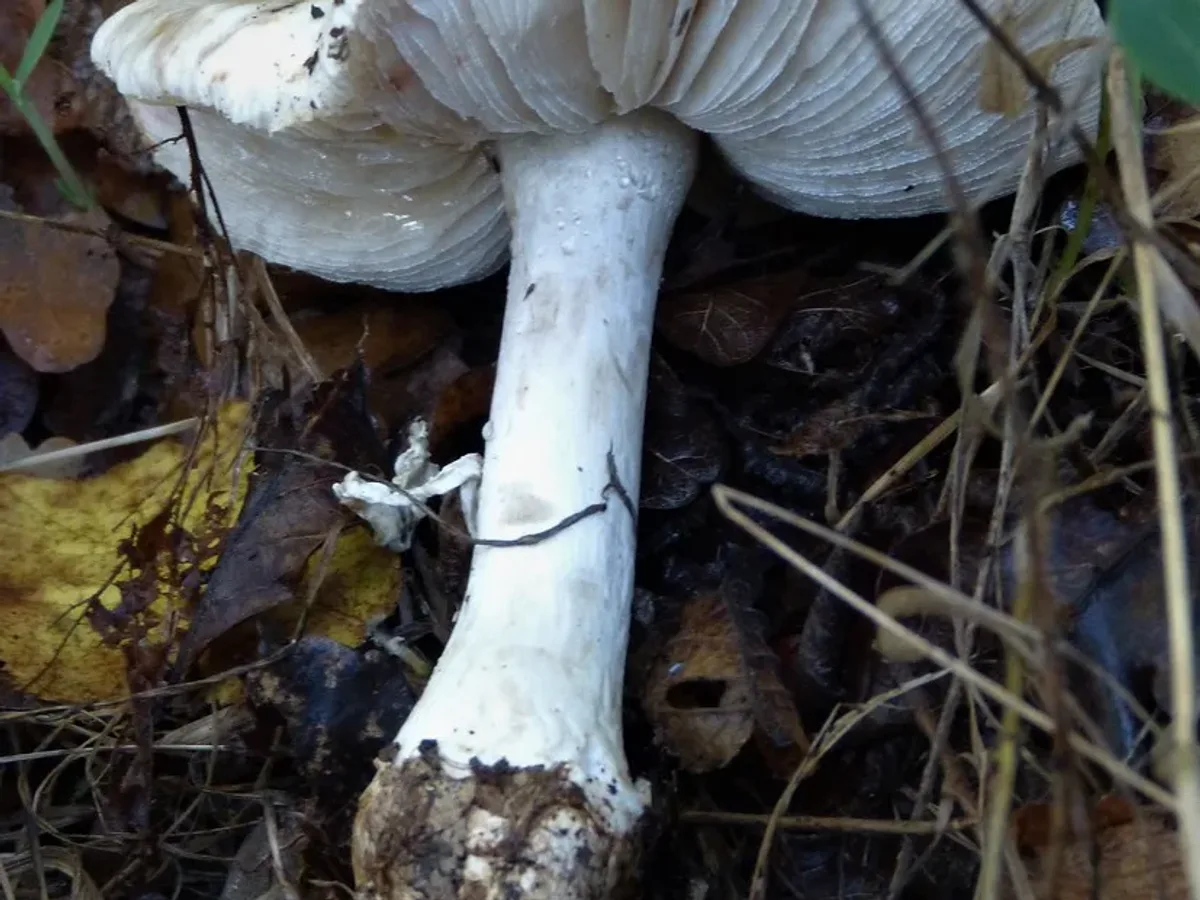 © gailhampshire (CC BY 2.0)
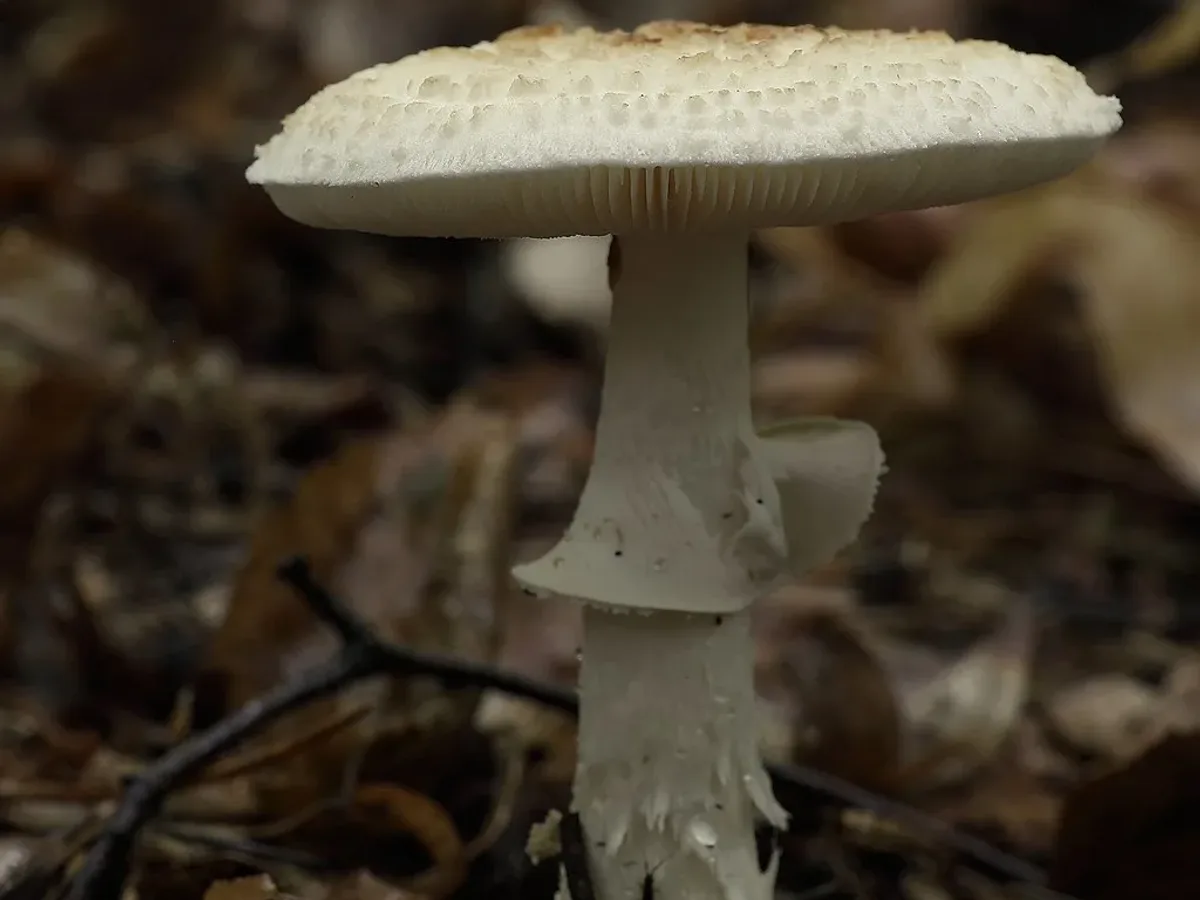 © Jac. Janssen (CC BY 2.0)
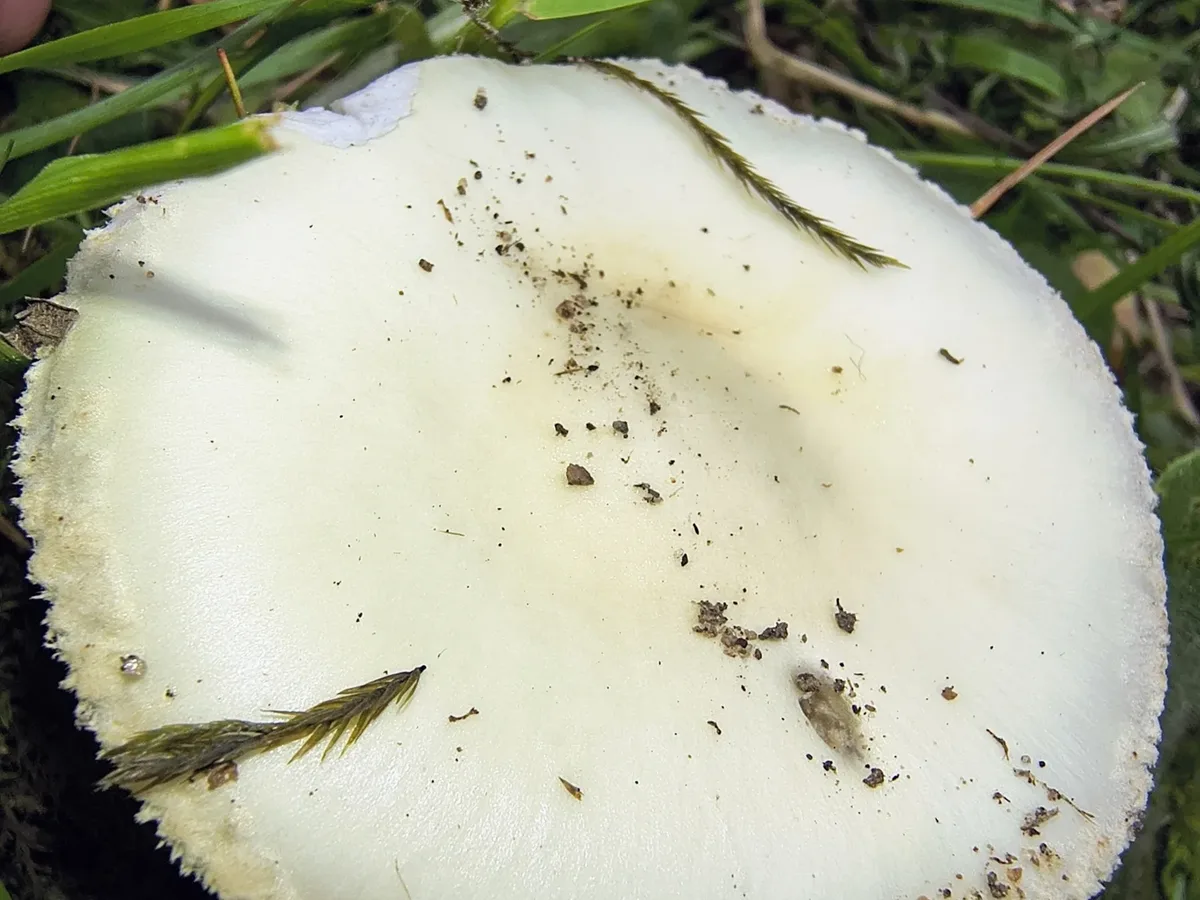 © Tracy Gould (CC BY)
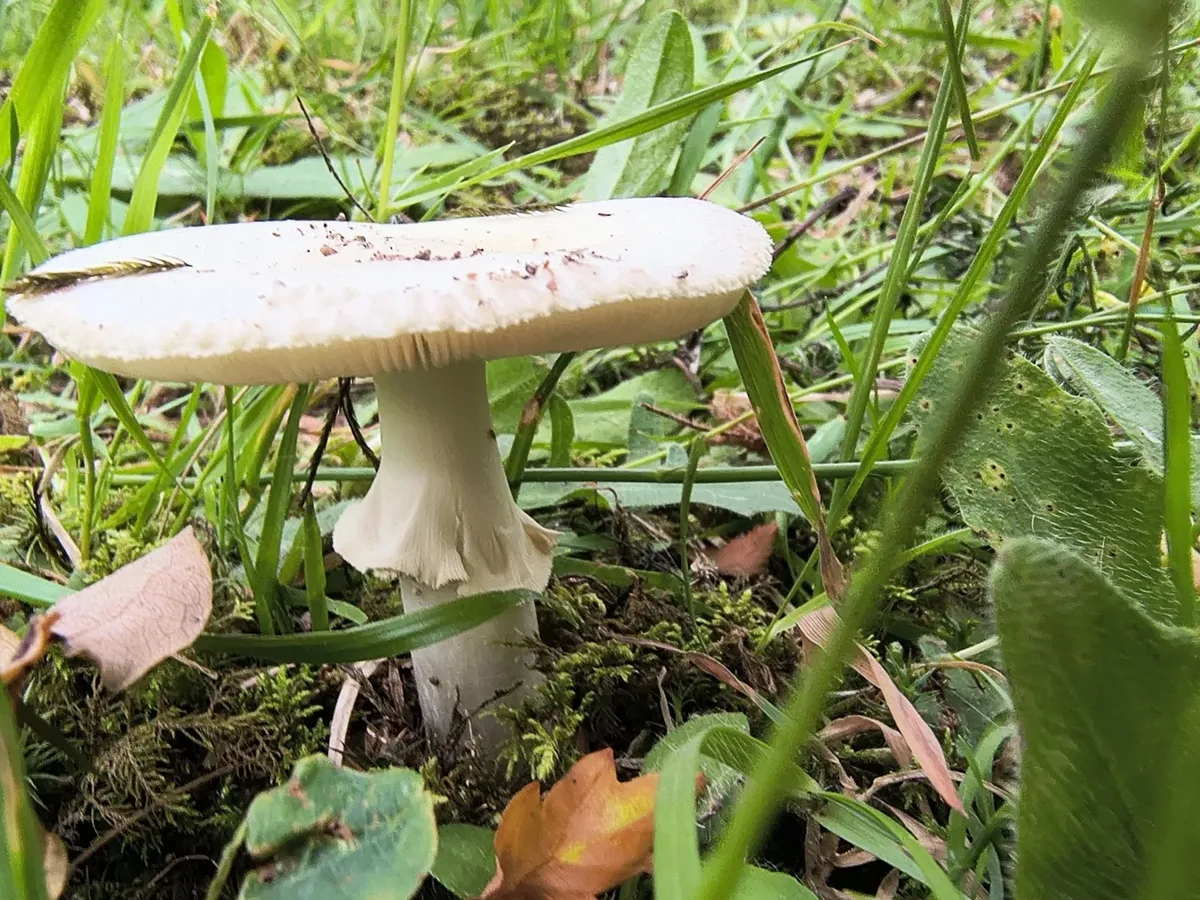 © Tracy Gould (CC BY)
 © Tracy Gould (CC BY)
 © gailhampshire (CC BY 2.0)© gailhampshire (CC BY 2.0)© Jac. Janssen (CC BY 2.0)
Edible only with the right preparation - or safe for some people but not others. Learn the caveats first.
Never eat a mushroom you are not 100% sure of - check the look-alikes below, and always cook wild mushrooms.
How to recognise it
Cap
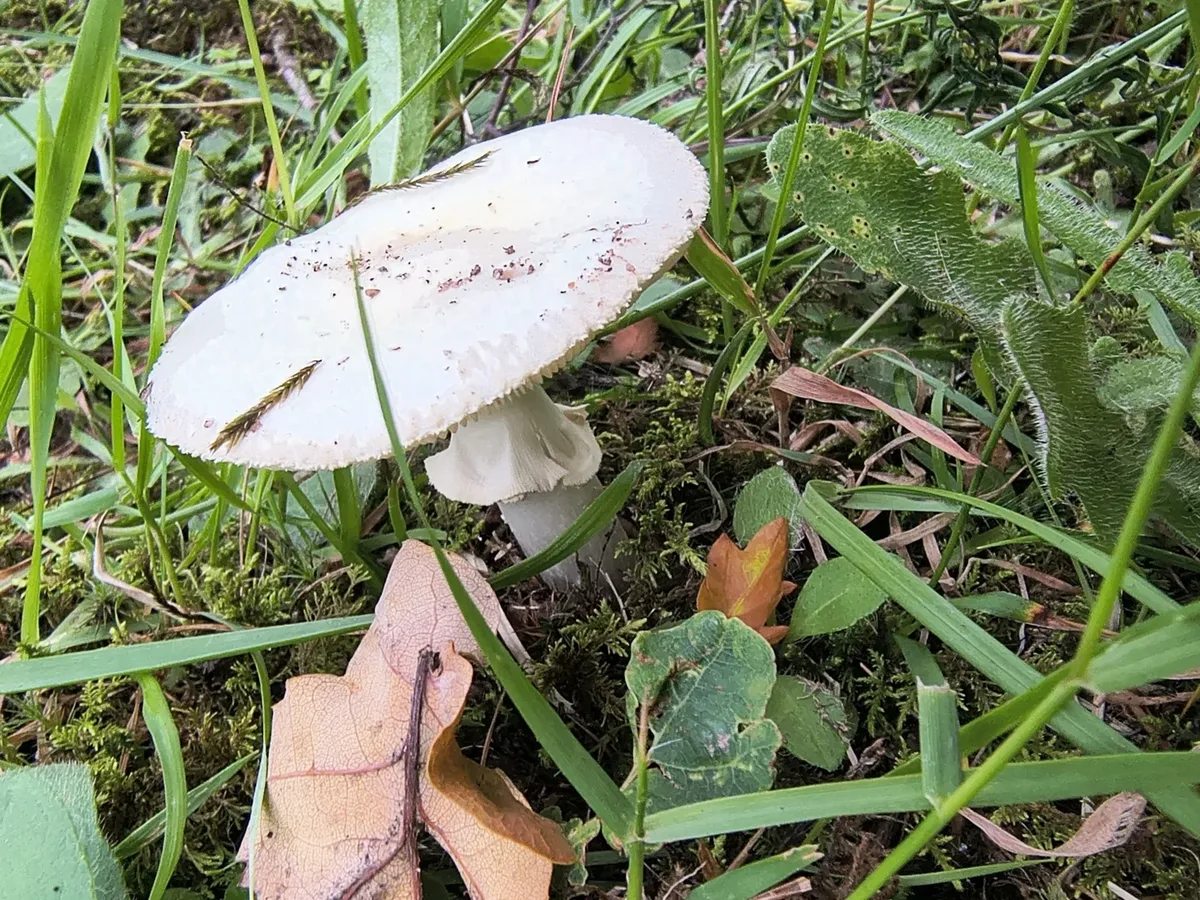
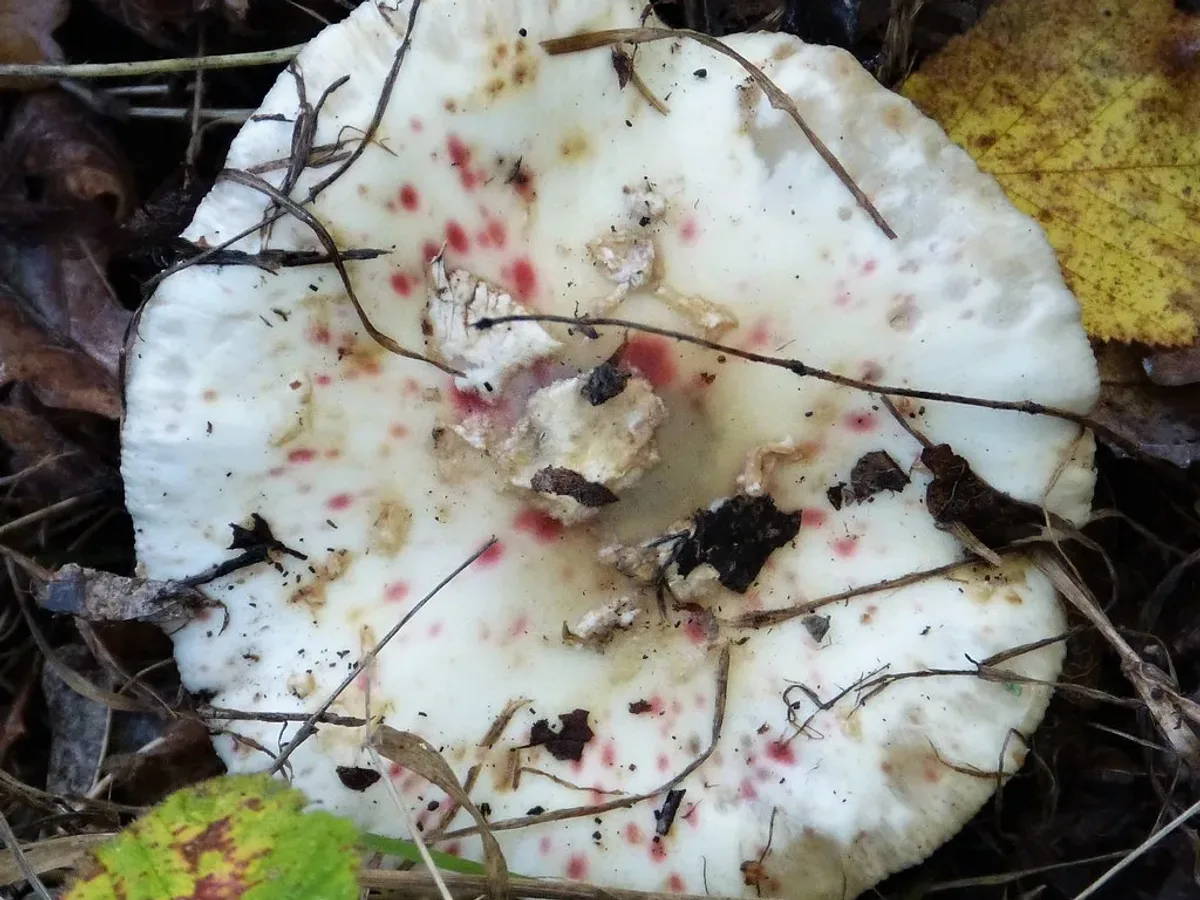
Cap 4-10 cm across, convex then broadly flat, pale lemon-yellow to straw-yellow in the typical variety (var. citrina) or entirely white in var. alba. The surface feels dry and bears irregular brownish-grey or buff patches - remnants of the universal veil - that can wash off in rain, leaving a bare pale cap.
Gills
White to pale cream, free from the stem, and crowded. Spore print white.
Stem
Stem 5-10 cm × 1-2 cm, whitish to pale yellow, with a thin but clearly membranous pendant ring. The base is enclosed in a thick, deeply cupped membranous volva, more U-shaped than sac-like.
Smell & taste
The most reliable non-visual cue is the persistent, strong smell of raw potato, turnip or radish - unusual and immediately distinctive once learned.
Why it's dangerous
The principal danger is misidentification: picking Amanita phalloides or Amanita virosa when intending to collect Amanita citrina.
Even experienced foragers have made this error - and half a death cap can kill an adult - so the false death cap is best left in the forest.
If any doubt exists about identification, discard the specimen and seek expert verification before handling further.
Toxin
Trace bufotenine (5-hydroxy-N,N-dimethyltryptamine) has been reported in Amanita citrina. Bufotenine is a serotonin analogue and can cause mild psychoactive effects and, in higher doses, autonomic symptoms.
It does not belong to the amatoxin family. The toxicological significance in humans from casual consumption of this species is not well-established, but caution is warranted.
Symptoms
Gastrointestinal upset (nausea, vomiting, diarrhoea) has been reported after eating Amanita citrina.
If Amanita phalloides has been accidentally consumed under the impression it was Amanita citrina, expect:
- 1delayed onset (6-24 hours) of severe gastrointestinal symptoms
- 2a deceptive remission
- 3liver and kidney failure
Staying safe
Do not eat.
Although Amanita citrina is not confirmed to cause the lethal amatoxin poisoning associated with the death cap and destroying angel, the species contains trace amounts of bufotenine (a serotonin analogue with psychoactive and potentially toxic properties), and some sources report gastrointestinal upset from consumption.
The paramount safety concern, however, is not the species itself but the very real risk of misidentifying a lethal Amanita species as the false death cap.
The raw-potato smell is the single most useful differentiating feature from the death cap, but it can be faint or absent in old or rain-washed specimens. Always verify the smell by breaking the flesh close to the stem base.
Where & when it grows
Habitat
Strictly mycorrhizal with broadleaf trees, mainly beech and oak, with birch and hornbeam secondary hosts; occasionally recorded under pines on sandy soils.
Prefers mildly calcareous to moderately acidic soils in deciduous or mixed woodland.
Because it shares hosts and habitat with Amanita phalloides, the two can be found fruiting within metres of each other - this proximity makes misidentification especially dangerous.
When
July to November in temperate western Europe, peaking August through October as the soil cools after summer rains.
Like many woodland Amanitas it waits underground as mycelium all year, then pushes fruit bodies up during the warm-wet spells of late summer and autumn - often appearing alongside Amanita phalloides under the same trees.
How it grows
Solitary or in loose troops beneath the host tree canopy.
As a mycorrhizal species it has lived for years - sometimes decades - as an underground web of threads trading water and minerals with the tree roots above it. What you see pushing through the leaf litter is just the fruiting body, the temporary spore-bearing tip of something much larger and older.
The button stage breaks surface as a pale, ovoid 'egg' tightly wrapped in the universal veil. As it expands the veil tears, leaving the distinctive cup-shaped volva at the base and the brownish-grey patches stranded across the cap.
Fruiting conditions
Mycorrhizal fruiter that responds to late-summer and autumn rain events once soils begin to cool; flushes coincide broadly with Boletus and Amanita phalloides flushes under the same canopy.
Look-alikes
The chief danger is confusion with Amanita phalloides (the death cap), which shares the same habitat and woodland type.
The death cap differs by:
- more distinctly greenish-yellow, olive or grey-green cap colouration
- absence of the raw-potato smell (it has a sickly sweetish odour)
- a more open, bag-like volva
However, pale yellow or yellowish-white forms of the death cap can closely resemble Amanita citrina, making the smell test and the volva shape critical.
The all-white variety (var. alba) is even more dangerous because it overlaps closely in appearance with the pure-white forms of Amanita phalloides and with Amanita virosa (the destroying angel); none of these have the potato smell.
Amanita citrina has also been confused with Amanita gemmata (the jewelled death cap), which is more yellow-ochre, typically lacks the potato smell, and has a less developed volva.
The death cap shares the same woodland habitat and a similar ring-and-volva structure. Key differences: the death cap typically shows more greenish-yellow, olive or grey-green cap tones and lacks the raw-potato smell (instead having a faintly sweetish, unpleasant odour); its volva is more open and sac-like. However, pale or yellowish forms of the death cap can appear very similar to Amanita citrina - the smell remains the most reliable field separator, but an expert should confirm any specimen in doubt.
The all-white variety (var. alba) of the false death cap can be confused with the pure-white destroying angel. Amanita virosa has a silky-white cap, a shaggy or fibrous stem surface, a tall skirt-like ring, and a sac-like volva, but lacks the potato smell. Because both are deadly if mixed up, any all-white Amanita with ring and volva should be left alone.
Amanita gemmata is more intensely yellow-ochre, has a less developed volva that often appears merely as a rim, and typically lacks the raw-potato smell. It is considered poisonous (contains ibotenic acid and muscimol) so confusion with it carries its own risk.
Novices occasionally mistake button-stage Amanita citrina for woodland Agaricus species; the critical difference is that Agaricus has gills that start pink and mature to chocolate-brown, a brown spore print, and never has a volva.
A reference guide - never an edibility guarantee. When in doubt, leave it out.