Southern death cap
Amanita australissyn. Amanita phalloides var. australis, Amanitopsis australis
 © Julia Palmer (CC BY)
 © Ian Dickie (CC BY)
 © Ian Dickie (CC BY)
 © Jeremy Rolfe (CC BY)
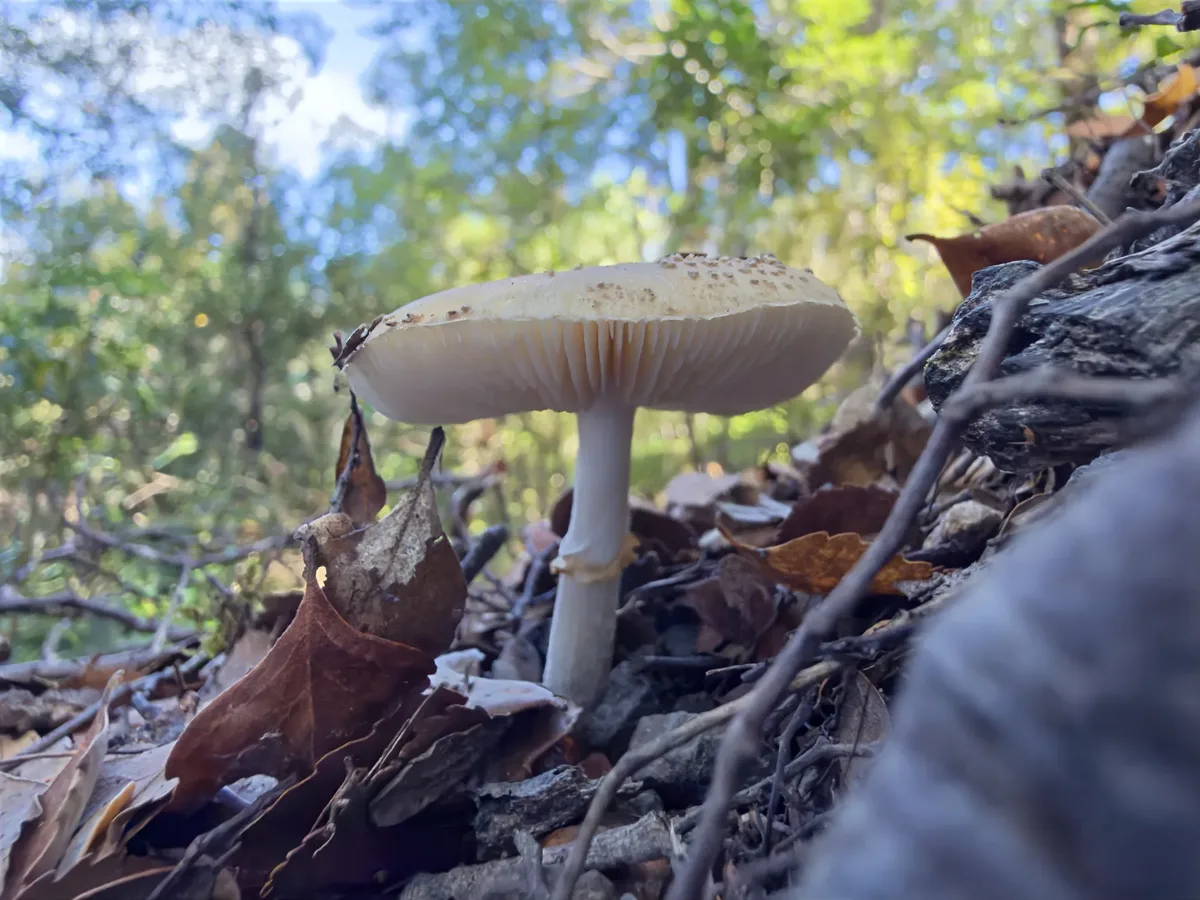 © Jeremy Rolfe (CC BY)
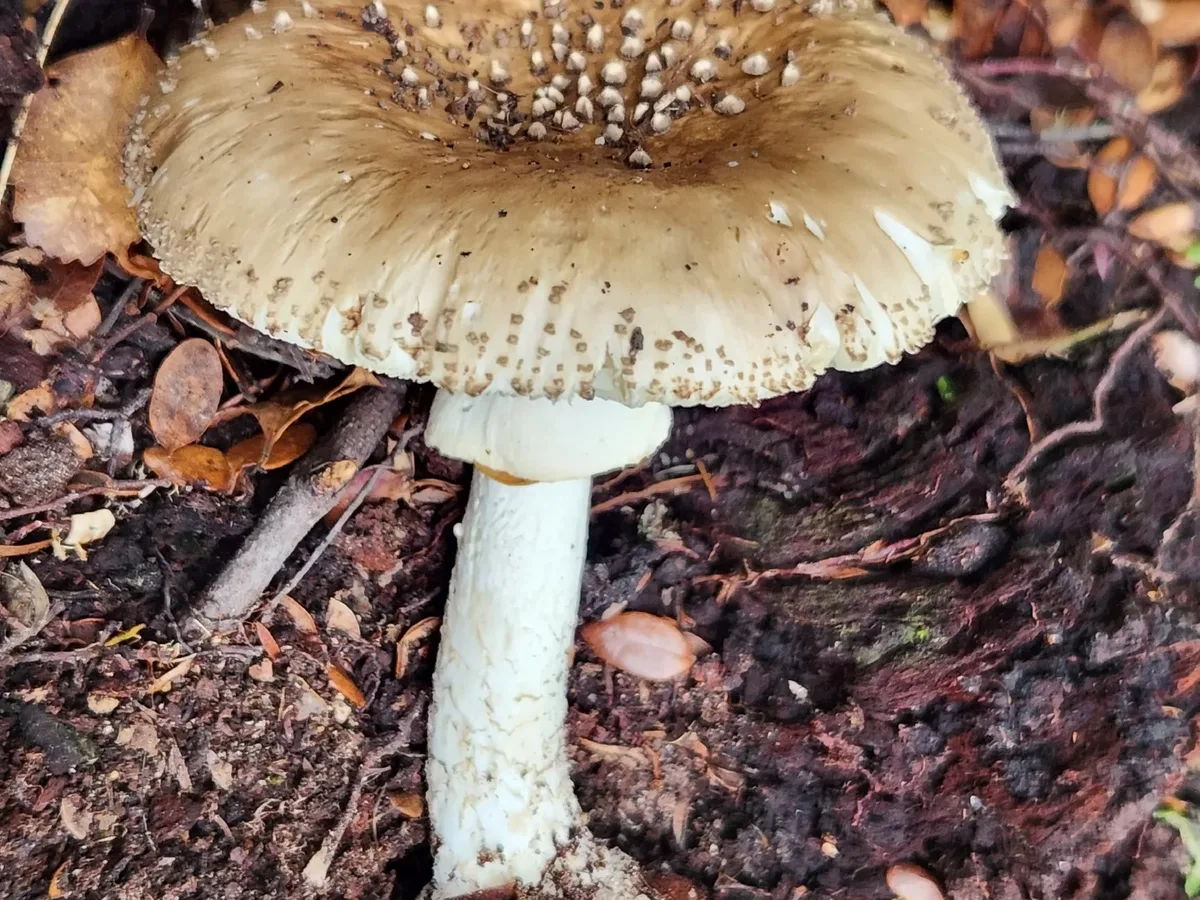 © claire (CC BY)
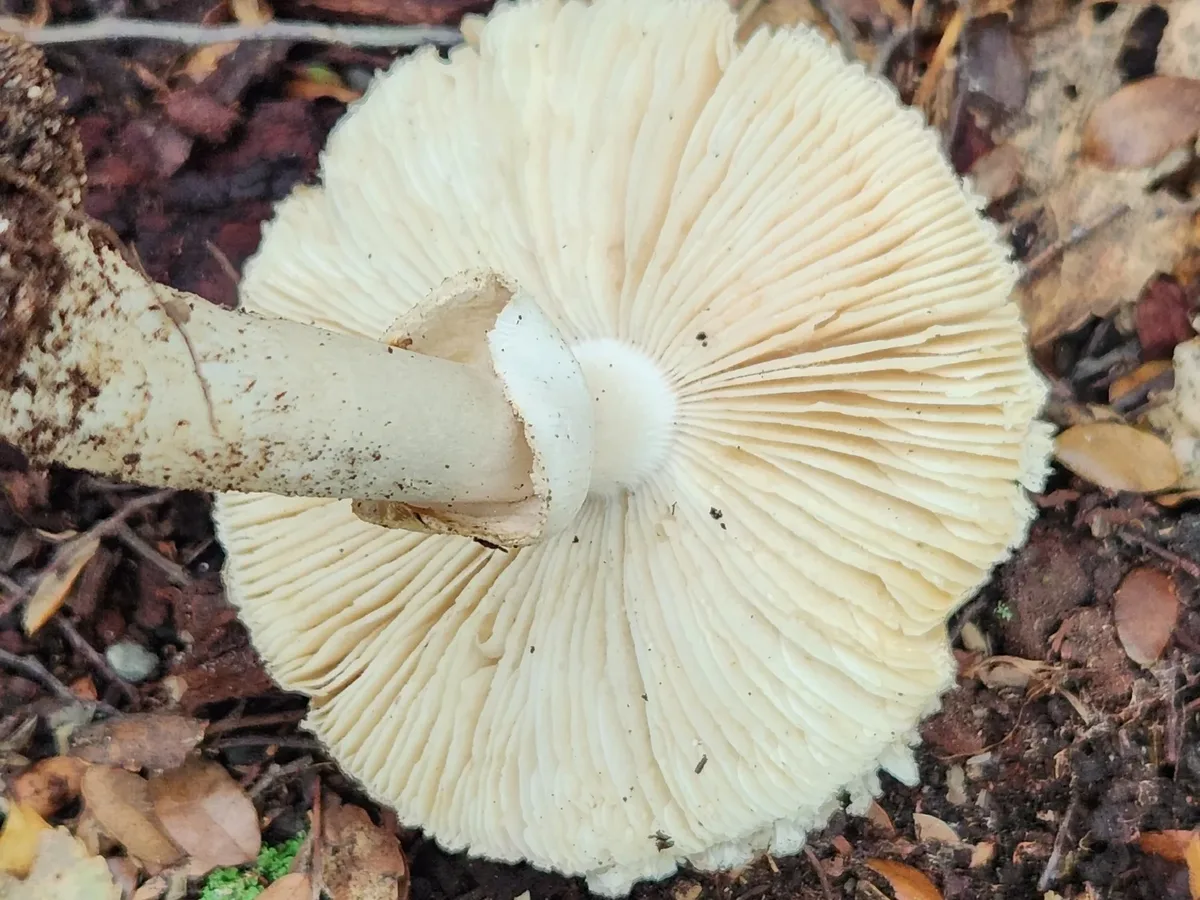 © claire (CC BY)
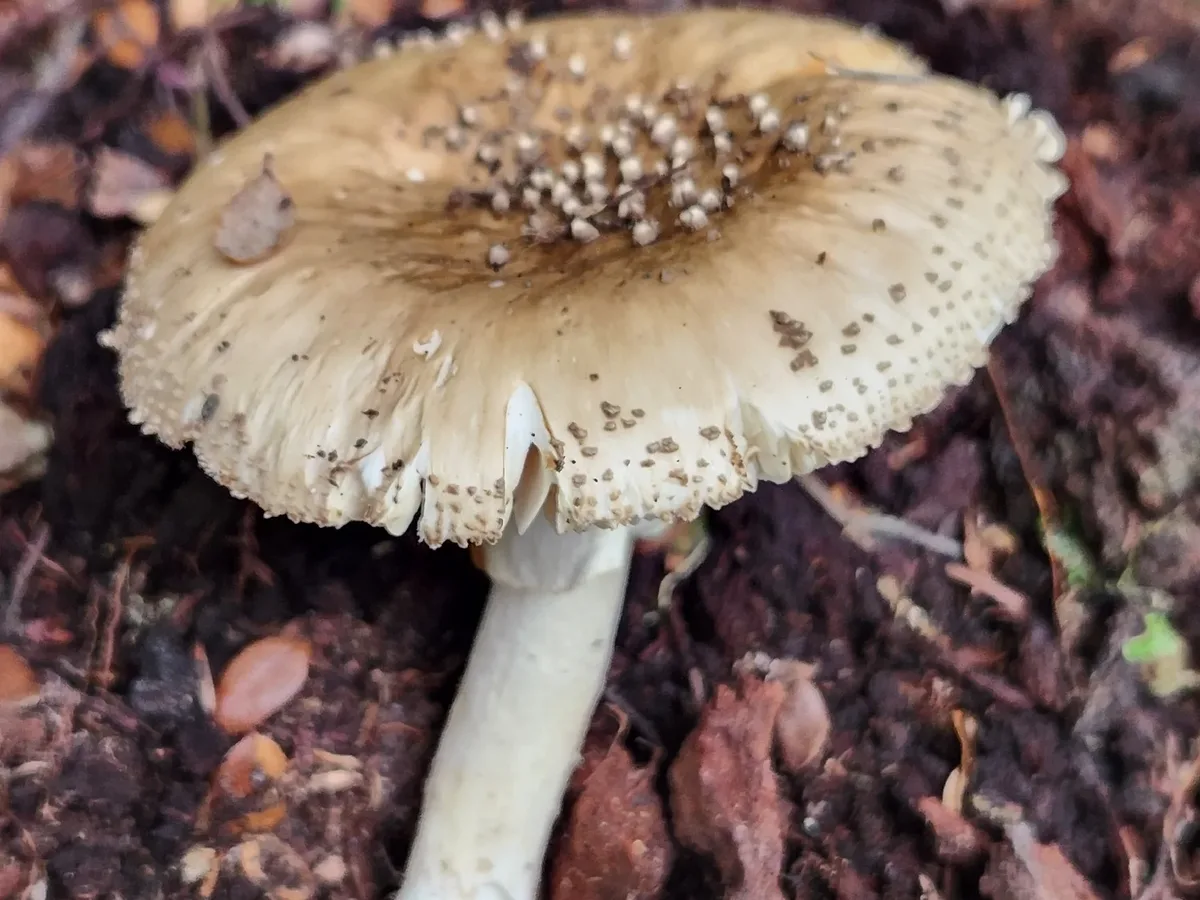 © claire (CC BY)
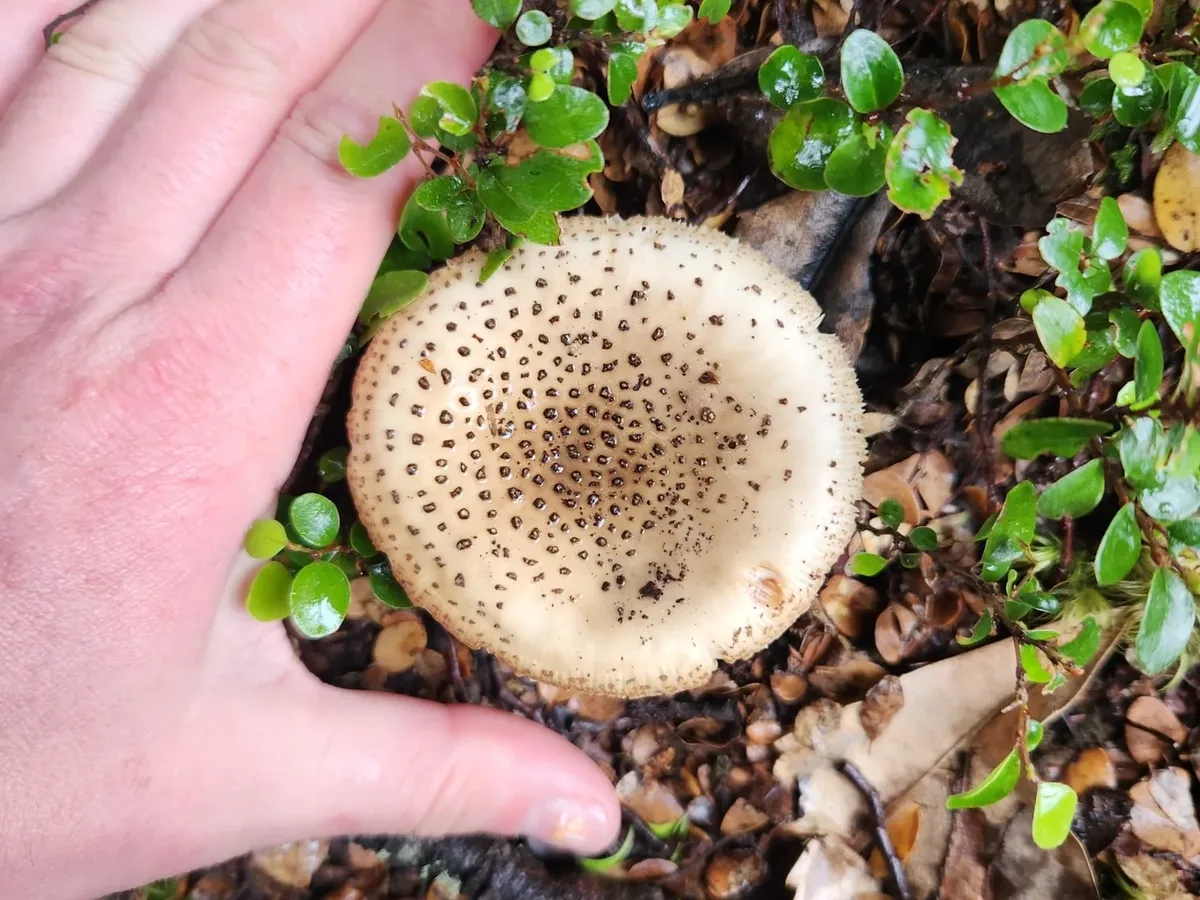 © Archie (CC BY)
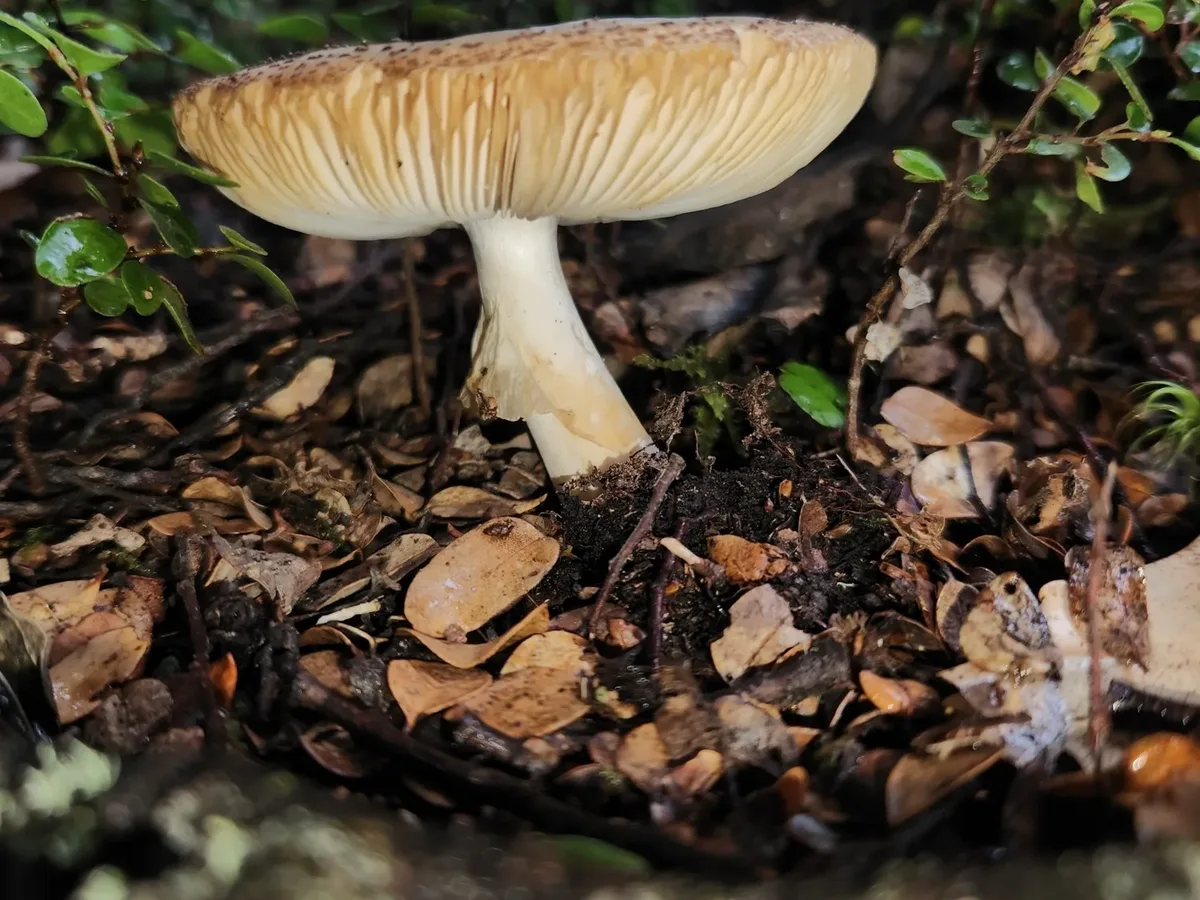 © Archie (CC BY)© Julia Palmer (CC BY)© Ian Dickie (CC BY)
Toxic - and the most serious cases can be fatal. Never eat it, and wash your hands after handling.
Never eat a mushroom you are not 100% sure of - check the look-alikes below, and always cook wild mushrooms.
How to recognise it
Amanita australis is a deadly species that wears the quiet, modest colours of the Southern Hemisphere forest floor.
Cap
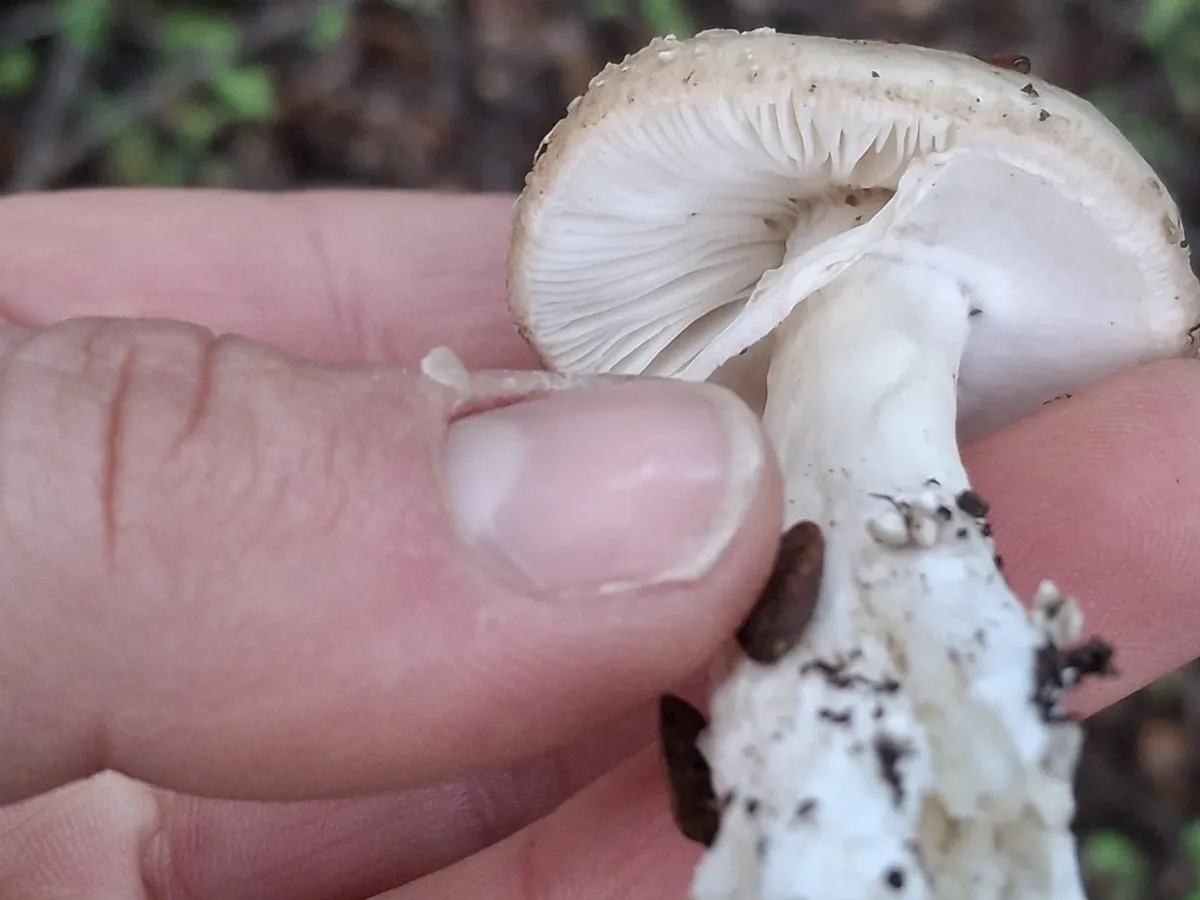
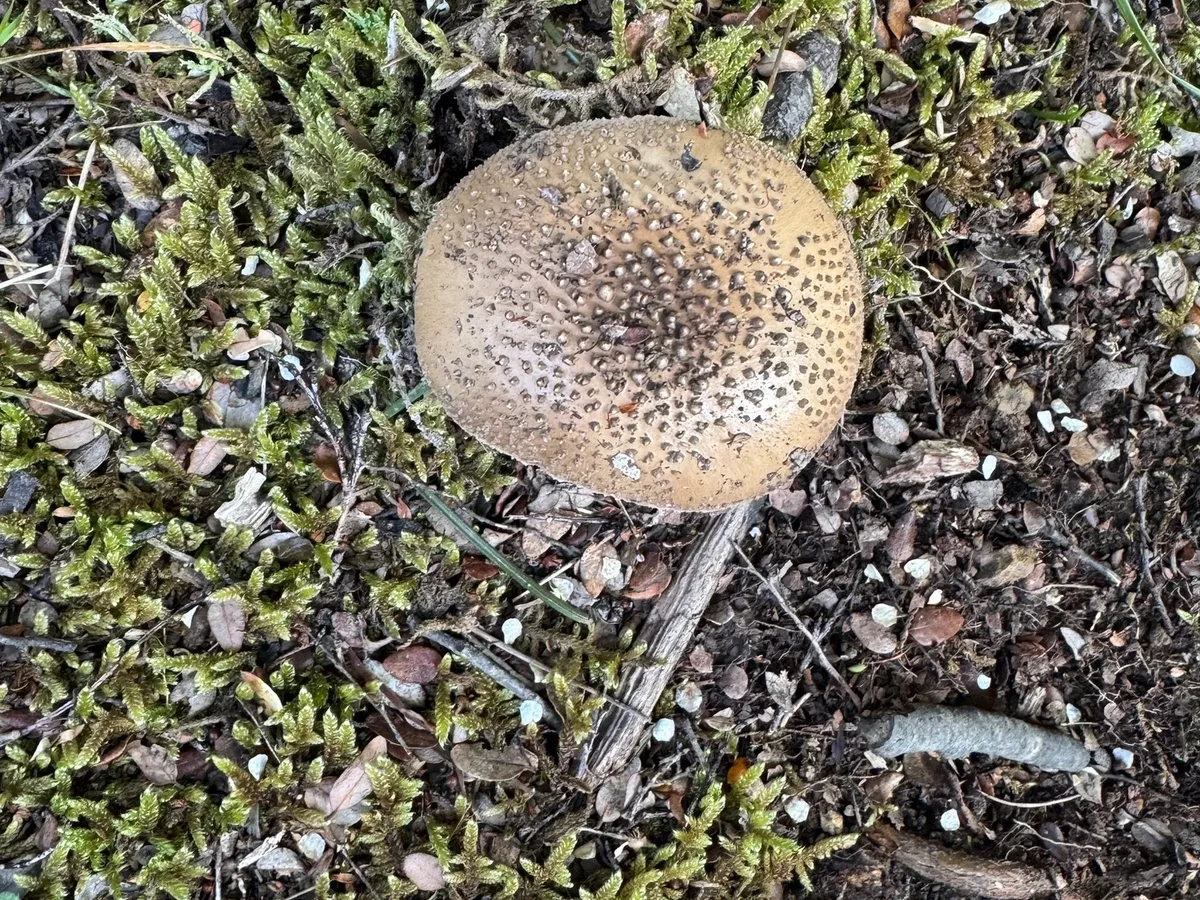
The cap is 40-100 mm across, beginning life as a smooth white to cream oval egg entirely sealed inside the universal veil, then expanding to broadly convex and eventually nearly flat.
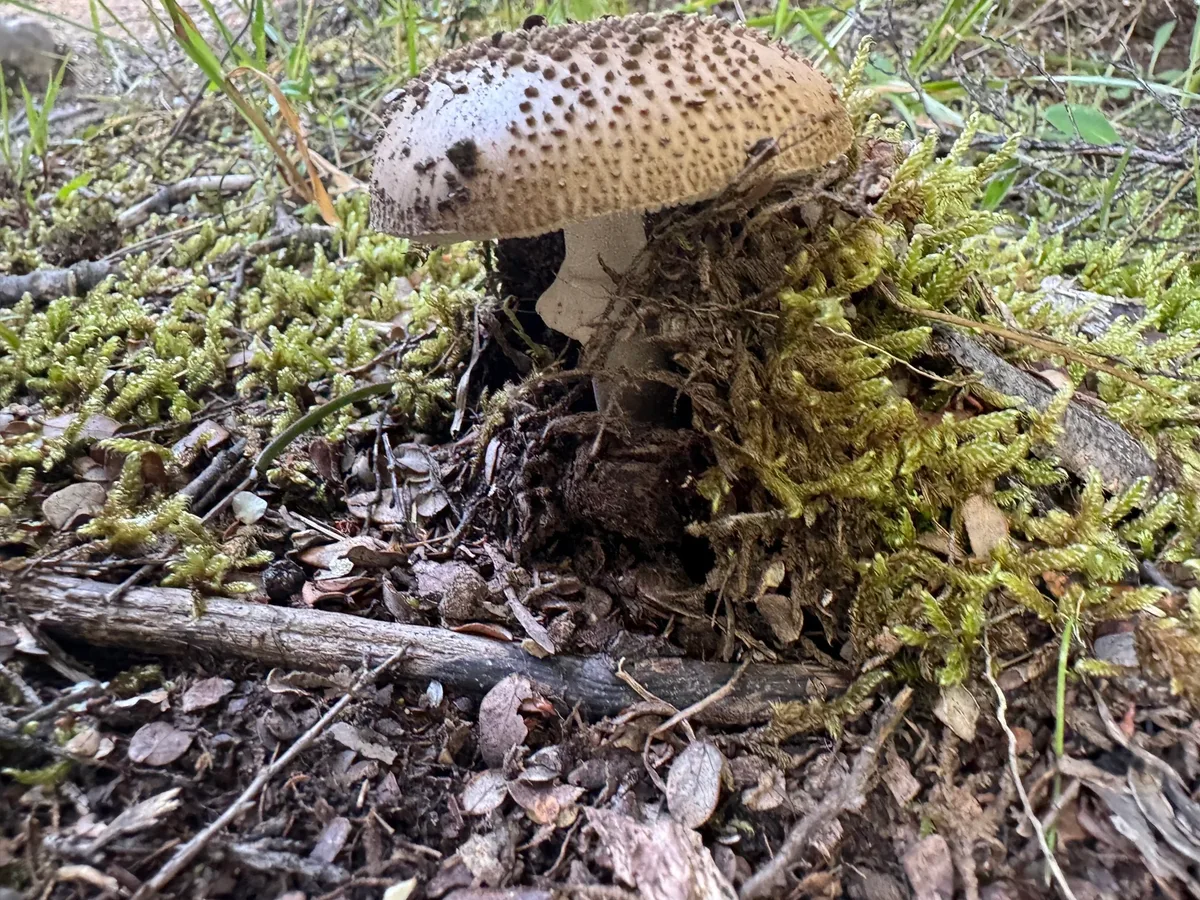
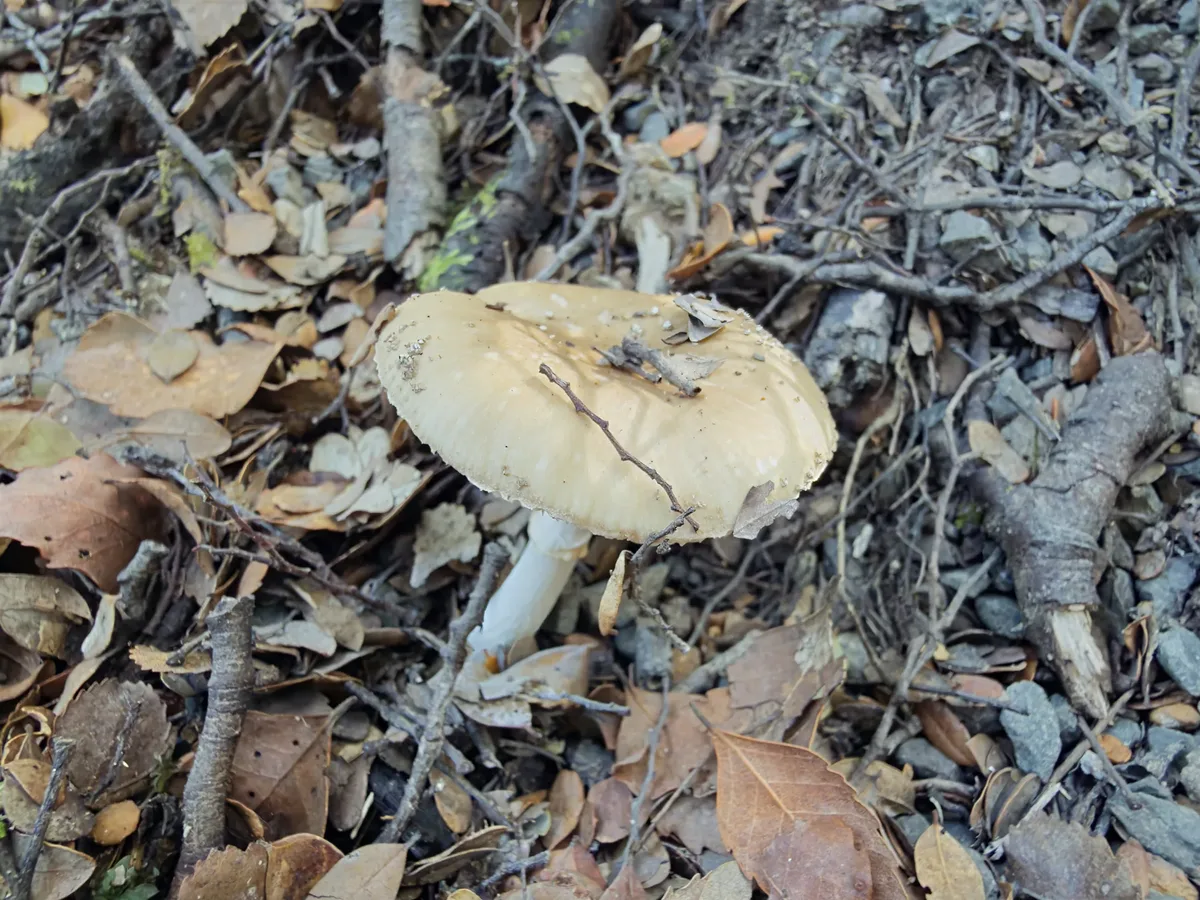
The cap surface is smooth and slightly sticky when wet, typically whitish to pale grey-brown or faint olive-brown - not dramatically coloured, which is precisely what makes it dangerous. The centre is often the palest, though some specimens develop a faint olive or grey-brown wash that is easily dismissed as natural variation.
The cap margin shows little to no striation, a critical distinction from the non-deadly grisettes (section Vaginatae), whose cap margins are distinctly ridged and grooved.
Gills
Beneath the cap, the gills are free, crowded, and white at every stage of development; they do not turn any colour.
Spore print is white.
Stem
The stem is white, 60-130 mm tall, sometimes with a slight thickening at the base.
The membranous ring hangs from the upper stem like a loose skirt - sometimes intact, sometimes collapsed against the stem, but always present on undamaged specimens.
At the base, excavation reveals the most important structural feature: a broad, lobed, sac-like white volva, 20-50 mm wide, often buried in the soil.
Flesh
The flesh inside is pure white, does not stain, bruise, or change colour at all.
Smell & taste
The whole mushroom has a mild to faintly sweetish odour in fresh specimens, occasionally described as unpleasantly sweetish when older.
Why it's dangerous
Amanita australis is responsible for documented poisoning cases in New Zealand, including deaths. The risk is not theoretical.
Foragers in native beech forest who are unfamiliar with this species are at elevated risk - and particularly migrants from East Asian countries where edible wild Amanita species (such as A. hemibapha) are traditional foods - because of the similar form of the egg and button stages.
If any quantity has been ingested:
- Call emergency services immediately (in New Zealand: 111; in Australia: 000).
- Do not wait for symptoms.
- Take the mushroom or a photo.
Hospital treatment - not watchful waiting - is the only appropriate response.
Toxin
Alpha-amanitin and beta-amanitin are bicyclic octapeptides. They are absorbed through the gut and transported into liver cells (hepatocytes) and kidney tubule cells, where they bind irreversibly to RNA polymerase II and arrest all protein synthesis.
The liver bears the greatest damage because it is the primary site of amatoxin uptake and metabolism.
The toxins are:
- heat-stable
- acid-stable
- not degraded by gastrointestinal flora
No preparation method reduces their potency. Even a small fragment of cap tissue may contain a clinically significant dose.
Symptoms
Phase 1 - gastrointestinal (6-24 hours after ingestion): severe, cramping abdominal pain, profuse watery to cholera-like diarrhoea, nausea, vomiting, and dehydration. This phase may require hospitalisation for fluid replacement but is often mistakenly attributed to ordinary gastroenteritis.
Phase 2 - apparent recovery (days 1-3): gastrointestinal symptoms subside and the patient may feel substantially better. This false recovery is the most dangerous feature of amatoxin poisoning, as it can discourage continued medical monitoring while hepatic necrosis deepens silently.
Phase 3 - organ failure (days 3-8): sudden deterioration with rising liver enzymes, jaundice, coagulopathy, hepatic encephalopathy, renal failure, and, without intensive intervention, death.
Death may occur between days 4 and 14 after ingestion. A single cap can deliver a lethal dose to an adult.
Staying safe
Amanita australis is one of the most dangerous mushrooms in New Zealand and south-eastern Australia. It contains alpha-amanitin and beta-amanitin - the same cyclopeptide toxins as the European death cap - at concentrations that make a single average-sized cap potentially lethal to an adult.
The amatoxins are heat-stable: boiling, frying, drying, pickling, and fermentation all fail to neutralise them. There is no antidote.
The clinical course has a treacherous feature: a latency period of 6-24 hours separates ingestion from the first symptoms, followed by an apparent recovery phase of 1-3 days during which liver and kidney damage intensifies silently. By the time jaundice and coagulopathy appear, severe hepatic necrosis may already be irreversible.
Treatment requires:
- immediate hospital admission
- aggressive supportive care
- silibinin (silymarin) infusion where available
- potentially emergency liver transplantation
If there is any possibility that A. australis - or any unidentified Amanita - has been eaten, call emergency services immediately without waiting for symptoms. Bring the mushroom, or a photograph of it, including the base.
Where & when it grows
Habitat
Amanita australis is a native New Zealand and south-eastern Australian species, found exclusively in Nothofagus (southern beech) forest - a habitat defined by the austral beeches that are one of the most iconic and ecologically important tree groups in the Southern Hemisphere.
It does not grow near oaks, pines, or other introduced trees, which clearly separates it geographically from the introduced Amanita phalloides.
In New Zealand it occurs on both North and South Islands in lowland to subalpine beech forest, often appearing at the edges of forest tracks or in lightly disturbed soils. In Australia it is recorded from Victoria and Tasmania in similar beech-dominated habitat.
The combination of Nothofagus forest and the physical appearance of this species means that foragers walking in native New Zealand bush are working in the range of a deadly mushroom that cannot be assumed safe simply because it looks unremarkable.
When
Late summer to autumn in the Southern Hemisphere - broadly February through June, with the productive peak in March, April, and May.
Like other ectomycorrhizal Amanita species, fruiting requires a dual trigger:
- soaking autumn rainfall after the summer dry period
- declining soil temperatures
In New Zealand beech forest, the characteristic autumn weather pattern of cool nights and wet fronts moving up from the south provides exactly these conditions.
Fruiting is often irregular: abundant after a good autumn with sustained rainfall, sparse or absent in dry years. A warm and dry March often delays or suppresses the main flush until April or later.
How it grows
Grows solitarily or in small, widely spaced groups; not clustered.
Each fruiting body begins as a white egg in the soil, the complete mushroom preformed inside the universal veil before emergence - already containing the full dose of amatoxins it will carry as a mature specimen. The egg stage can persist in the soil for several days.
Once conditions are right, the stem elongates rapidly; the cap can expand from tight button to fully open in 24-48 hours of wet weather.
The volva is often buried 2-5 cm below the surface, so a carelessly picked mushroom loses this critical character.
All stages - egg, button, mature, and old - contain lethal quantities of amatoxins.
Fruiting conditions
Autumn ectomycorrhizal fruiter in the Southern Hemisphere; flushes follow soaking autumn rains once soil temperatures cool below approximately 16 °C. Peak March-May in New Zealand and south-eastern Australia.
Look-alikes
Amanita australis shares the same general form - pale cap, free white gills, pendant ring, sac-like volva - with the introduced European death cap Amanita phalloides, which is also present in New Zealand.
The principal ecological distinction is habitat: A. australis grows in native Nothofagus forest; A. phalloides grows near planted European trees (oaks, chestnuts, hornbeams). Both are equally deadly.
Within native beech forest, other native Amanita species occur in New Zealand, and none are safely edible.
- Amanita gemmata (jewelled death cap, introduced) is yellow-capped with a ring and volva, found near pines.
- White button mushrooms (Agaricus bisporus) cultivated commercially bear no volva and discolour yellow or red when cut; they are not a realistic field confusion but are mentioned because foragers seeking 'field mushrooms' in native bush are working in a hazardous environment.
- Lepiota and Macrolepiota species have a ring but no sac-like volva and have non-amyloid spores - always check the base carefully.
- Among native species, pale Volvariella (which has a volva but no ring) could confuse an inattentive observer, but Volvariella gills turn pink with age and produce a pink spore print.
Amanita phalloides is an introduced European species also present in New Zealand, growing near planted exotic broadleaf trees (oaks, chestnuts, hornbeams). A. australis grows in native Nothofagus forest. Both are equally deadly and amatoxin-containing. Phalloides typically has a more distinctly greenish-yellow to olive-brown cap with fine radial streaking; australis tends paler grey-brown or whitish. Habitat is the most reliable separator: native beech forest versus exotic tree plantings. From a safety standpoint, the distinction is taxonomic, not toxicological - both are lethal.
Amanita virosa is entirely white at all stages - white cap, white gills, white stem with a cottony or shaggy surface, white ring, white volva. Amanita australis may have a faint pale grey-brown or olive tinge to the cap. Both are deadly amatoxin-containing species. Virosa is found in exotic or mixed forest; in native Nothofagus habitat, any white Amanita with a volva and ring should be treated as A. australis or similarly deadly.
Agaricus campestris and related field mushrooms grow in open grassland, pasture, and lawns - not in native forest. They lack a volva at the base entirely; cutting the base reveals no sac. Gills start pink-red and turn dark chocolate brown-black with age (from the spores), producing a dark brown spore print. Amanita australis has permanently white gills and a white spore print, and always has a sac-like volva at the buried base. The habitats do not overlap, but foragers sweeping the forest edges who find a pale gilled mushroom should always check the base before concluding it is safe.
Several native ringless Amanita (grisette) species also occur in New Zealand Nothofagus forest, and the distinction from A. australis is critical. The key field characters: grisettes have a deeply and distinctly striate cap margin (run your finger along the edge - you will feel clear ridges) and absolutely no ring on the stem. Amanita australis has a non-striate cap margin and always has a pendant membranous ring. The presence or absence of the ring is the single most important field character to confirm. Never assume a pale Amanita in native beech forest is a grisette without confirming these two points.
Large-capped pale mushrooms with a ring are sometimes confused with deadly Amanita species by beginners. Macrolepiota and Chlorophyllum species have a double or moveable ring (it can be slid up and down the stem), scaling on the cap surface, reddening flesh when cut, and - crucially - no sac-like volva. Amanita australis has a simple pendant ring and a definitive sac-like volva at the buried base. Always excavate the stem base of any unknown pale ring-bearing mushroom.
A reference guide - never an edibility guarantee. When in doubt, leave it out.