Latin American death cap
Amanita arocheae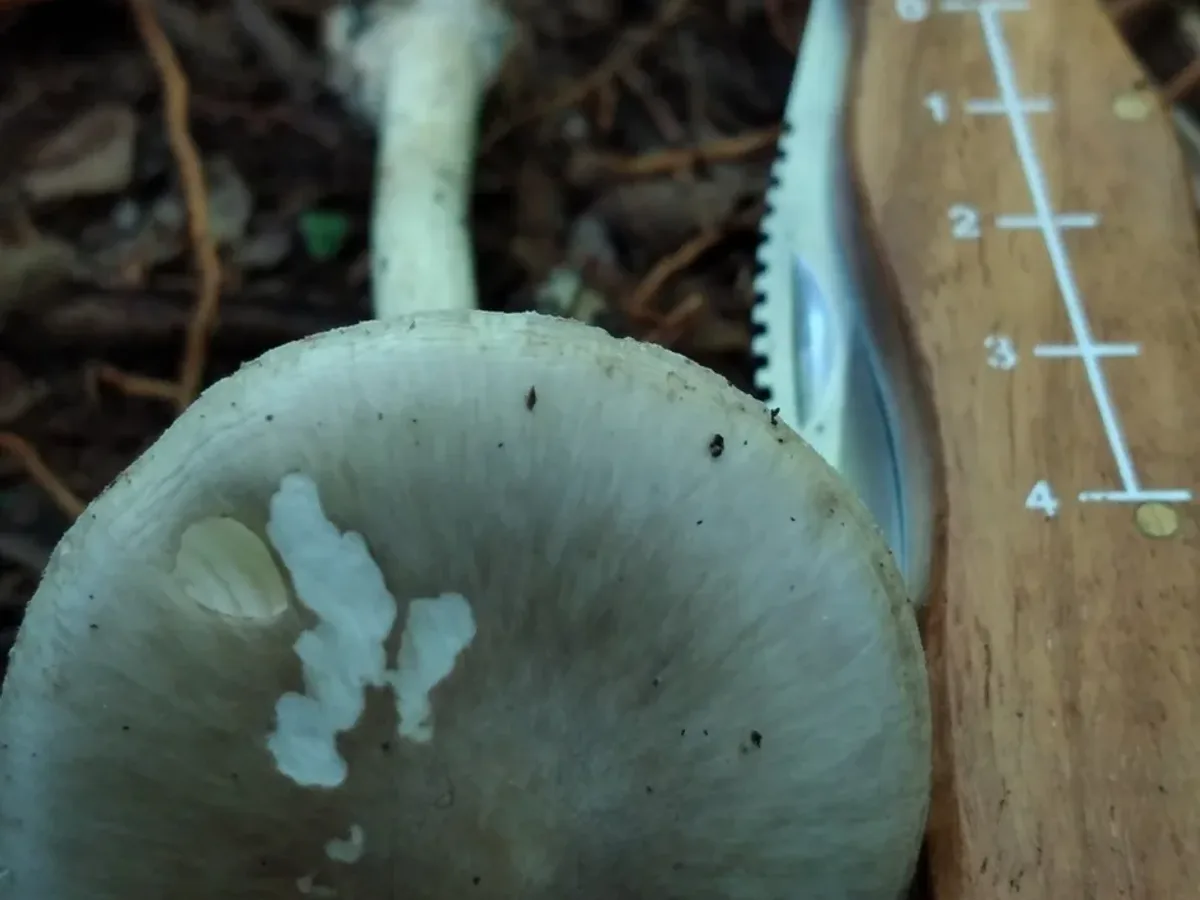 © Andrey Loria (CC BY)
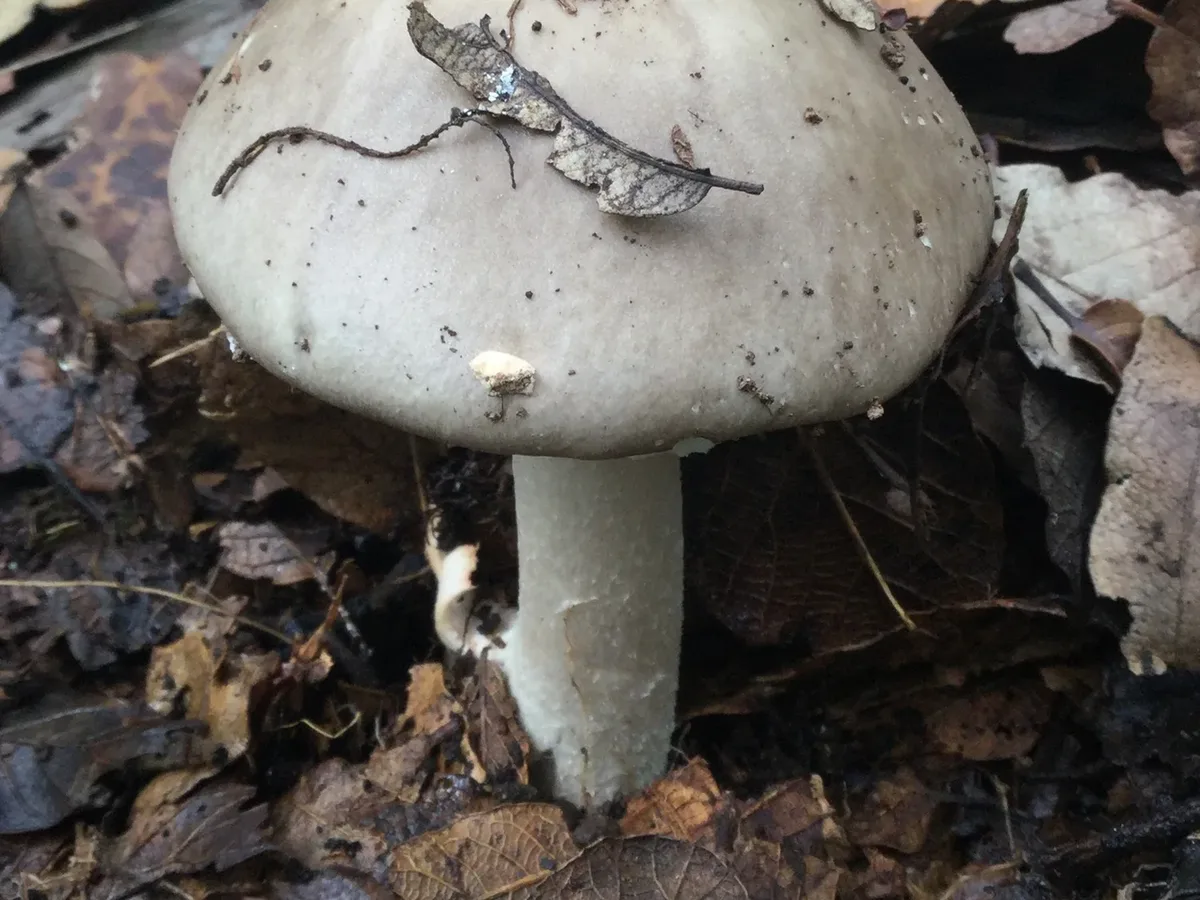 © Erick Vélez Sánchez (CC BY)
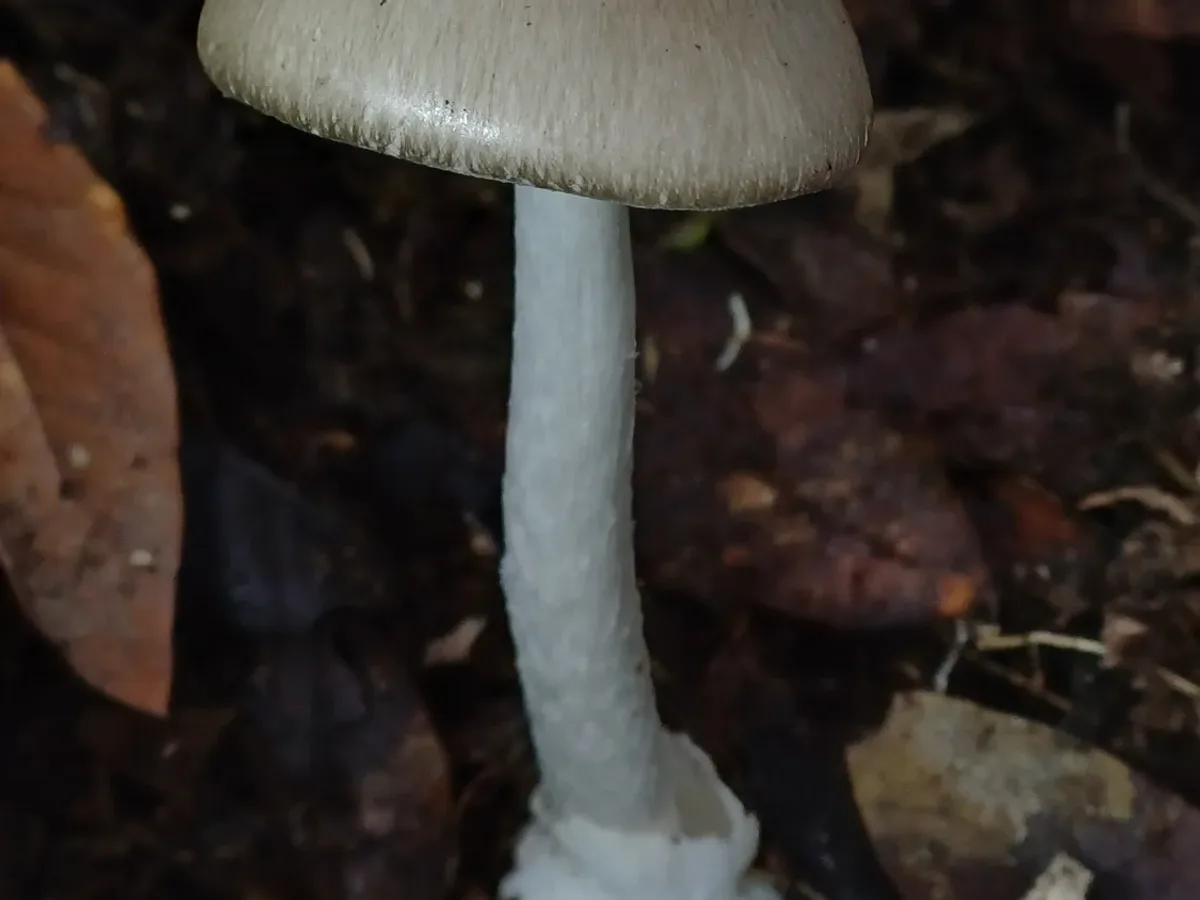 © Andrey Loria (CC BY)
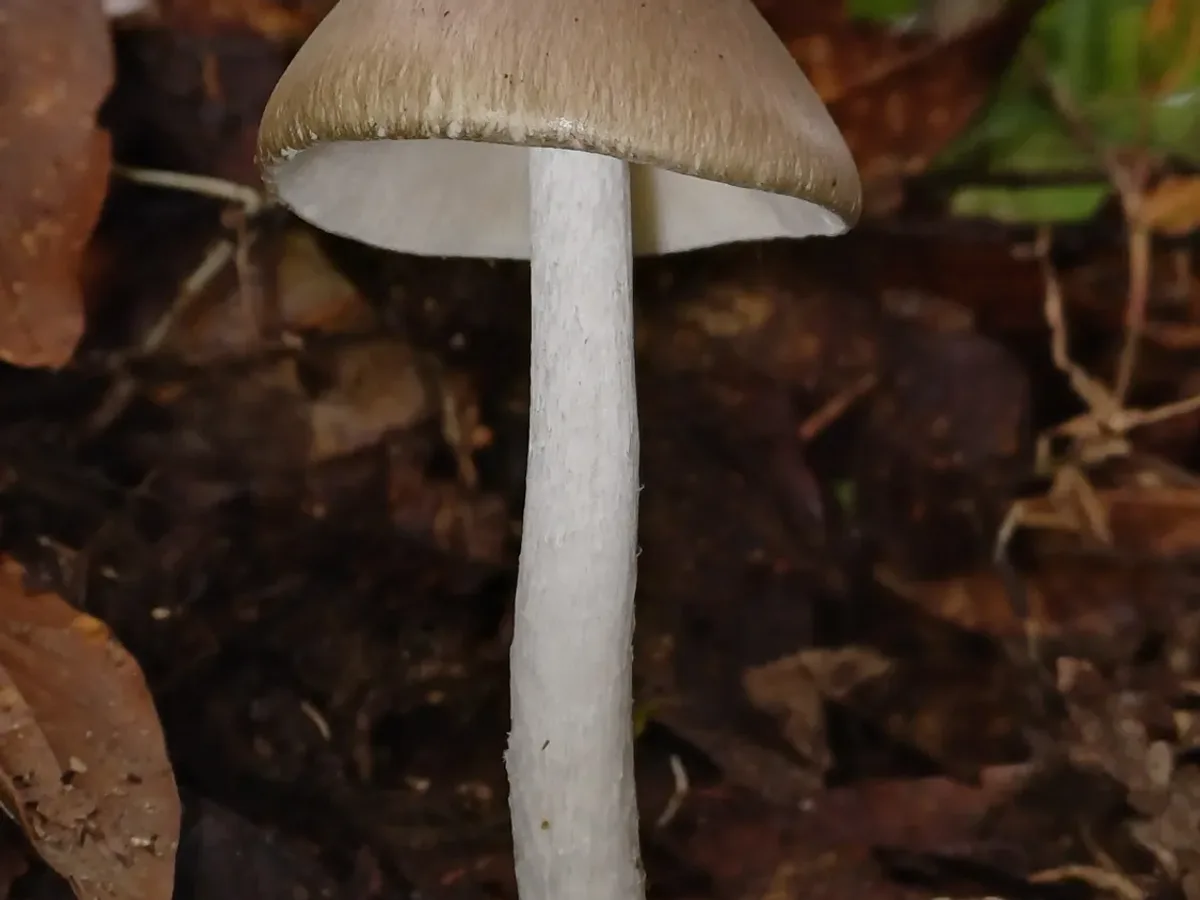 © Andrey Loria (CC BY)
 © Andrey Loria (CC BY)
 © Andrey Loria (CC BY)
 © Erick Vélez Sánchez (CC BY)
 © Erick Vélez Sánchez (CC BY)
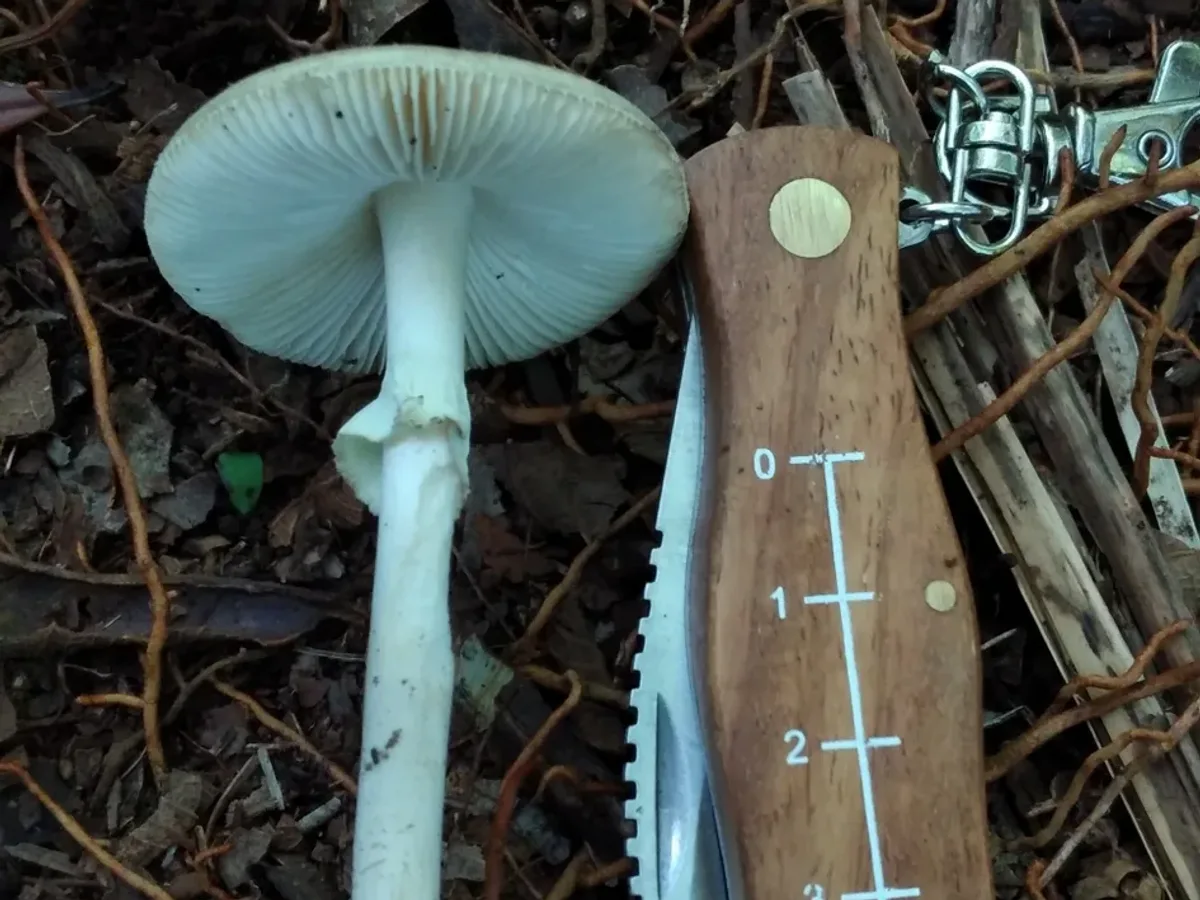 © Andrey Loria (CC BY)© Andrey Loria (CC BY)© Erick Vélez Sánchez (CC BY)
Toxic - and the most serious cases can be fatal. Never eat it, and wash your hands after handling.
Never eat a mushroom you are not 100% sure of - check the look-alikes below, and always cook wild mushrooms.
How to recognise it
Cap
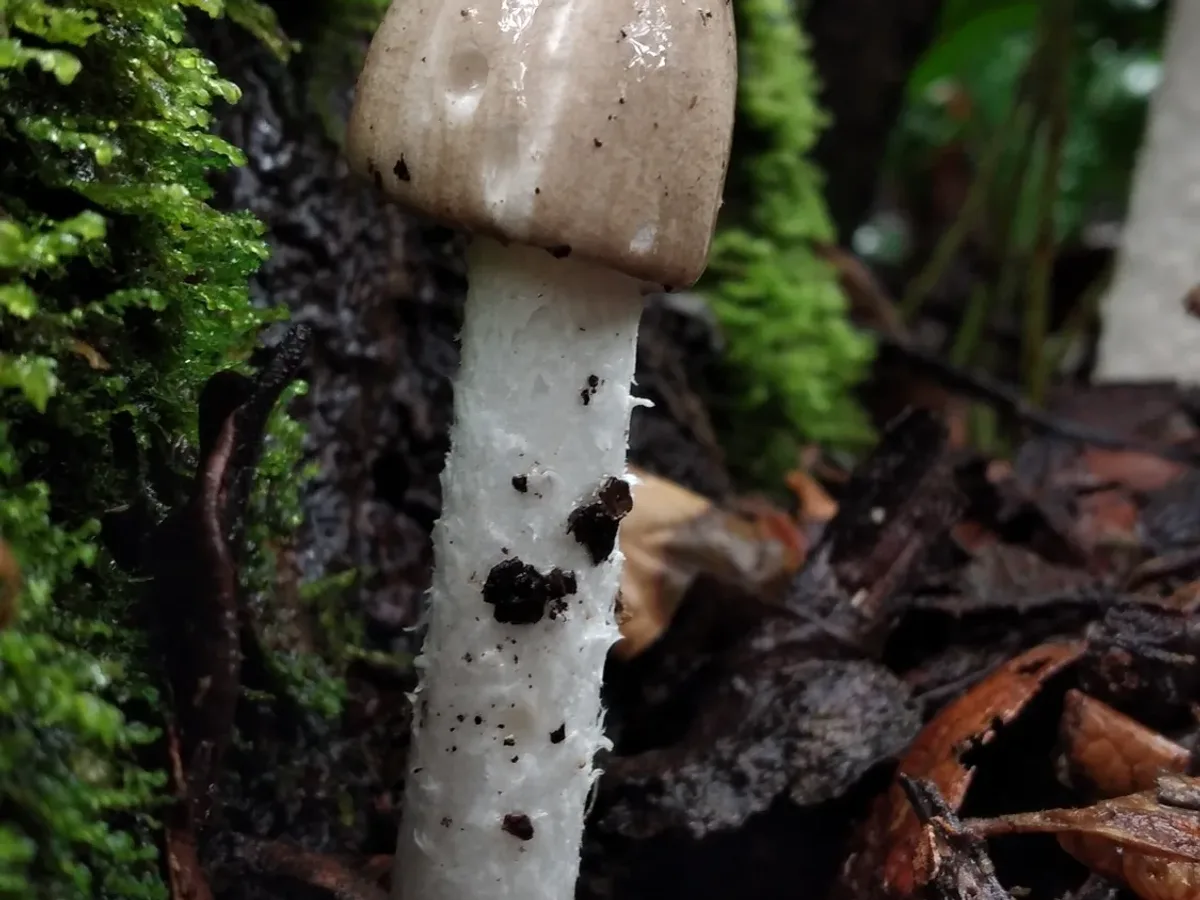
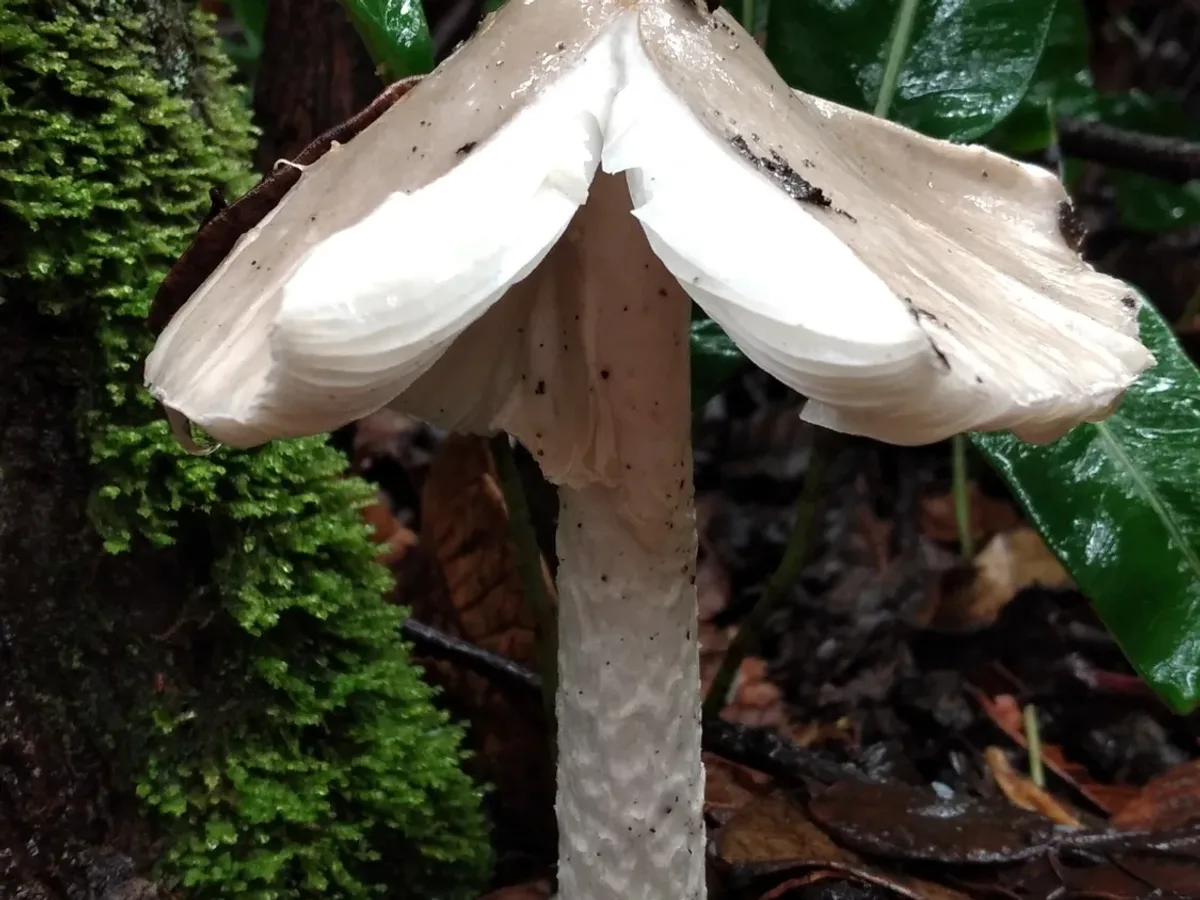
Cap 4-12 cm, convex at first then flattening, whitish to pale olive-grey or greenish-grey, smooth and somewhat viscid when moist, with radial fibrils giving a silky sheen.
Colour is unreliable as a sole field mark - pale white to yellow-green forms all occur.
Gills / Pores
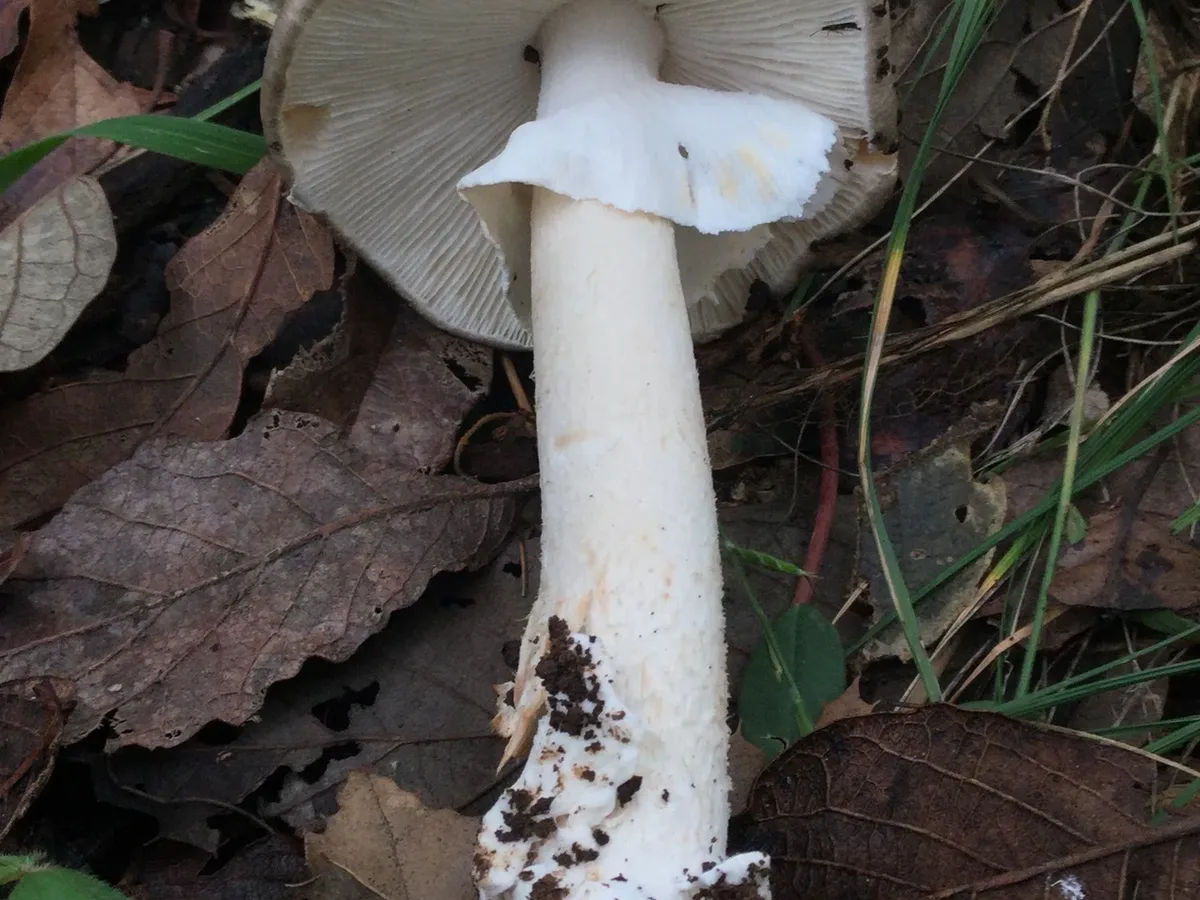
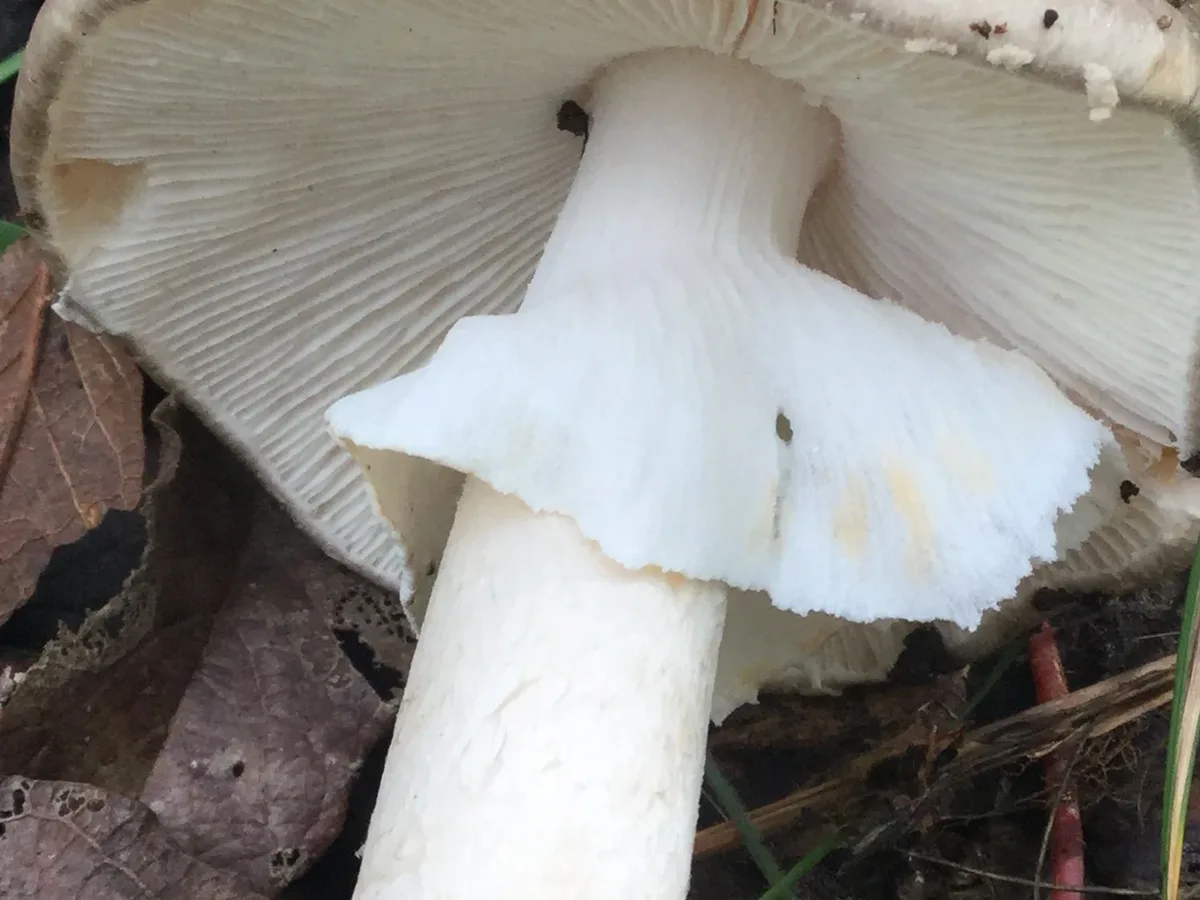
Gills white, free, crowded. Spore print white.
Stem
Stem 6-14 cm, white, bearing a fragile white pendant ring that may shred and collapse.
The bulbous base is wrapped in a sac-like white volva - the single most important feature - that is frequently buried and easily lost when the mushroom is pulled up carelessly.
Smell & taste
Odour is mild in fresh specimens; older ones develop a faint sweetish-unpleasant smell.
Why it's dangerous
Amanita arocheae is responsible for a significant proportion of fatal mushroom poisonings in Mexico and Central America. Because it grows in regions where edible Amanita and Volvariella species are traditionally harvested, the risk of misidentification is high.
Poisoning incidents have been documented in Oaxaca and other Mexican states, in Guatemala and Costa Rica, and in Colombia.
If any amount of arocheae has been eaten, call emergency services immediately - do not wait for symptoms. Bring the mushroom remains or a photograph.
Treatment requires:
- hospital admission
- IV fluids
- silibinin (silymarin)
- N-acetylcysteine
- in severe cases, liver transplantation
There is no antidote once liver failure begins.
Toxin
Amatoxins (principally alpha-amanitin), the same class of cyclopeptide toxins as in Amanita phalloides.
Alpha-amanitin inhibits RNA polymerase II, shutting down protein synthesis in liver and kidney cells.
Heat-stable: no cooking method renders the mushroom safe.
Symptoms
Latency 6-24 hours after ingestion. The delayed onset is characteristic and means victims often do not connect their illness with the meal.
- 1Phase 1 (6-24 h): severe nausea, vomiting, profuse watery diarrhoea and abdominal cramps.
- 2Phase 2 (1-3 days): apparent recovery - the patient may feel better, but liver and kidney damage is progressing silently.
- 3Phase 3: acute liver failure, coagulopathy, hepatic encephalopathy and renal failure; without intensive medical care death follows within 4-8 days.
A single mushroom can contain a lethal dose for an adult.
Staying safe
A single mushroom can deliver a lethal dose to an adult.
The 6-24 hour latency between eating and first symptoms means victims frequently do not connect the meal with the illness - do not wait for symptoms to appear before seeking help.
If there is any possibility of ingestion, call emergency services immediately and bring the mushroom or a photograph.
No preparation method - boiling, frying, drying, fermenting - removes the toxins.
In the field, never harvest any pale-gilled mushroom in Neotropical oak or cloud forest without fully exposing the base. The sac-like volva is the single most important safety character and is easily left in the ground if the fruiting body is snapped rather than dug.
Where & when it grows
Habitat
Mycorrhizal with oaks (Quercus) and tropical broadleaf hardwoods in montane and premontane cloud forests, from Mexico through Central America and into the northern Andes of South America.
It grows on well-drained mineral soils in both mature forest and forest edges, and can appear in coffee plantations or shaded gardens where native oaks remain.
When
The wet season in the Neotropics (broadly May-November), peaking at the height of the rainy season in June-September.
Altitude and local rainfall timing shift fruiting by weeks.
How it grows
Solitary or in small groups, emerging from a buried volva.
Mycorrhizal, so it recurs in the same spots around the same host trees year after year.
It often appears when the rains are well established and soil moisture and warmth are both high.
Fruiting conditions
Wet-season ectomycorrhizal fruiter; flushes follow sustained rainfall once soil is warm. At higher montane elevations (1500-2500 m) fruiting concentrates in June-September; at lower premontane sites it can extend from May through November.
Look-alikes
Young button-stage specimens can be confused with edible Volvariella volvacea (paddy straw mushroom), which also has a volva but lacks a ring and has pink gills and a brown-pink spore print.
Local edible Amanita species such as Amanita rubescens can superficially resemble arocheae at early stages, but rubescens reddens where damaged and has a non-saccate volva.
The introduced Amanita phalloides (European death cap) also occurs in South America around ornamental and planted trees. Both phalloides and arocheae are deadly and can be confused with each other; phalloides tends more greenish-yellow, arocheae more pallid-grey, but colour is unreliable.
Amanita virosa is entirely white and may co-occur with arocheae at higher altitudes and in cooler cloud forest. Both are deadly amatoxin producers. Virosa lacks any greenish-grey tint, is usually taller and more slender, and has a more cottony/shaggy stem surface. Any pure-white Amanita with a volva in Neotropical mountain forest must be treated as lethal.
Amanita phalloides has been introduced to South America around planted European oaks and ornamental trees. Both phalloides and arocheae are deadly amatoxin producers. Phalloides typically has a more greenish-yellow to olive cap with pronounced radial streaks; arocheae tends paler grey-white. Both are lethal - distinguishing them matters for taxonomy, not safety.
Amanita rubescens reddens distinctly wherever the flesh is damaged - scratch the cap, cut the stem, or press the gills and the flesh turns pinkish-red. Arocheae does not redden. Rubescens also has a non-saccate volva that breaks into patches at the base rather than a neat sac.
Edible Amanita species in the Caesareae group (e.g. Amanita jacksonii in Central America) have a bright orange-red cap and yellow gills, quite different from the pallid grey-white cap and white gills of arocheae. If any Amanita lacks the vivid orange-red colouration, assume it is not in this group.
Volvariella has a volva but NO ring on the stem, and its gills turn pink as spores mature, producing a pink-brown spore print. Amanita arocheae always has white gills, a white spore print, and a pendant ring. Fatal confusions have occurred when harvesters collected young arocheae buttons alongside straw mushrooms.
A reference guide - never an edibility guarantee. When in doubt, leave it out.