powdery Amanita
Amanita ananiceps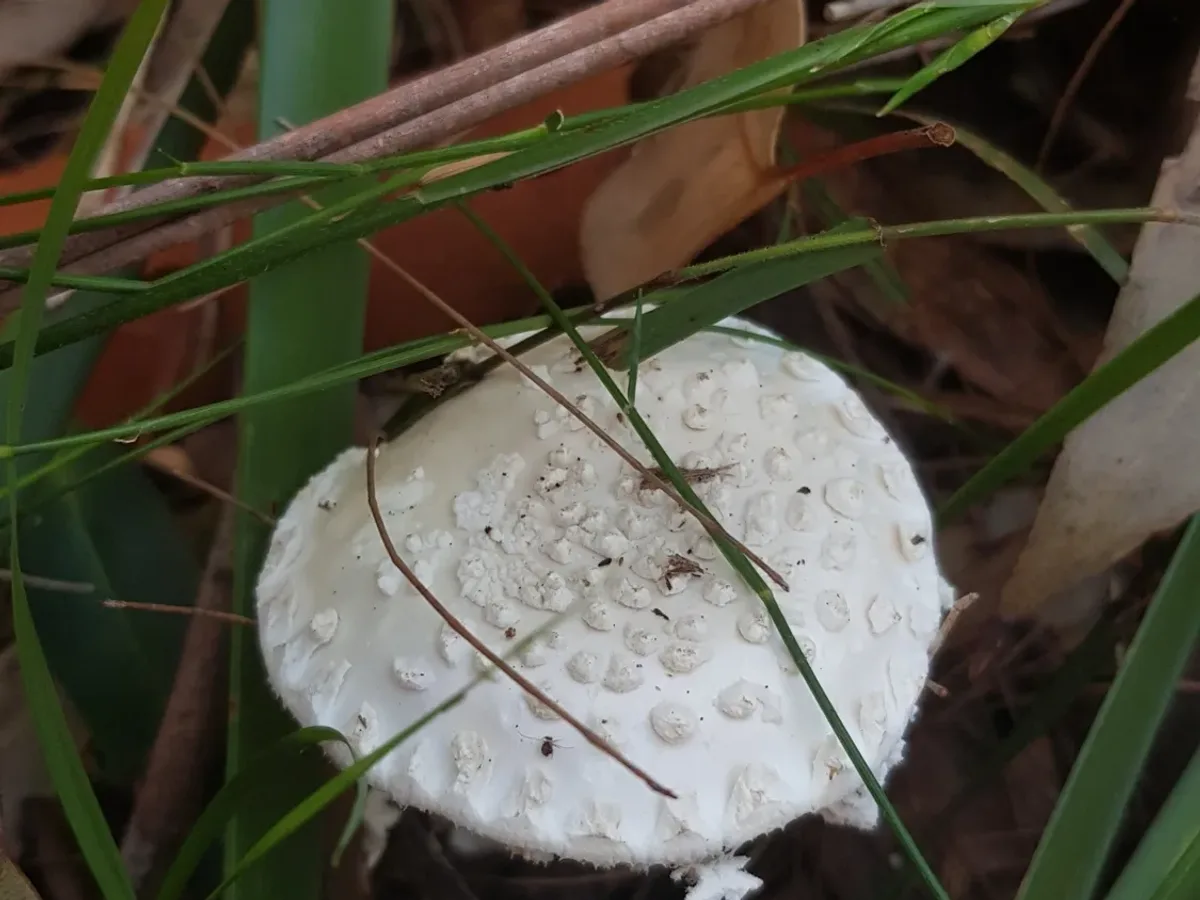 © Sofia Zvolanek (CC BY 4.0)
 © Sofia Zvolanek (CC BY)
 © Sofia Zvolanek (CC BY)
 © Jean Lightfoot (CC BY-SA)
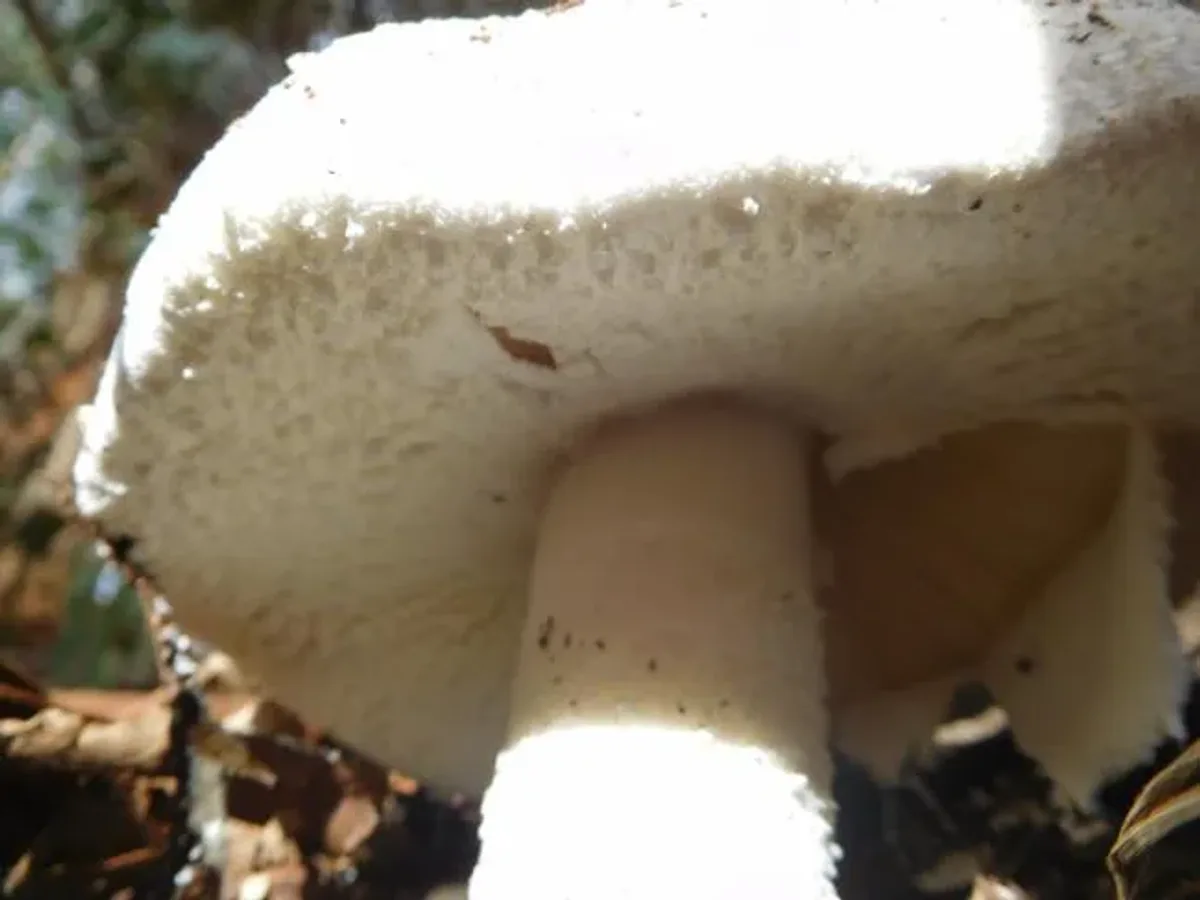 © Jean Lightfoot (CC BY-SA)
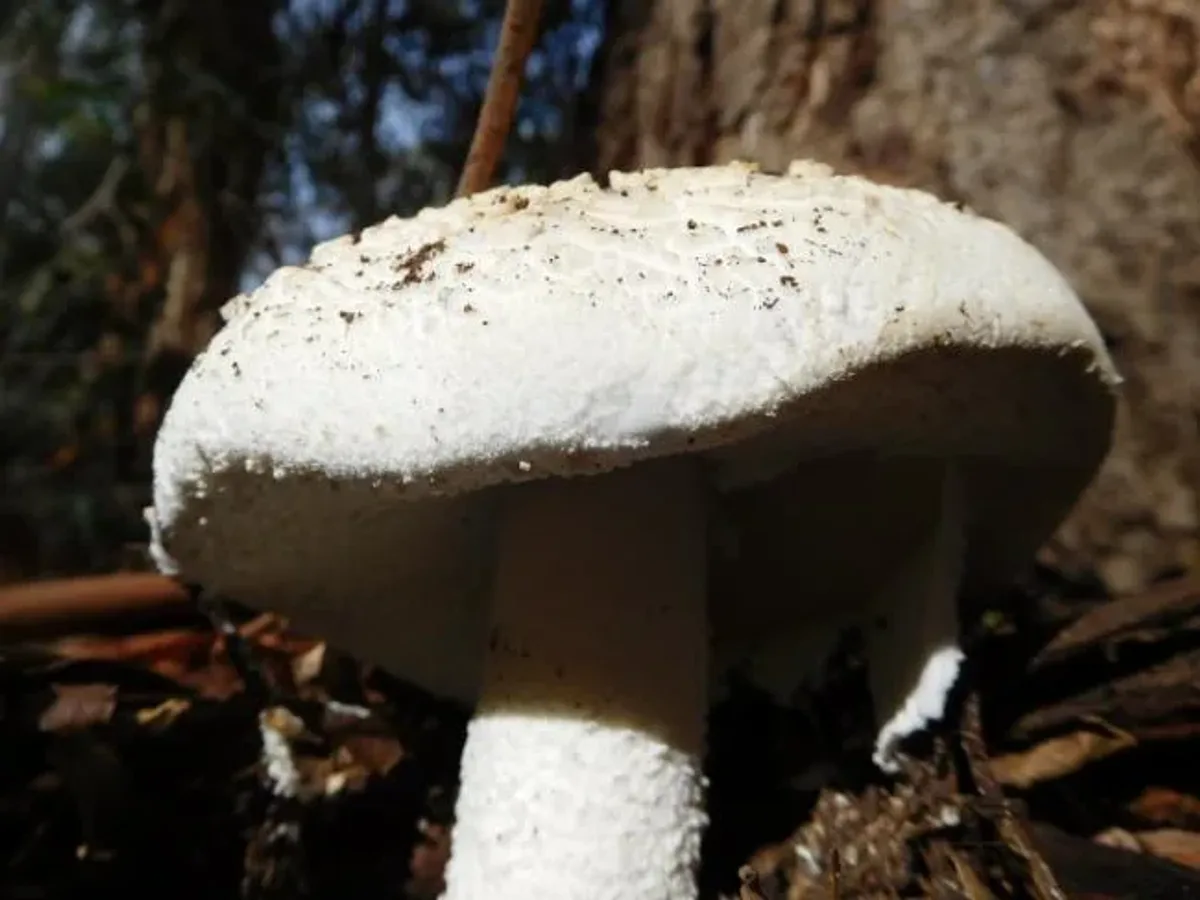 © Jean Lightfoot (CC BY-SA)
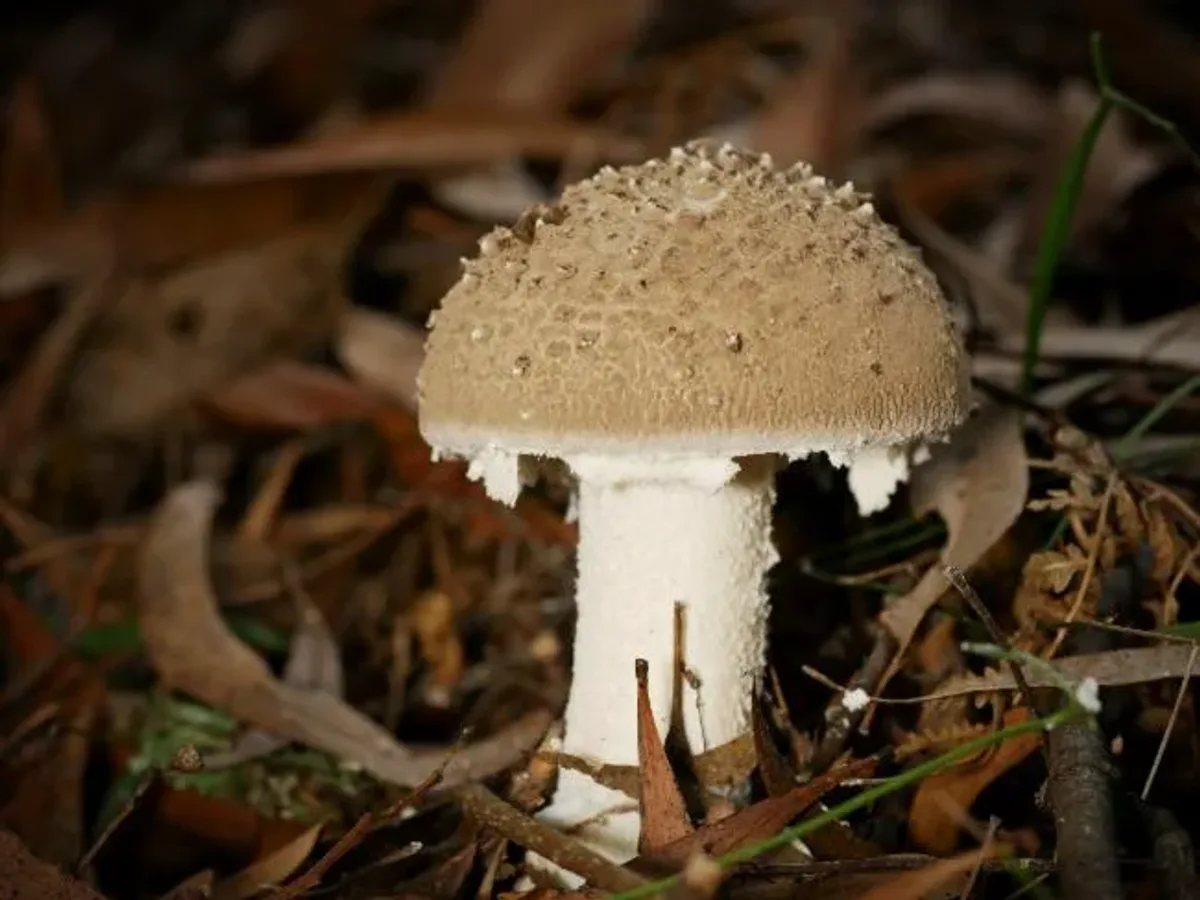 © Torbjorn von Strokirch (CC BY)
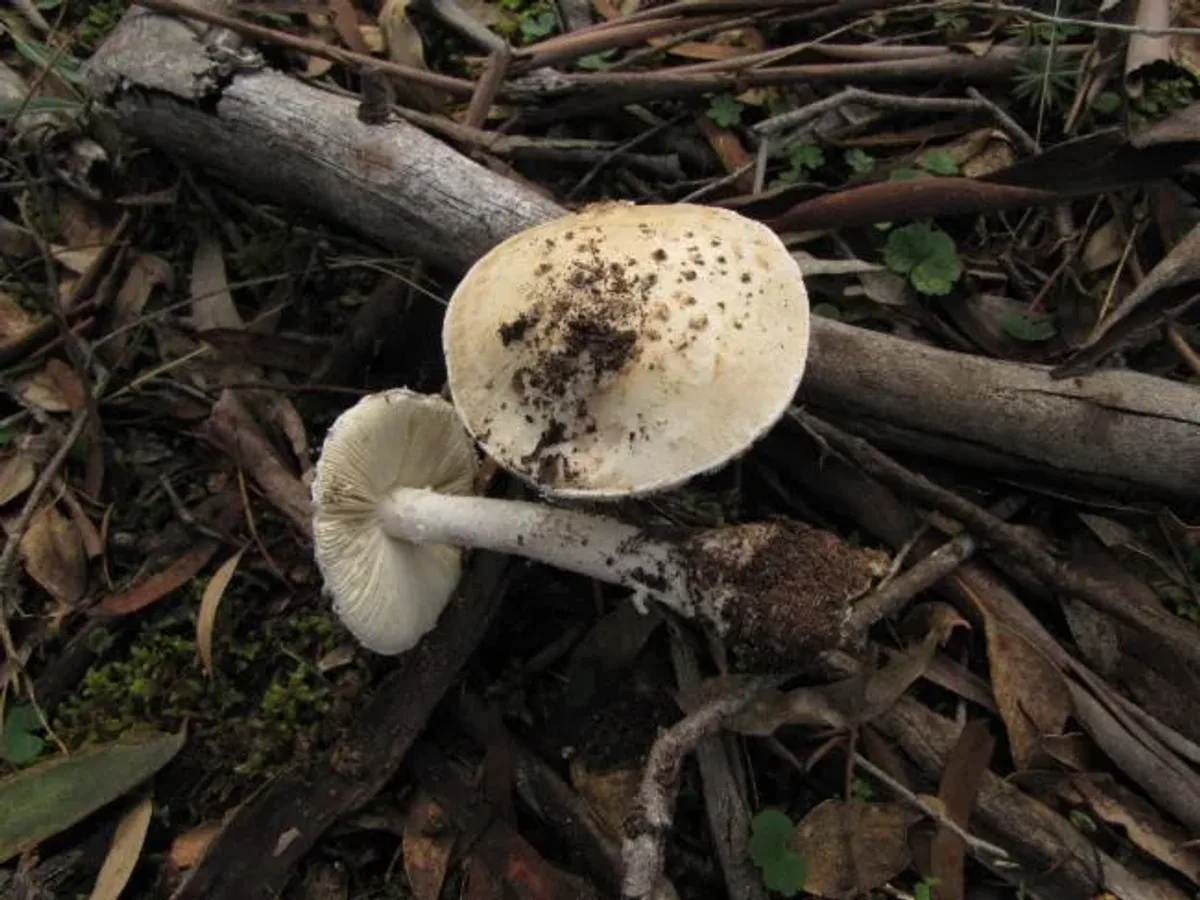 © Dave Munro (CC BY)
 © Dave Munro (CC BY)© Sofia Zvolanek (CC BY 4.0)© Sofia Zvolanek (CC BY)
Edible only with the right preparation - or safe for some people but not others. Learn the caveats first.
Never eat a mushroom you are not 100% sure of - check the look-alikes below, and always cook wild mushrooms.
How to recognise it
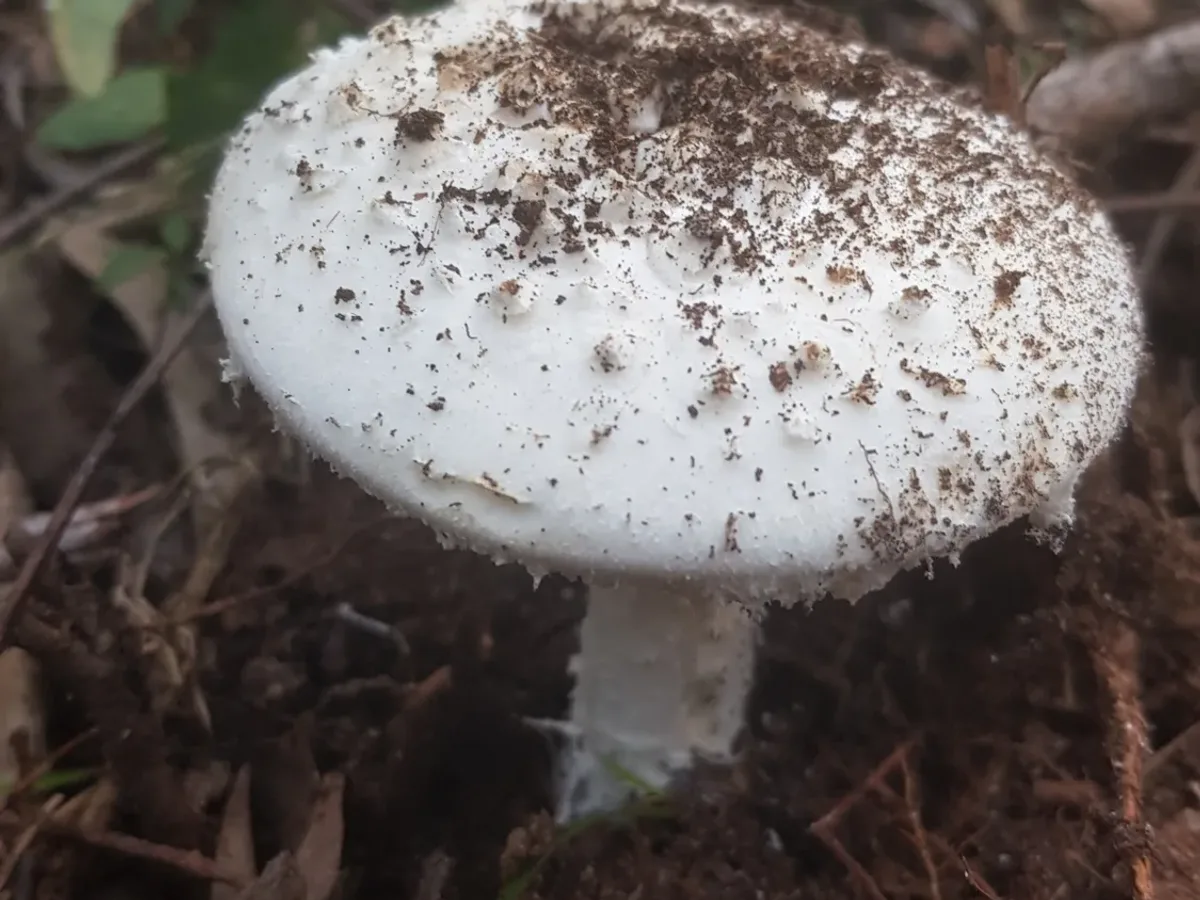
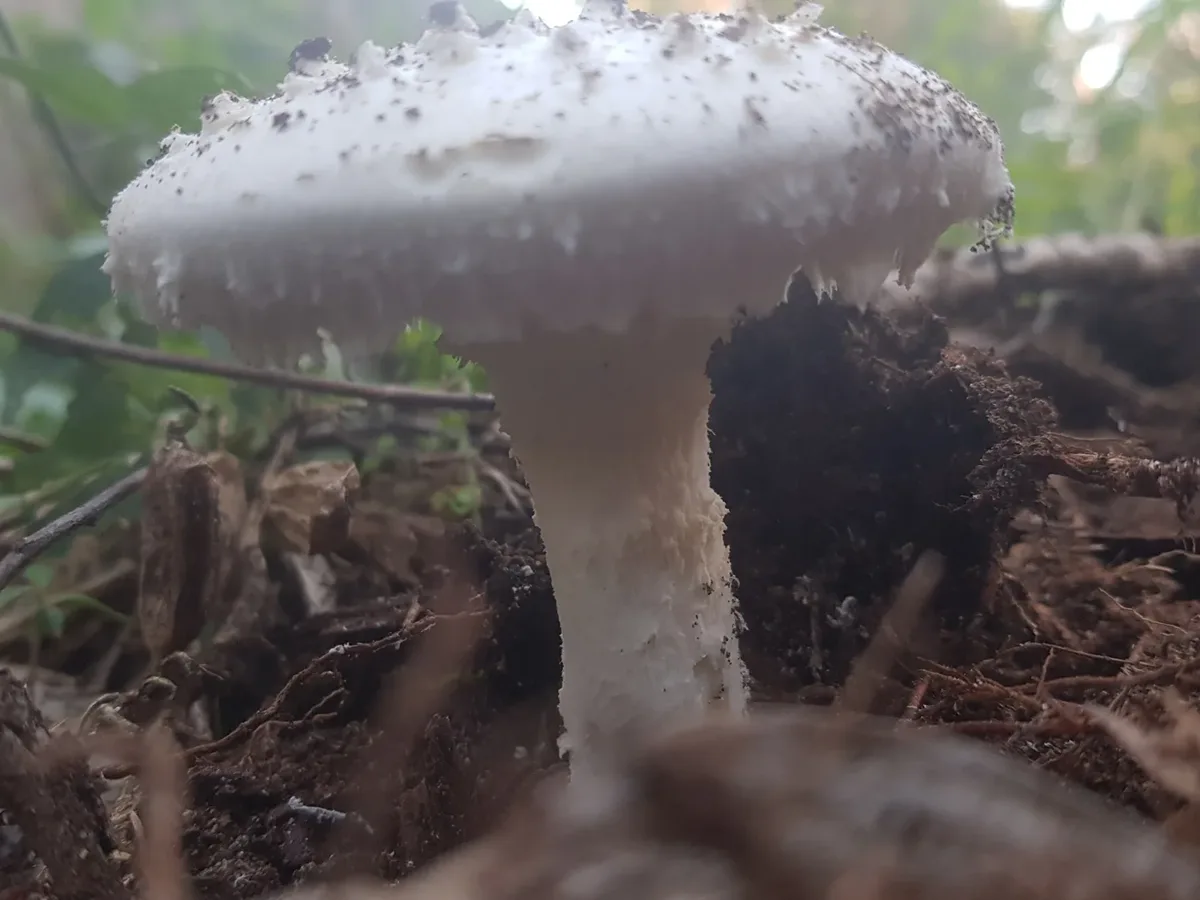
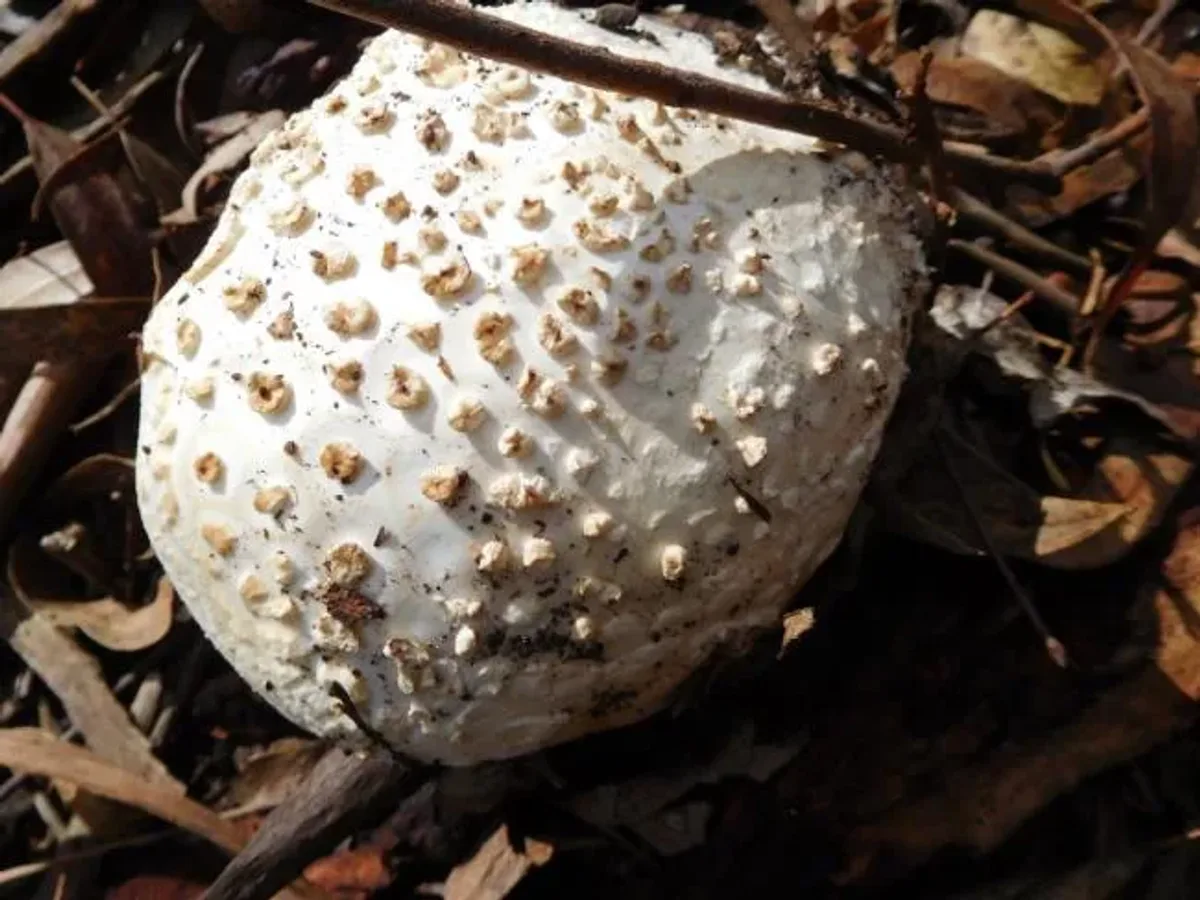
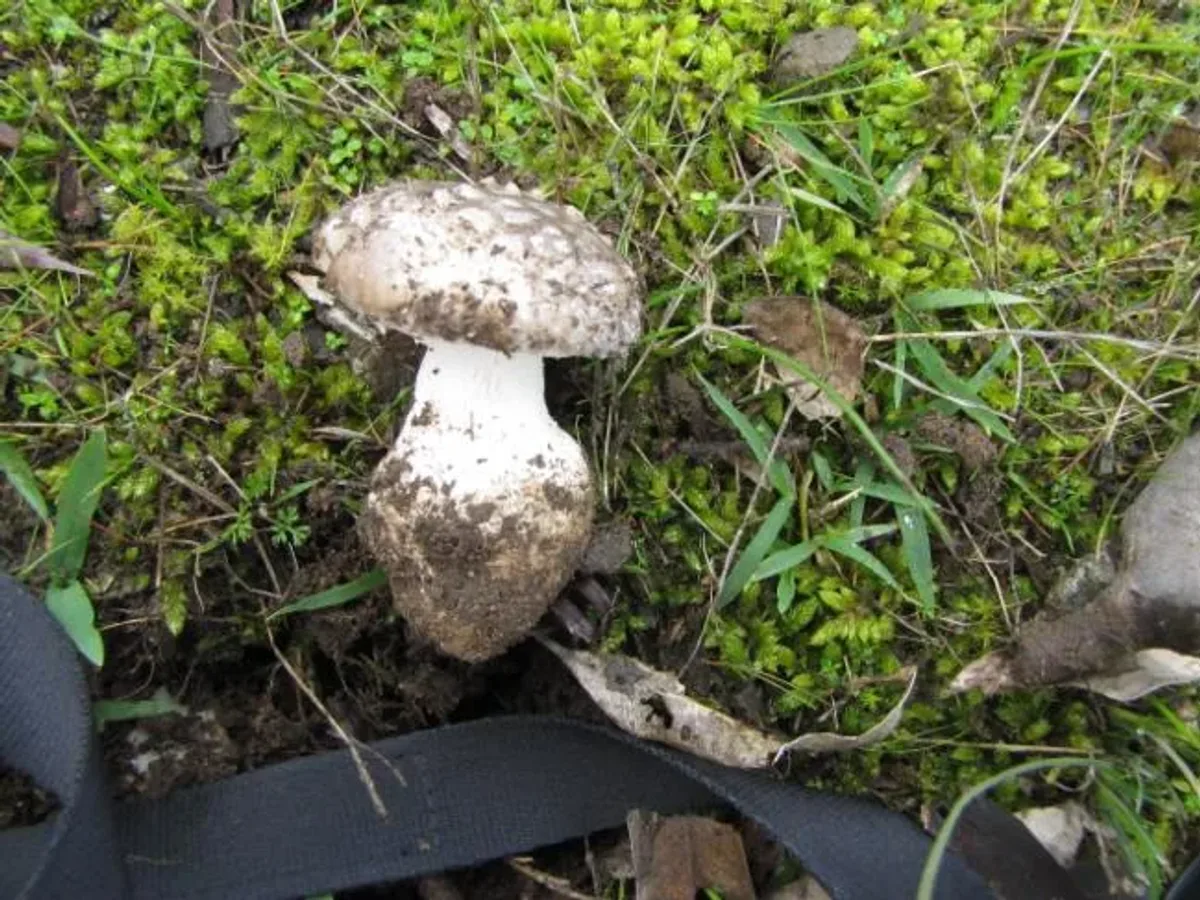
Amanita ananiceps is a medium-sized, wholly white Amanita distinguished by the dense powdery to mealy coating on both its cap and stem.
Cap
The cap begins as a rounded globe and expands to broadly convex or flattened, remaining white to cream-white throughout. The farinose (floury) surface texture persists into maturity but can be rubbed off or washed away by heavy rain.
Gills
White, free, and crowded.
Stem
The stem is stout, white, and mealy-granular, with a pendant membranous ring that is often fragile.
Most importantly, the stem base arises from a buried volva - a sac-like white cup in the soil. This volva may require careful digging to expose, and its presence is critical for identification.
Flesh
White, firm, and does not stain on cutting. Spore print is white.
Why it's dangerous
Amanita ananiceps is principally hazardous as a lookalike hazard for more lethal white Amanita species. In native Australian bushland and New Zealand forests, it co-occurs with potentially deadly native Amanita species.
Any white Amanita with a volva in the southern hemisphere must be treated with the same caution as the death cap.
Do not eat white-capped, volva-bearing Amanitas from the southern hemisphere under any circumstances without expert mycological confirmation.
Toxin
The precise toxin profile of Amanita ananiceps is not fully characterised in the published literature. Its placement in Amanita section Lepidella associates it with a group known to contain gastrointestinal irritants and, in some species, ibotenic acid and muscimol.
Gastrointestinal irritants cause acute nausea, vomiting, cramps, and diarrhoea without the organ-damaging delayed toxicity of amatoxins.
However, given the incompleteness of toxicological data and the risk of misidentification as an amatoxin-containing species, the danger must be rated as significant. The mushroom is not cleared for consumption.
Symptoms
If Amanita ananiceps is consumed, the expected presentation based on section Lepidella chemistry would be gastrointestinal, beginning 30 minutes to 3 hours after ingestion:
- Nausea
- Abdominal cramps
- Vomiting
- Diarrhoea
These symptoms are usually self-limiting but can cause significant dehydration.
However, because this species can be confused with amatoxin-containing Amanita species, any person who has consumed a white Amanita with a volva should seek emergency medical evaluation immediately and not wait to see what symptoms develop.
Amatoxin poisoning has a deceptive latent phase of 6-24 hours - by the time gastrointestinal symptoms appear from the wrong identification scenario, serious organ damage may already be occurring.
Staying safe
This species must be treated with extreme caution. Amanita ananiceps belongs to section Lepidella, a group that includes species with a range of toxic compounds.
While its specific toxin content has not been exhaustively documented, section Lepidella contains species known to produce gastrointestinal irritants and potentially ibotenic acid or related compounds.
The broader principle applies here: no white Amanita with a volva should be eaten unless its identity has been confirmed beyond doubt by a qualified mycologist - and even then, eating it is inadvisable given the section's variable and incompletely characterised chemistry.
Additionally, its close superficial resemblance to deadly amatoxin-containing Amanita species makes any misidentification life-threatening. Treat any fully white, ring-bearing, volva-bearing Amanita as potentially deadly until proven otherwise.
Where & when it grows
Habitat
A native Australian species recorded across south-eastern Australia - New South Wales, Victoria, South Australia, and Tasmania - and also from New Zealand.
It grows in dry sclerophyll eucalyptus forest and open woodland, heathland, and occasionally mixed forest.
Like all native Australian Amanitas, it partners with native ectomycorrhizal trees rather than exotic plantings, so it turns up deep in native bushland far from any introduced oaks or chestnuts.
This matters: unlike the introduced death cap, which mainly appears under exotic trees in parks and gardens, this species is at home in undisturbed bush - places where foragers may feel more confident. That confidence is misplaced.
Dangerous native Amanitas, including this species and Amanita marmorata, share the same native-forest habitat as edible fungi.
When
Autumn to early winter, March through July in the Southern Hemisphere, with peak fruiting in April and May.
Fruiting follows the onset of autumn rains combined with cooling soils.
Dry autumn years produce sparse or delayed flushes; heavy early autumn rains after a dry summer typically trigger the best fruiting.
How it grows
Mycorrhizal with native Australian Eucalyptus and related Myrtaceae, and also forming associations with Nothofagus and possibly Pinus in New Zealand.
Fruit bodies emerge singly or in small scattered groups from the soil.
The base and volva are often largely buried and concealed under leaf litter - careful excavation is needed to expose the full mushroom. This partly-buried habit means the volva is easily missed, especially in duff-covered forest floors.
Fruiting conditions
Autumn fruiter in the Southern Hemisphere; flushes follow post-summer rains as soil temperatures fall below approximately 19 °C. Peak April-May.
Look-alikes
The greatest danger is confusion with deadly Amanita species sharing white coloration and a volva. All of the following are potentially deadly and can superficially resemble A. ananiceps:
- Amanita phalloides (death cap) in its white-capped forms
- Amanita virosa (destroying angel)
- Native Australian amatoxin-containing Amanita species (such as A. marmorata)
The mealy-powdery coating on the cap and stem is the most distinctive feature of A. ananiceps, and it can help distinguish it from A. phalloides (which is usually smooth and often tinged greenish) - but relying solely on surface texture is unsafe.
Among edible lookalikes, various white field mushrooms (Agaricus species) may be confused with it by beginners, though these have pink-to-brown gills and a dark spore print and lack a volva entirely.
White puffballs superficially resemble the egg stage of young Amanita ananiceps, but puffballs show a homogeneous white interior when sliced - Amanita eggs, when sliced vertically, reveal the outline of the developing cap, gills, and stem inside.
The introduced death cap shares a white volva, white ring, white gills, and white spore print. White forms of A. phalloides closely resemble A. ananiceps. Key differences: A. phalloides typically has a smooth, non-mealy cap surface and is more commonly yellowish-green to pale olive-brown; A. ananiceps has a distinctively powdery-mealy (farinose) cap and stem surface. A. phalloides is primarily found under introduced exotic trees such as oaks and sweet chestnuts; A. ananiceps grows under native eucalypts. Both differences are subject to variation and should not alone be used to rule out lethality.
The European destroying angel is pure white with a more conical cap that rarely fully flattens, and a smooth to slightly silky (not mealy) cap surface. Both have a prominent volva and pendant ring. A. ananiceps has the diagnostic powdery-mealy coating. Both are treated as deadly.
Another native Australian dangerous Amanita. A. marmorata has a white to grey cap with irregular grey-brown marbling (patchy velar remnants forming a mottled pattern), not the uniform powdery mealy coating of A. ananiceps. Both arise from a buried white volva. Both should be treated with extreme caution.
The field mushroom has no volva, pink gills when young (turning chocolate-brown at maturity), a dark-coloured (brown-black) spore print, and often a pleasant mushroomy or anise odour. A. ananiceps has white gills throughout, a white spore print, and the distinctive buried volva. Always check the spore print colour and dig up the base before concluding any white mushroom is an Agaricus.
Young Amanita fruit bodies emerging from the soil resemble white eggs. Puffballs are round and solid; when sliced vertically they show completely homogeneous white flesh throughout. A young Amanita, sliced vertically, reveals the outline of the future cap, gills, and stem developing inside. Never eat any white egg-shaped ground mushroom without slicing it to confirm it is a true puffball.
A reference guide - never an edibility guarantee. When in doubt, leave it out.