Sheep polypore
Albatrellus ovinus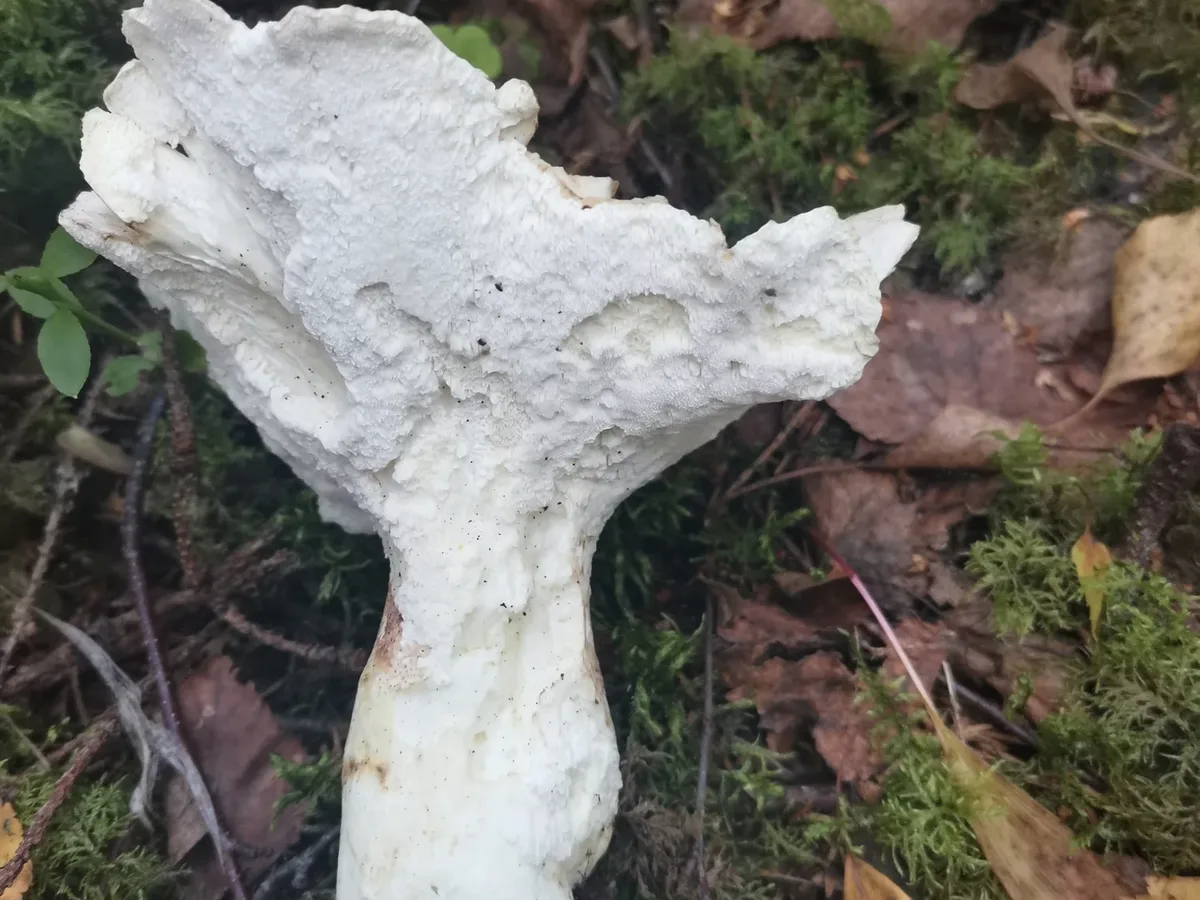 Ilkka Kaita-aho (CC0)
 © Arttu Hallberg (CC BY 4.0)
 © Nils Edvard Stokke (CC BY)
 © Inger-Lise Fonneland (CC BY)
 © Ulrik Andreassen (CC BY)
 © Ulrik Andreassen (CC BY)
 © Siv Moen (CC BY)
 © Rob Foster (CC BY 4.0)
 Ilkka Kaita-aho (CC0)
 © TheAdventurer (CC BY 4.0)
 © Arttu Hallberg (CC BY 4.0)
 © Rob Foster (CC BY 4.0)Ilkka Kaita-aho (CC0)© Arttu Hallberg (CC BY 4.0)
Good to eat, once you have identified it with certainty and cooked it through.
How to recognise it
Cap
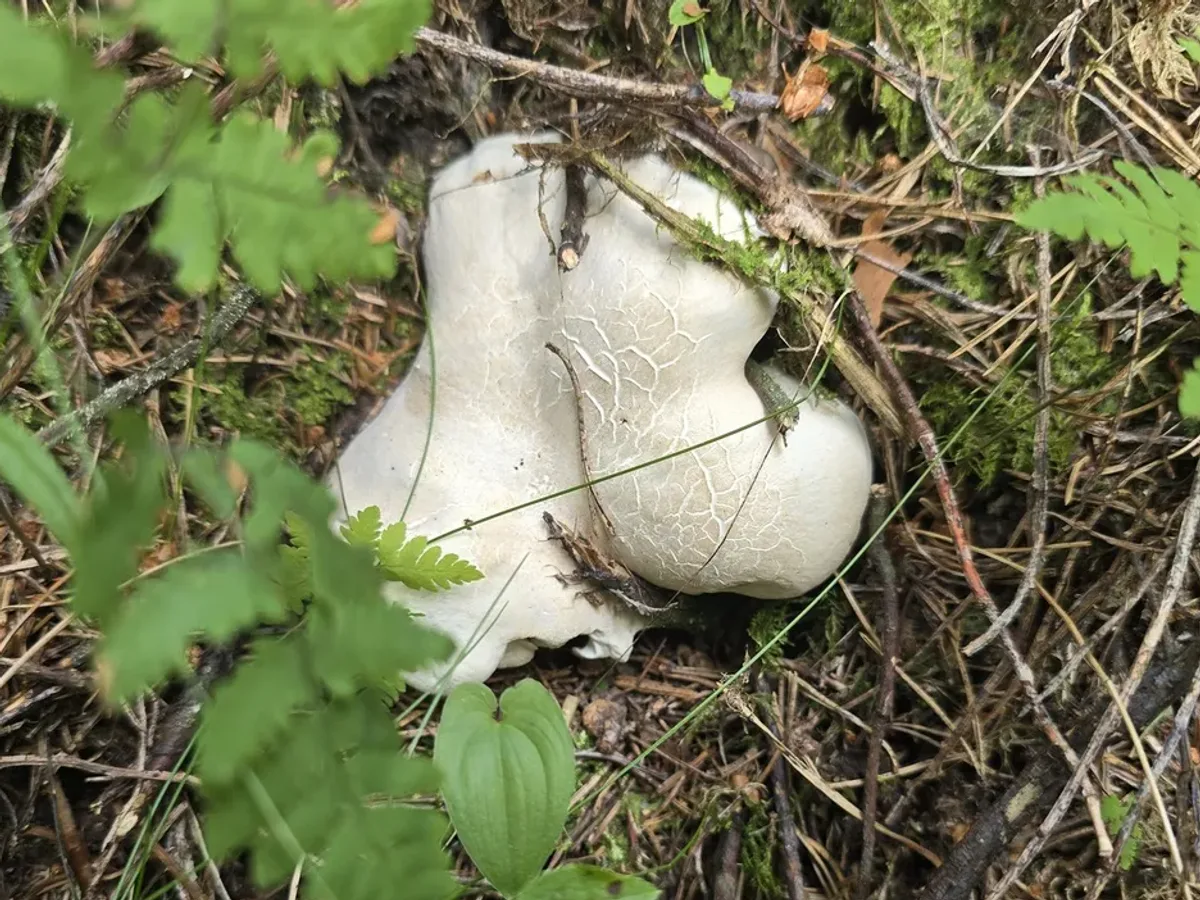
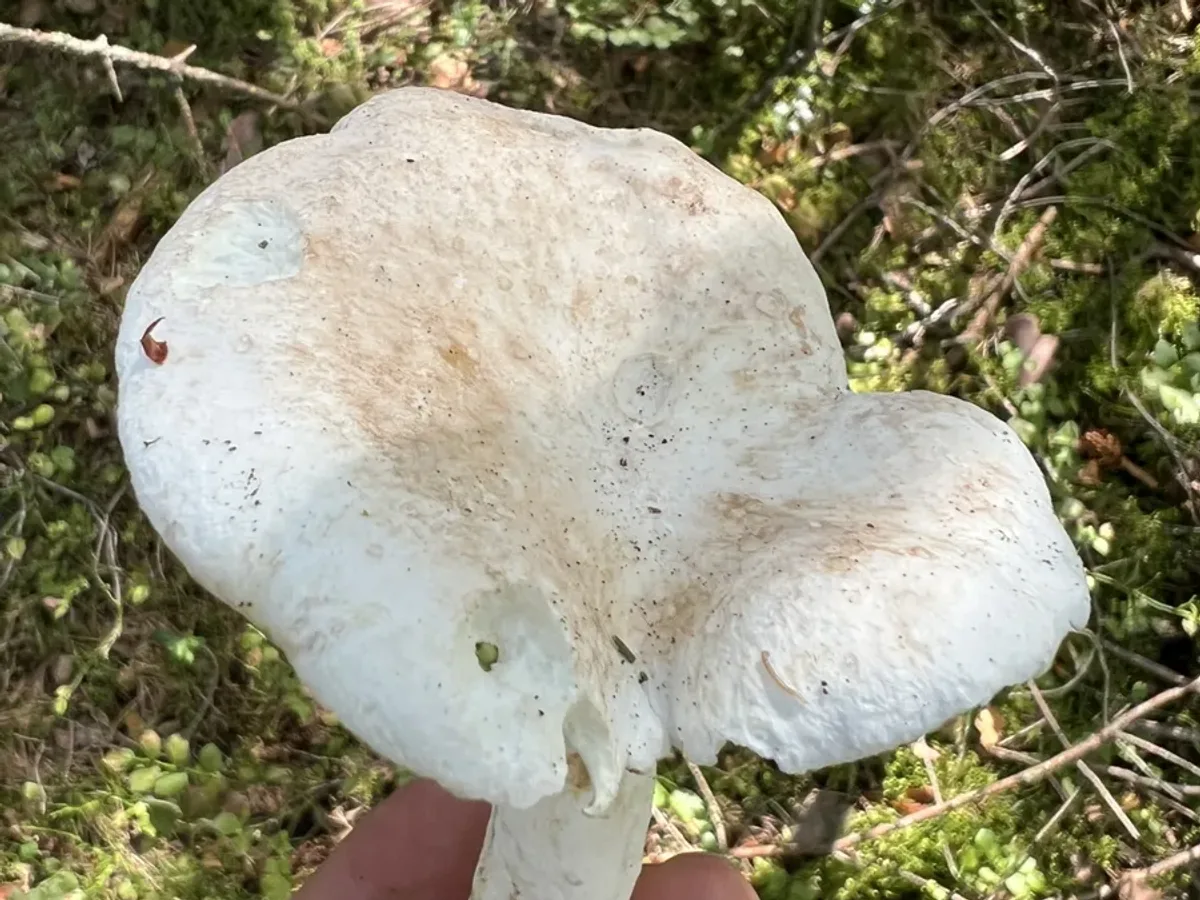
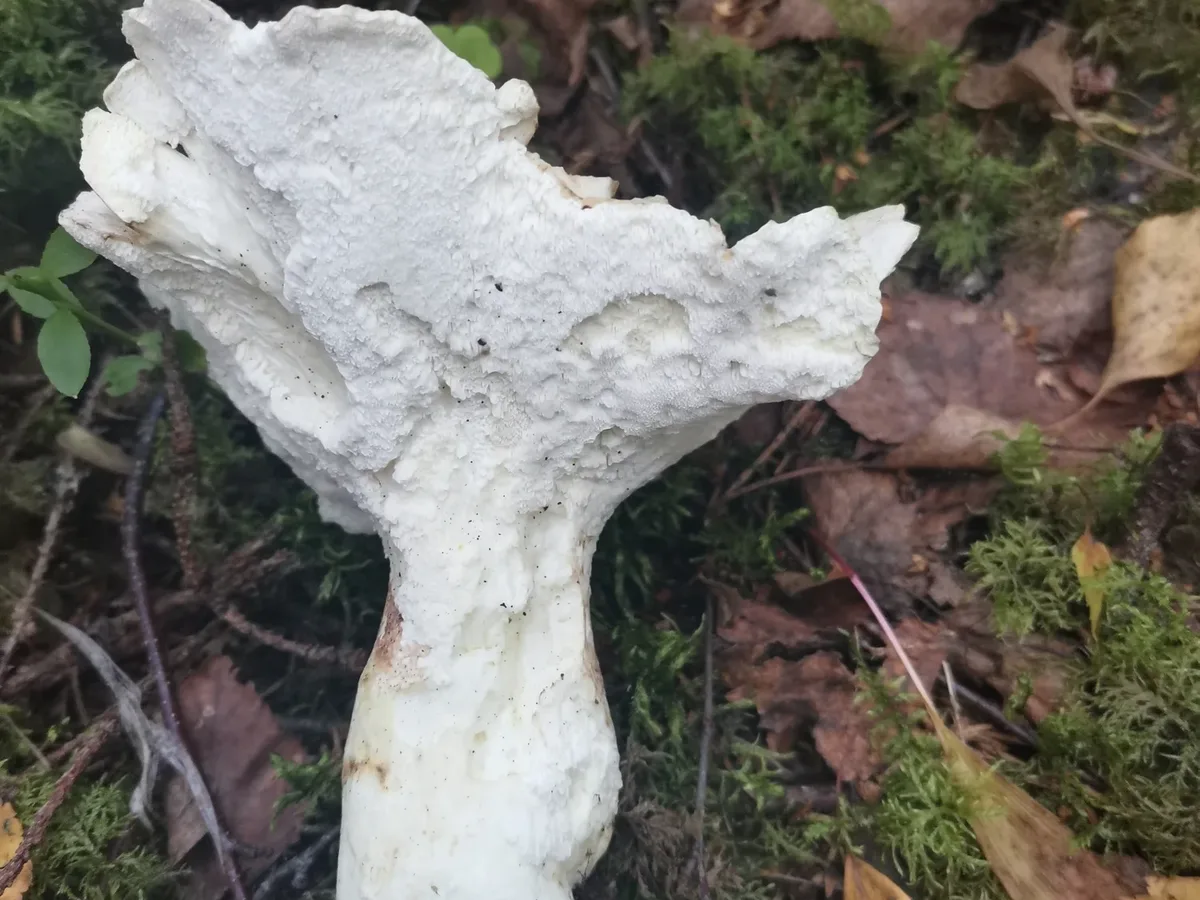
The sheep polypore builds a substantial fruiting body - caps regularly reach 15 cm and occasionally push past 20 cm on well-fed spruce roots. Young caps emerge convex and almost porcelain-white, the surface smooth and slightly greasy to the touch.
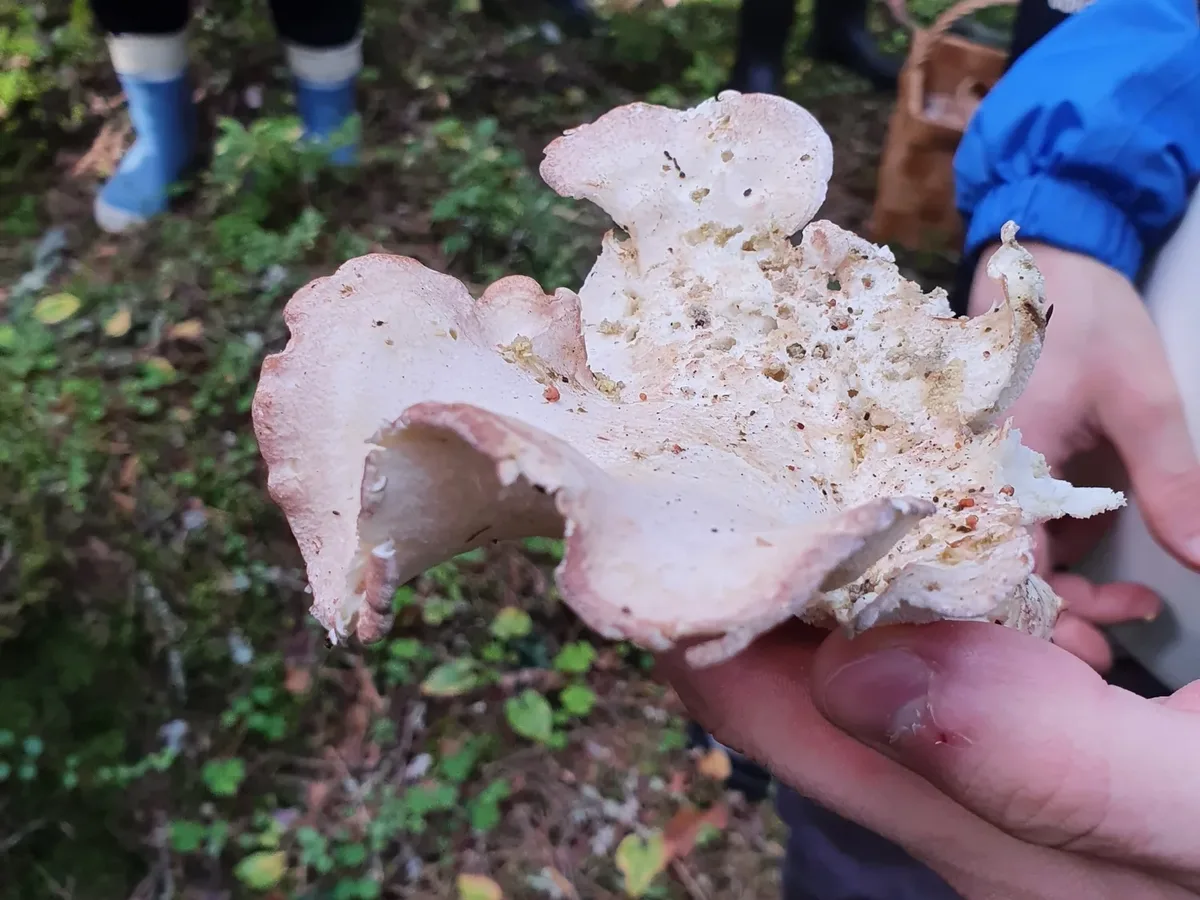
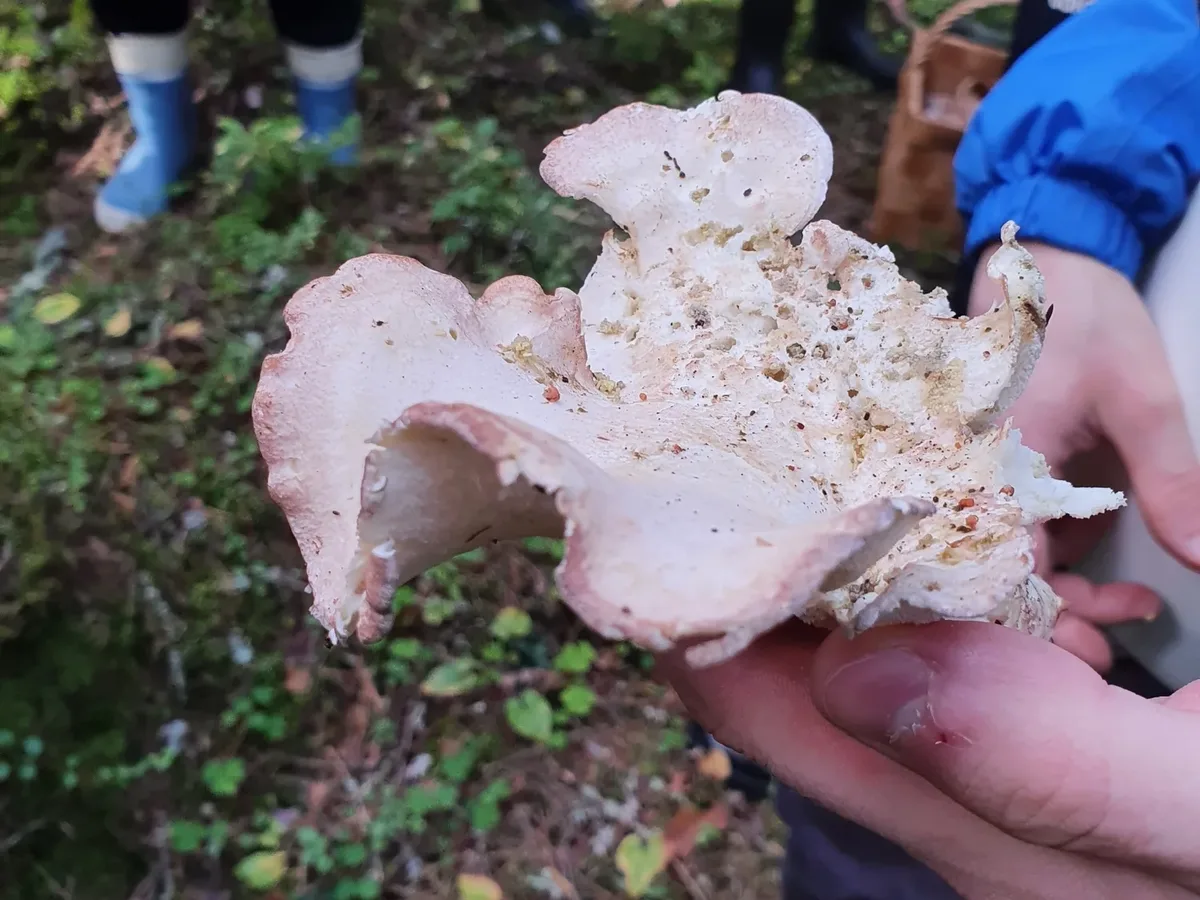
As the cap expands and flattens, it shifts through cream into grey-brown or pale buff, often developing an uneven, wavy margin. Age and desiccation bring the most distinctive cosmetic change: the surface cracks into irregular patches that give the cap a faintly scaly, almost reptilian look, and spots or flushes of lemon-yellow appear - especially toward the centre.
Gills / Pores
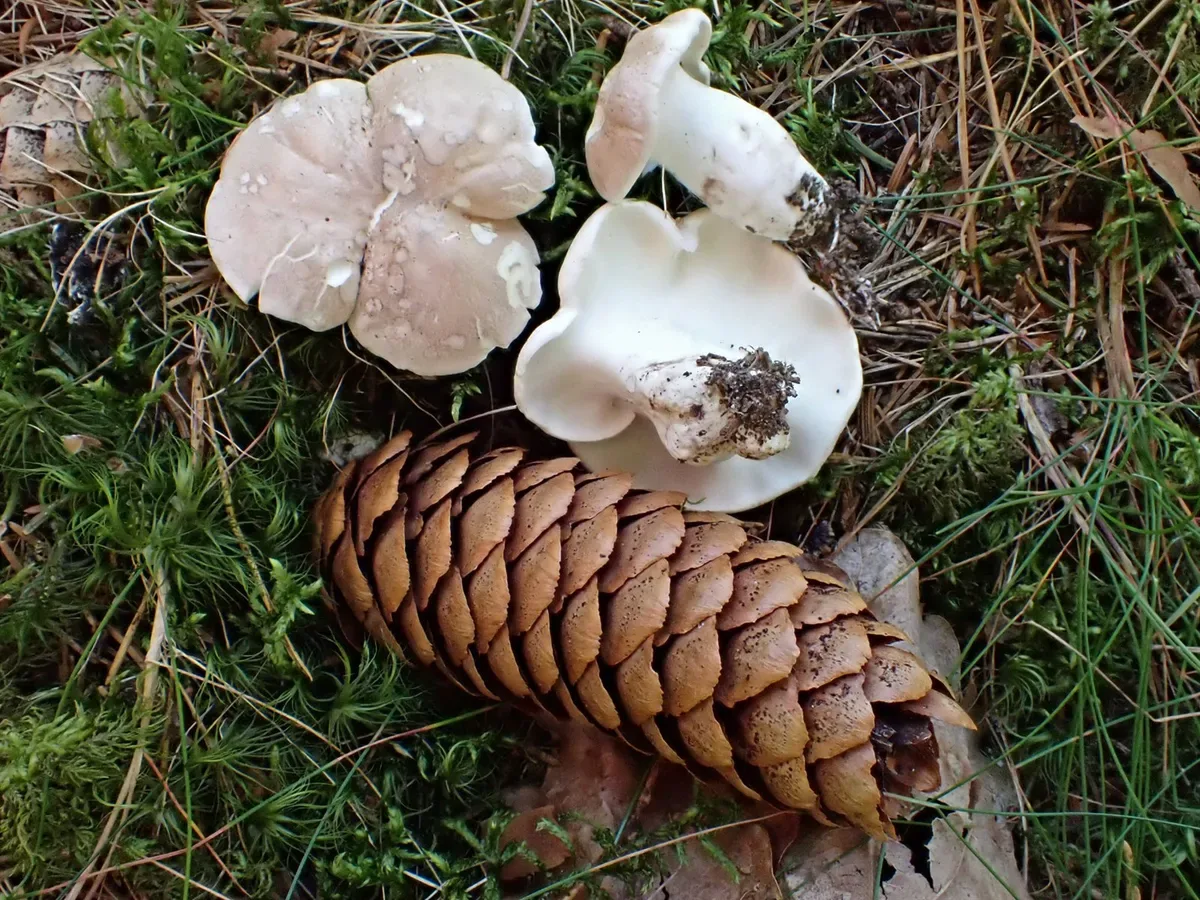
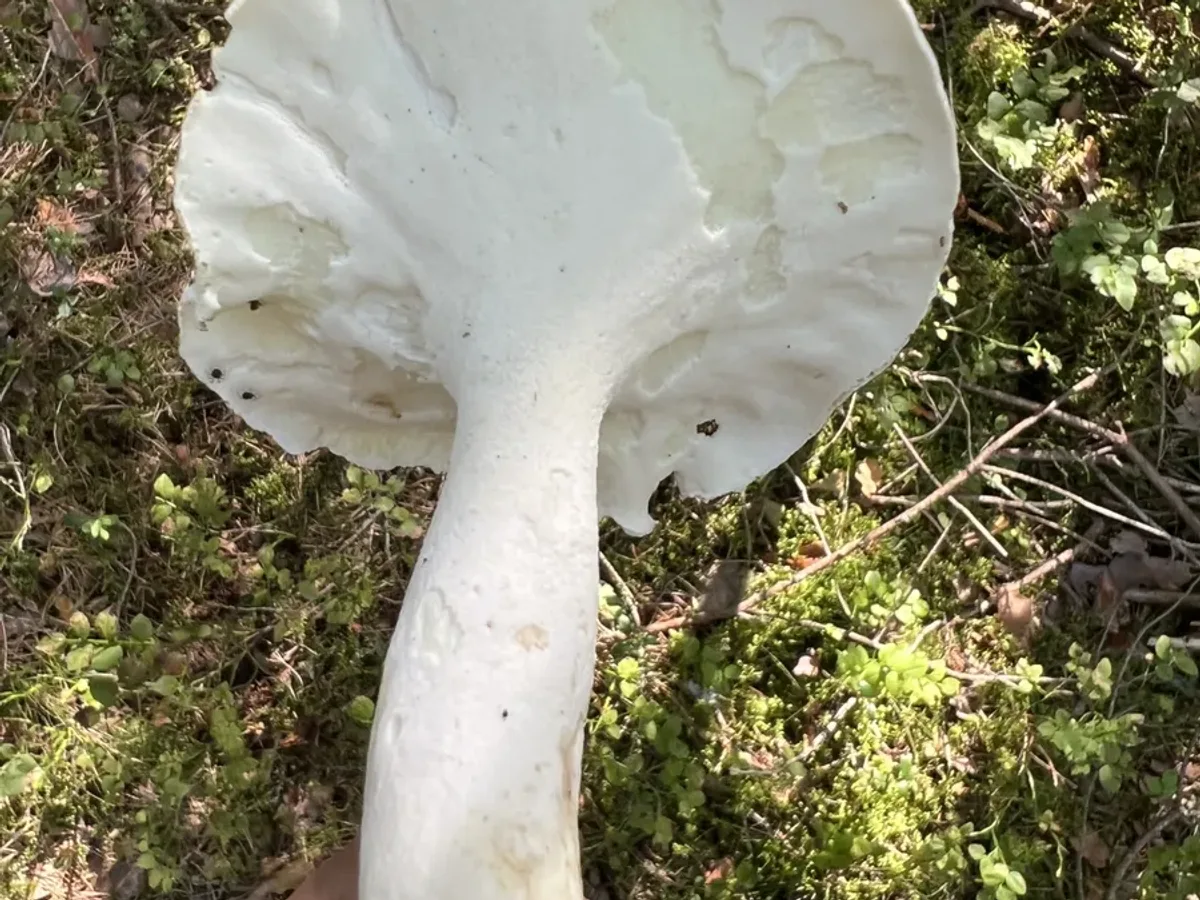
Underneath, the pore layer is one of the cleanest whites you will find in the autumn forest: tiny, angular pores running 3-4 per mm. This white surface often develops its own lemon-yellow mottling with age, and critically, it decurs - slopes gently down the stem.
Stem
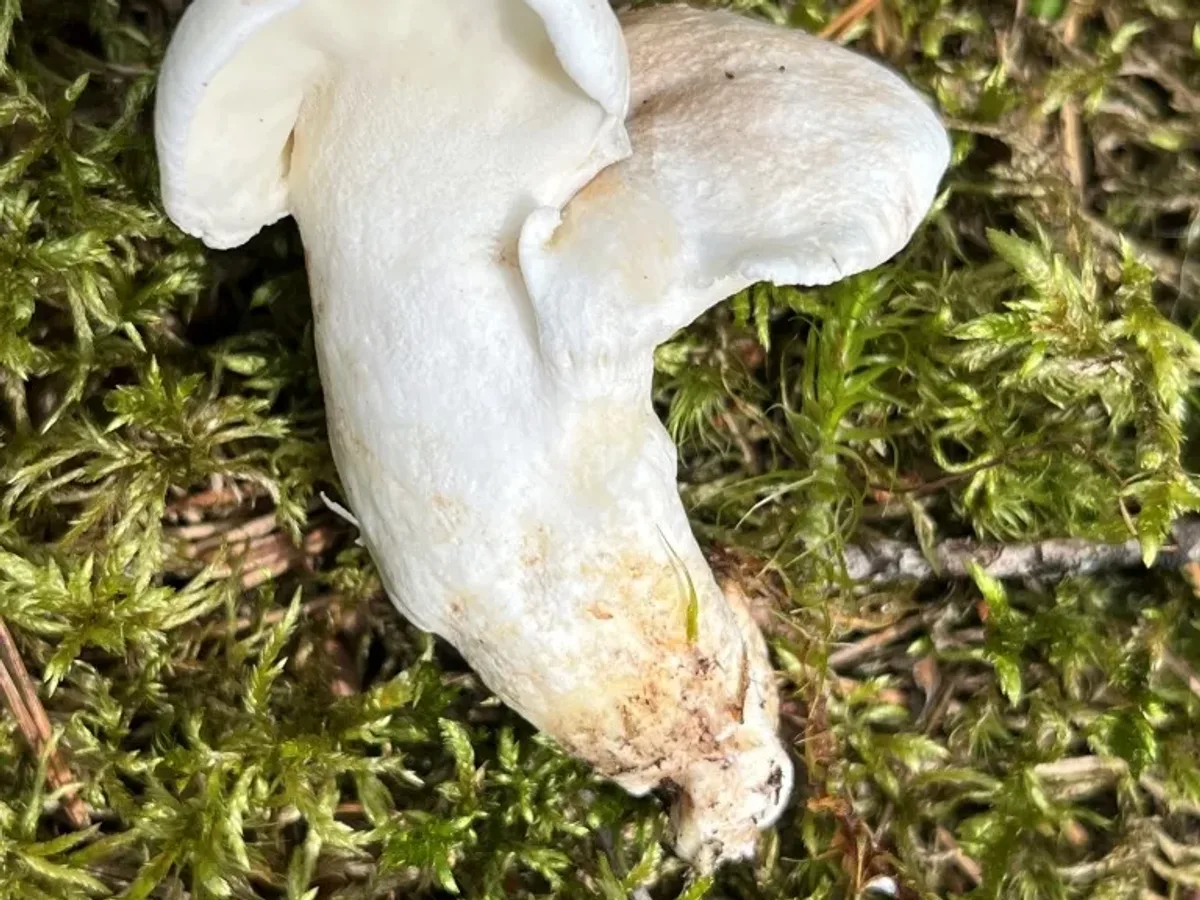
The stem itself is stout, 3-8 cm tall and up to 5 cm across, white to off-white, often off-centre or irregular in outline when neighbouring caps have fused.
Flesh
Cut through any part of the fruitbody and the flesh is firm and white, with a barely perceptible greenish or lemon-yellow cast that becomes more obvious when the mushroom is cooked - the flesh shifts to yellow-green, and in a cast-iron pan it goes near-black. Both reactions are caused by the same pigment chemistry and are entirely harmless.
Where & when it grows
Habitat
Albatrellus ovinus is a forest mushroom of the boreal and montane spruce belt - moss-carpeted Norway spruce stands on moderately acid, well-drained soils are its heartland.
In Sweden it is common across most of the country between the southern beech and oak zone and the high-alpine treeline, with a concentration in the mid-Sweden spruce forests of Medelpad, where it has been designated the provincial mushroom. It retreats at the extremes: genuinely rare in the southernmost provinces where spruce is sparse, and in the northernmost subarctic fringe where permafrost compresses the active soil layer.
The mushroom is strictly mycorrhizal with spruce (Picea abies in Scandinavia), forming a close below-ground partnership in which the fungal mycelium wraps around the fine root tips, dramatically extending the spruce's effective absorptive surface area while drawing photosynthate in return.
Because this relationship is specific to the root system of living trees, you will almost never find sheep polypore in clearcuts or young plantations without established spruce, even where plenty of organic matter remains.
Classic habitat: old-growth or semi-natural spruce forest with a deep sphagnum or feather-moss carpet, often sloping terrain, sometimes alongside lingonberry and bilberry. In Scandinavia the species frequently co-occurs with other polypores (Phaeolus schweinitzii, Suillus species) and with the milkcaps and webcaps that share the same spruce roots.
When
Fruit bodies appear from August through October across most of Scandinavia, with the peak flush concentrated in September - weeks 37-39 on the foraging calendar.
The timing is closely coupled to soil temperature and autumn moisture: the mycelium waits for soils to cool below roughly 16 °C and for a meaningful autumn rain event (typically 20+ mm over 14 days) before investing energy in fruiting. Once those triggers align, the first caps can push through moss within 7-14 days.
In a warm, dry autumn the flush shifts late and may be thin; in a wet September with an early cool snap, crops can be heavy. At higher elevations the season starts two to three weeks earlier than in lowland spruce; in southerly stands it may persist into November during mild years.
The polypore's fruitbodies are noticeably more frost-tolerant than most cap-and-stem mushrooms - a light freeze overnight barely damages them, and foragers returning to a patch after a cold spell sometimes find the caps still firm and collection-worthy.
How it grows
The mycelium of Albatrellus ovinus lives as an intimate partner inside the soil, sheathing spruce root tips in a dense hyphal mantle and threading between cortex cells in the Hartig net characteristic of ectomycorrhizal associations.
This network can persist in the same patch of forest for decades, waiting out drought, late frosts, and poor fruiting years underground. When autumn conditions finally align - moist soils, cooling temperatures - primordia initiate and caps rise through the moss within days, the cap tissue laid down rapidly from stored carbohydrate.
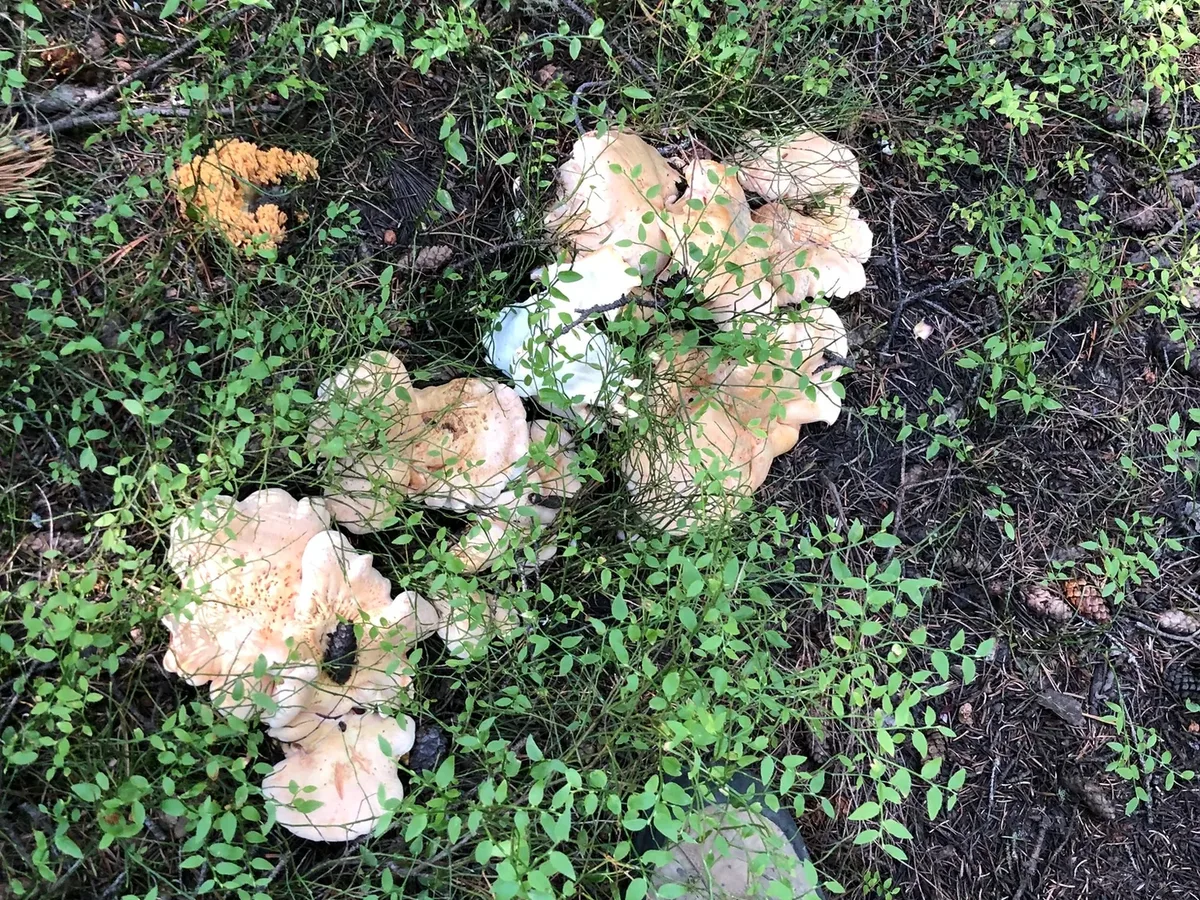
A notable growth quirk: individual fruiting bodies sometimes stay single-stemmed, but more often two, three, or more caps emerge from a shared basal point or fuse laterally as they expand, forming irregular, lobed clumps that can weigh several hundred grams as a unit. This clustering habit means a single productive spot can yield a kilogram-basket in minutes.
The mycelium's relationship with old-growth spruce probably explains why patches are reliable year after year: the same network fruits from the same root system as long as the tree is healthy, rewarding foragers who record GPS coordinates and return annually.
Spore production is enormous - the pore layer releases basidiospores that are wind-dispersed, but new mycorrhizal establishment is slow and depends on compatible spruce seedling roots, so patches do not spread rapidly.
Fruiting conditions
Mycorrhizal autumn fruiter; flushes follow late-summer to autumn rain once soil has cooled.
Look-alikes
Albatrellus ovinus sits in a small genus of closely related polypores, and all its lookalikes are edible or merely inedible - there is no toxic double.
- Bread polypore (Albatrellus confluens) - the species most commonly confused with sheep polypore in the field; it grows in dense, fused tufts, but its cap surface and pore layer stain distinctly orange-brown where handled or aged, a colour absent in sheep polypore. Its flesh also stains orange on bruising.
- Lamb polypore (Albatrellus subrubescens) - behaves similarly: orange-brown staining, rarer overall, and with a slightly smaller, thinner cap.
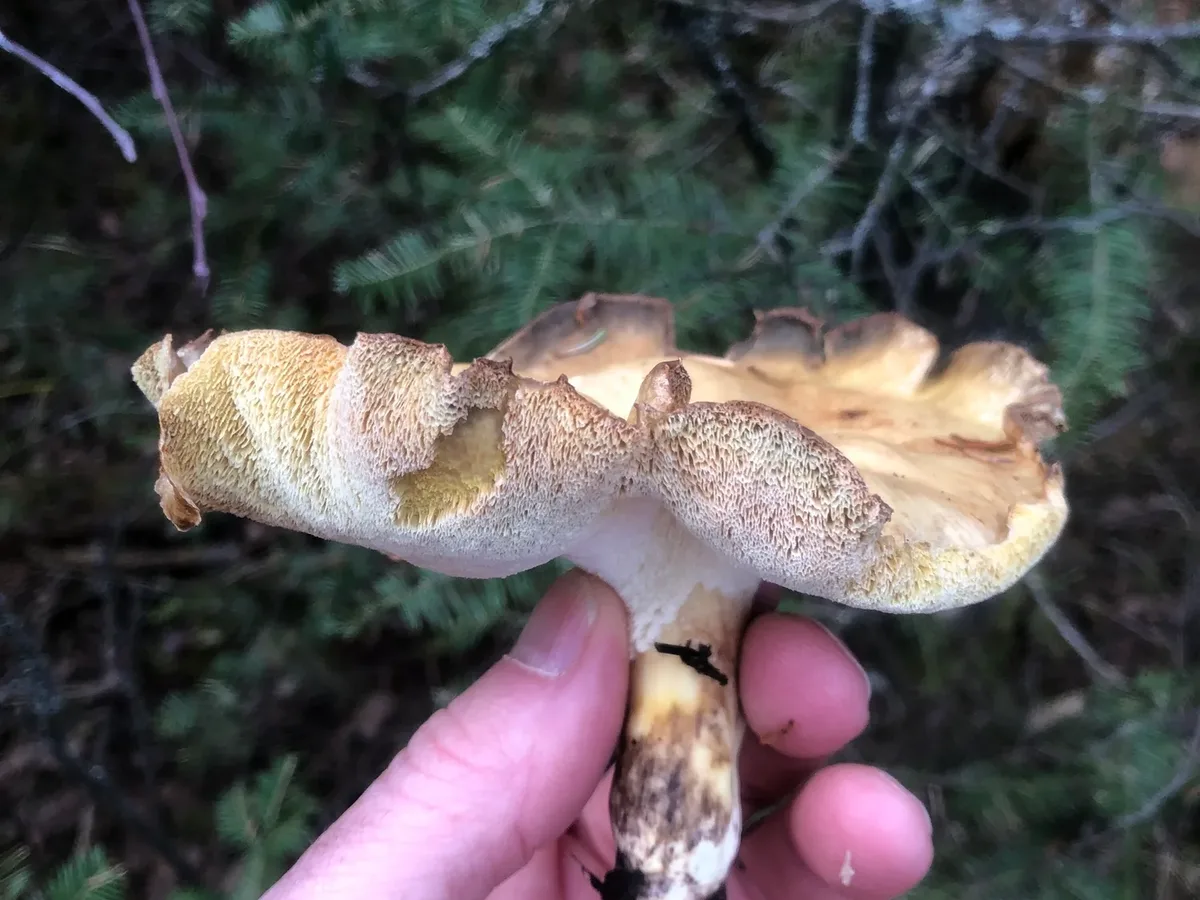
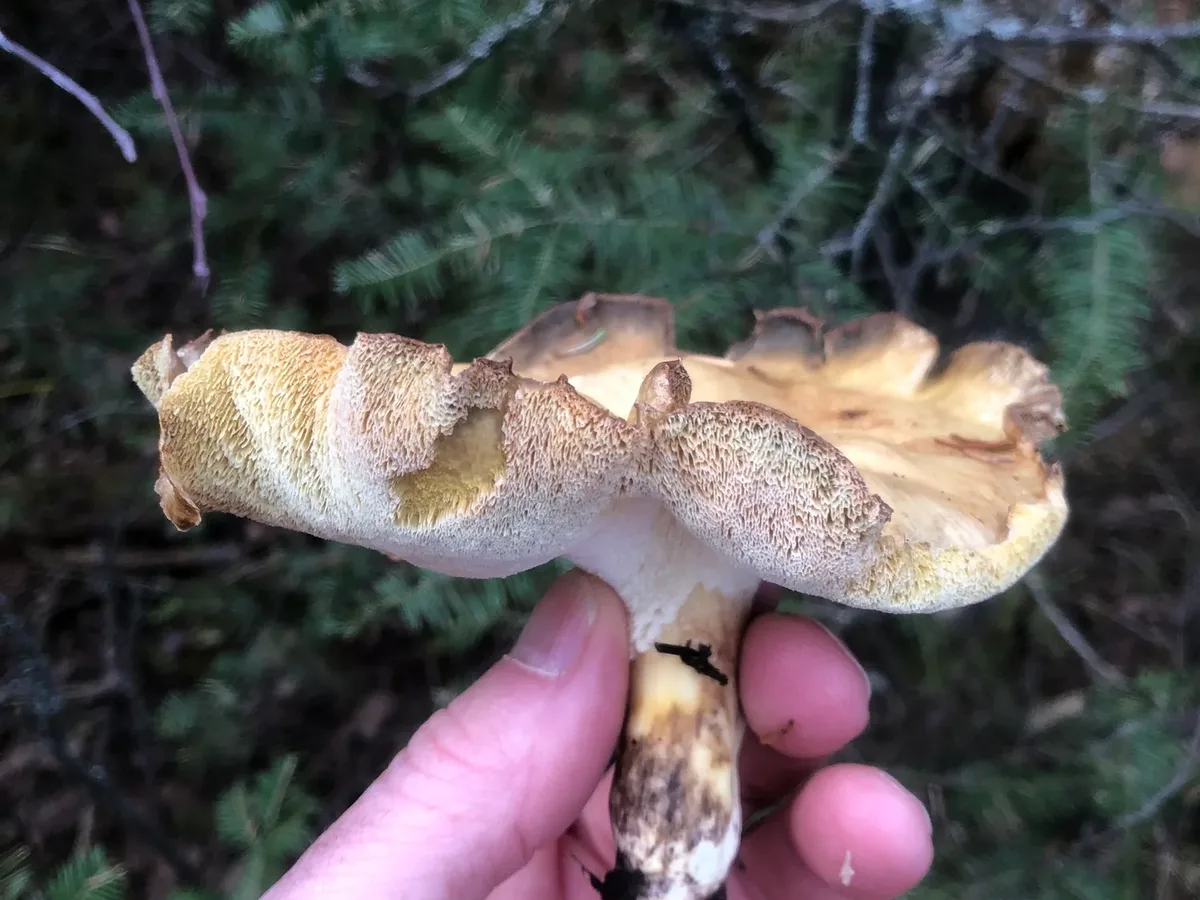
- Zoned polypore (Albatrellus cristatus) - separated cleanly by its zoned (banded) cap, which ranges from olive to greenish-brown, and its pore layer, which is sulphur-yellow rather than white. It is inedible due to bitterness but not harmful.
Outside the Albatrellus genus, young specimens of some Phaeolus schweinitzii (velvet roll-rim / dyer's polypore) could theoretically cause hesitation, but Phaeolus grows from roots or buried wood of conifers with a brown, velvety, radially fibrous cap surface very different from sheep polypore's smooth-then-cracked pale white.
All reliable distinguishing features are macroscopic; you do not need microscopy for field identification of this species.
Edible; stains orange-brown and grows in tufts.
Edible; stains orange-brown, rare.
Inedible but harmless; zoned cap and a sulphur-yellow pore layer.
In the kitchen
Picking & cleaning
Sheep polypore is about as forager-friendly as a wild mushroom gets - fleshy, not easily mistaken, and often yielding large amounts in a single visit.
Harvest caps that are firm and white, avoiding any with soft brown patches or a waterlogged, sodden texture that indicates the fruitbody is past its best. For the most tender eating, pick on the younger side: caps under 12 cm with a still-convex centre and a clean, white pore layer. Older caps are perfectly safe but tougher and less refined on the plate.
Twist-and-lift or cut at the stem base - both techniques work; there is no benefit to digging out the base, and leaving the mycelium undisturbed is good field practice.
Shake each cap over the moss before bagging it to dislodge any debris from the pore layer, which can trap grit. Because the fruitbodies are dense and dry, they transport well without the crushing that ruins more delicate species.
The colour change to yellow-green during cooking, and the blackening in cast iron, are well-known and harmless; briefing anyone new to the species in advance prevents unnecessary alarm.
Cooking
In the kitchen, sheep polypore behaves like a firmer, more substantial cousin of the chanterelle - it holds its shape well, doesn't waterlog when washed, and its mild, pleasant aroma means it integrates rather than dominates a dish.
The most common and rewarding preparation is slicing and sautéing in butter over medium-high heat until the cut faces are golden; it needs a full 8-10 minutes in a hot pan to become tender, so resist crowding and rushing. Paired with onion, garlic, and a splash of cream, it makes a standalone sauce that works over toast, pasta, or game.
Because its own flavour is gentle, it functions brilliantly as a volume-filler alongside stronger mushrooms (porcini, chanterelles, black trumpets), absorbing and amplifying their flavour without competing.
For drying: the caps slice cleanly and dehydrate well at 45-55 °C, reducing to roughly a tenth of their fresh weight; rehydrated dried sheep polypore has a more concentrated, almost meaty depth that many experienced foragers prefer over the fresh version. The dried mushroom also grinds into a fine powder suitable for seasoning broth or risotto.
The colour change on cooking is unavoidable but aesthetically manageable: a mixed mushroom dish hides it naturally, and anyone who has been warned in advance finds it unremarkable.
Good to know
Albatrellus ovinus carries no known toxins and is well-documented as safe and edible across Scandinavia and northern Europe. It does not appear on any toxicological watchlist and has no history of poisoning events in the medical literature.
Raw or undercooked polypores can cause gastrointestinal irritation in some individuals - the standard foraging practice of cooking all wild mushrooms thoroughly applies here. The firmness of the flesh means it needs adequate heat time; do not rush it in the pan.
A minority of people find any polypore harder to digest in large portions than softer-fleshed species, so modest first servings are sensible when eating sheep polypore for the first time.
The striking colour change during cooking - white flesh going yellow-green, browning or blackening in cast iron - is purely cosmetic chemistry (pigment oxidation and pH reaction with iron), not a sign of spoilage or toxicity.
No cross-reactions with medications or alcohol have been documented. Overall, this is one of the safest wild mushrooms a beginner can learn.
A reference guide - never an edibility guarantee. When in doubt, leave it out.