Spring fieldcap
Agrocybe praecoxsyn. Pholiota praecox, Agaricus praecox, Togaria praecox, Agrocybe sphaleromorpha
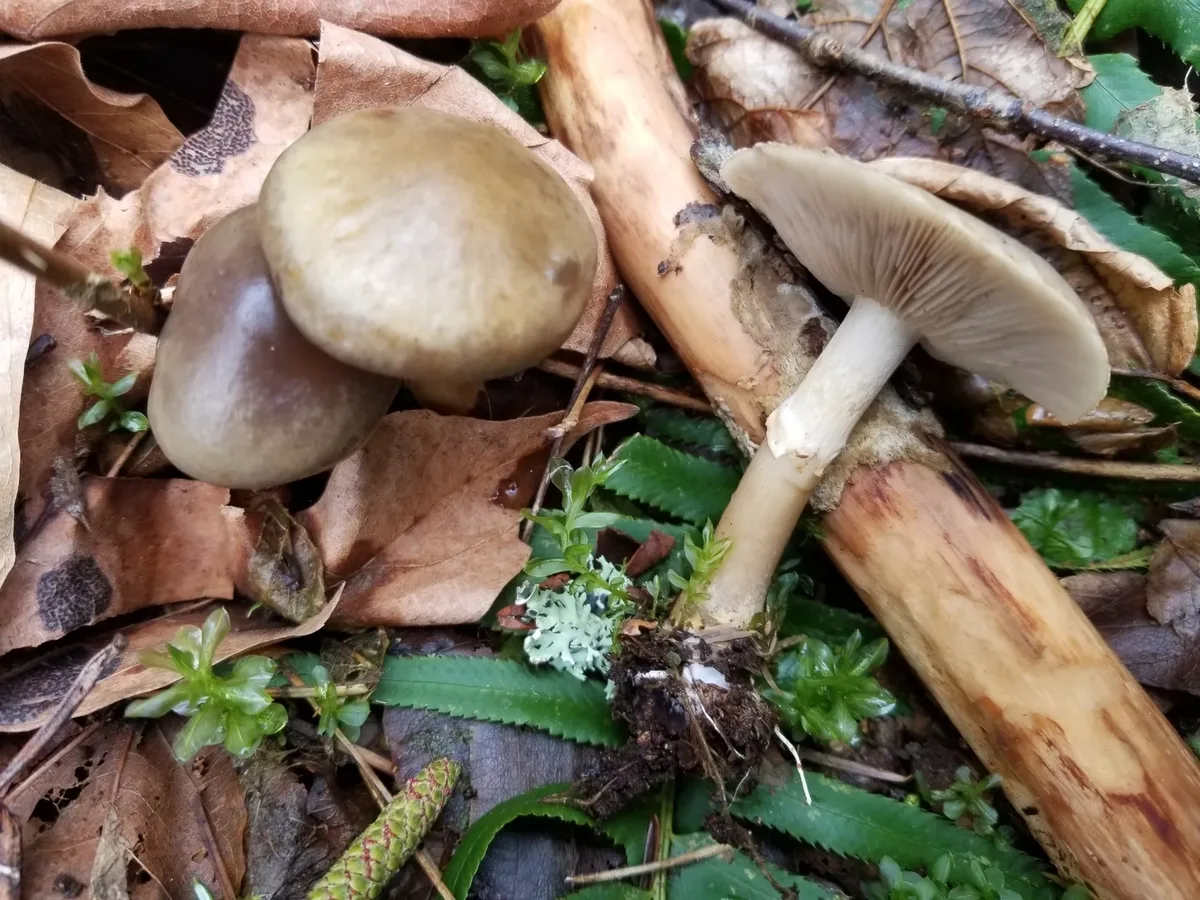 © Jonathan Curley (CC BY 4.0)
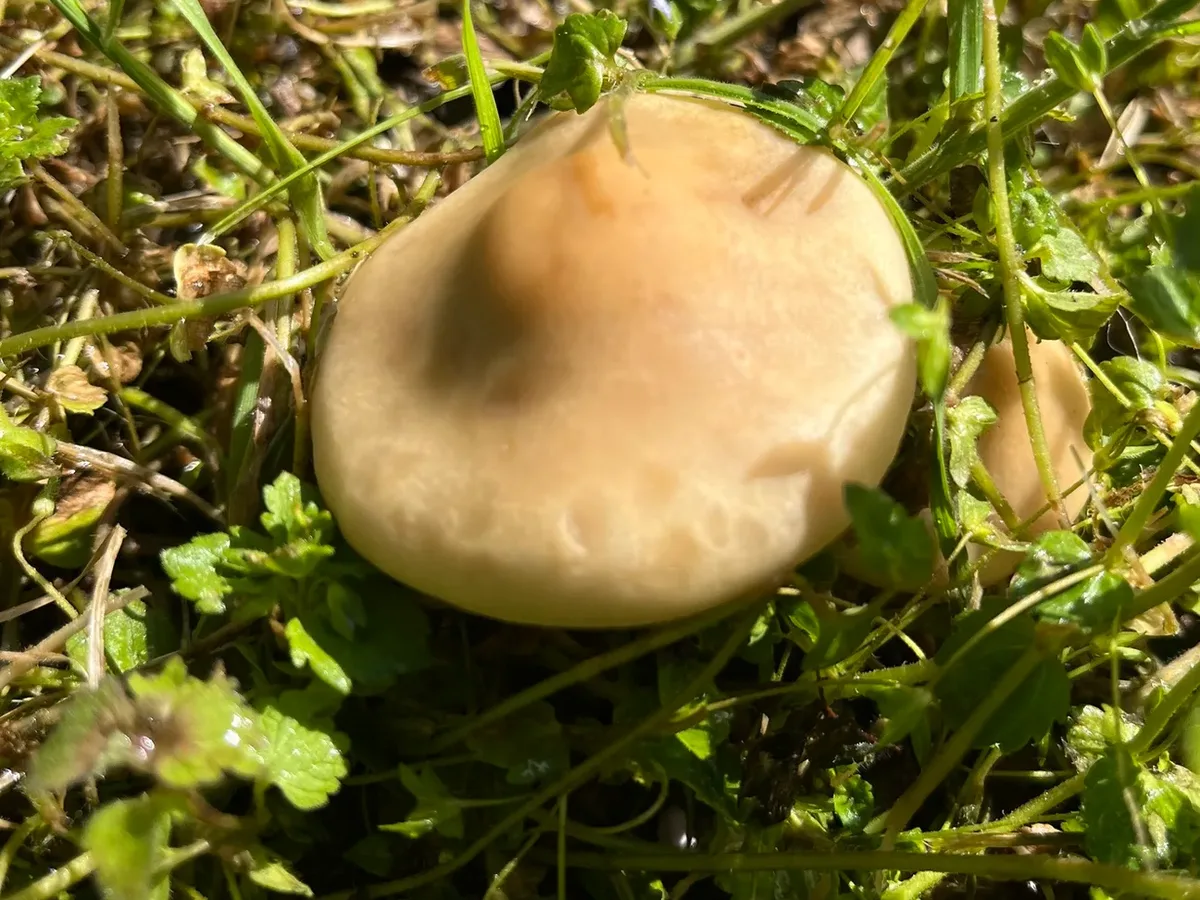 © Наталья Пикалова (CC BY)
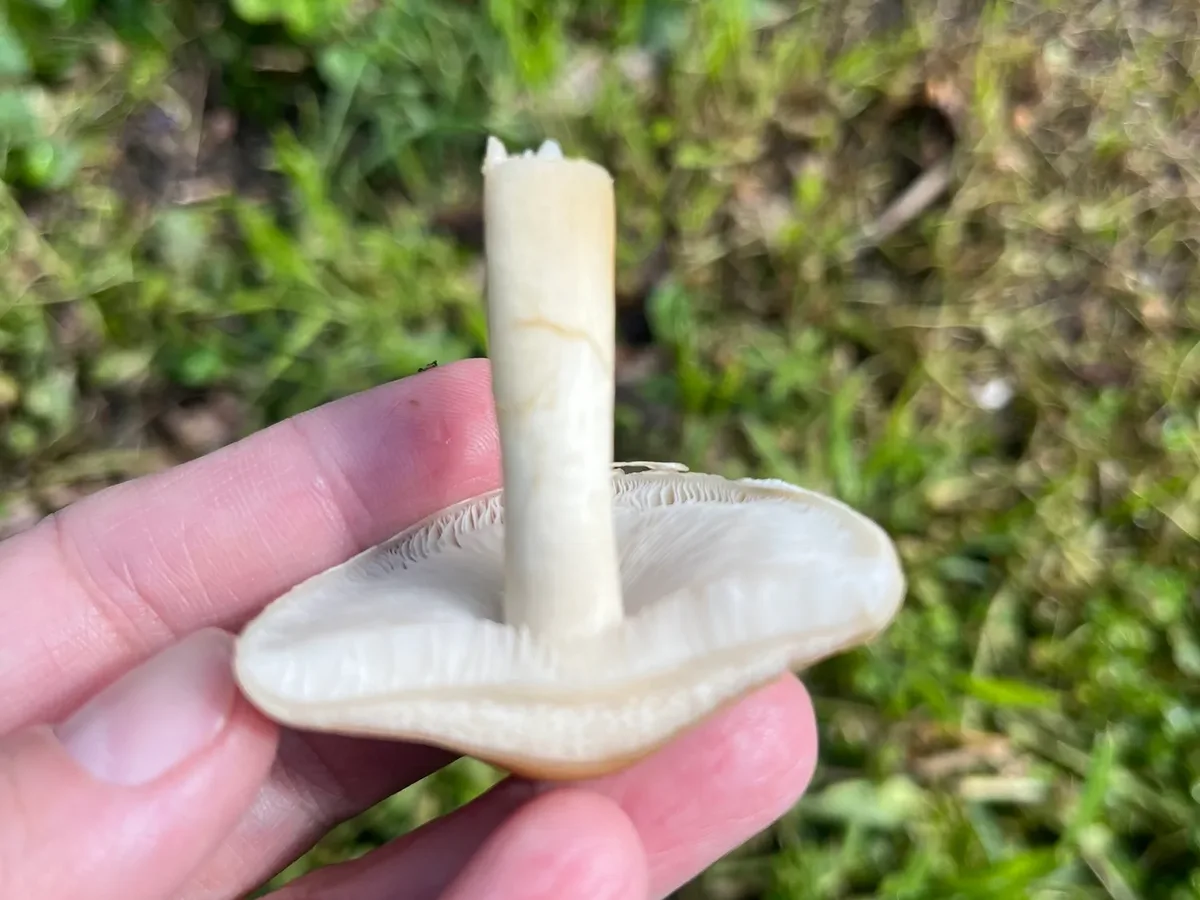 © Наталья Пикалова (CC BY)
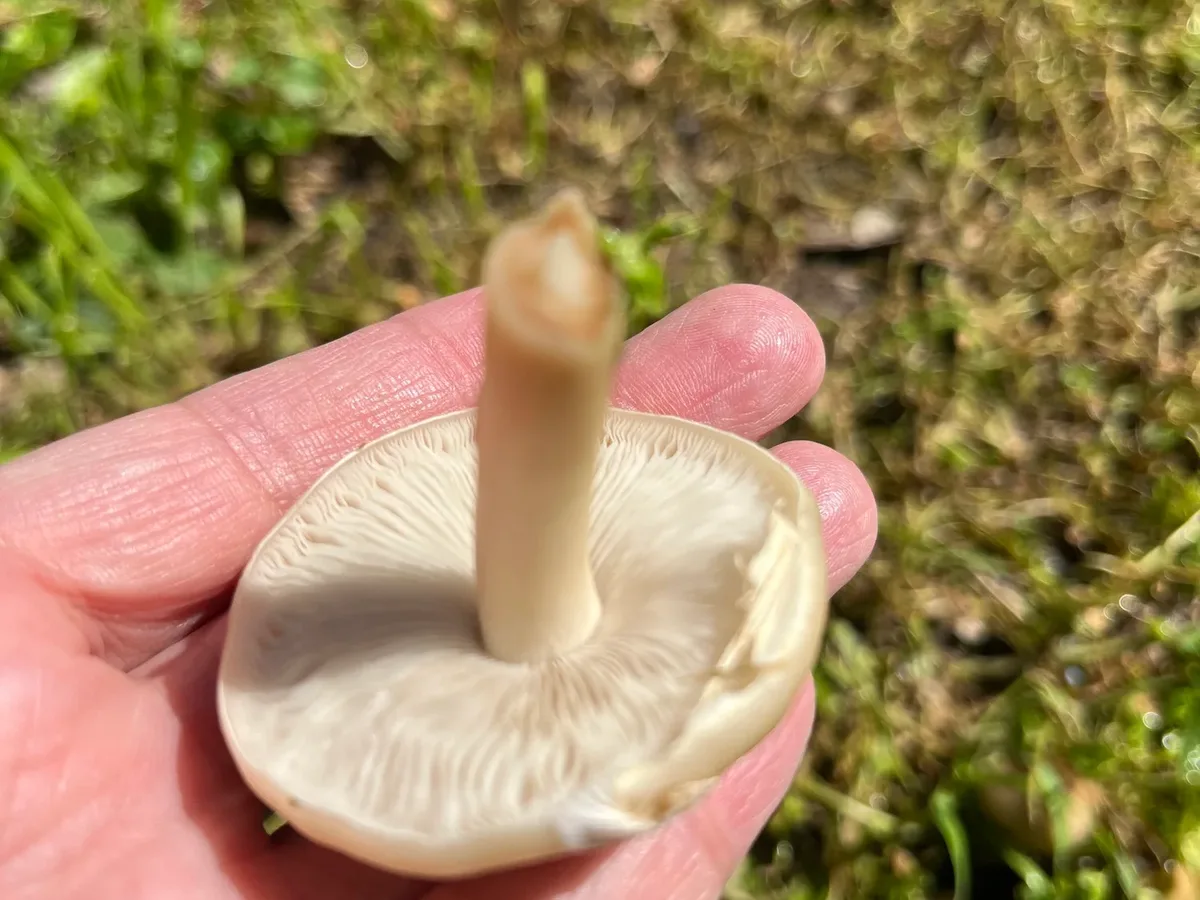 © Наталья Пикалова (CC BY)
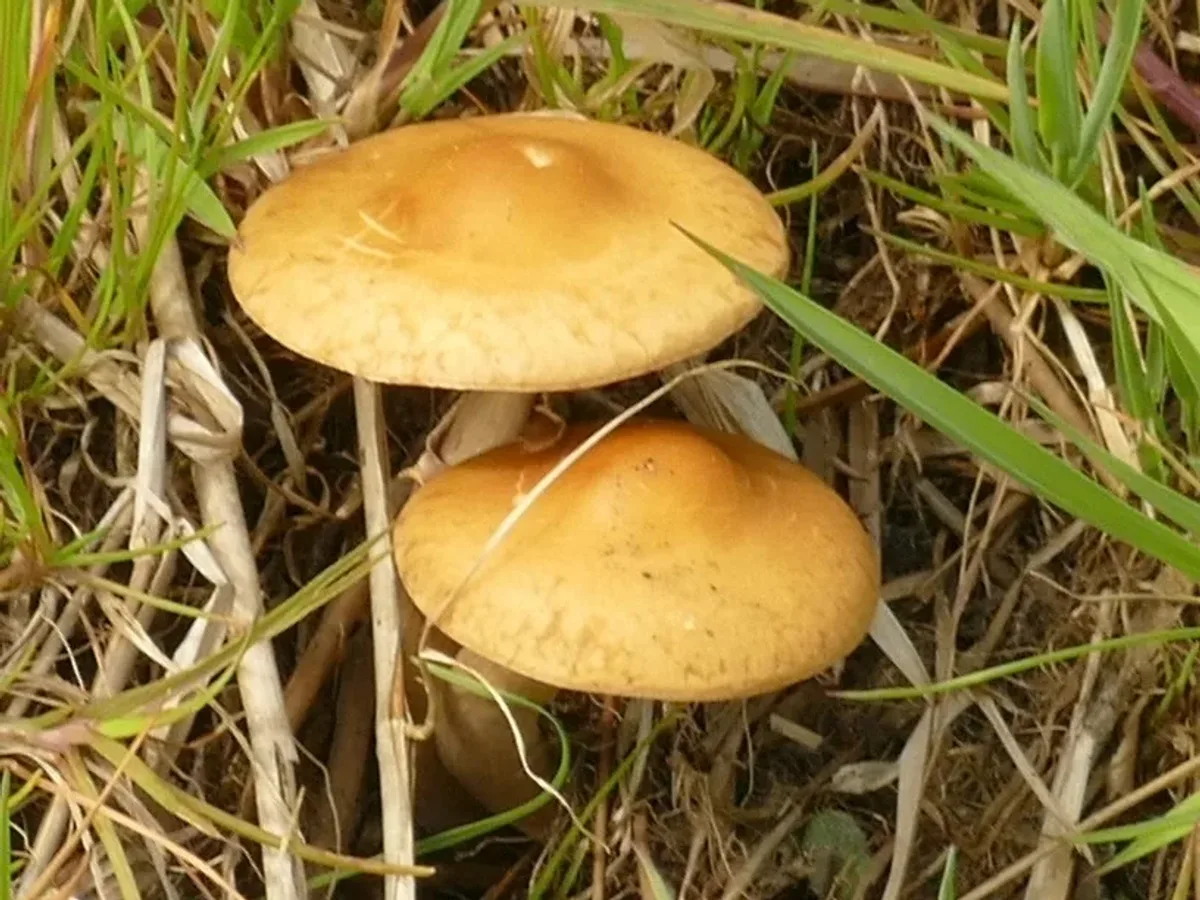 Jean-Paul Boerekamps (CC0)
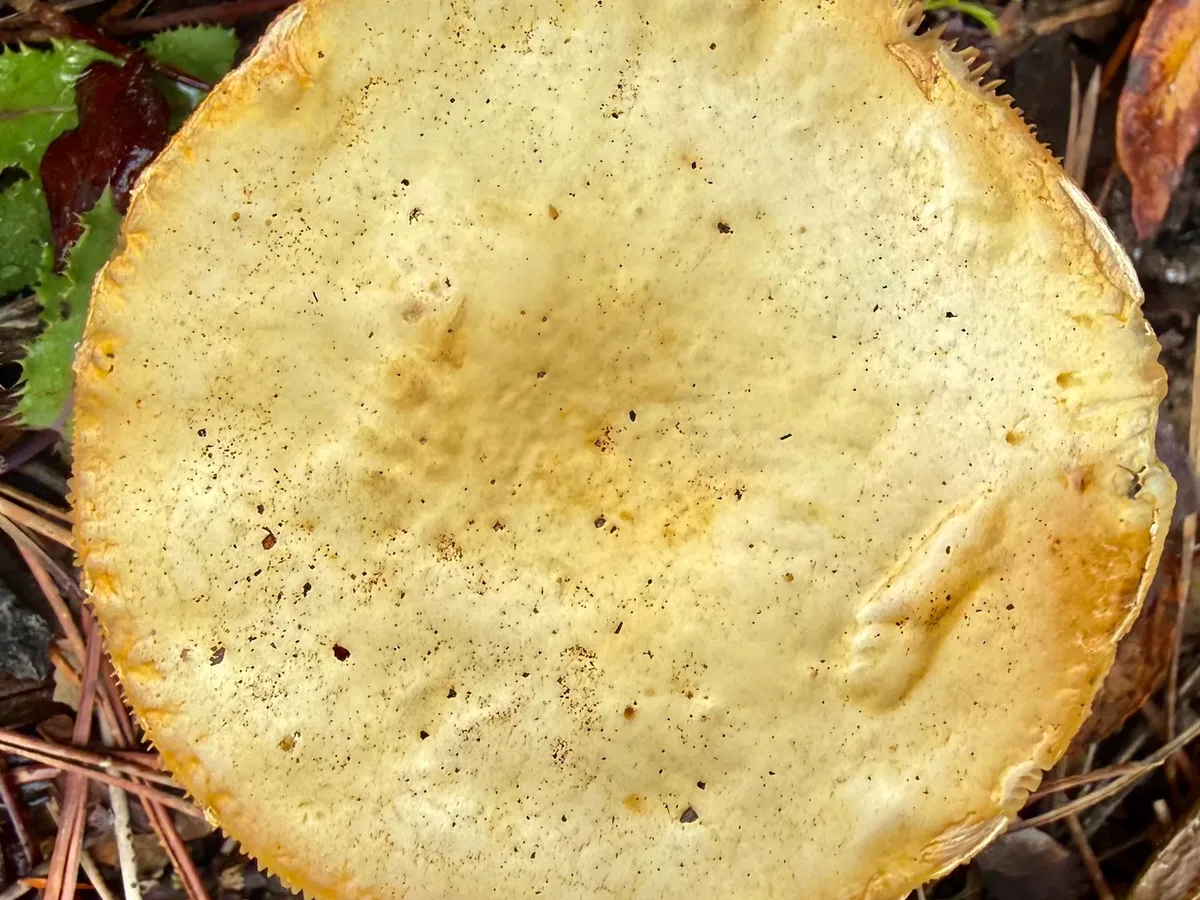 Chuck Wilson (CC0)
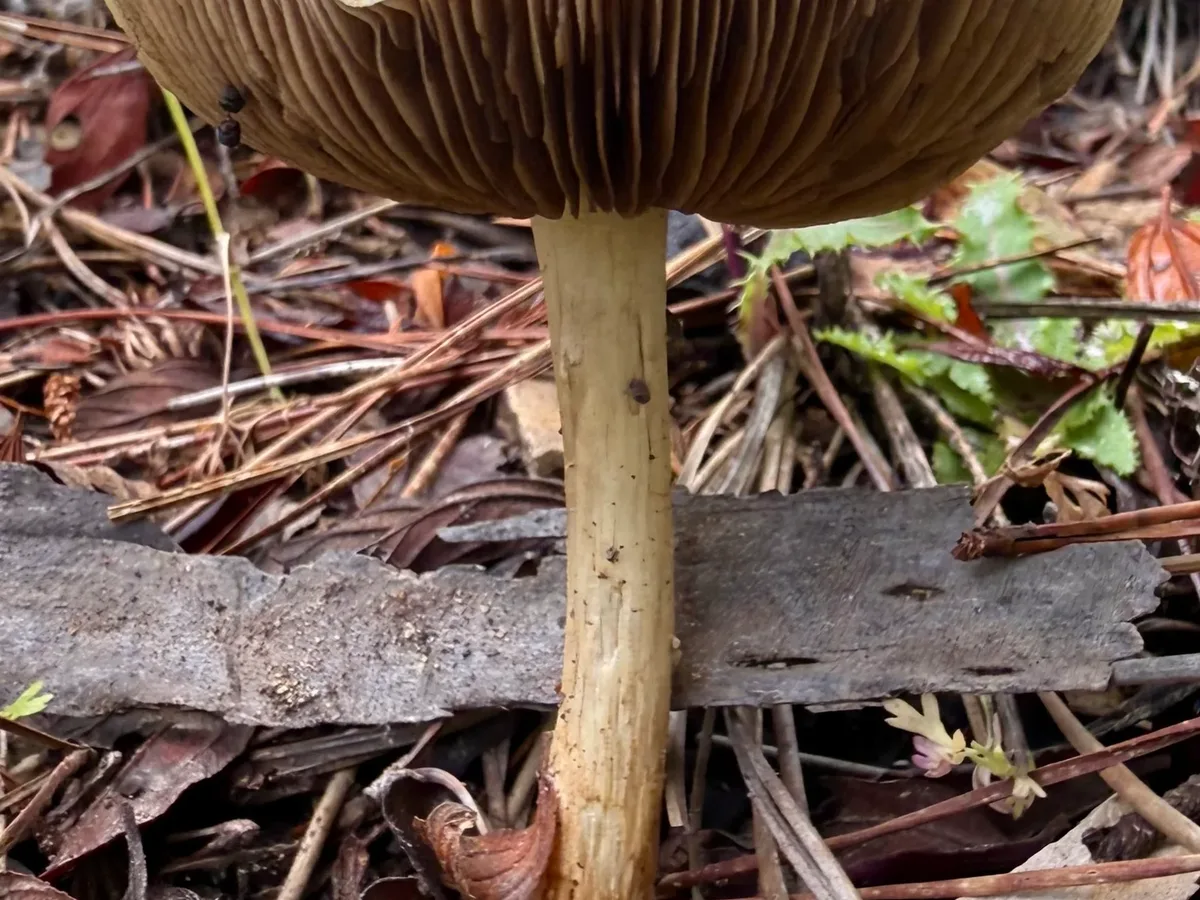 Chuck Wilson (CC0)
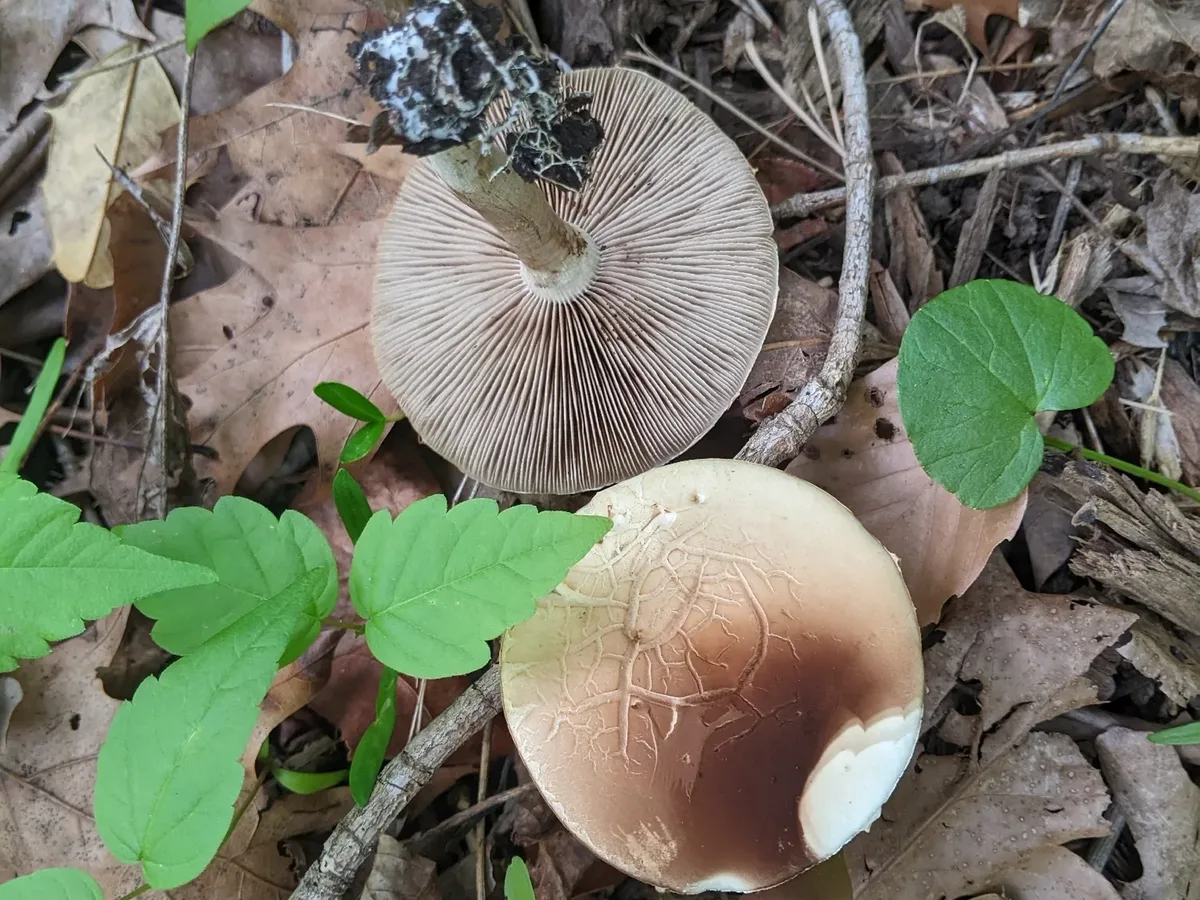 © Maria Aghazarian (CC BY)
 © Maria Aghazarian (CC BY)
 © Ирина Хохрякова (CC BY 4.0)© Jonathan Curley (CC BY 4.0)© Наталья Пикалова (CC BY)
Edible only with the right preparation - or safe for some people but not others. Learn the caveats first.
Never eat a mushroom you are not 100% sure of - check the look-alikes below, and always cook wild mushrooms.
How to recognise it
The spring fieldcap is a medium-sized, solidly built mushroom with a handful of features that, taken together, make identification much easier than the brown-capped crowd it lives among.
Cap
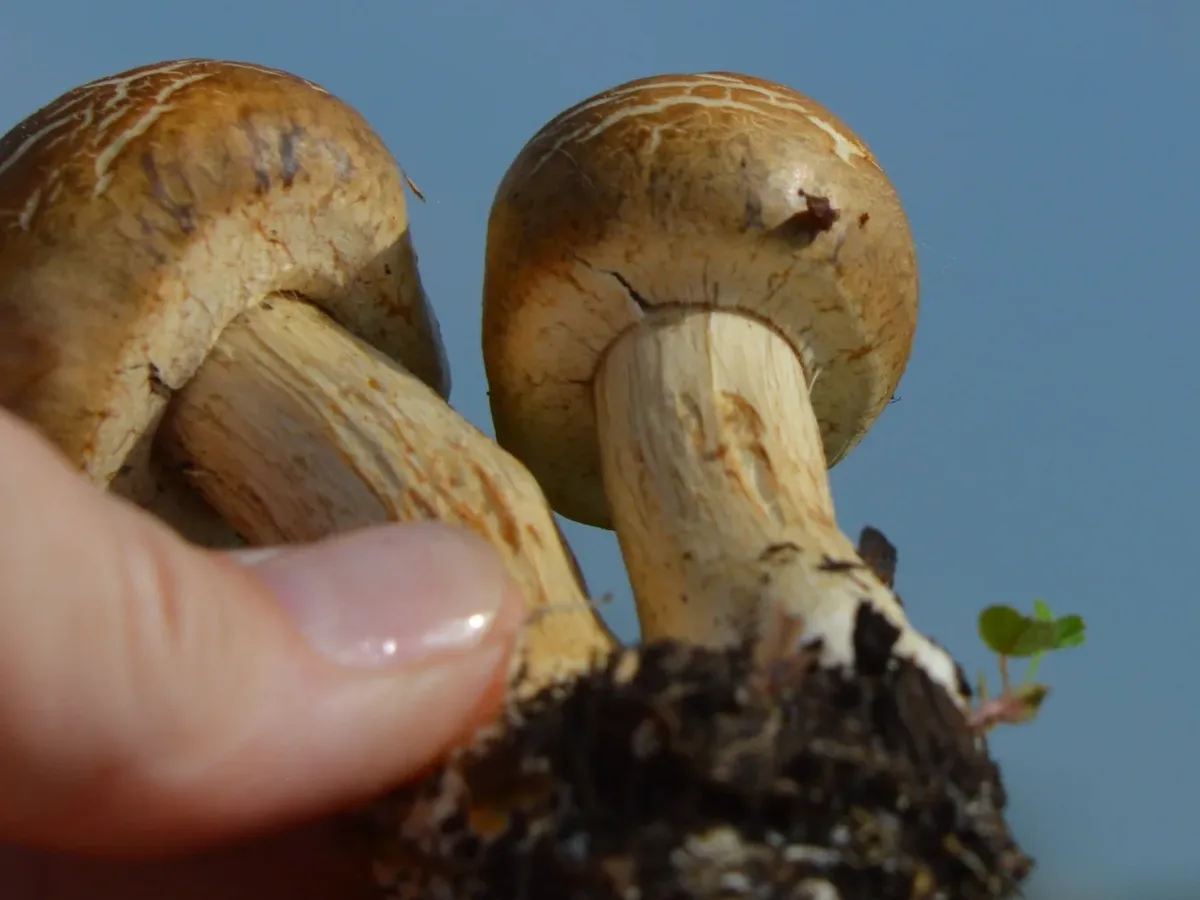
The cap starts convex to hemispherical, 3-8 cm across, and opens gradually to broadly umbonate or nearly flat. Fresh and moist it is a warm honey-ochre or pale tawny, often darker at the centre, but as it dries it can bleach to near-cream and crack radially - a striking change that catches the eye in dry spring weather.
The surface is smooth, slightly greasy when wet, with no scales or slime.
Gills
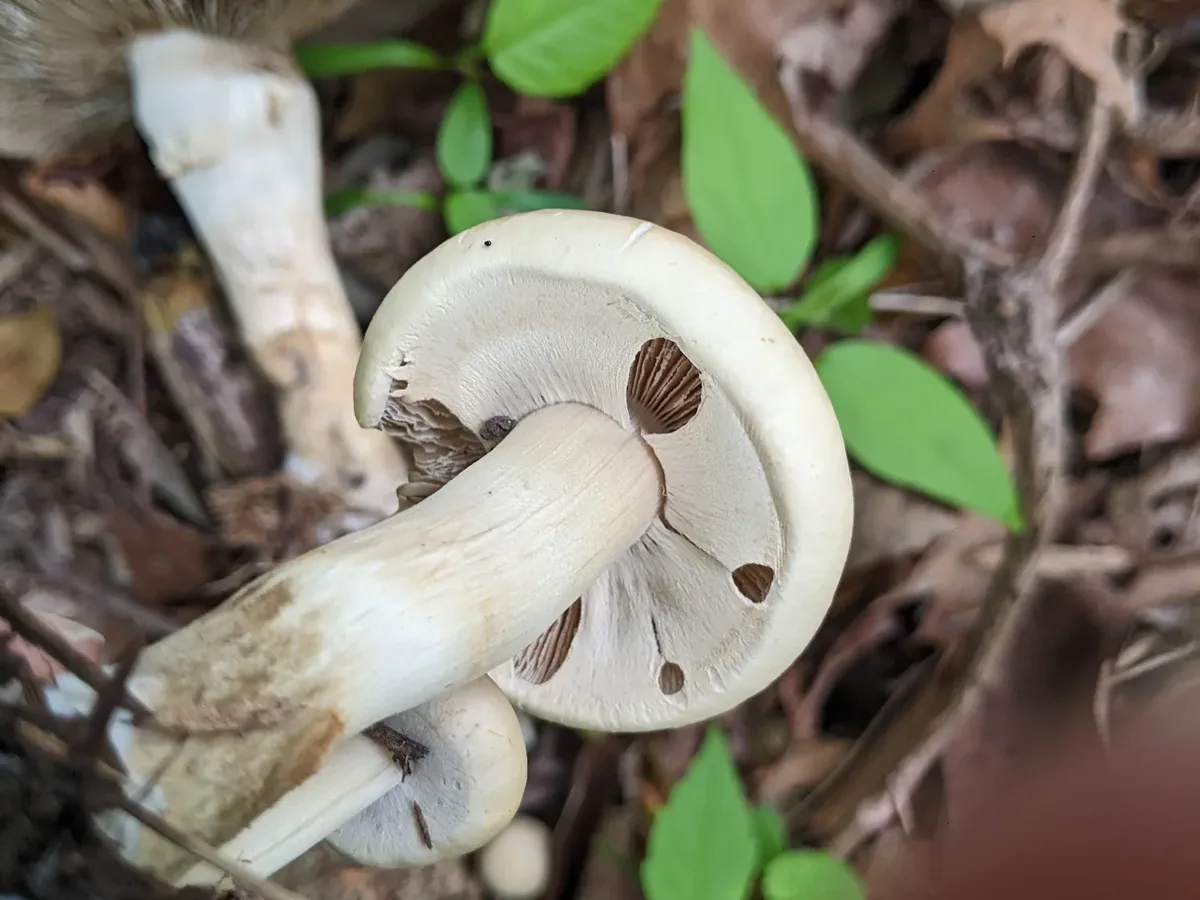
Underneath, the gills are crowded and adnate, starting pale greyish-buff and darkening steadily to full cinnamon-brown as the spore deposit builds.
Stem
The stem is 4-10 cm tall and 4-10 mm across, white to pale buff, fibrous, and carries the most useful field mark: a well-formed, skirt-like membranous ring in its upper third, white on top and often dusted rust-brown underneath by falling spores.
This ring persists throughout the mushroom's life - unlike the flimsy, disappearing rings of some dangerous lookalikes.
Flesh
The flesh is white, firm, and does not change colour when cut.
Smell & taste
The smell is the other key clue: a strong, pervasive floury or mealy scent, like fresh grain, raw potato, or cucumber, that is usually unmistakable once you know it.
Spores
Spore print rust to tobacco-brown. Microscopically: spores 9-13 × 5.5-7.5 µm, ellipsoidal, smooth, thick-walled, with a distinct germ pore.
Where & when it grows
Habitat
A classic opportunist of disturbed, nitrogen-rich substrates. Agrocybe praecox fruits prolifically on lawns, garden beds enriched with compost or bark chips, road verges, parks, cemetery grasslands, the edges of cultivated fields, and in open woodland clearings where leaf litter and organic debris accumulate.
It has a strong affinity for wood-chip mulch and disturbed ground in urban green spaces - habitats that have expanded enormously in recent decades, making this one of the commoner spring mushrooms in European cities.
In more natural settings it appears in meadows, hedge banks, and along woodland margins on loamy or calcareous soils. Unlike many Agrocybe species, it does not fruit directly from wood, though it can emerge from buried woody debris.
When
One of the earliest brown-spored grassland mushrooms in temperate Europe, the spring fieldcap earns its name by appearing while the year still feels tentative.
The first fruitbodies push up from late April as soil temperatures creep above 8-10 °C, and the main flush runs through May and June - a season when most of its lookalikes have yet to arrive, which makes the timing itself a useful clue.
In warm, wet springs fruiting can stretch into early July. A quieter second flush may follow in September-October when summer drought breaks, though this is less reliable.
The species is largely absent through the hot, dry summer months, resting as mycelium in the soil until conditions are right again.
How it grows
Grows solitary, scattered, or in small loose groups - not in the dense, wood-hugging clusters typical of Galerina marginata. Occasionally it forms rings or arcs in lawn turf as the underground mycelium expands outward year after year.
When spring warmth and moisture align, fruitbodies develop quickly, often emerging and maturing over just 3-5 days.
The partial veil is most striking on young specimens, stretching between cap margin and stem like a small white skirt. As the cap expands it tears free, leaving the persistent ring on the stem.
As the cap flattens and the surface dries it frequently cracks radially, giving older specimens a weathered look.
Fruiting conditions
Fruiting is triggered by warm spring rains once soil temperatures consistently exceed 8-10 °C. A 14-day period with at least 15 mm of rainfall, following the first sustained warmth of spring, reliably produces flushes. High summer temperatures (soil >20 °C) suppress fruiting. The lag from rain to visible fruitbodies is typically 7-14 days in spring conditions.
Look-alikes
Several lookalikes demand careful attention, two of which are potentially lethal.
1. Galerina marginata (DEADLY) - the most dangerous confusion. Galerina marginata (and the Galerina autumnalis group) share a brown-spored cap with ring, similar colouring, and overlapping habitat (wood chips, decomposing woody debris). Galerina contains lethal amatoxins.
Differentiation from Galerina:
- A striate (grooved) cap margin when moist
- A more hygrophanous cap (strongly two-toned when drying)
- A more slender and fragile ring that often disappears
- A lack of mealy smell (instead earthy or slightly radish-like)
- Smaller spores with a roughened surface (noticeable under microscope)
- Fruits more commonly in autumn
However, reliable separation requires a spore print (both tobacco-brown - unhelpful) and microscopy in ambiguous cases. If the specimen is growing from wood or a wood-chip substrate and lacks a strong floury smell, treat it as potentially Galerina and discard.
2. Inocybe species (TOXIC - muscarine, potentially deadly) - several are similar in stature and colour. They lack the persistent membranous ring (though a few have a ring-zone), have more fibrous-silky or radially splitting caps, and may smell spermatic, fruity, or earthy rather than mealy.
Many contain dangerous and potentially lethal levels of muscarine; deaths have been recorded. Never confuse these with Agrocybe praecox; the ring on A. praecox is far better developed and more persistent.
3. Pholiota species - viscid, scaly cap surface, growing on wood; lack mealy smell; spore print tobacco to rust-brown but cap typically scaly or glutinous.
4. Pholiotina filaris / Conocybe filaris (DEADLY - amatoxins) - a small (cap 1-3 cm), fragile, ring-bearing species that can grow in the same grassy or woodchip habitats; contains amatoxins identical to those in the death cap. Far more slender and delicate than A. praecox, with a thin ephemeral ring and no mealy smell. Never confuse any ring-bearing LBM you intend to eat without absolute certainty.
5. Stropharia species - green or purplish tints on cap or stem, purple-brown spore print, glutinous or slimy cap surface; smell and taste not mealy.
Inocybe species are smaller to similar-sized, have radially fibrous or silky-splitting caps, lack a well-developed membranous ring (at most a fibrous ring-zone), and smell spermatic, fruity, or earthy-never strongly mealy. They contain dangerous amounts of muscarine and some species have caused human deaths; treat any Inocybe as potentially deadly. The cap texture and smell are the quickest separators from Agrocybe praecox.
Galerina marginata is deadly (amatoxins) and can share the same wood-chip substrate. It has a hygrophanous cap (strongly two-toned when drying, dark brown moist / pale ochre dry) with a striate margin when fresh, a more slender fragile ring that often disappears with age, lacks a strong mealy smell, and has roughened spores (visible under microscope). Agrocybe praecox has a consistently ochraceous-buff cap, a robust persistent membranous ring, and a strong floury/mealy odour. When the substrate is wood chips and the mealy smell is absent, treat the specimen as potentially Galerina and do not eat.
A small (cap 1-3 cm), fragile, ring-bearing species containing amatoxins identical to those in the death cap. Much more slender and delicate than Agrocybe praecox, with a thin ephemeral ring, hygrophanous cap, and no mealy smell. Found in grass and soil, including the same enriched lawns and wood-chip beds as A. praecox. Deadly; never confuse with any ring-bearing species you intend to eat.
A smaller relative (cap 1-4 cm), typically lacks a ring (occasionally shows a ring-zone), grows in similar grassy habitats, and fruits throughout summer into autumn rather than spring. Edibility similar but the spring timing and persistent ring of A. praecox are the easiest separators.
Armillaria mellea grows in large dense clusters at or near wood, has a ring, and a similar honey-brown cap, but the cap is scaly with dark-tipped fibres at the centre, the gills are white to pale cream (not grey-brown to cinnamon), and the spore print is white-not brown. Strong mealy smell is absent.
Grows in dense tufts directly from wood or at the base of trees (particularly poplars and elders), not from soil; has a more robust ring and darker brown cap with paler margin. Both are edible but habitat (wood vs. soil) is the clearest distinction.
In the kitchen
Picking & cleaning
If harvesting for eating, collect only young, fresh specimens with an intact, unexpanded cap and a clear white ring not yet stained brown by spores.
Positive identification is essential before collection. Confirm:
- The mealy smell
- The rust-brown spore print (never black, olive, or white)
- The membranous ring
Avoid any specimen that lacks a ring or smells different.
Because the species grows on enriched urban soil and wood-chip beds, specimens from roadside or treated-lawn sites may have accumulated heavy metals or pesticide residues - only collect from sites known to be uncontaminated.
Do not confuse with Galerina marginata (deadly) or Inocybe species (toxic). When in doubt, leave it out.
Cooking
The edibility of Agrocybe praecox is rated mediocre to acceptable in the European literature - it is edible when thoroughly cooked but is rarely actively sought for the table.
The strong mealy-floury flavour, which intensifies on cooking, is pleasant to some palates but cloying or even unpleasant to others. Young, unexpanded caps are preferred; older specimens develop a bitter edge.
It can be:
- Sautéed in butter
- Added to omelettes or risotto in small quantities
- Dried and powdered as a flavouring
The floury character means it does not pair well with delicate ingredients; use it alongside robust flavours. Always cook thoroughly - never eat raw.
Given the moderate eating quality relative to the identification risk from Galerina marginata, most experienced foragers pass over this species in favour of better-rewarded spring mushrooms.
Good to know
Agrocybe praecox is edible but rated caution because:
- 1It has DEADLY lookalikes in Galerina marginata and Pholiotina filaris, both containing amatoxins, and can share the same wood-chip substrate with Galerina.
- 2Inocybe species - some of which are potentially deadly due to muscarine - can occur in the same habitats.
- 3The eating quality is mediocre and strongly flavoured, providing little reward for the identification risk.
- 4Raw or undercooked specimens can cause mild gastrointestinal upset in some individuals.
The species itself contains no known serious toxins, but the identification margin of safety is narrow.
Only experienced foragers who can reliably distinguish A. praecox from Galerina marginata - including by microscopy if necessary - should attempt to eat this species. Beginners should avoid it entirely.
Do not eat any brown-capped, ring-bearing mushroom from a wood-chip bed without absolute certainty of identification.
A reference guide - never an edibility guarantee. When in doubt, leave it out.