Almond mushroom
Agaricus subrufescenssyn. Agaricus blazei sensu auct., Agaricus blazei Murrill sensu auct., Agaricus brasiliensis, Agaricus rufotegulis, Fungi no kasei
 © Denis Zabin (CC BY 4.0)
 © Denis Zabin (CC BY 4.0)
 © Denis Zabin (CC BY)
 © Denis Zabin (CC BY)
 © Denis Zabin (CC BY)
 © Fernanda Tupini (CC BY-SA)
 © Fernanda Tupini (CC BY-SA)
 © Fernanda Tupini (CC BY-SA)
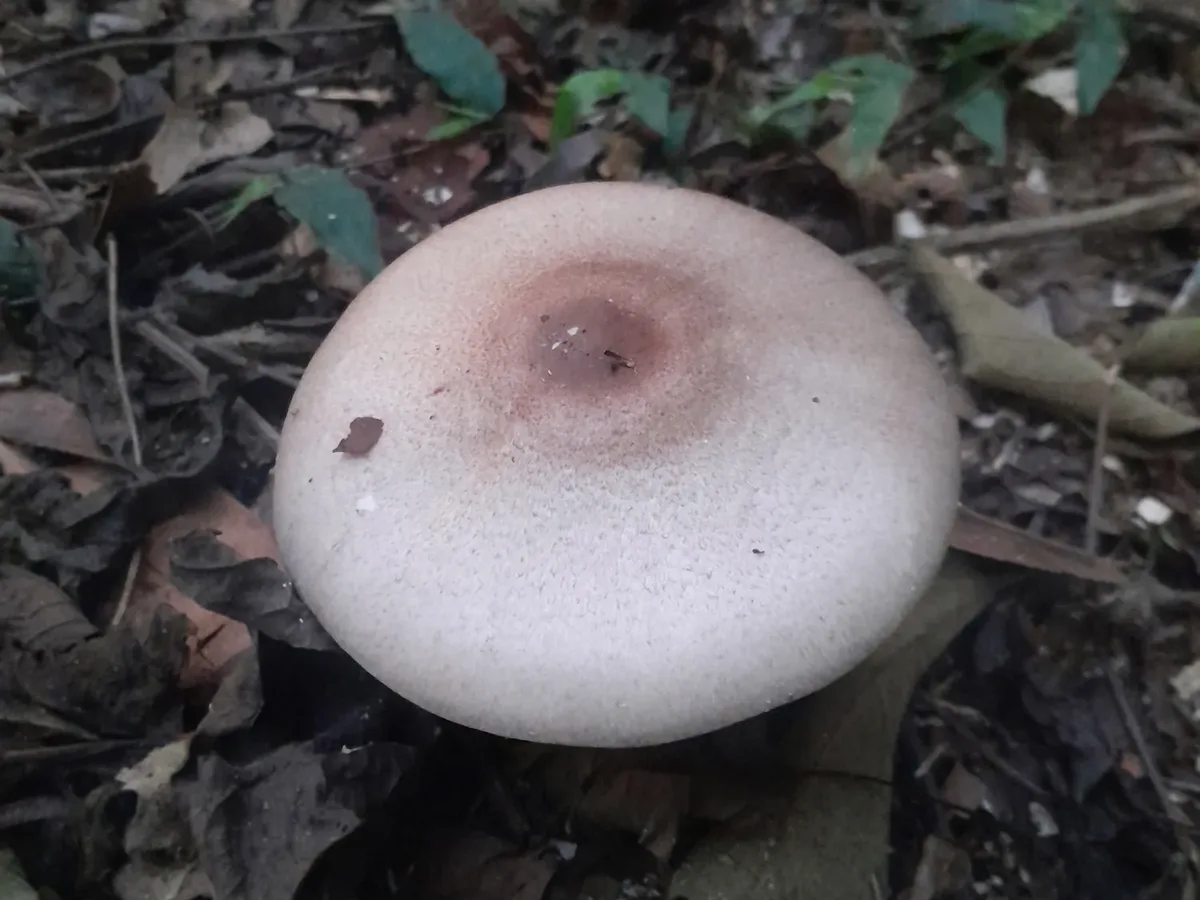 © Ana Cristina Almeida (CC BY-SA)
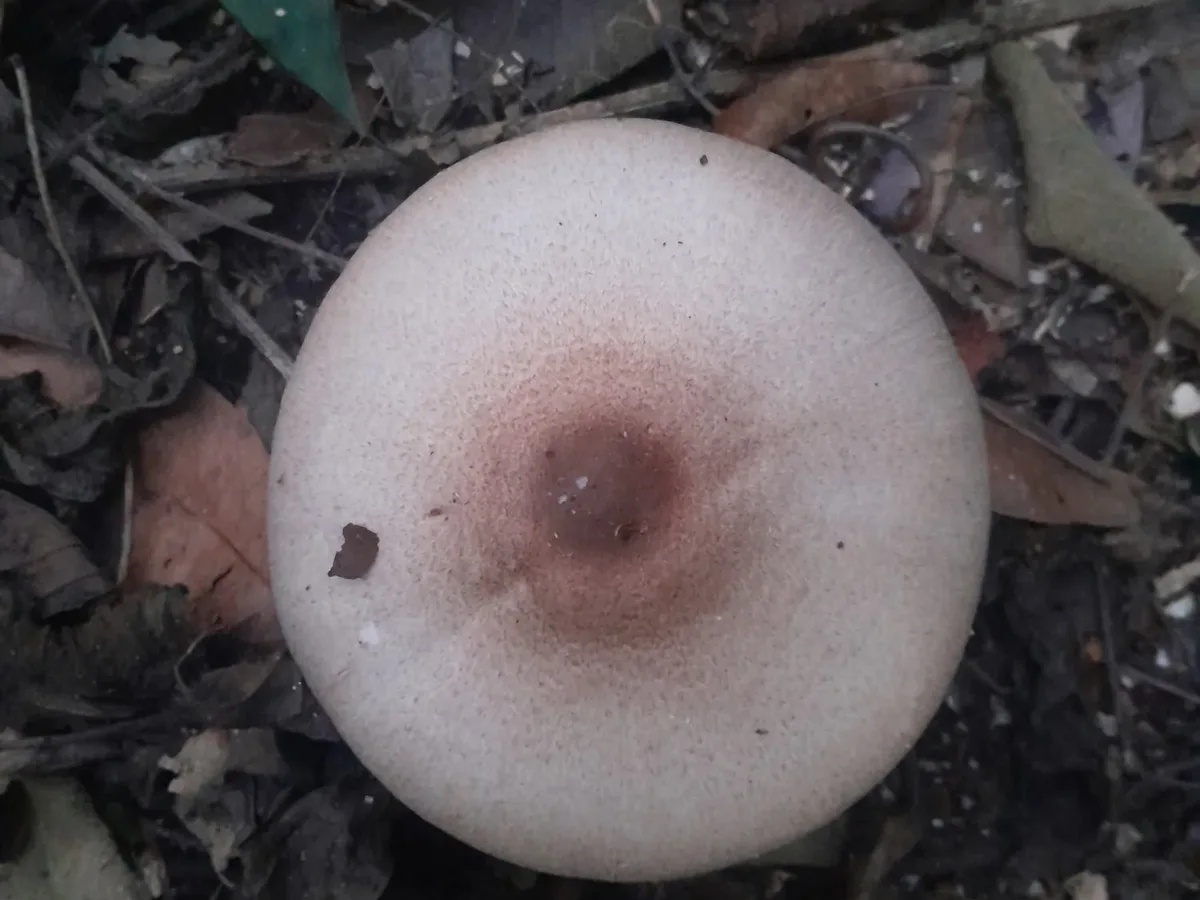 © Ana Cristina Almeida (CC BY-SA)
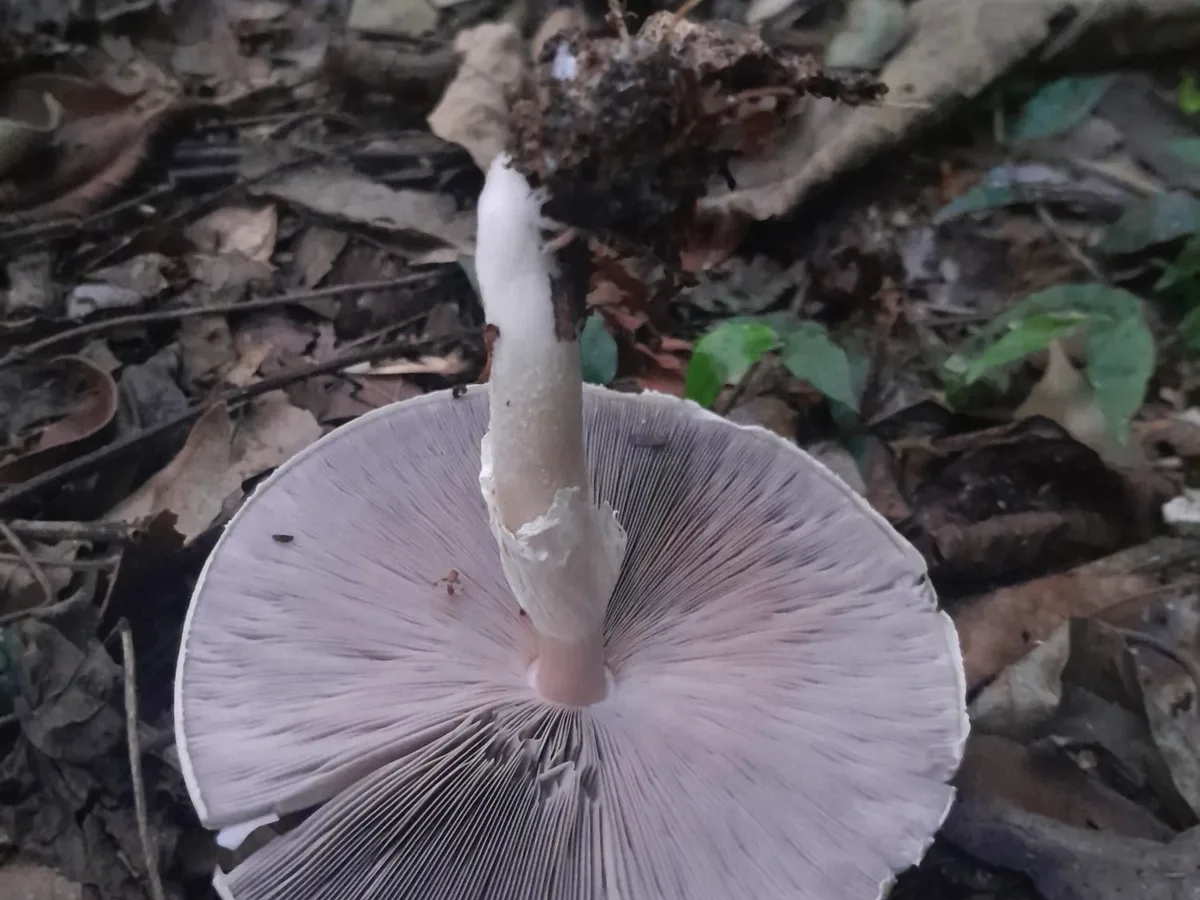 © Ana Cristina Almeida (CC BY-SA)
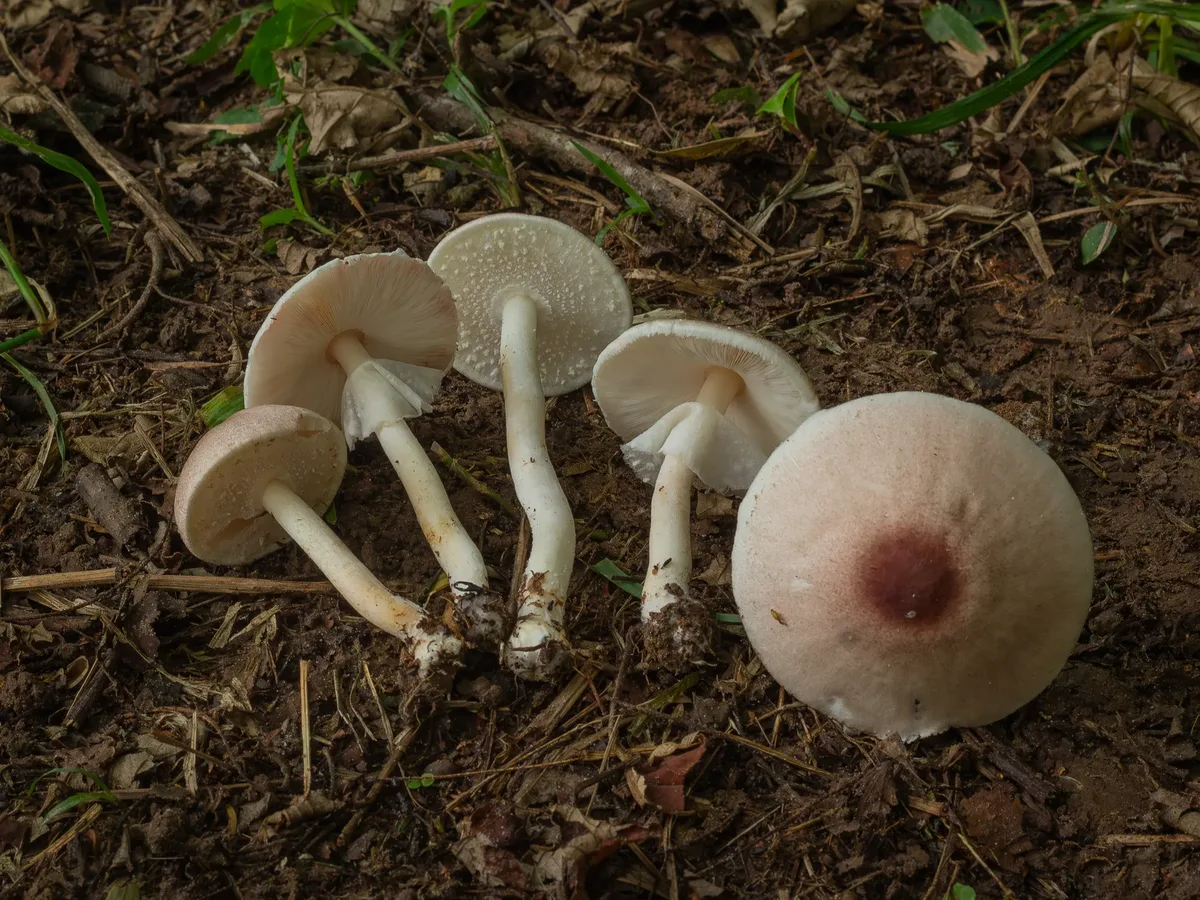 © Denis Zabin (CC BY)
 © Denis Zabin (CC BY 4.0)© Denis Zabin (CC BY 4.0)© Denis Zabin (CC BY 4.0)
One of the best mushrooms you can bring home - once you are certain of the identification.
Never eat a mushroom you are not 100% sure of - check the look-alikes below, and always cook wild mushrooms.
How to recognise it
Before you even look closely, the almond mushroom announces itself: that warm, sweet scent of marzipan or bitter almonds rising from a firm, pale cap is as distinctive as the mushroom's elaborate double-layered ring.
Cap
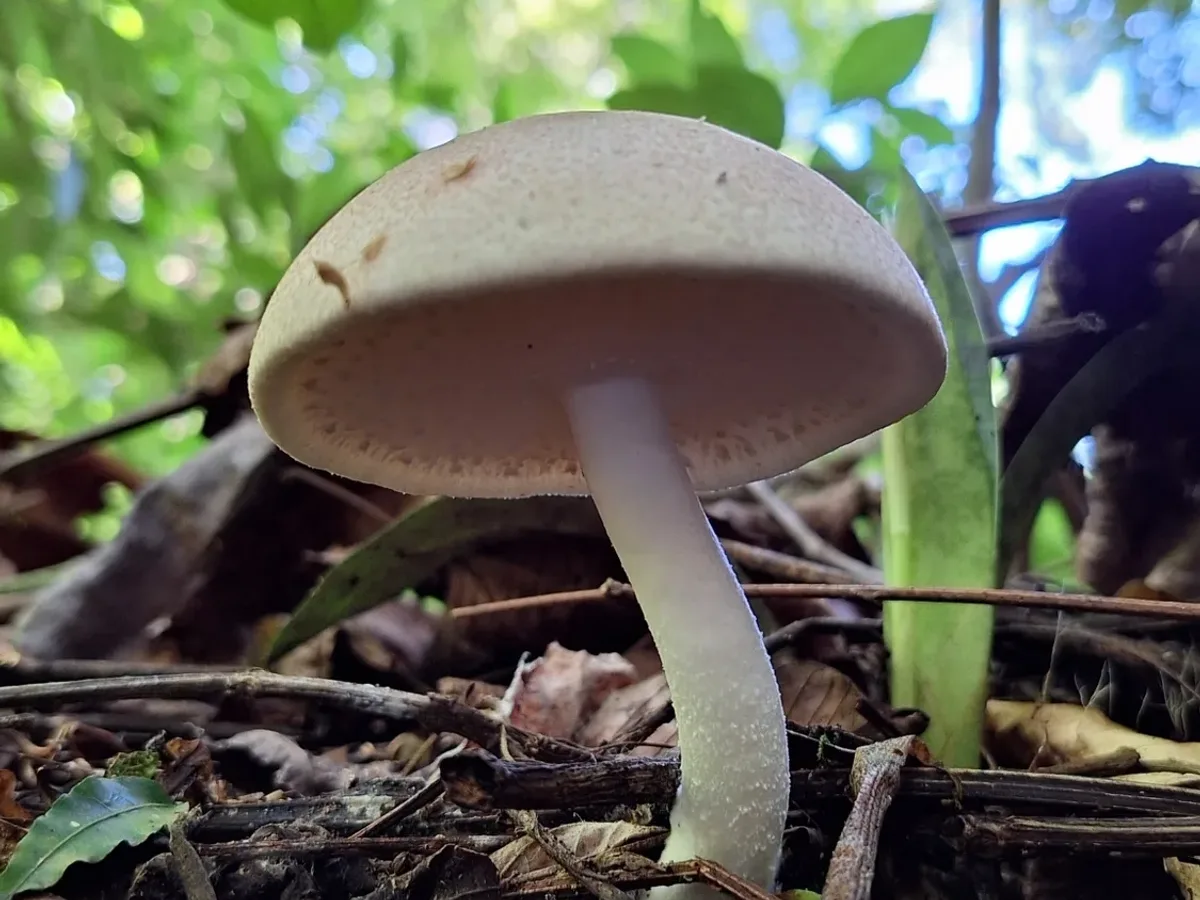
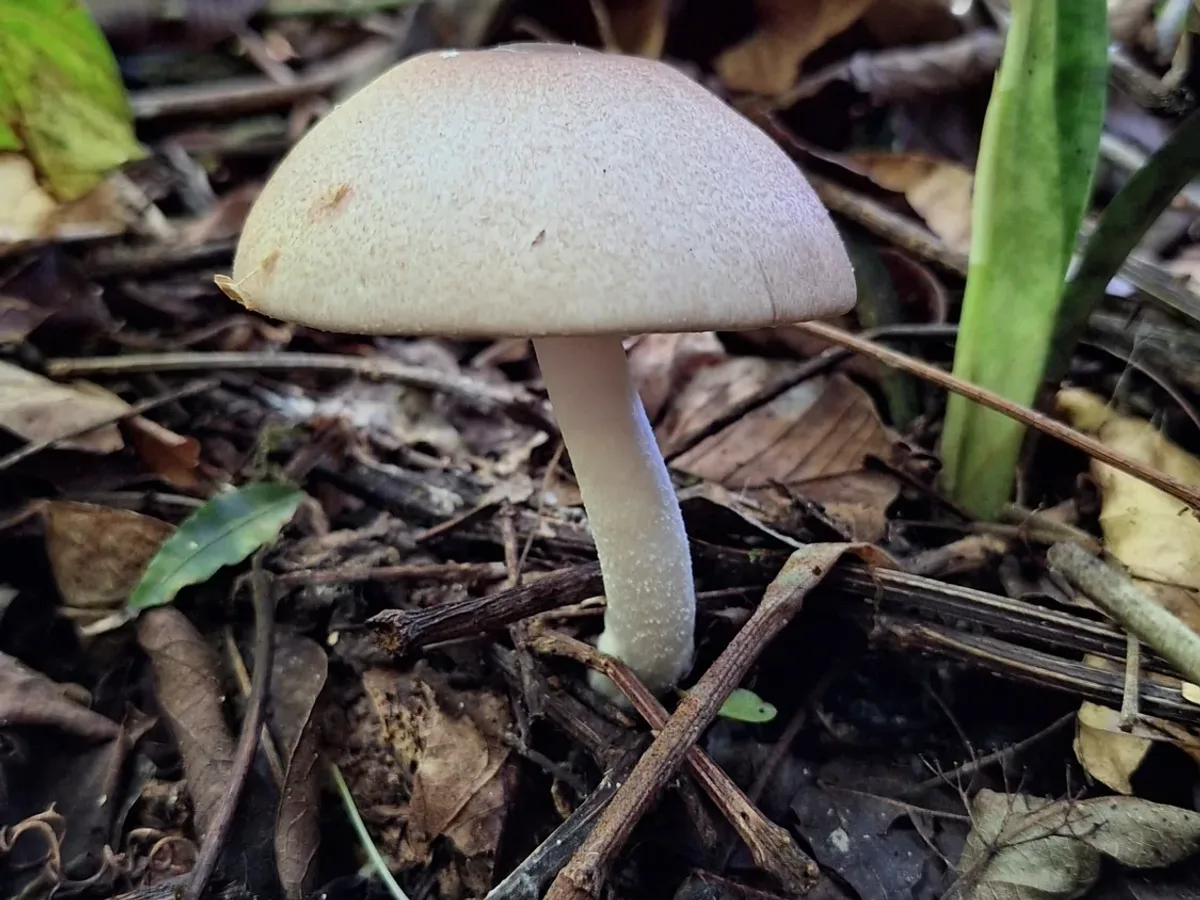
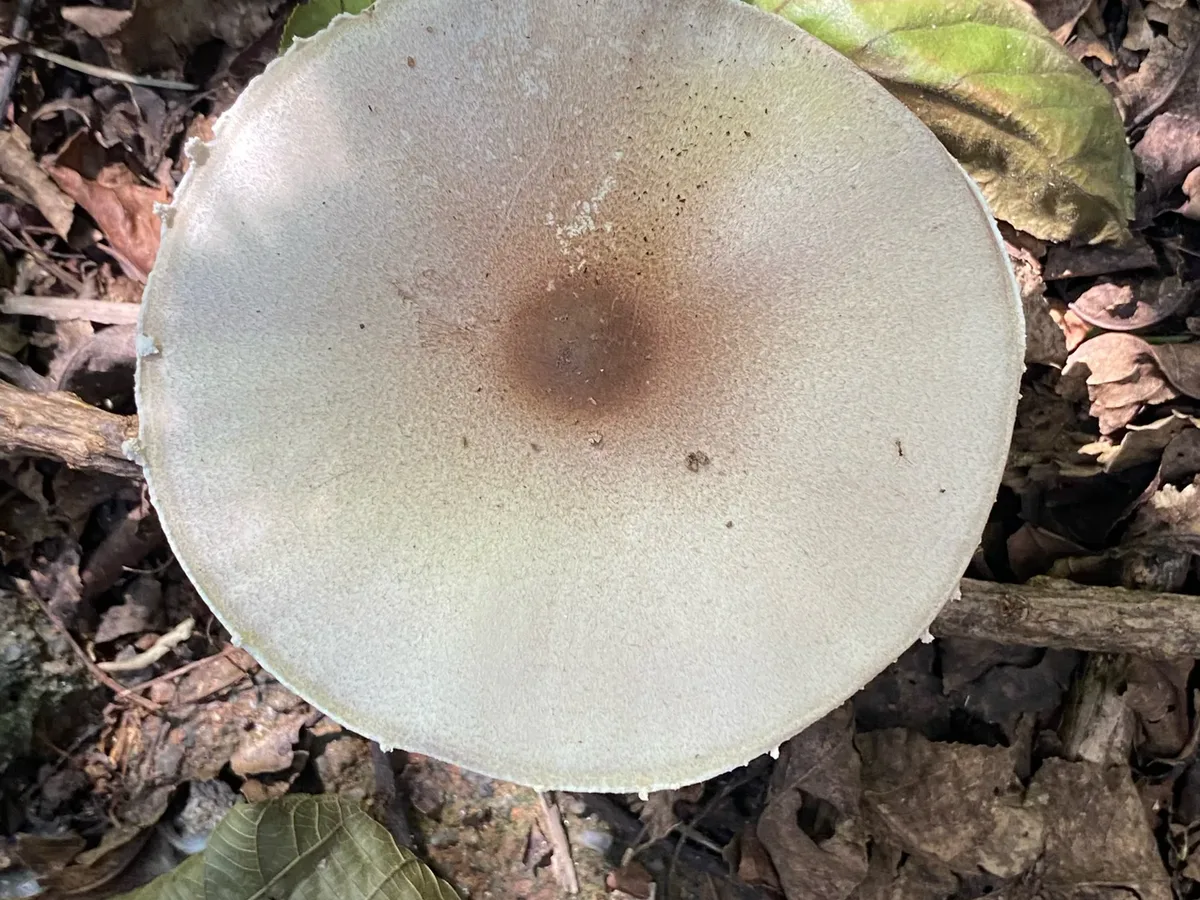
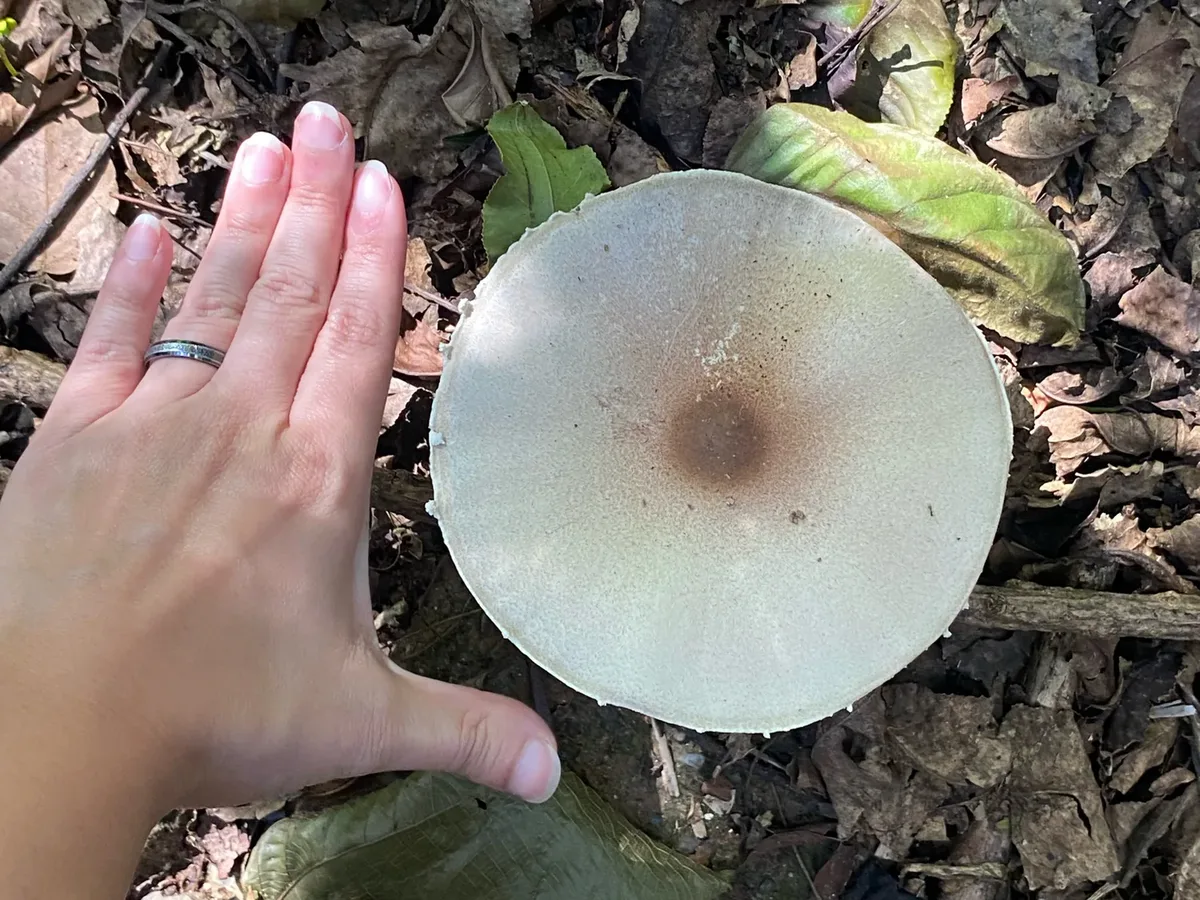
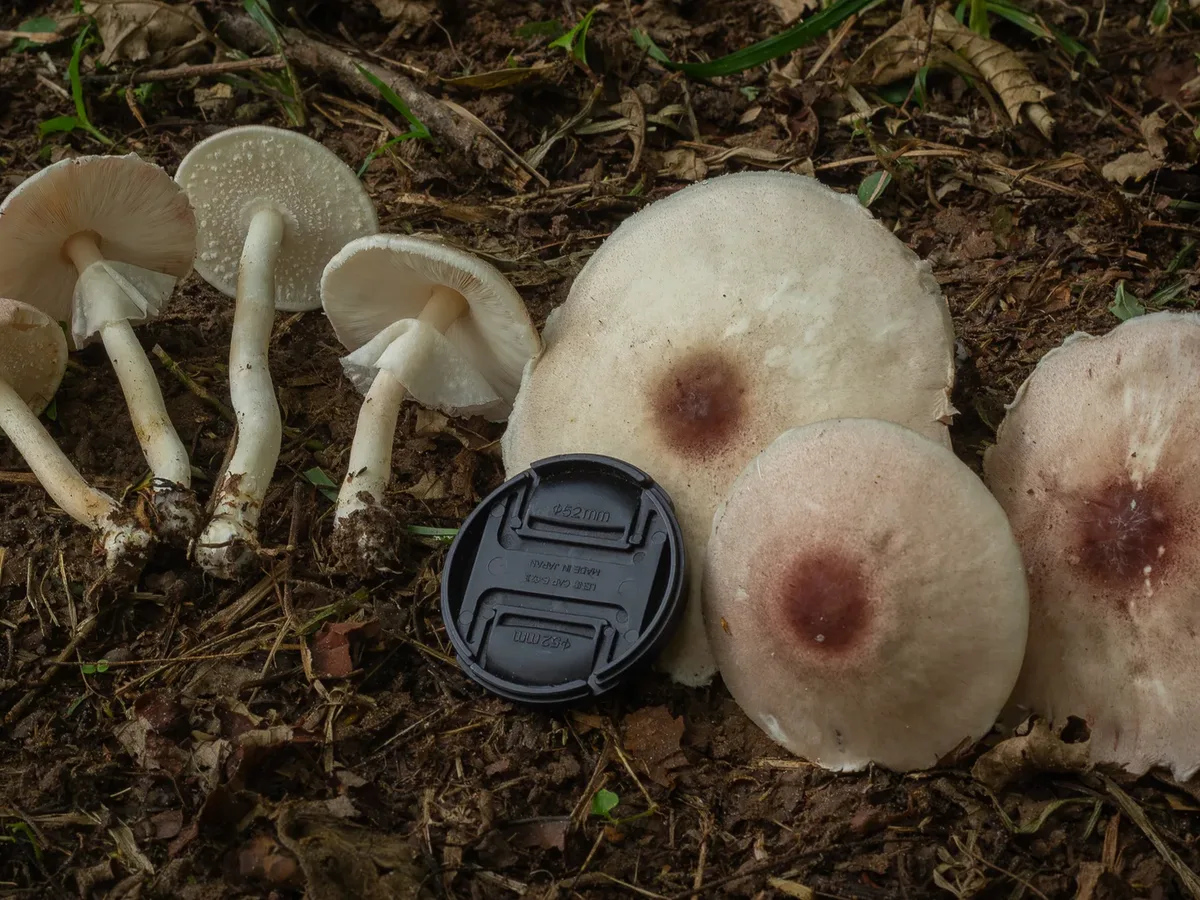
It is a robust, medium-to-large species, 5-15 cm across, starting out convex to broadly umbonate before spreading wider with age.
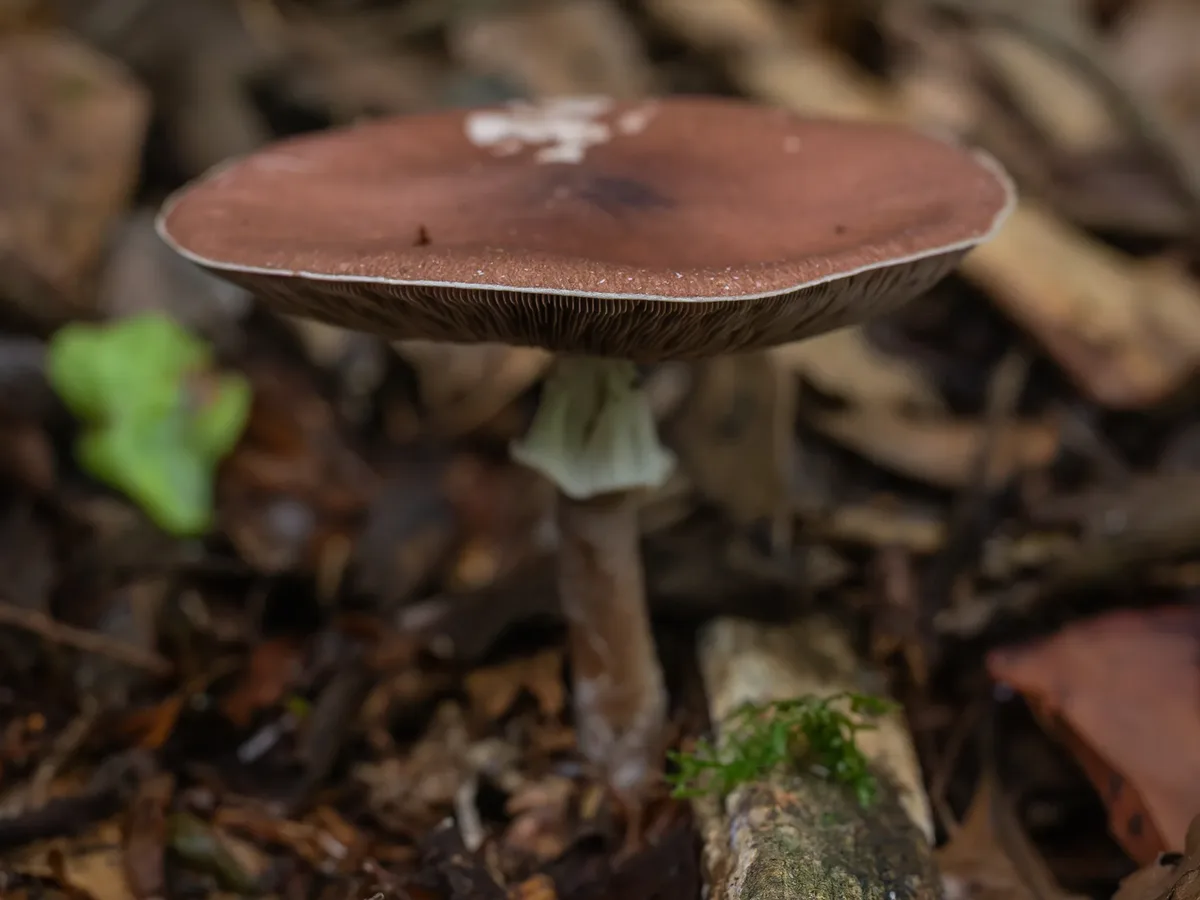
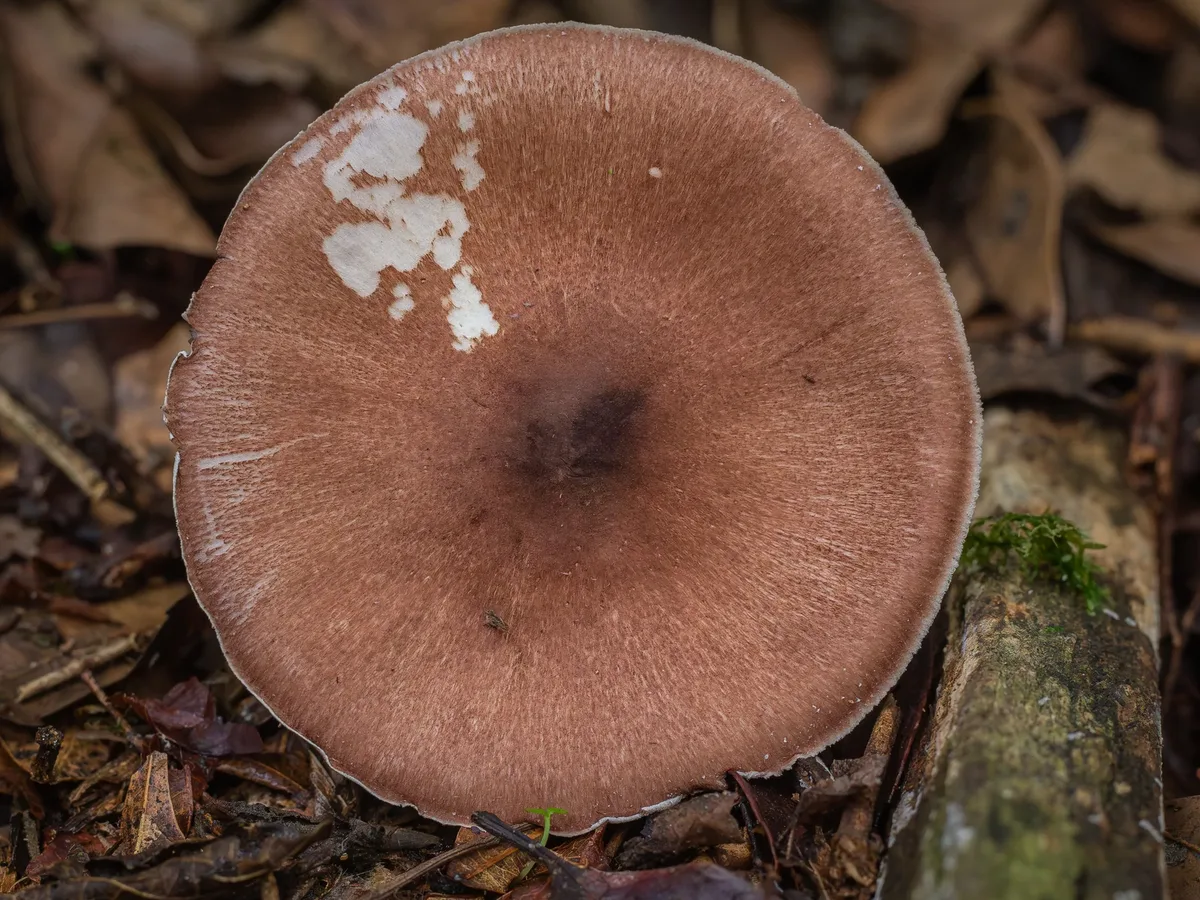
The dry cap surface is clothed in silky, appressed fibrils or fine scales - whitish to pale buff when young - that deepen to tan or light reddish-brown toward the centre as the mushroom matures.
The cap margin often stays incurved for some time and may trail white cottony remnants of the partial veil.
Gills
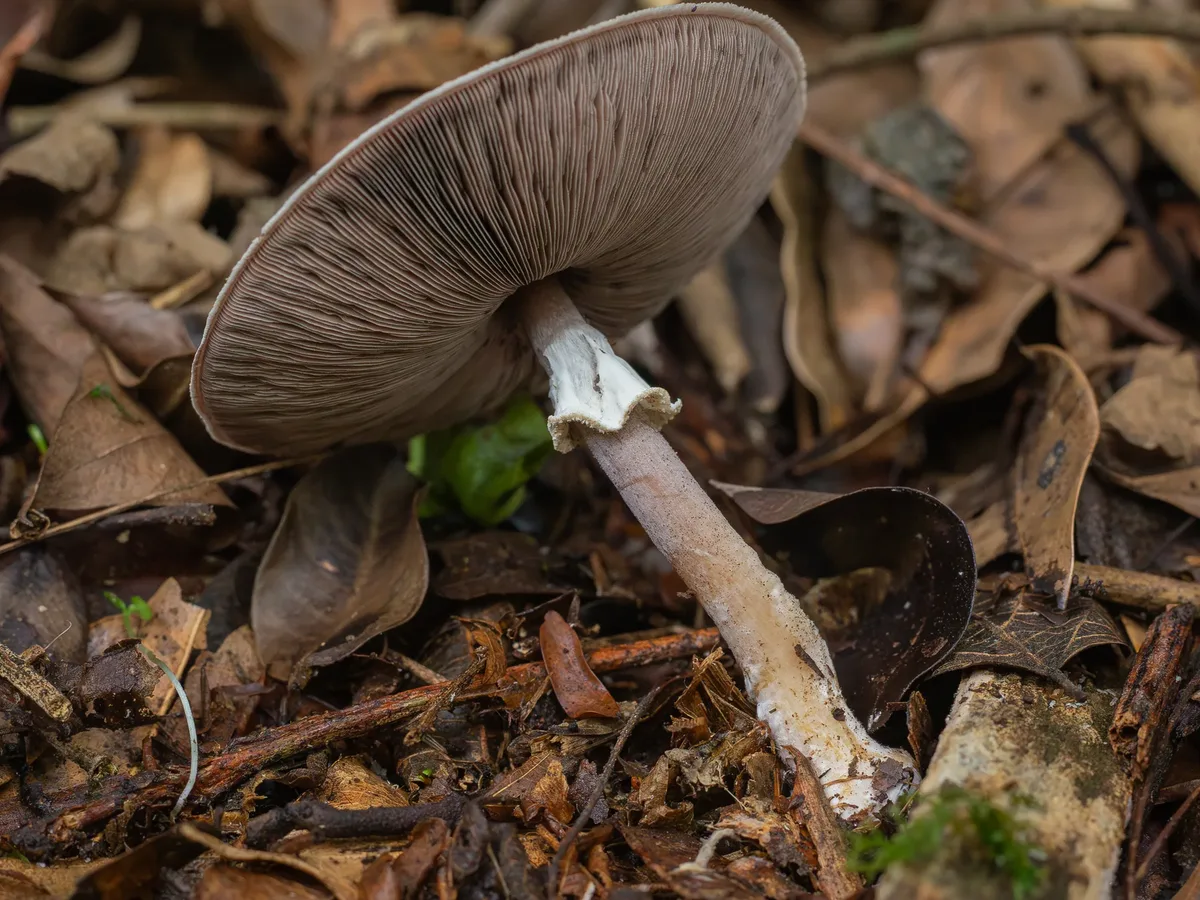
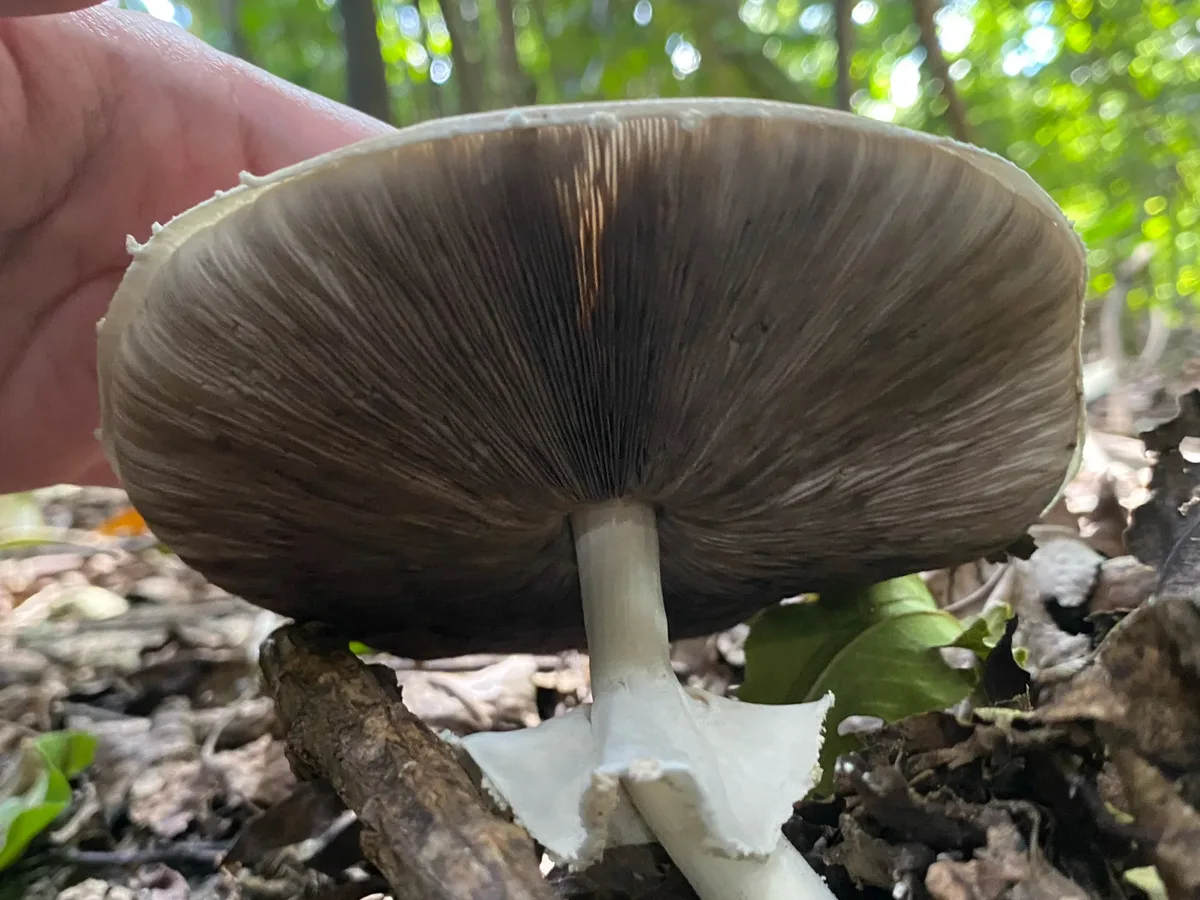
Lift a button and check the gills: they should be pink or pinkish-grey from the very start, never white or yellow.
This pink-to-brown progression - gills deepening steadily through deep chocolate-brown and sepia as the spores mature - is one of the most reliable signals for safely placing a mushroom in the edible Agaricus group.
The gills are free from the stem and densely crowded, a hallmark of the genus.
Stem
The stem is stout, 6-14 cm tall and 1-2.5 cm thick, with a slightly swollen base that sits clean in the soil with no enclosing volva (which would indicate a deadly Amanita).
The surface is white above the ring and fibrous to finely scaly below.
The ring itself is one of this species' most interesting features: large, thick, double-layered, and skirt-like, with a distinctly cogwheel-like pattern of coarse ridges on its underside - a useful character that helps distinguish it within the group.
Young stems are solid; older ones become hollow or pithy.
Flesh
Sliced flesh is white and firm throughout the cap. It may flush very faintly pinkish on cutting, but it does not turn chrome-yellow - the absence of that reaction is critical, separating it cleanly from the toxic yellow-staining mushrooms.
Spore print is dark chocolate-brown to purple-brown; spores 6-8.5 × 4-5.5 µm, ellipsoid, smooth.
Where & when it grows
Habitat
The almond mushroom is a saprotroph - a dedicated recycler, breaking down leaf litter, wood chips, composted manure, and humus-rich soil rather than partnering with tree roots.
In its native eastern North American range it favours the transitional zones between woodland and open ground:
- forest edges
- grassy margins near hardwoods
- lawns thick with organic debris
- disturbed soils where organic material accumulates
It is a creature of edges and abundance, not the deep forest interior.
The species has a remarkable intercontinental story: purportedly carried from Pennsylvania to Brazil in the 1960s, it took hold in the Atlantic Forest biome and became a major cultivated and naturalised species, growing in composted leaf litter enriched with sugar-cane and agricultural waste. From there cultivation spread across Japan (where it is grown as 'himematsutake'), China, Korea, and Southeast Asia.
In temperate Europe and North America today it turns up most often near compost heaps, garden beds, and fertilised lawns in late summer - a garden escapee from cultivation more often than a genuine wild find. It needs no host tree and forms no mycorrhizal association.
When
This is a warm-season mushroom through and through - it dislikes cold and will not tolerate frost.
In its native eastern United States, fruitings run from mid-summer (July) through late autumn (November), with the best flushes appearing in August and September after warm rains on nights that stay above 15 °C. Look for it when the air is still summery but the first hints of September coolness arrive.
In the subtropical and tropical zones where it is now cultivated - Brazil, Southeast Asia, Japan - it can fruit year-round when conditions are right:
- substrate temperatures of 25-35 °C for colonisation
- dropping to 20-28 °C to trigger fruiting
- humidity held above 85%
In northern Europe it occasionally turns up in compost-rich gardens during a warm late summer, but wild finds are genuinely uncommon and almost always near a cultivation source.
How it grows
Like all Agaricus species, this mushroom is not mycorrhizal - it earns its living as a saprotrophic decomposer, threading white, rope-like mycelium through composted plant matter, wood chips, and humus-rich soil.
That mycelium can spread quietly for weeks unseen. Then, given the right cue - a temperature drop of 5-10 °C, a surge of fresh air and humidity - it clusters into primordia almost overnight, and buttons push through the soil surface within days.
Commercial cultivation exploits exactly this behaviour, using composted substrates such as:
- rice straw
- sugar-cane bagasse
- soybean straw
- cotton waste
Wild fruitings appear solitary to scattered or in small, loose clusters - never in tight tufts.
Young buttons emerge still enclosed in the white partial veil. As they push upward and the cap expands, that veil tears away to leave the characteristic double-layered, cogwheel-ridged ring around the stem.
Fruiting conditions
Warm-season species; requires sustained warmth and moisture. In wild settings flushes follow late-summer rains when soil temperature remains above 18 °C. In cultivation, fruiting is triggered by a temperature drop of 5-10 °C from colonisation temperature combined with fresh-air exchange and humidity above 85%.
Look-alikes
Several species can be confused with Agaricus subrufescens, and two groups are genuinely dangerous:
- 1DEADLY - Amanita bisporigera (eastern North American destroying angel) and Amanita virosa (European destroying angel): These can superficially resemble immature buttons still enclosed by the partial veil, especially when barely emerged from soil. However, all Amanita species have white gills at every stage of development, a saclike volva at the base of the stem, and lack the almond/anise odour. Never pick any white or pale mushroom without checking the base for a volva and confirming pink-to-brown gills.
- 2DEADLY - Amanita phalloides (death cap): Less white than the destroying angels but can appear as a pale button; has white gills, a volva, and no almond scent. Responsible for the majority of fatal mushroom poisonings worldwide.
- 3TOXIC - Agaricus xanthodermus (yellow-staining mushroom): The most dangerous lookalike within the same genus. It resembles A. subrufescens closely but turns instantly bright chrome-yellow when the base of the stem or cap flesh is bruised or cut - a reaction absent in A. subrufescens. It smells of phenol or ink (unpleasant, medicinal) rather than almonds. Yellow-staining causes gastrointestinal poisoning.
- 4TOXIC - Agaricus californicus: A western North American species with a mild smell but turning yellow at the base. Gill colour and phenol reaction distinguish it.
- 5TOXIC - Chlorophyllum molybdites (green-spored parasol): Found in the same lawns and disturbed soils across eastern North America; the most frequent cause of serious mushroom poisoning in North America. Cap is parasol-like with coarse scales; gills turn dull green with age; spore print is green. A. subrufescens has chocolate-brown (never green) gills and a dark purplish-brown spore print.
- 6CAUTION - Leucoagaricus leucothites (white dapperling): Has white gills that remain white at maturity - a firm exclusion criterion. No almond smell.
- 7CAUTION - Macrolepiota procera (parasol mushroom): Much larger, snakeskin-patterned stem, moveable ring, no almond smell; cap scales are brownish patches, not fibrous.
Key safety checks for Agaricus subrufescens:
- gills MUST be pink or pink-grey in young specimens
- NO chrome-yellow reaction when stem base is cut
- almond/anise smell present
- NO volva at stem base
- double cogwheel ring present
Always has white gills at every stage; has a saclike volva (cup) at the stem base; lacks almond/anise smell; cap usually greenish-olive to yellowish-green. Responsible for most fatal mushroom poisonings worldwide.
All-white mushroom with persistently white gills; prominent volva at base; no almond scent; simple rather than double-cogwheel ring; stem surface not fibrous-scaly. European species, but the whole Amanita virosa complex shares these features.
All-white mushroom with persistently white gills at every stage; prominent saclike volva at stem base; no almond scent; simple ring; deadly amatoxins. The primary destroying angel of eastern North America - always dig up the stem base and reject anything with a volva.
Yellow-staining at base; mild to slightly unpleasant odour; western North America; gastrointestinal toxin
Parasol-like with coarse cap scales; gills turn dull green with age; spore print is green (never brown). The most frequent cause of serious mushroom poisoning in North America, sharing lawns and disturbed soils with A. subrufescens in its native range. Take a spore print if in doubt.
Much larger; stem has distinctive snakeskin banding pattern and a freely sliding ring; flesh does not stain pink; no almond smell; cap scales are broad brownish patches not appressed fibrils
Gills remain white throughout development - never pink; no almond smell; slender stem; ring is simple, not double cogwheel
Turns instant chrome-yellow when stem base or cap flesh is cut or bruised; smells of phenol or ink, not almonds; causes gastrointestinal poisoning
In the kitchen
Picking & cleaning
Pick while the veil beneath the cap is still intact or just beginning to tear - at this stage the gills are deep pink to pink-grey and the cap has not yet flattened, and the flavour is at its mildest and sweetest.
Older, fully open specimens with chocolate-brown gills and hollow stems are still good to eat but carry a more assertive, stronger flavour and aroma.
Cut cleanly at the soil surface with a knife rather than pulling, so you leave the surrounding soil and any nearby developing buttons undisturbed.
Shake off loose soil, then run through the quick safety checks:
- no volva enclosing the stem base
- no chrome-yellow staining when you cut the flesh
- that characteristic almond scent clearly present
Commercial 'ABM' (Agaricus blazei Murrill sensu auct.) supplements are based on this species dried and powdered.
Cooking
Agaricus subrufescens has a rich, nutty, almond-sweet flavour considerably more complex than the common Agaricus bisporus.
The fresh mushroom is excellent sliced and sautéed in butter or olive oil, where it develops an intense savoury depth within 5-8 minutes. It holds its shape well when cooked and suits risotto, pasta, pizza, and cream sauces. The flavour is strong enough to anchor vegetarian mains.
It can be dried and powdered, intensifying both flavour and the characteristic almond-anise notes, making it useful as a seasoning.
Regional preparations vary:
- In Japanese cuisine it is consumed thinly sliced in hot pots and yakitori.
- In Brazil it is commonly grilled whole or sautéed with garlic.
Some sources note that very large quantities eaten raw may cause mild gastrointestinal upset due to agaritine content (a hydrazine compound present in most raw Agaricus); cooking destroys agaritine and is advisable. Always cook thoroughly.
Good to know
Agaricus subrufescens is considered a safe, choice edible when correctly identified.
The critical safety steps are:
- 1Always confirm pink gills in buttons - white gills of any shade indicate a potentially deadly Amanita.
- 2Perform the yellow-staining test by cutting or bruising the stem base - instant yellow means discard.
- 3Confirm the pleasant almond or anise odour - a phenol, ink, or medicinal smell means a toxic yellow-staining Agaricus.
- 4Check for absence of a volva by digging gently around the base.
Consuming unidentified white-gilled mushrooms in this growth form is responsible for a large proportion of fatal mushroom poisonings worldwide.
In eastern North America, also verify the spore print is dark chocolate-brown or purple-brown, not green (which would indicate the toxic Chlorophyllum molybdites).
Cultivated ABM supplements are generally regarded as safe, though high-dose aqueous extracts have very rarely been associated with hepatotoxicity in immunocompromised individuals; the dried and cooked mushroom as food is without such concerns.
A reference guide - never an edibility guarantee. When in doubt, leave it out.