Wood Mushroom
Agaricus silvicolasyn. Psalliota silvicola (Vittad.) Peck, Agaricus sylvicola (Vittad.) Peck, Psalliota sylvicola (Vittad.) Peck, Pratella sylvicola Vittad.
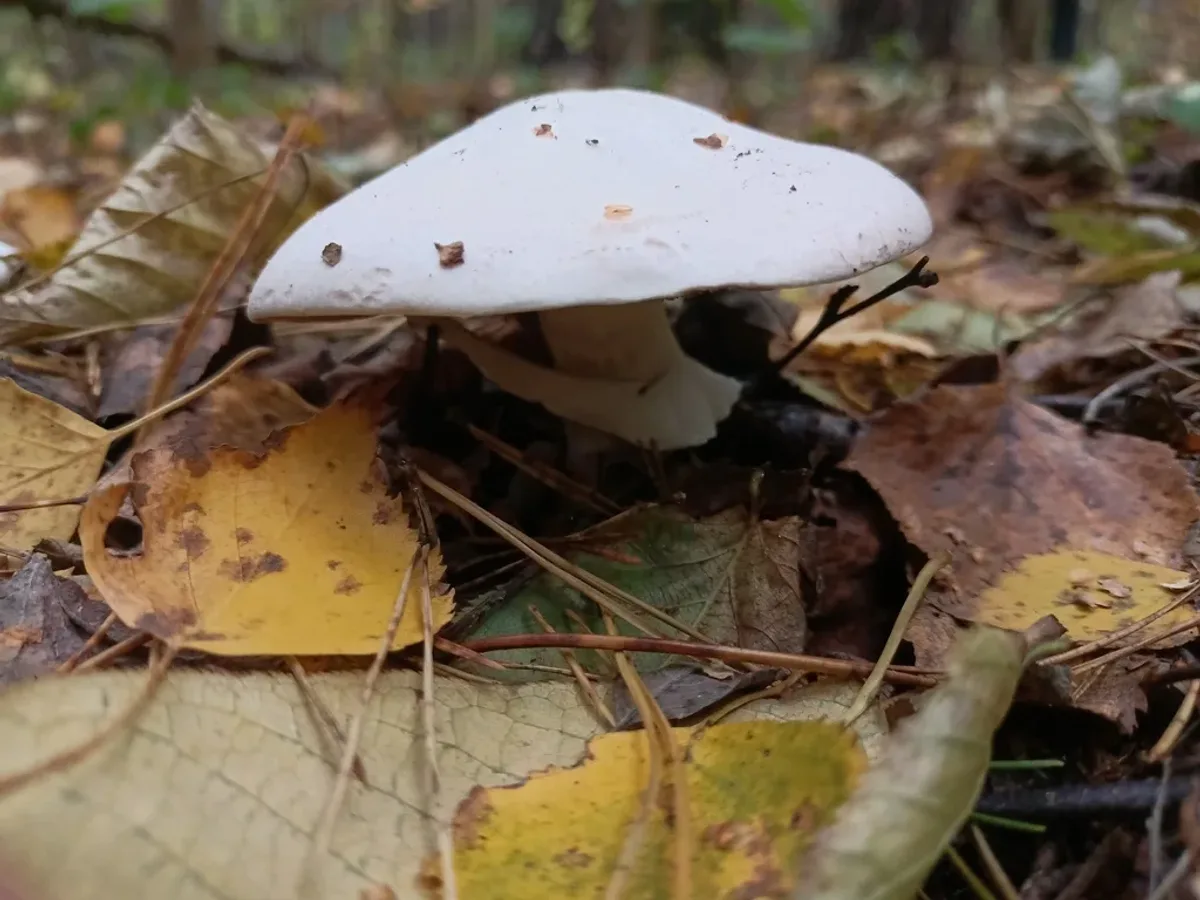 (c) captainclover, some rights reserved (CC BY)
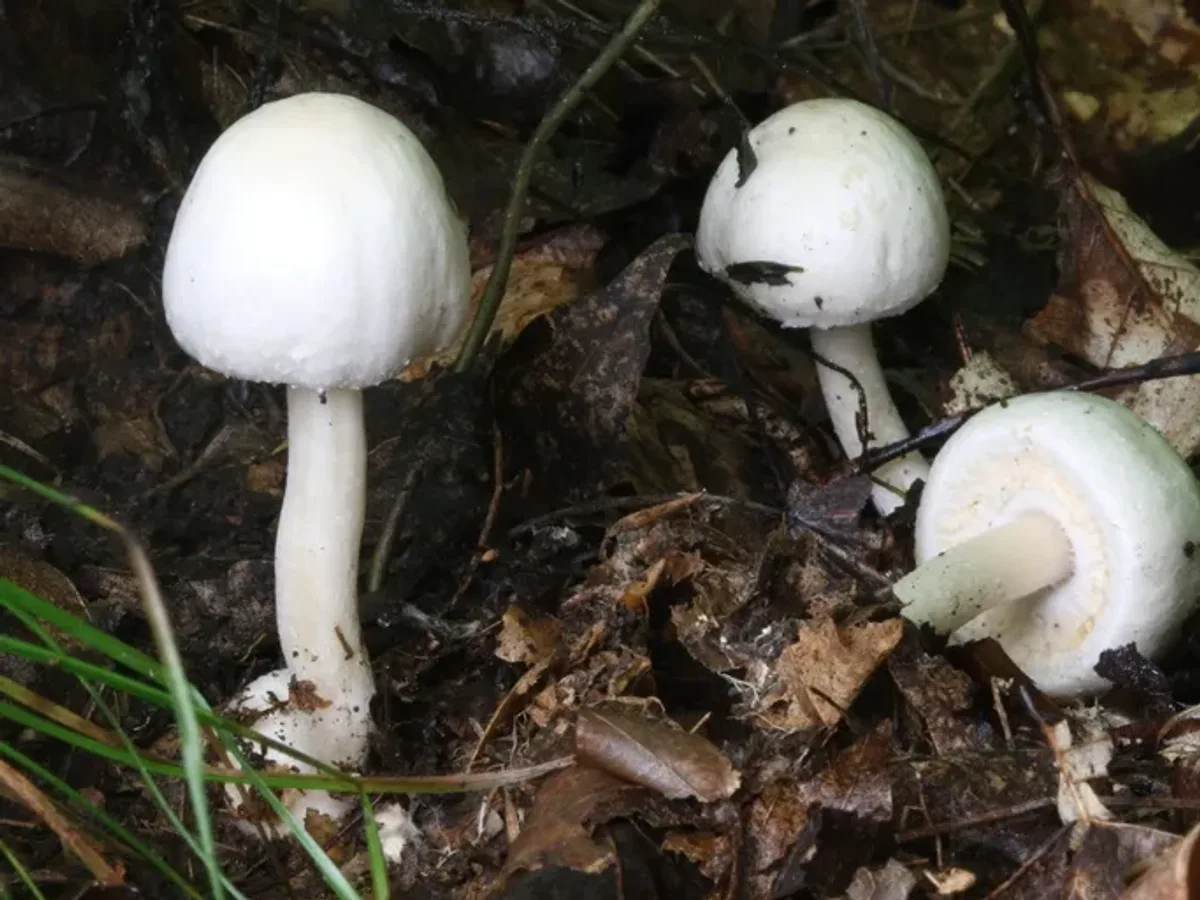 no rights reserved
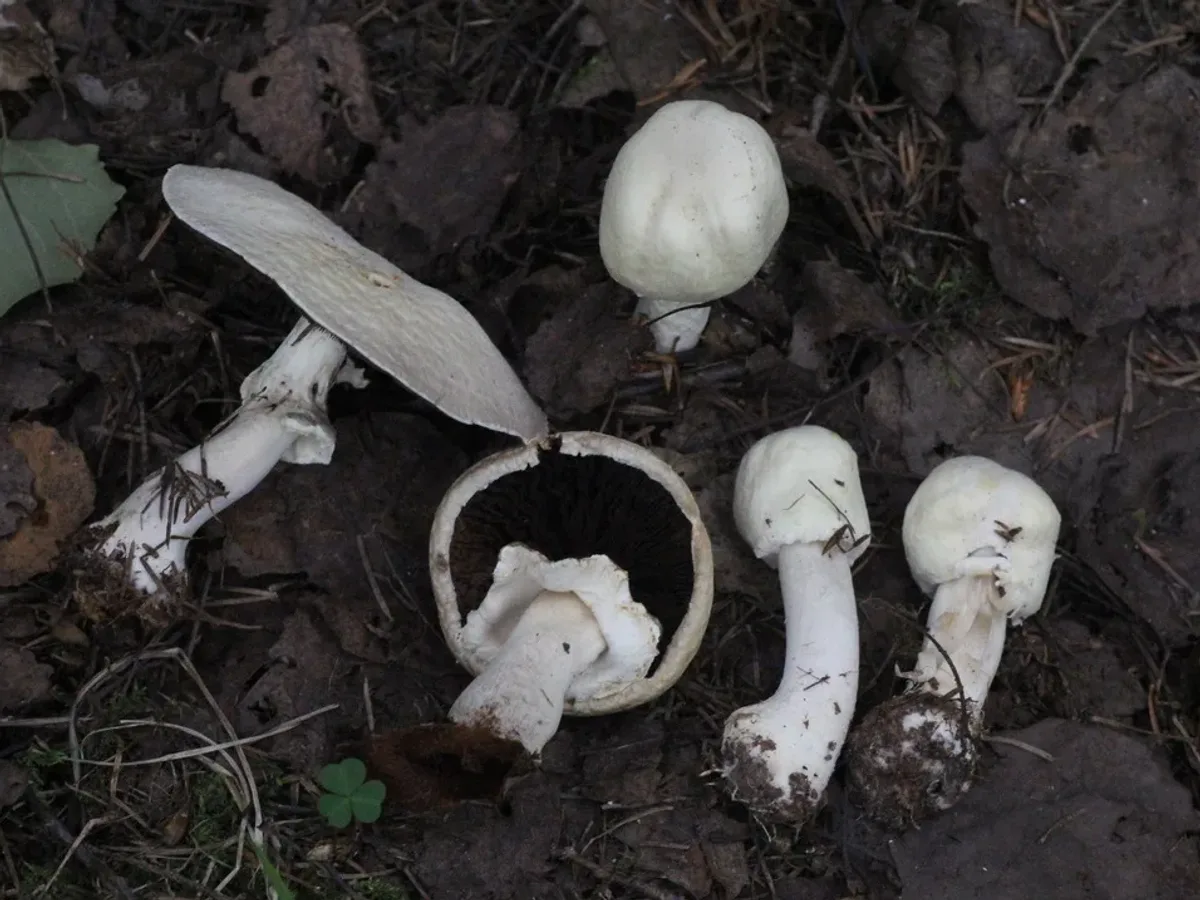 (c) Nina Filippova, some rights reserved (CC BY)
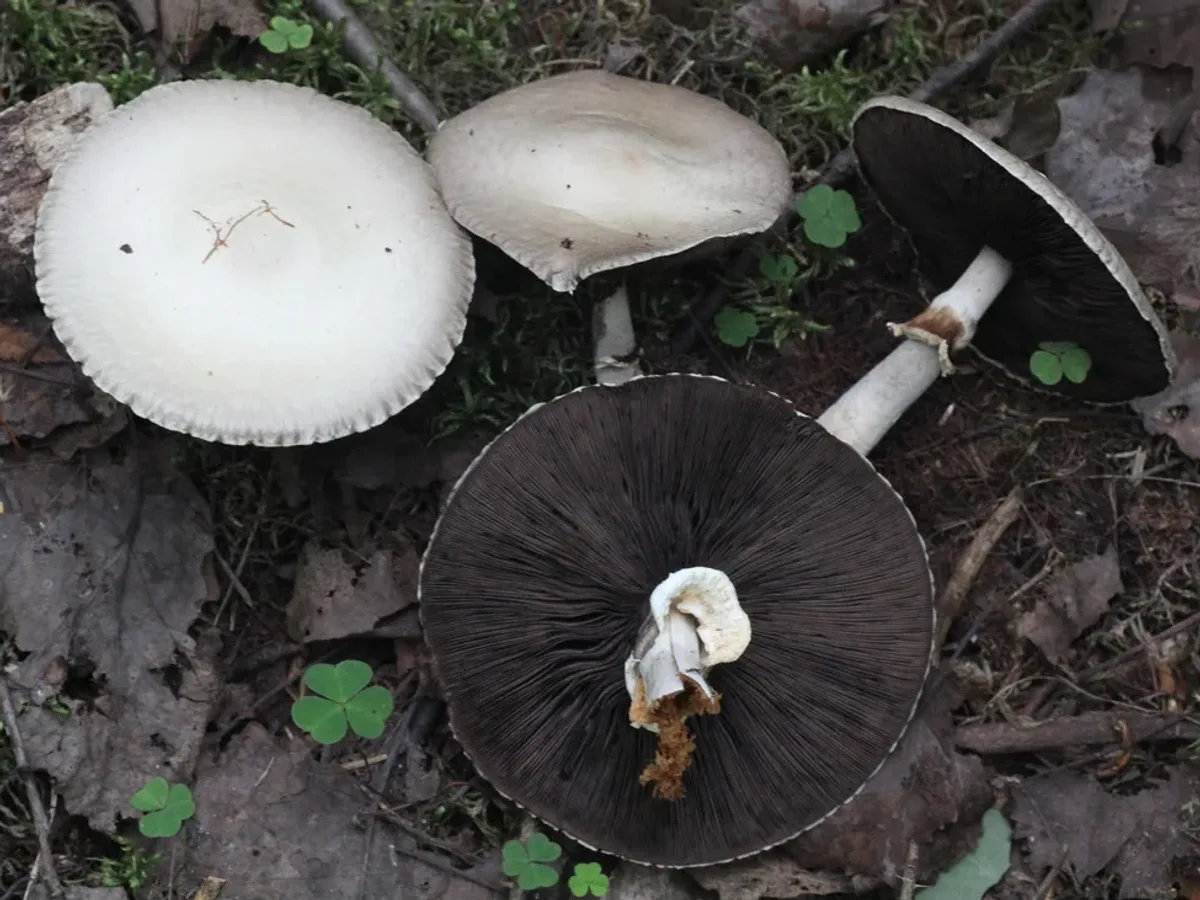 (c) Nina Filippova, some rights reserved (CC BY)
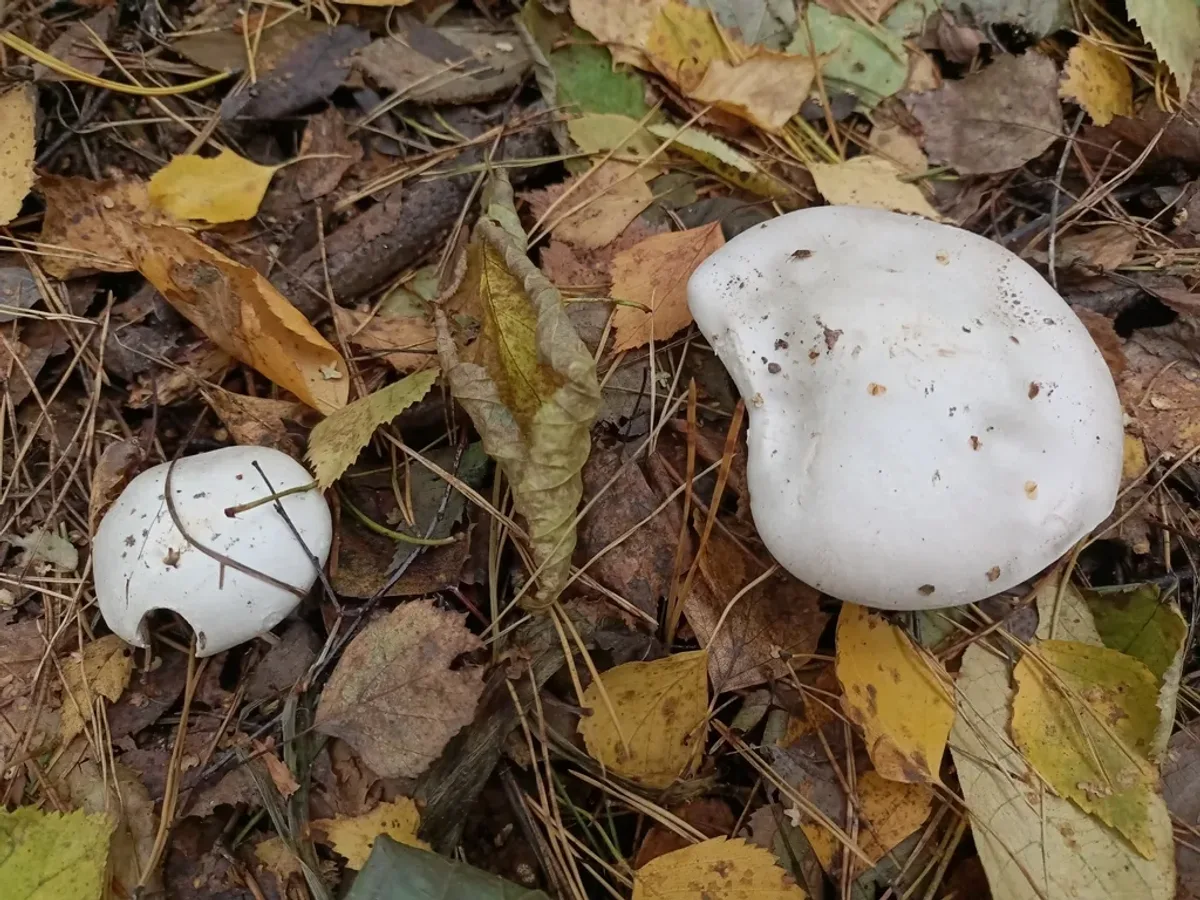 (c) captainclover, some rights reserved (CC BY)(c) captainclover, some rights reserved (CC BY)no rights reserved
Good to eat, once you have identified it with certainty and cooked it through.
Never eat a mushroom you are not 100% sure of - check the look-alikes below, and always cook wild mushrooms.
How to recognise it
Agaricus silvicola is a graceful, pale woodland mushroom that rewards close inspection precisely because getting it right matters - it grows in the same forest that shelters some of the most dangerous fungi in the world.
At first glance it looks like a slender, whiter version of the Horse Mushroom (A. arvensis).
Cap
The cap is a clean white to ivory dome, smooth and dry, with little of the coarser scaling or russet tones that decorate its relatives.
In young specimens the cap is a rounded hemisphere, the margin often still curved inward, the surface silky and near-white; as it matures it expands broadly and may flatten almost completely, the colour shifting to cream or pale buff.
Rub the cap margin firmly with your thumb and watch for a slow, diffuse yellowing - the wood mushroom will oblige, but the colour that develops is pale straw or cream, spreading gradually, never the immediate, vivid chrome-yellow associated with the poisonous Yellow Stainer.
Gills
The gills are hidden beneath the cap but are one of the most important safety checks you can make: lift the cap or slice the specimen and you should see distinctly pink gills even in the youngest, tightest buttons.
They deepen through grey-pink and fawn to a rich chocolate-brown as the mushroom ages.
The fact that the gills begin pink - and never white - is a fundamental separation from the deadly Destroying Angel and Death Cap, both of which have pure white gills at every stage of development.
Stem
The stem is relatively slender - the wood mushroom has a more delicate stature than A. arvensis - with a ring that hangs like a pendant skirt.
Flesh
The flesh is white, firm, and thinner than in the pasture species.
Smell
The whole mushroom smells pleasantly of aniseed or almonds; this is one of its most reliable characters in the field.
Where & when it grows
Habitat
Where this species grows is one of its defining characters: it is a woodland mushroom, not a pasture mushroom.
Unlike the common Field Mushroom and Horse Mushroom, A. silvicola is found on the forest floor, particularly under conifers - spruce, fir, pine, larch - and sometimes under beech or oak, where it feeds on needle duff and leaf humus.
In Australia and New Zealand, where European conifers and ornamental trees have been widely planted in parks, gardens, plantation forests, and urban reserves, the Wood Mushroom has followed, establishing itself as a genuine (though introduced) resident of these modified woodland habitats.
The Death Cap (Amanita phalloides) has done the same: introduced in soil around European oak and other ornamental trees, it now occurs in gardens, parks, and plantations across both countries.
This overlap is the single most important ecological fact about foraging A. silvicola in Australasia - the species you most need to distinguish it from may be growing metres away, or even in the same patch of litter.
When
In Australia and New Zealand, the Wood Mushroom is an autumn species. The season opens with the first substantial rains of March or April, when soils are cooling from summer but still carry enough warmth to stimulate mycelial activity.
The main flush runs through April and May, with occasional caps persisting into June in milder coastal areas.
The trigger is the combination of rain and soil warmth: a good autumn flush typically follows 20-30 mm or more of rain in a two-week window when soils remain above about 10 °C.
In colder upland or southern locations the season may be shorter and more sharply autumn-focused. In the Northern Hemisphere the timing shifts to summer-autumn, with peak fruiting from August through October.
How it grows
A saprotrophic decomposer, A. silvicola derives its nutrition from digesting the organic matter in forest humus - needle duff, leaf litter, buried twigs - without partnering with tree roots.
Fruiting bodies appear singly or in small, loose, scattered groups, rarely in dense clusters; true fairy rings are uncommon. A suitable site with stable mycelium may produce caps in successive years following good rains.
Buttons emerge from below the duff surface and can be partially buried in the early stages, which creates the critical safety risk.
At the very youngest button stage, a partially buried A. silvicola is not always easy to distinguish from a young Amanita button, and the check against deadly lookalikes must be applied regardless of how confident you feel about the habitat.
Fruiting conditions
Saprotrophic woodland species; fruiting triggered by sustained autumn rain (≥20 mm over 14 days) with soil temperatures between 10-20 °C. In Australia-NZ (Southern Hemisphere), fruiting occurs March-June with peak April-May. Buttons emerge 5-10 days after significant rainfall. Fruiting ceases when soils cool below ~8 °C or during dry periods.
Look-alikes
Four species demand careful attention.
- 1The Death Cap (Amanita phalloides) is the highest-priority lookalike in Australia and New Zealand, where it has been introduced alongside European trees and now grows in exactly the same habitats - under conifers, oaks, and ornamental trees in parks and gardens. It is separated absolutely by its gills, which are pure white at every stage; by the volva, a membranous sac or cup at the base of the stem that persists from the universal veil; by a white spore print (never dark brown); and by the absence of an aniseed smell. There is no aniseed smell in a Death Cap. There is no volva in a Wood Mushroom. Slice down and examine the stem base of every single specimen before it goes into your basket.
- 2The Destroying Angel (Amanita virosa and related species) is equally deadly and equally definitive in its separation: pure white at all stages, white gills that remain white into maturity, a prominent volva, white spore print, no anise smell.
- 3The Yellow Stainer (Agaricus xanthodermus) is the critically important toxic Agaricus mimic: it shares the woodland habitat, looks very similar, and lacks a volva - but it stains instantly and brilliantly chrome-yellow when cut, especially at the very base of the stem and in the cap cuticle, and smells strongly of ink, phenol or carbolic acid rather than aniseed. The contrast with A. silvicola's slow, pale yellowing and anise aroma is usually decisive once you know what to look for; when in doubt, trust the smell.
- 4The Horse Mushroom (Agaricus arvensis) is a safe, edible relative that is easily confused with A. silvicola; it is distinguished by its larger, more robust build, stronger anise scent, and especially by its grassland rather than woodland habitat - it prefers open pastures, meadows, and dunes. The two can occur near each other at woodland margins. Both are edible and the same safety rules apply.
DEADLY. Introduced to Australia and New Zealand alongside European oaks and conifers, and grows in exactly the same parks, gardens, and plantation habitats as A. silvicola. Separation is absolute: the Death Cap has gills that are PURE WHITE at every stage and remain white into full maturity; a membranous sac-like VOLVA cupping the stem base; a WHITE spore print; and NO aniseed smell. Agaricus silvicola has pink-to-brown gills, no volva, a dark chocolate-brown spore print, and smells of aniseed. Dig up the stem base and check for a volva on every specimen before harvesting.
DEADLY. Pure white at all stages; gills white and remaining white throughout; prominent volva at stem base; white spore print; no aniseed smell; no yellowing of flesh. No characteristic of A. virosa matches A. silvicola once you check gills, volva, and smell. Never assume a white woodland mushroom is safe without inspecting the base.
Not deadly but the most common cause of severe mushroom poisoning in warm regions of Australia, North America, and elsewhere; occasionally found in gardens and parks alongside introduced trees. Distinguished by its coarsely scaly cap, gills that turn DULL GREEN as spores mature, and a GREEN spore print - entirely unlike the pink-to-chocolate-brown gills and dark brown spore print of A. silvicola. Always take a spore print when in doubt about any pale gilled mushroom.
Edible and closely related. Typically more robust and larger, with a stronger aniseed scent, a more distinctly cogwheel-patterned ring, and a strong preference for open grassland (pastures, meadows, dunes) rather than woodland. Where the two species meet at woodland margins they can be confused; apply the same volva/white-gill/staining checks. Both are safe once the deadly species have been excluded.
Edible and choice. Distinguished from A. silvicola by its much larger size (cap typically 15-25 cm), densely fibrous brown scales on the cap, substantially stouter stem with recurved brownish scales below the ring, and stronger anise-marzipan scent. Both are woodland Agaricus species and both are safe after the standard volva/gill/staining checks.
Poisonous - causes gastrointestinal illness in most people who eat it. Appears very similar: same habitat, same pale cap, same ring. It is separated by two reliable tests: cut the flesh (especially at the very base of the stem) and it stains INSTANTLY and VIVIDLY chrome-yellow - the reaction is unmistakable; and it smells strongly of ink, phenol, or carbolic acid rather than aniseed. A. silvicola yellows only slowly, faintly, and at the stem base only, and smells of anise. If the smell is chemical or absent, discard the specimen.
In the kitchen
Picking & cleaning
Pick only specimens you have fully examined, one at a time. Select young to medium-aged fruiting bodies with caps that have not yet fully flattened and gills that are still pink to light brown - these have the best flavour and texture.
Use a knife to cut cleanly at the base rather than pulling, to preserve the surrounding mycelium.
Most importantly, dig out a small hollow around the base of every specimen before cutting and confirm with your own eyes that the stem base is NOT enclosed in a membranous sac or cup-like volva. A volva is the single most reliable field indicator of a deadly Amanita. A Wood Mushroom sits in bare soil with no volva of any kind.
- Confirm the gills are pink (not white).
- Confirm the aniseed smell is present.
- Cut a piece of flesh: confirm no instant, vivid chrome-yellow staining and no smell of ink or chemicals.
If all three checks pass, you have a safe specimen. Do not harvest in a hurry - take your time with each individual mushroom.
Cooking
The Wood Mushroom is a pleasant, versatile edible with a flavour profile similar to the Horse Mushroom - a mild, nutty mushroom flavour lifted by a gentle aniseed note that mellows agreeably on cooking.
The flesh is thinner and less meaty than A. arvensis or A. augustus, so it suits preparations where that lightness is an advantage:
- sautéed quickly in butter with garlic and herbs
- folded into omelettes
- stirred into risotto or cream sauces
- used to top toast or bruschetta
Larger caps can be lightly stuffed and grilled.
As with all Agaricus species, eat thoroughly cooked, not raw. Cook promptly after picking - the thinner flesh softens more quickly than the sturdier pasture species - and clean by brushing rather than soaking to avoid waterlogging.
It can be dried at low heat and rehydrated, though the flavour is more delicate than that of the dried Prince or Horse Mushroom.
Good to know
The Wood Mushroom is a good edible and has a long history of human use, but it is not a species for beginners. Its woodland habitat is shared by the Death Cap (Amanita phalloides), which causes the majority of fatal mushroom poisonings worldwide, and which is present in Australia and New Zealand.
Three checks are non-negotiable, every time, for every specimen:
- 1DIG UP THE BASE and inspect the stem base in open air - confirm there is NO volva (no sac, cup, or bag of white membrane). A volva cannot be hidden from a careful look.
- 2CHECK THE GILLS - confirm they are pink or brown, never white. White gills in a woodland white mushroom are a stop sign, regardless of other features.
- 3SMELL AND STAIN TEST - the flesh should smell of aniseed or almonds and should NOT turn instantly vivid chrome-yellow when cut; a slow pale yellow at the very stem base is acceptable, but bright yellow anywhere in the cap means discard the specimen.
No single check is sufficient alone; all three together give high confidence. If any check fails, discard the specimen.
Do not eat raw - cook thoroughly. A small proportion of people are sensitive to Agaricus species even when correctly identified; try a modest portion the first time.
Cadmium and heavy metal accumulation is a concern with Agaricus species generally; avoid collecting from roadsides, disturbed urban soil, or land with known contamination.
A reference guide - never an edibility guarantee. When in doubt, leave it out.