Dune Mushroom
Agaricus devoniensissyn. Psalliota devoniensis P.D. Orton
 © Michael Tidwell (CC BY)
 © Bjørn Eidhammer (CC BY)
 © Bjørn Eidhammer (CC BY)
 © Bjørn Eidhammer (CC BY)
 © Bjørn Eidhammer (CC BY)
 © Michael Tidwell (CC BY)
 © Michael Tidwell (CC BY)
 © Michael Tidwell (CC BY)© Michael Tidwell (CC BY)© Bjørn Eidhammer (CC BY)
Good to eat, once you have identified it with certainty and cooked it through.
Never eat a mushroom you are not 100% sure of - check the look-alikes below, and always cook wild mushrooms.
How to recognise it
The Dune Mushroom is a modest but neatly proportioned Agaricus built for its harsh, windswept habitat.
Cap
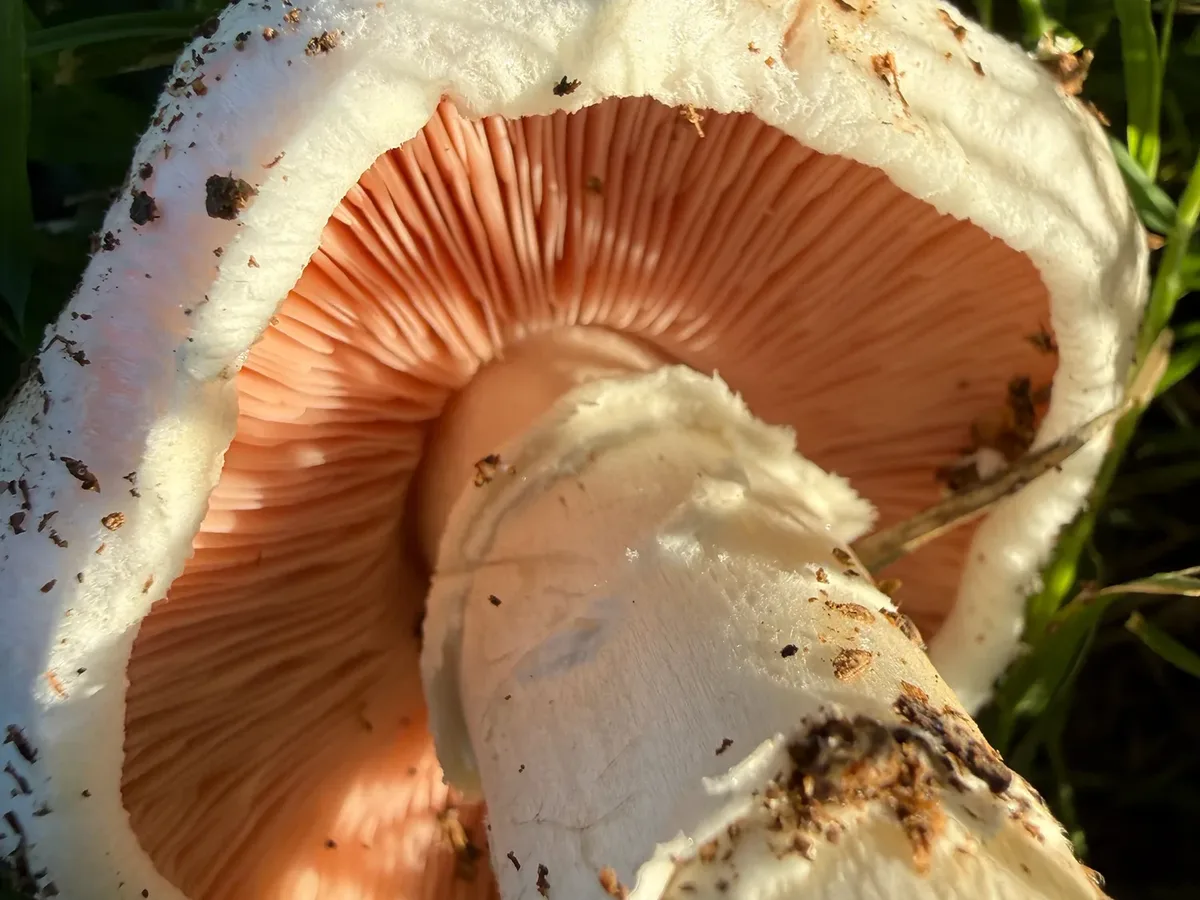
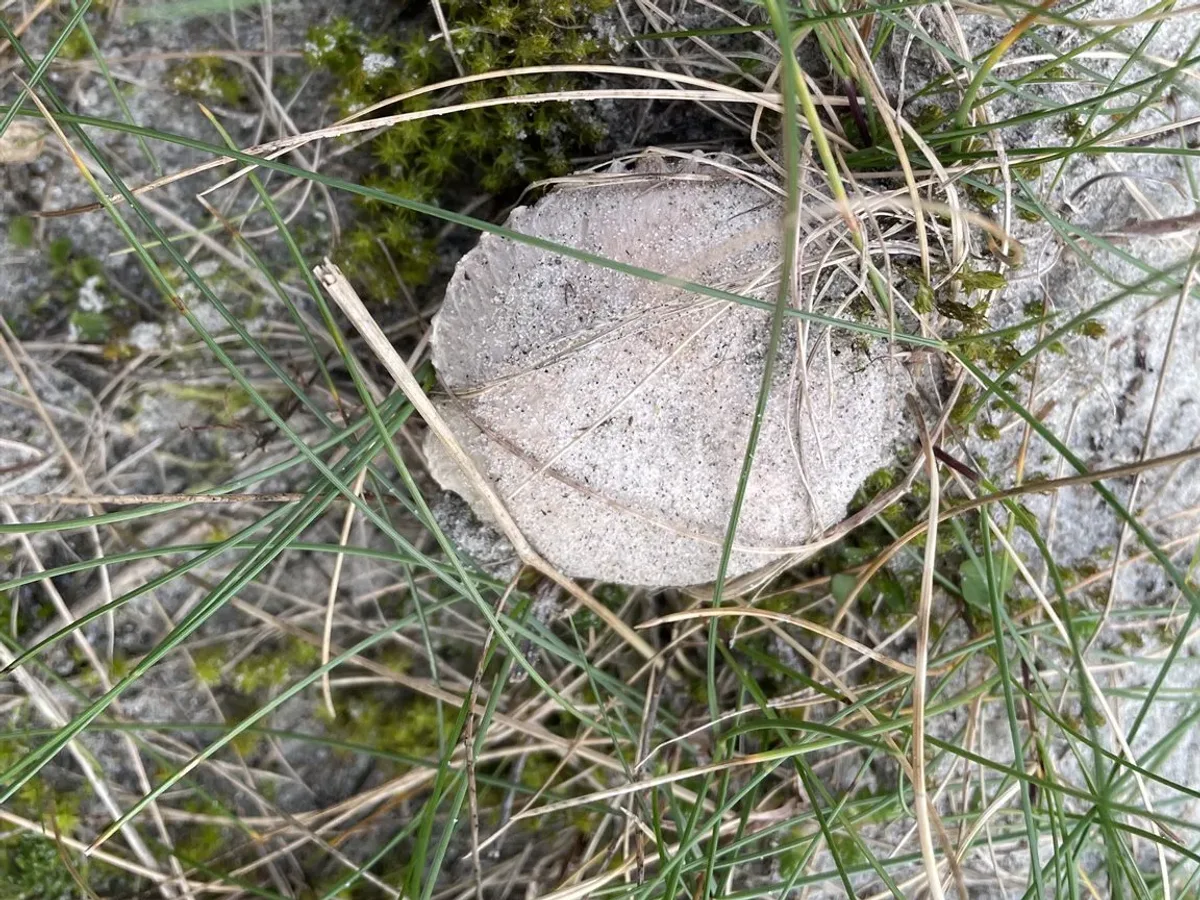
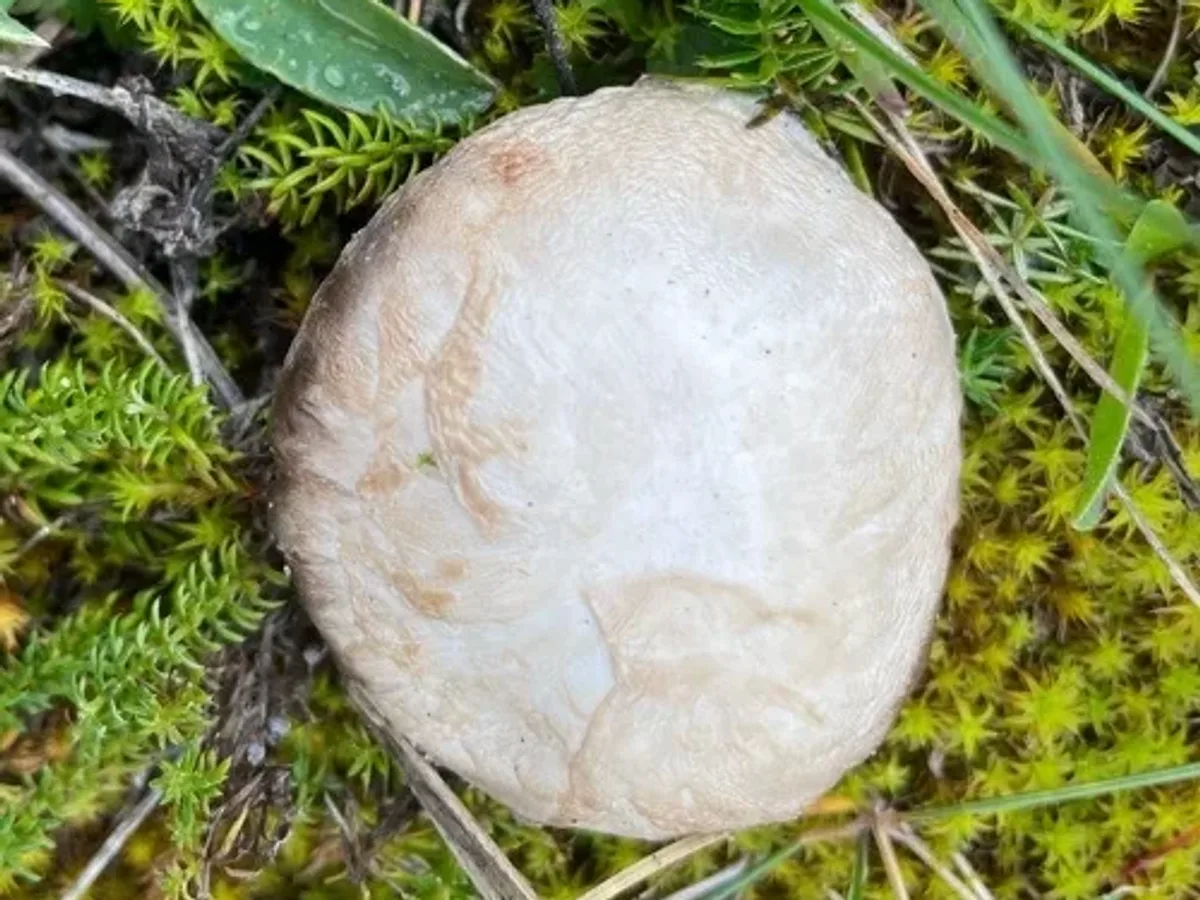
The cap, 3-8 cm across, opens from a convex dome into a broadly flat or slightly umbonate disc. Its surface is clean white to pale ivory and dry to the touch, without the coarse brown scales of Agaricus augustus or the strongly yellowing cuticle of Agaricus xanthodermus.
Gills
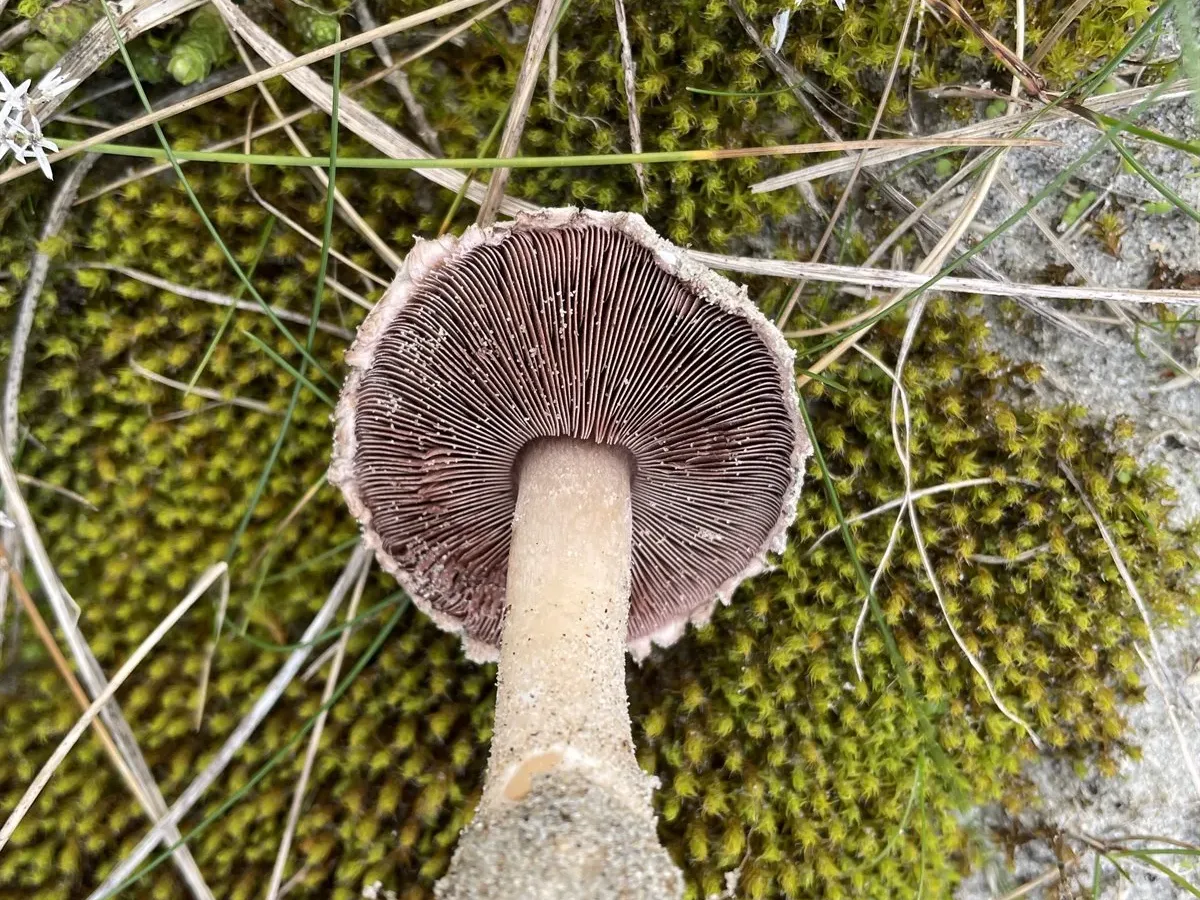
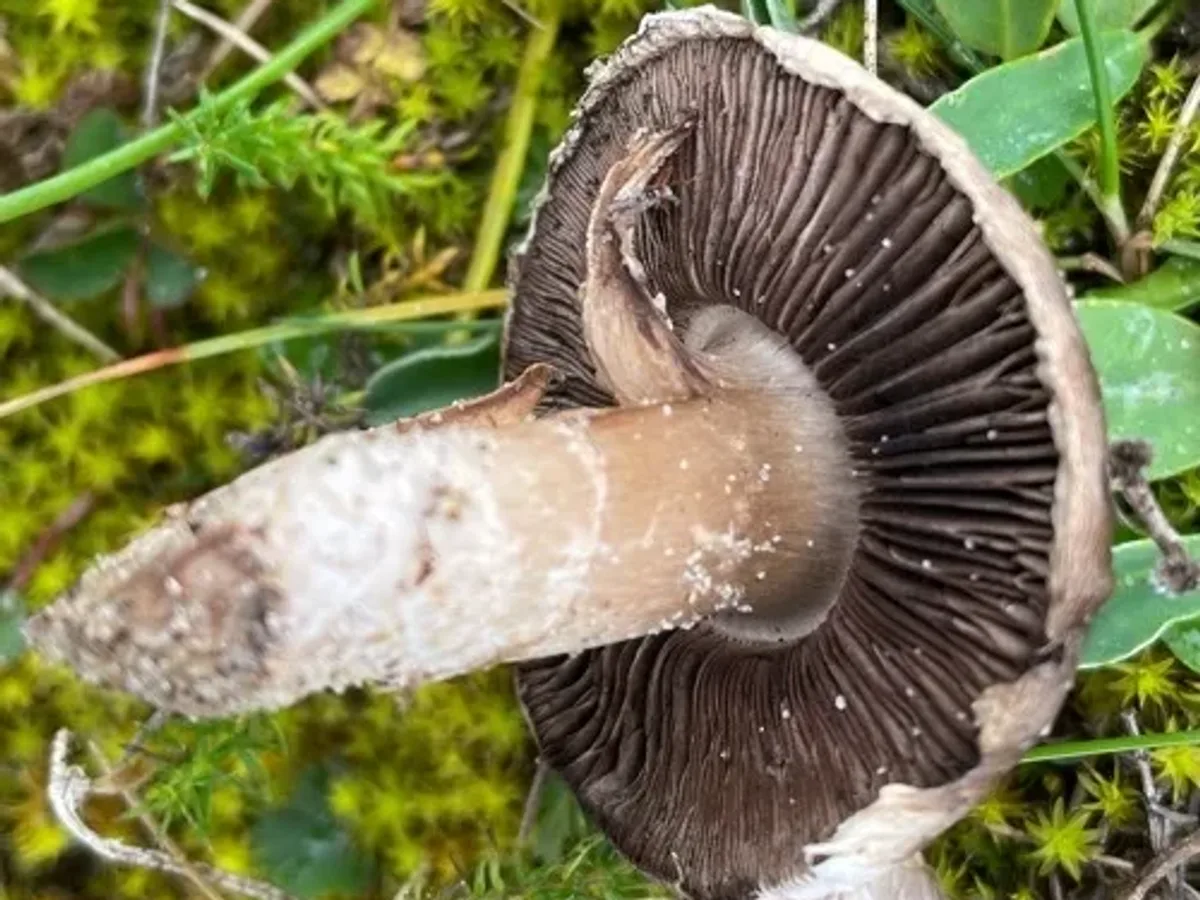
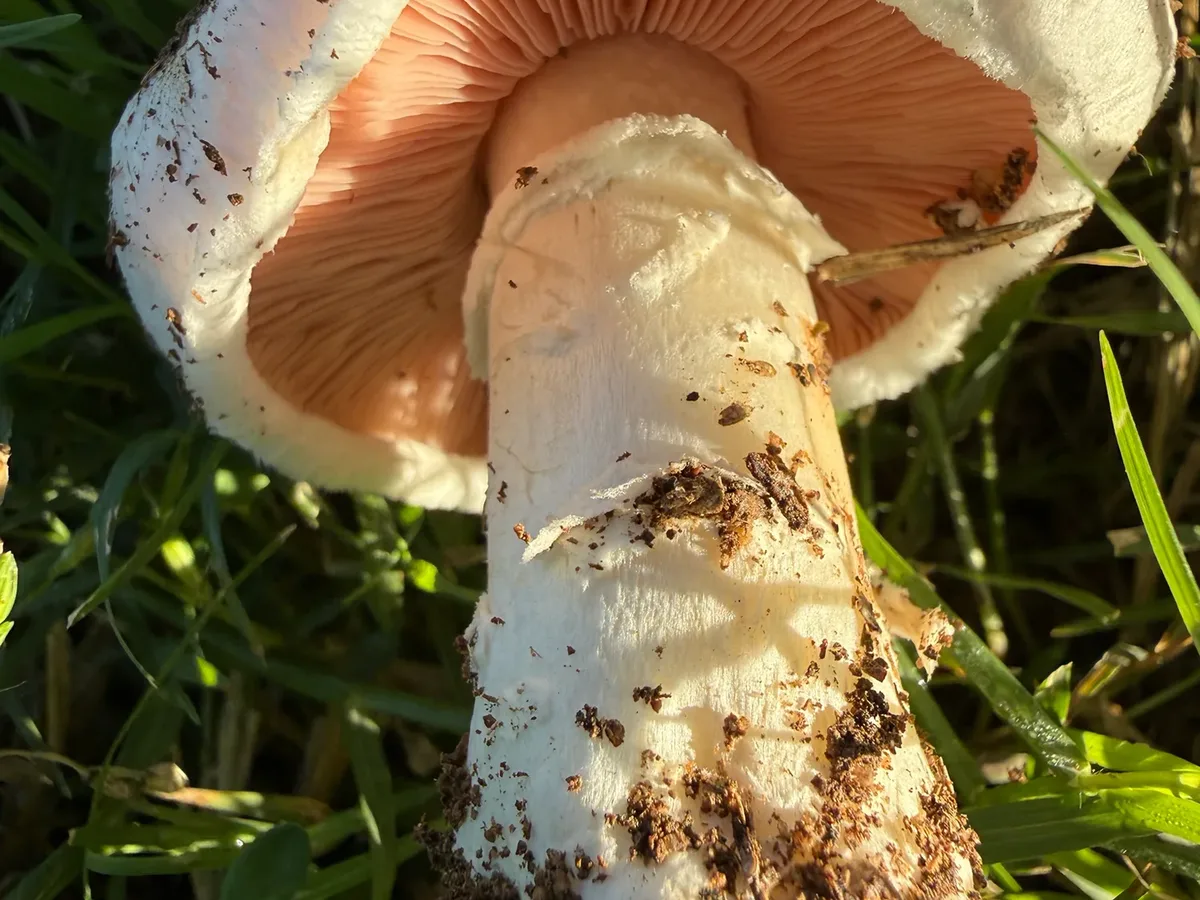
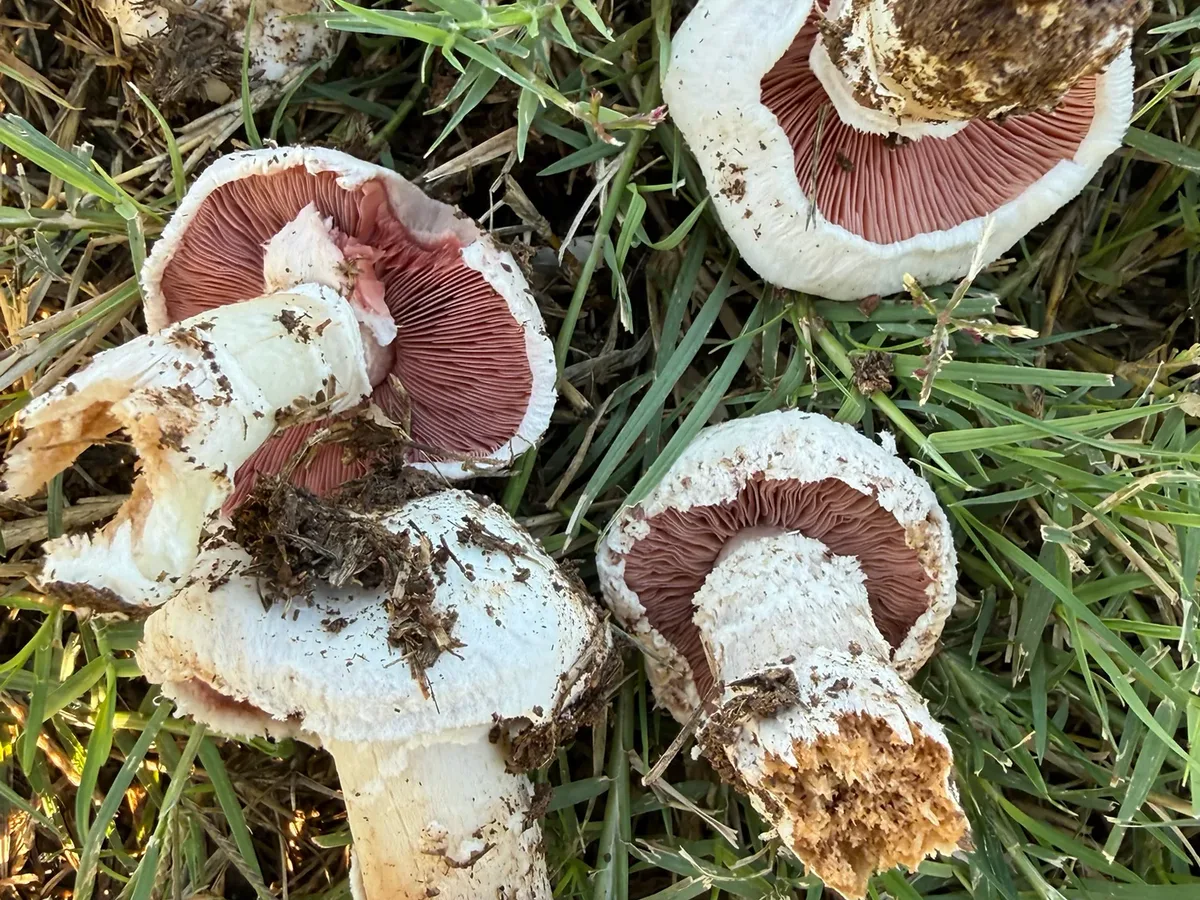
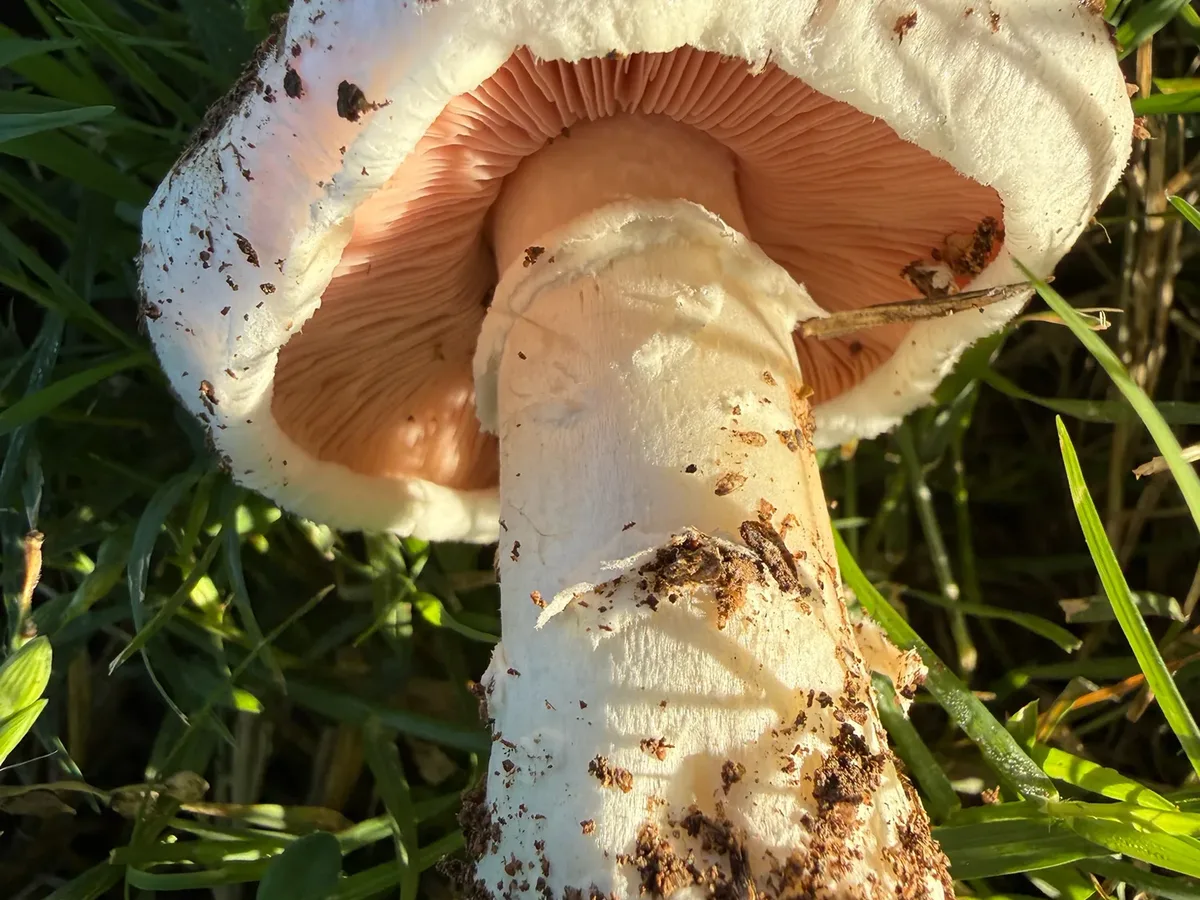
The gills, free of the stem, run through the family routine: pale greyish-pink to distinctly pink in young specimens, then deepening steadily through rosy-brown and chocolate to almost black at full maturity.
They are never white in a fresh, intermediate-age specimen, and this is one of the most important features distinguishing any Agaricus from a deadly all-white Amanita whose gills remain pure white.
Stem
The ring is thin and fragile - simpler and more delicate than that of the Horse Mushroom - and sits as a pendant skirt on the stem; it may tatter or collapse in wet dune conditions.
Flesh
Cut or handle the cap and the flesh stays stubbornly white - at most a very faint, slow creamy-yellow may develop at the very bottom of the stem with time, but there is no instant vivid chrome-yellow reaction anywhere. The flesh is firm and white.
Smell & taste
It smells pleasantly and mildly of mushroom, without the strong aniseed of a Horse Mushroom or the offensive inky-phenolic odour of the Yellow Stainer.
Spore print dark chocolate-brown: always take one if there is any doubt, since it immediately eliminates deadly white-spored Amanitas.
Where & when it grows
Habitat
This is one of the few Agaricus species with a genuine ecological preference for coastal dune systems. It thrives in stabilised and semi-stabilised sand dunes, dune slacks, and short sandy coastal turf, where the characteristic plants are marram grass, sea couch, fescues, and mat-forming herbs.
The sandy, low-nutrient, fast-draining substrate would be hostile to many other Agaricus species but suits this one precisely because its mycelium is adapted to exploit the sparse humus layer that builds up beneath dune vegetation.
It has been reliably recorded from coastal dune systems in south-west England (Devon and Cornwall, giving rise to its name and common name), along Atlantic coasts of Europe, and in coastal Australia and New Zealand, where it occurs in analogous dune environments with a mix of native and introduced grasses.
Its inland range is limited; finding it far from the coast should prompt extra caution and rigorous identification checks.
When
In Australia and New Zealand, which is the primary region treated here, the Dune Mushroom is an autumn species that follows the seasonal reversal of the Southern Hemisphere.
Fruiting begins as summer heat breaks, typically from March, builds through April and May - the main flush period - and may persist into June when conditions remain mild.
Rain is the immediate trigger, but because dune sand drains extremely quickly, even a modest rainfall event of 10-15 mm can initiate primordia if the soil is warm enough (above roughly 10 °C). A longer, saturating rain gives a better and more sustained flush.
In the Northern Hemisphere (Britain, Ireland, Atlantic Europe) the same biology plays out in reverse: look from July into October, with August and September the typical peak.
How it grows
The mycelium spreads through the organic horizon just beneath the sandy surface. Fruiting bodies emerge singly or in small loose groups, sometimes scattered over several square metres rather than tightly clustered.
Because dune sand provides little structural support, the stem base is sometimes partly buried and the whole mushroom can tilt at an angle.
It does not typically form well-defined fairy rings, though scattered arcs or lines following the direction of mycelial spread are occasionally seen.
Growth from primordium to harvestable size is fairly rapid in moist, mild conditions - a matter of a few days - but the mushrooms can persist in reasonable condition for several days in the cool, wind-dried dune environment.
Fruiting conditions
Sandy dune substrate drains rapidly so even modest rainfall (10-15 mm) can trigger fruiting; a heavier event (20+ mm) over 14 days gives a more sustained flush. Soil temperature must be above roughly 10 °C. In Australia/NZ this aligns with the autumn cooling (March-June); fruiting typically follows 3-8 days after significant rain during this window.
Look-alikes
Several potentially dangerous confusions deserve careful attention in the dune habitat.
The most critical is the Destroying Angel (Amanita virosa / Amanita bisporigera) and related all-white deadly Amanitas, which, as buried buttons on sandy soil, could be mistaken for young Dune Mushrooms. These are decisively separated by their permanently white gills (never pink or brown), white spore print, and a papery sac (volva) enclosing the swollen stem base that a true Agaricus never possesses.
The Death Cap (Amanita phalloides) most commonly associates with woodland but has been recorded in wooded dune margins; it also shows white gills, a white spore print, and a basal volva.
The Yellow Stainer (Agaricus xanthodermus) is probably the most realistic confusion risk: it is white, broadly similar in size, and can occur in sandy grassland. The decisive tests are the bruising reaction - the Yellow Stainer flushes INSTANTLY bright chrome-yellow (most vividly at the very base of the cut stem) - and its unmistakably unpleasant smell of ink, phenol, or carbolic acid, which intensifies dramatically on cooking. The Dune Mushroom neither stains vivid yellow nor smells of chemicals.
The Field Mushroom (Agaricus campestris) is an entirely safe confusion and also occurs in sandy coastal grassland; it is separated by its single thin ring and often slightly redder-pink young gills, but both are good edibles.
Agaricus xanthodermus is the most commonly mis-eaten toxic Agaricus in Australasia; treat the smell test and the immediate-yellow-staining test as non-negotiable before eating any white Agaricus from coastal grassland.
Deadly. Most common in woodland but recorded in wooded dune margins. White to greenish-olive cap, permanently white gills, white spore print, and a basal volva. The Dune Mushroom has pink-to-chocolate gills, a dark-brown spore print, and no volva. Contains lethal amatoxins; responsible for the majority of fatal mushroom poisonings worldwide.
Deadly. As a buried white button in sand it can superficially resemble a young Dune Mushroom, but its gills stay PURE WHITE at all stages, the spore print is white, and there is a papery sac-like volva (cup) enclosing the swollen base - features no Agaricus ever shows. Always dig up the complete stem and reject anything in a volva or with white mature gills. Contains lethal amatoxins; a single cap can kill.
An Australian dune-associated Agaricus that has been confused with A. devoniensis in some collections. It tends to have a more distinctly cracked or fissured cap cuticle and a slightly stronger yellowing at the stem base. Both are edible; definitive separation may require microscopy, but the Yellow Stainer tests (bruising, smell) remain the priority safety check regardless of which species is in hand.
An entirely safe lookalike that also occurs in coastal sandy turf. Very similar in size, white cap, and dark brown spore print; tends to have slightly redder-pink young gills and a single thin fragile ring. Both are good edibles and this is a benign confusion, but confirming no yellow staining and no phenolic smell is still good practice.
Poisonous (causes gastroenteritis, not lethal). The most realistic toxic confusion in sandy coastal grassland of Australia and New Zealand. It is white, similar in size and habitat, but bruises INSTANTLY vivid chrome-yellow when the stem base is cut - the reaction is fast and unmistakable - and smells strongly of phenol, ink, or carbolic acid. The Dune Mushroom shows no rapid chrome-yellow staining and smells pleasantly mild. Never eat a white Agaricus from this habitat without testing both characters.
In the kitchen
Picking & cleaning
Collect only firm, fresh specimens and inspect each one meticulously before collecting.
The fundamental safety rule for any Agaricus is to ALWAYS dig up the ENTIRE fruiting body - including the buried stem base - and check for a sac-like volva (cup) at the base, which would indicate a deadly Amanita and never occurs in a true Agaricus.
Slice every specimen longitudinally and verify:
- 1gills are distinctly pink to chocolate (not white),
- 2flesh stays white without rapid chrome-yellow staining,
- 3smell is pleasant and mild, not inky or phenolic.
The dune habitat is generally free of the worst Amanita species but is not entirely risk-free, especially where dune systems transition to scrub or dune woodland where Amanita phalloides has been recorded.
Avoid collecting near areas of coastal development where pesticides or heavy metals may contaminate sandy substrates. Use the specimens promptly - they do not keep as well as firmer-fleshed relatives.
Cooking
The Dune Mushroom is a pleasant, mild-flavoured edible, unpretentious but agreeable. Its texture is moderately firm and it holds together well in the pan.
Slice and sauté in butter or olive oil over medium heat until tender and lightly golden; season simply with salt, pepper, and fresh herbs. It works well in omelettes, pasta sauces, or as a topping on toast.
It is less intensely flavoured than the Horse Mushroom or the Prince, but its scarcity and the romance of its coastal provenance make it a satisfying find.
Always cook thoroughly - do not eat raw - and, as with all Agaricus species, eat a modest first portion if it is new to you, since occasional individual sensitivity to the group is not unknown.
Good to know
The Dune Mushroom is a genuine edible, but this is a genus and a habitat that demand careful, systematic checking, not casual identification. Three rules are non-negotiable.
- 1DIG UP the whole fruiting body and check the base: any sac-like volva means deadly Amanita - discard immediately and do not let it touch your harvest.
- 2CUT the flesh at the stem base and confirm no instant bright chrome-yellow staining and no inky/phenolic smell - these together point to Agaricus xanthodermus, which causes significant gastrointestinal poisoning.
- 3CONFIRM that the gills are distinctly pink to chocolate-brown (never white) in intermediate-age specimens, and take a spore print if uncertain - it must be dark chocolate-brown, not white.
When collecting in dune systems near wooded margins, apply the Amanita check with particular rigour.
The dune habitat itself is generally lower risk than woodland, but "lower risk" is not "no risk." When in any doubt, leave it out.
A reference guide - never an edibility guarantee. When in doubt, leave it out.