Field mushroom
Agaricus campestris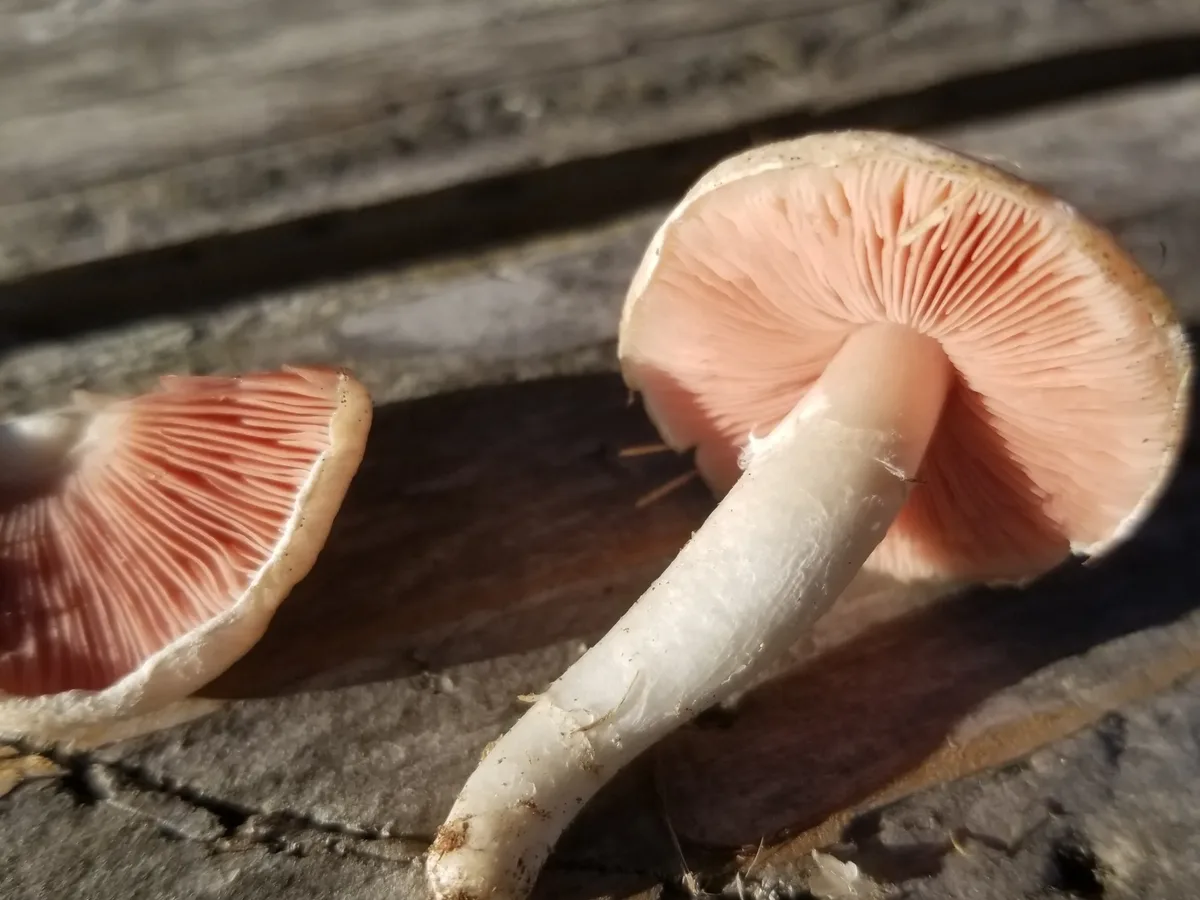 wllam (CC0)
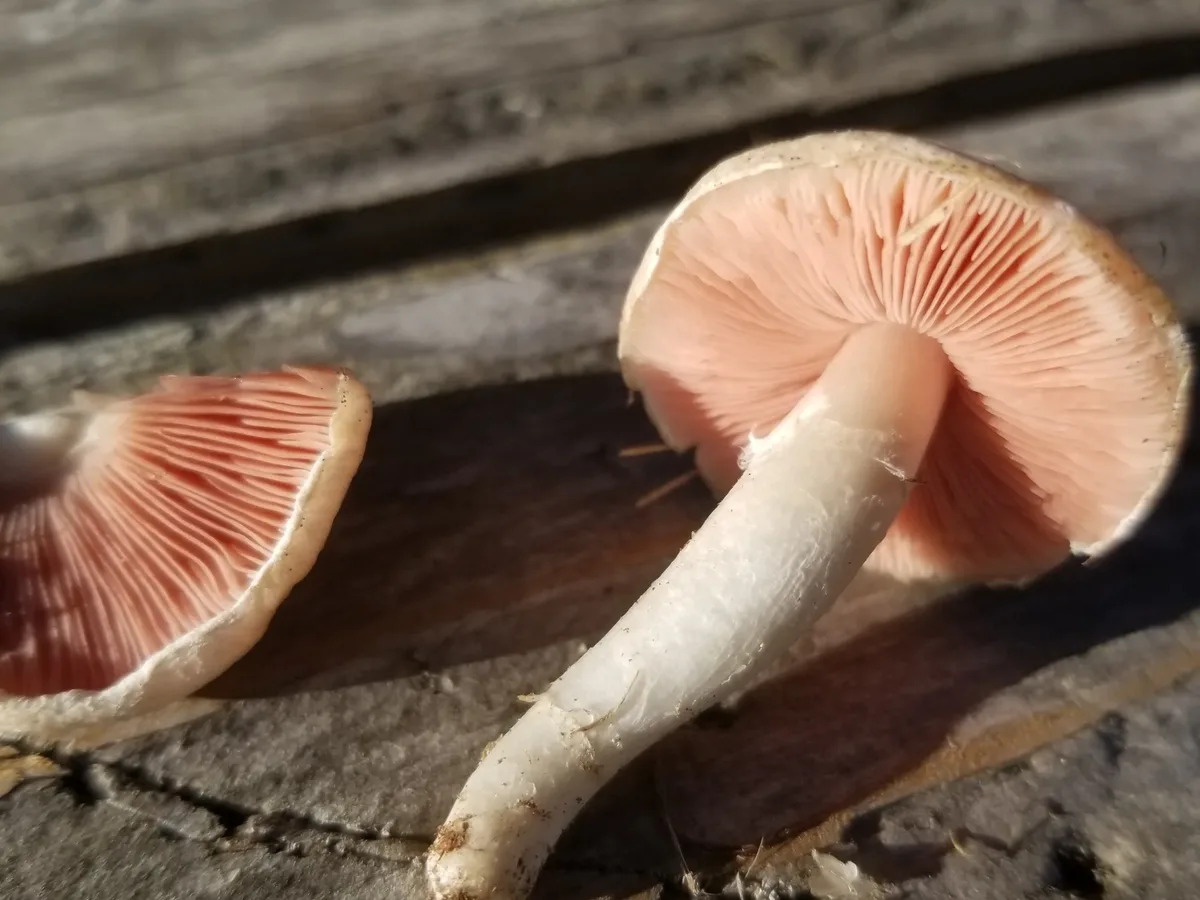 wllam (CC0)
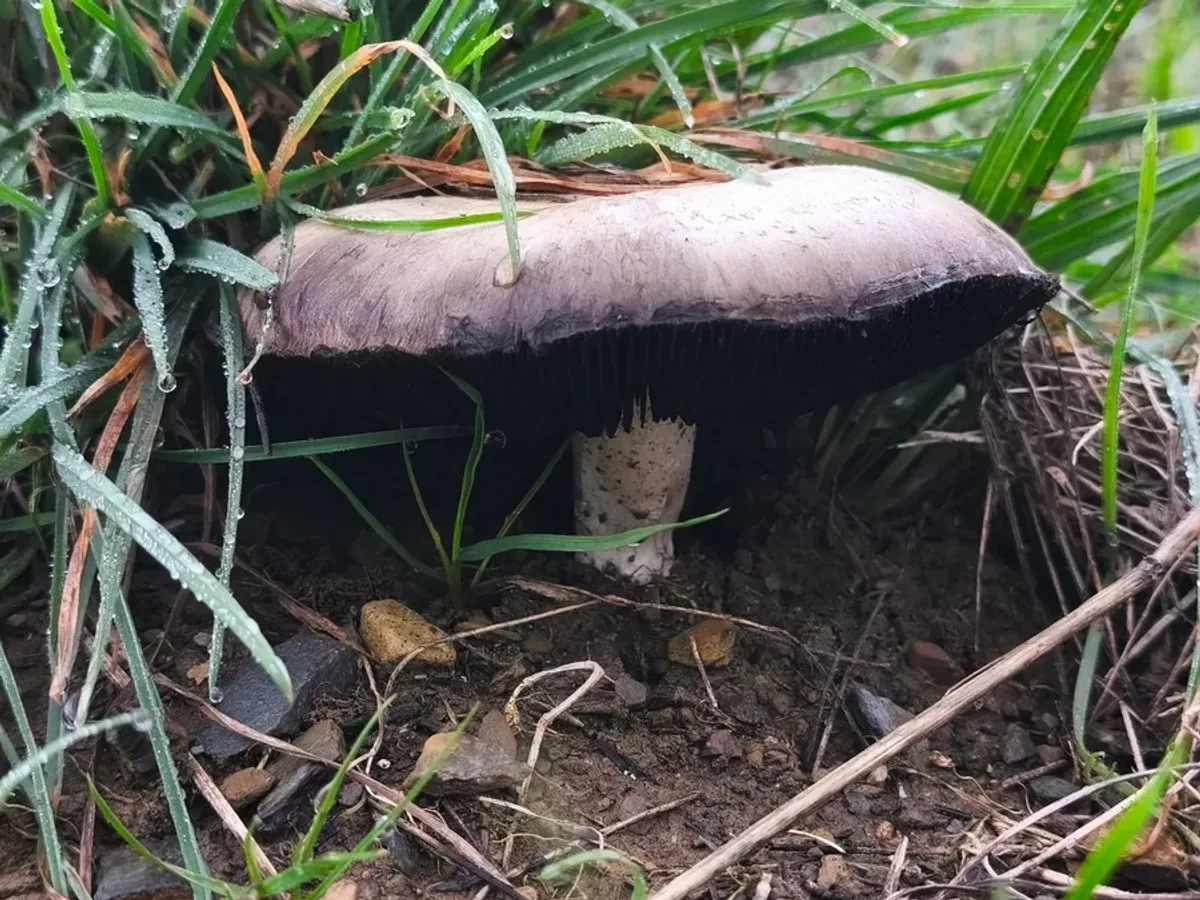 © victor laborde (CC BY)
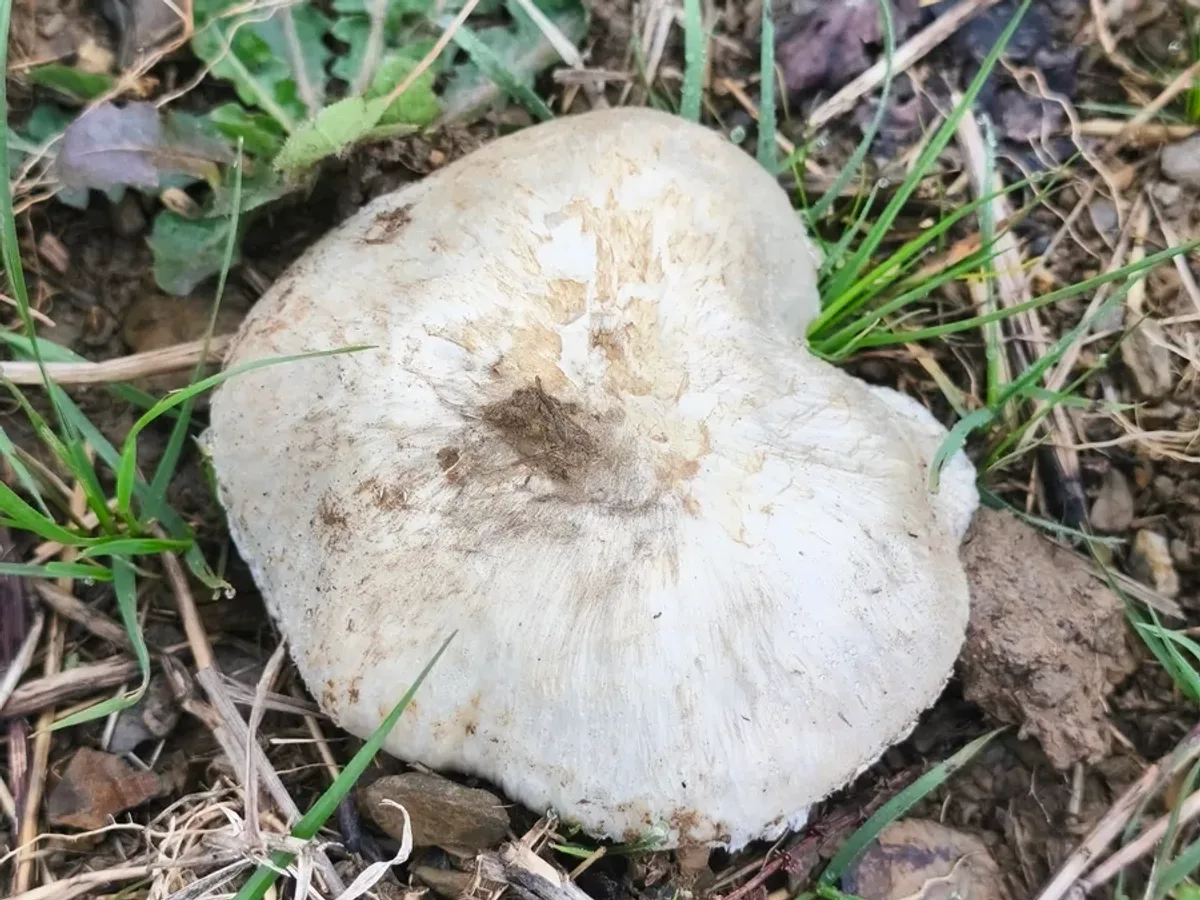 © victor laborde (CC BY)
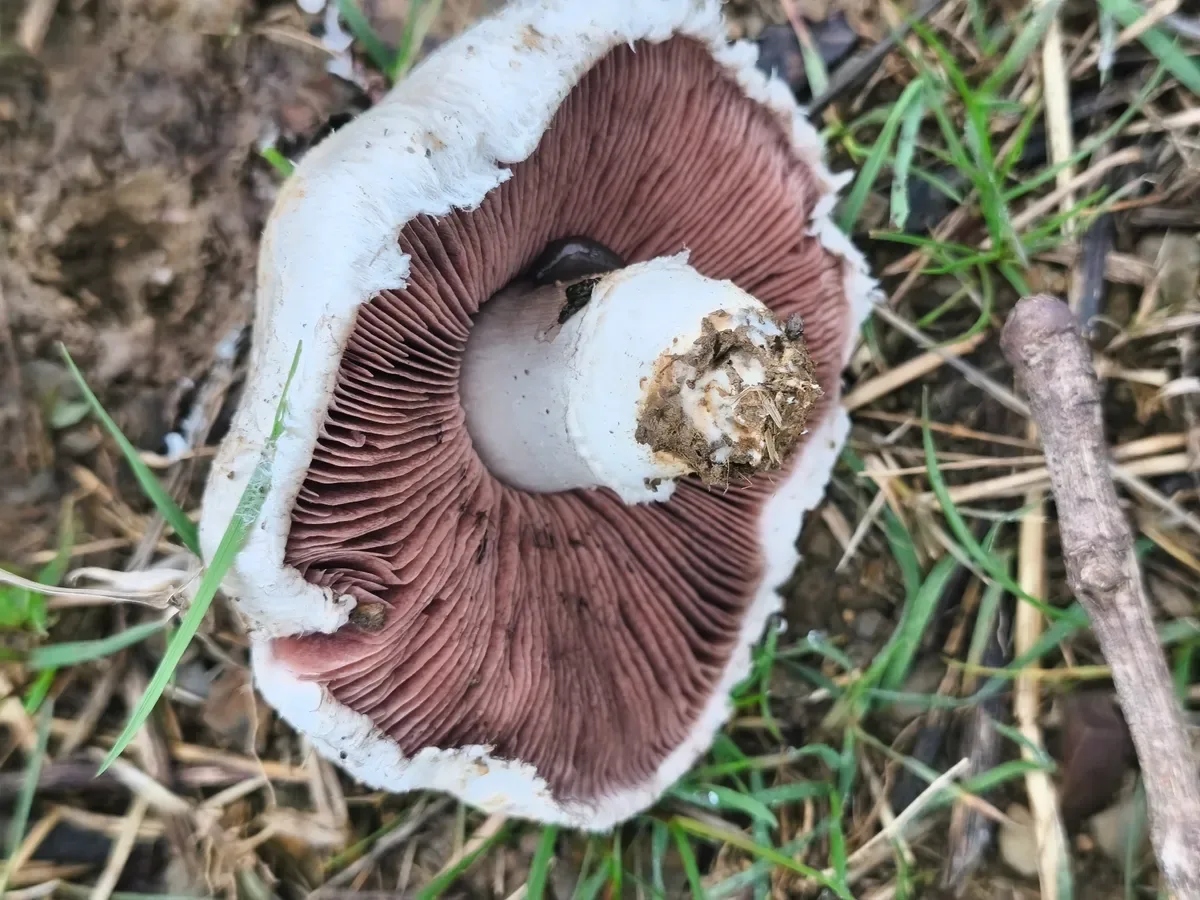 © victor laborde (CC BY)
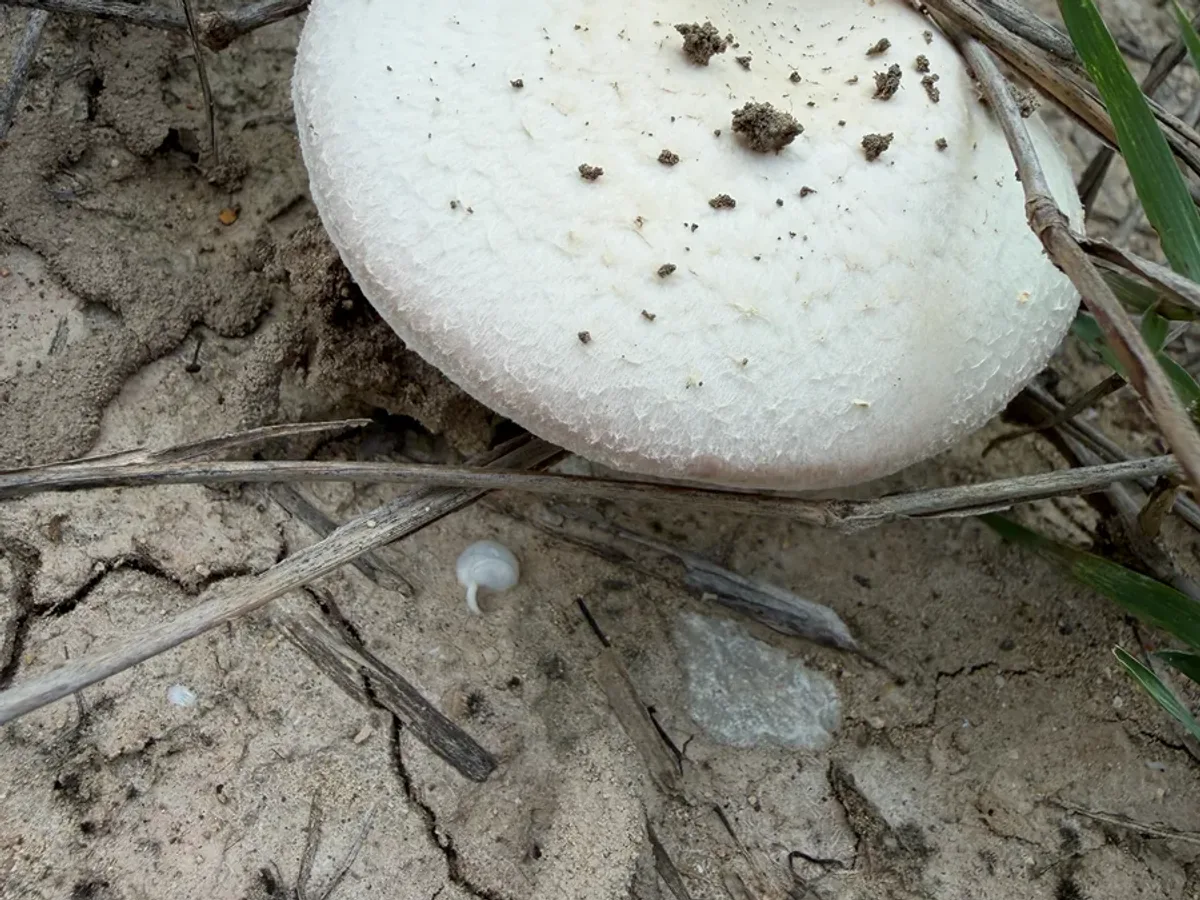 © IDClaire (CC BY)
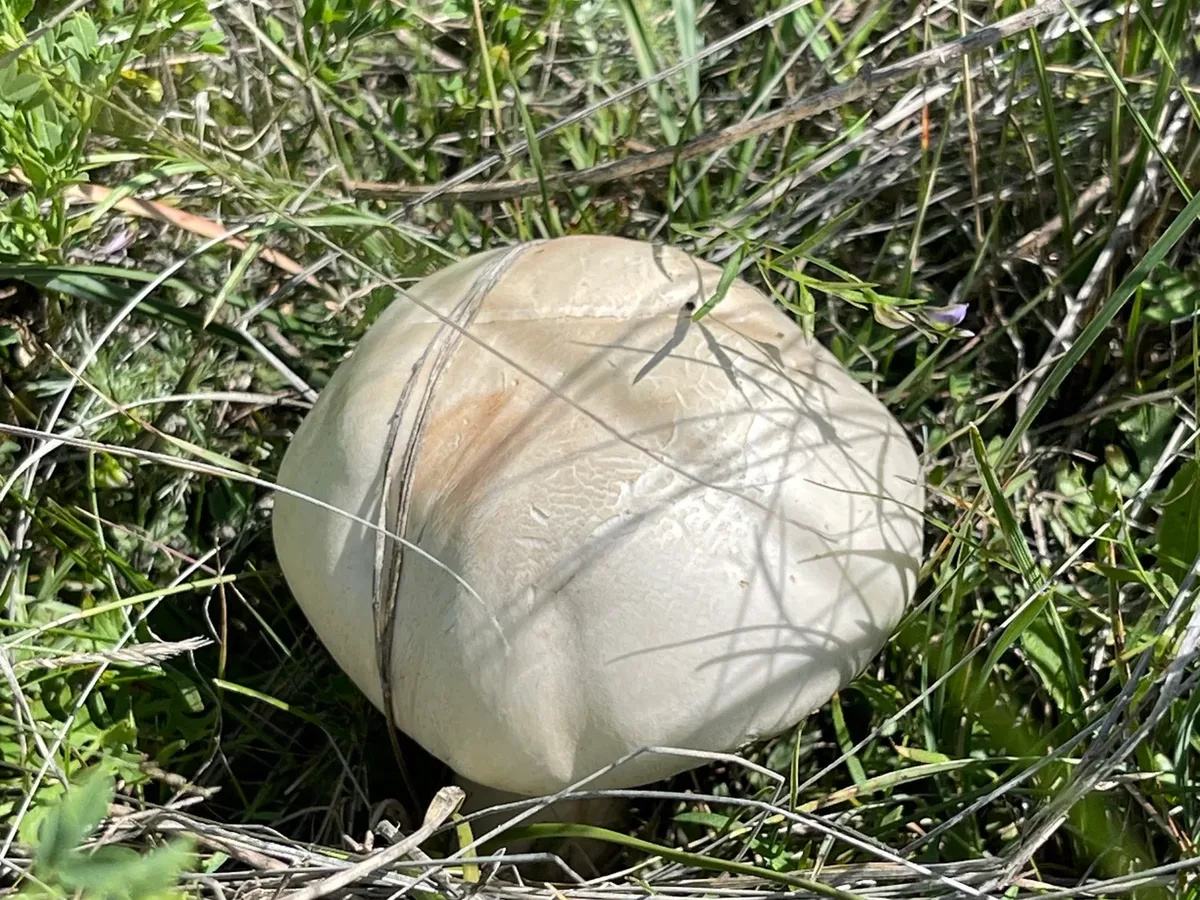 © Daniil N Olennikov (CC BY 4.0)
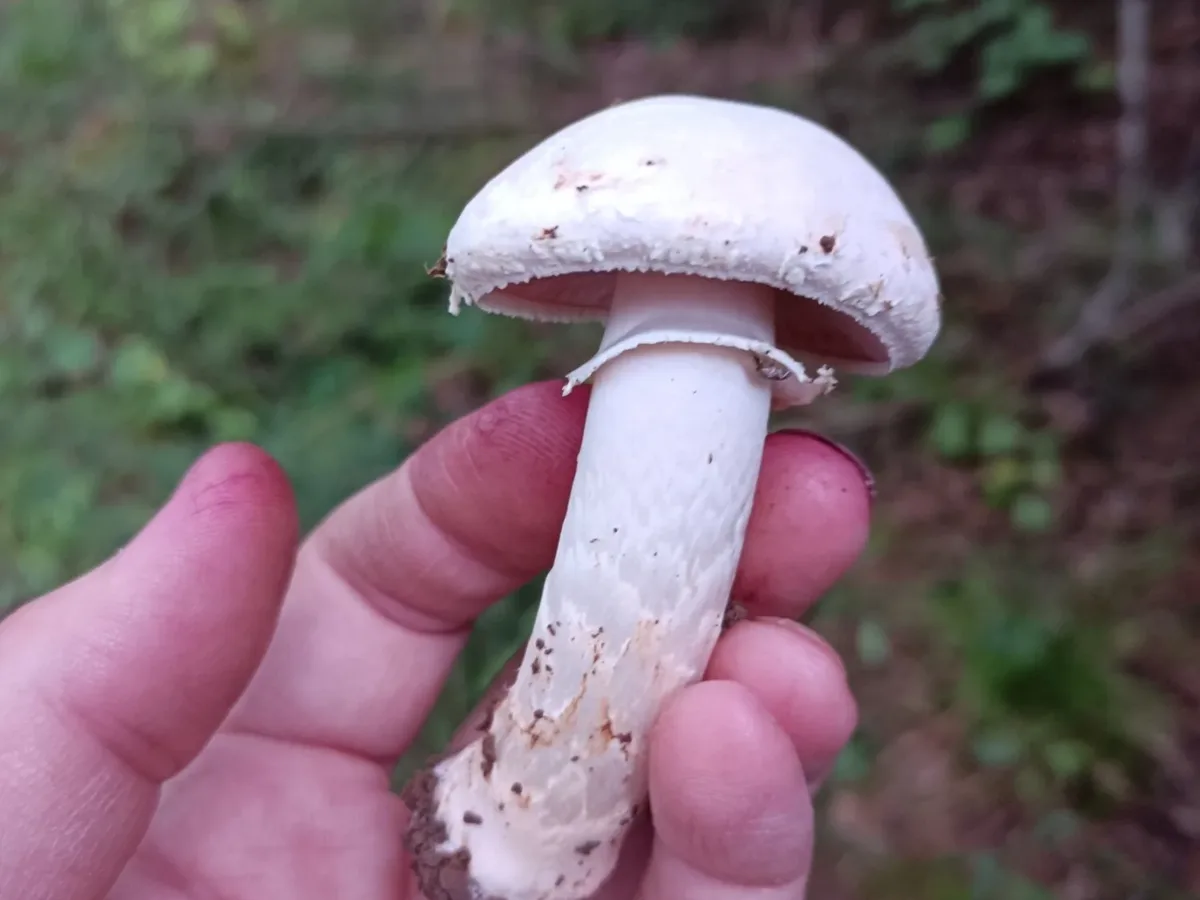 © Ирина Хохрякова (CC BY 4.0)
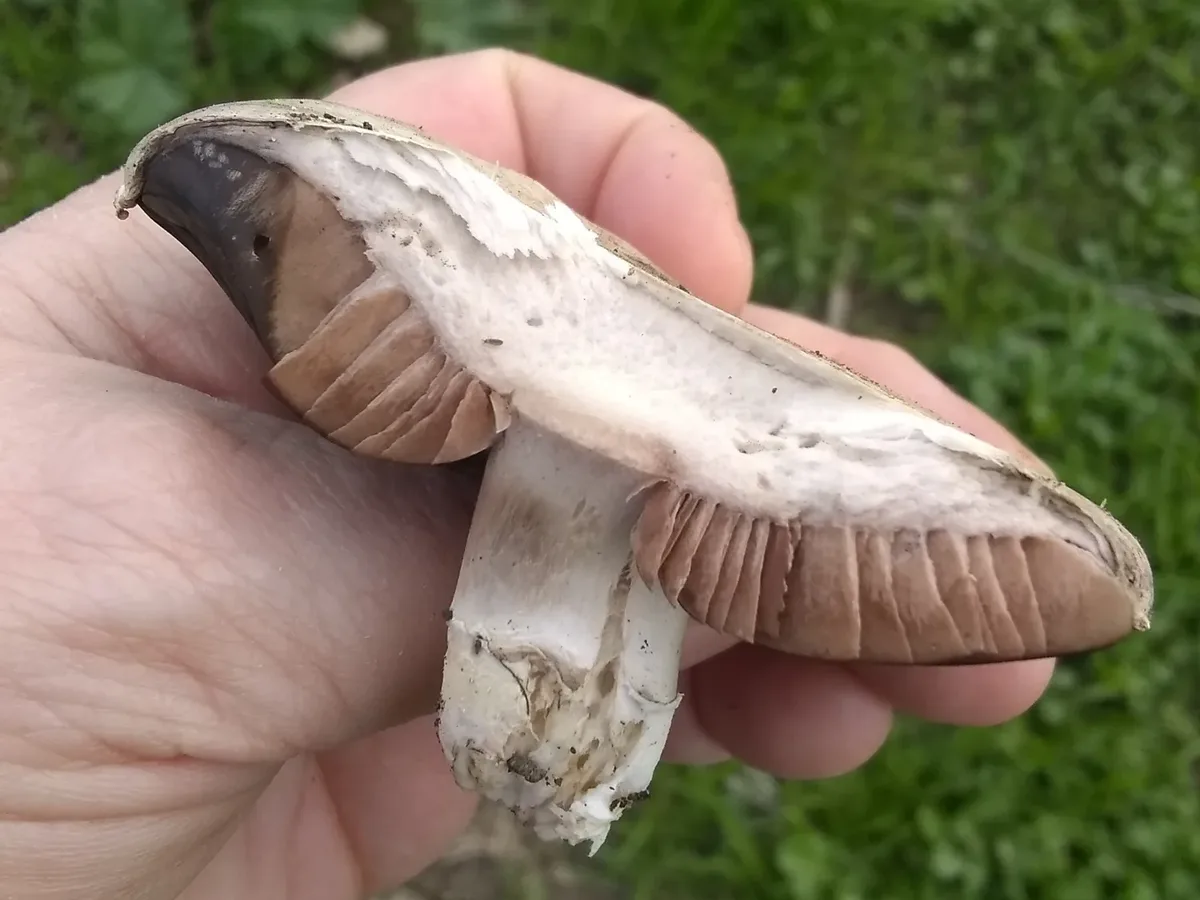 © P Holroyd (CC BY 4.0)
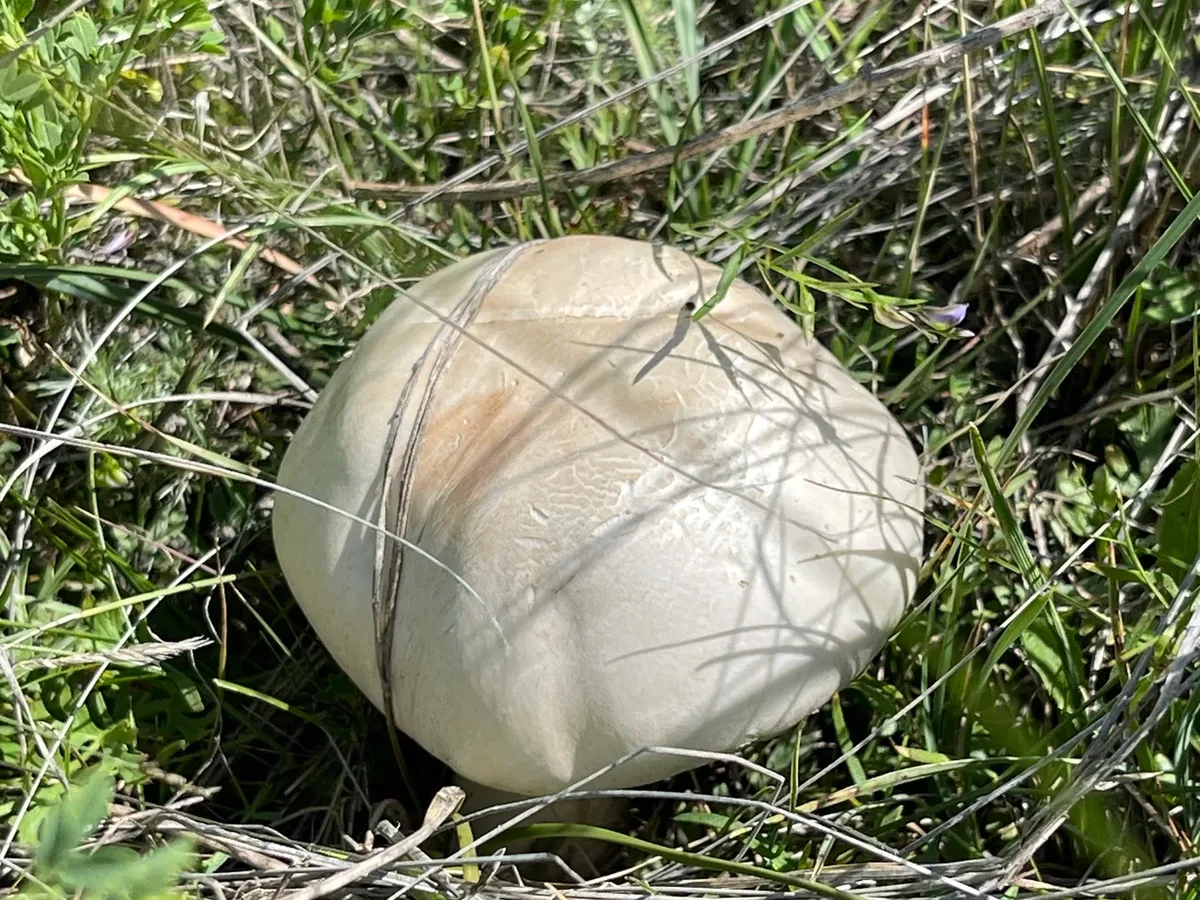 © Daniil N Olennikov (CC BY 4.0)
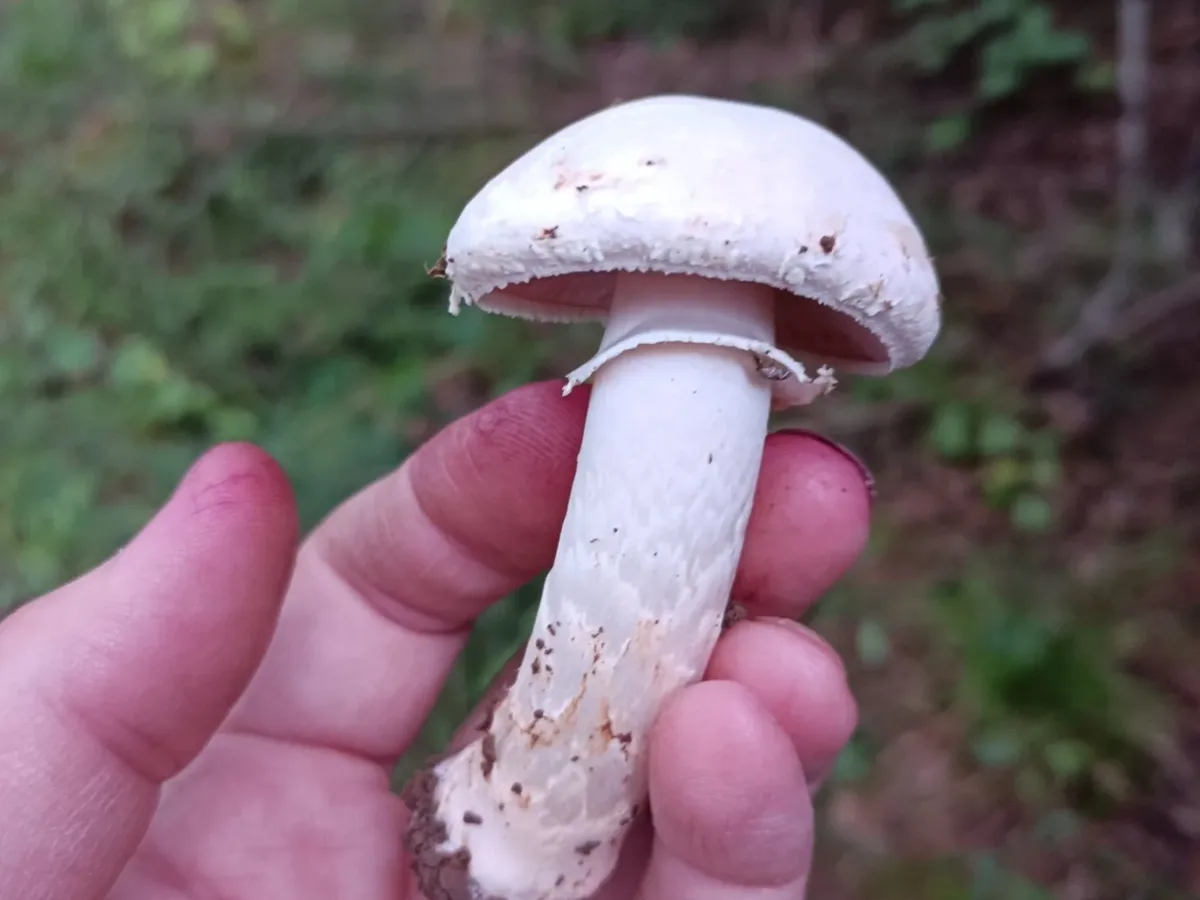 © Ирина Хохрякова (CC BY 4.0)
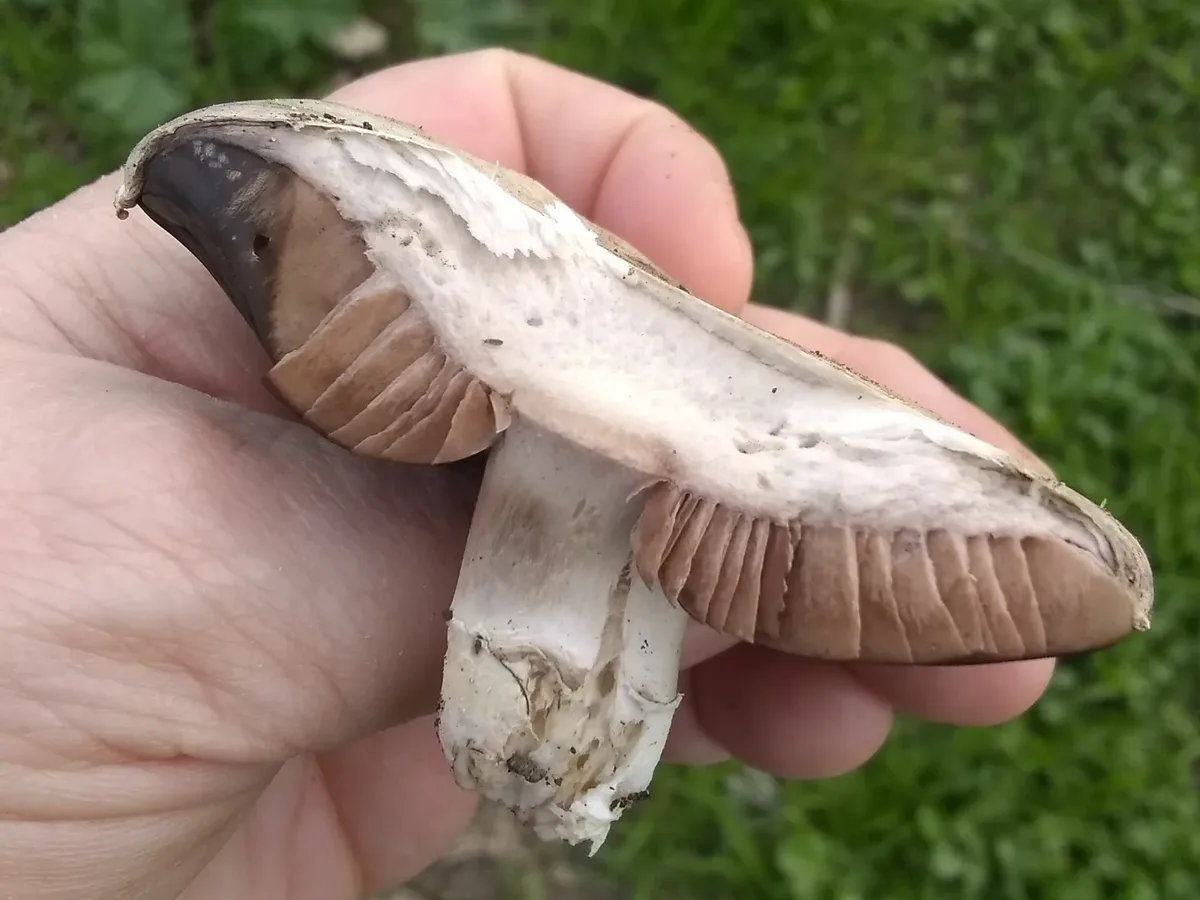 © P Holroyd (CC BY 4.0)wllam (CC0)wllam (CC0)
Good to eat, once you have identified it with certainty and cooked it through.
Never eat a mushroom you are not 100% sure of - check the look-alikes below, and always cook wild mushrooms.
How to recognise it
The field mushroom announces itself as a clean white dome pushing up from short grassland - from a distance it is easily mistaken for a golf ball or a fragment of chalk.
Cap
The cap (3-12 cm across, occasionally reaching 15 cm in vigorous specimens) is dry and matt in texture, never sticky or viscid in the way of some Amanita or Hygrophorus species.
Young buttons are nearly spherical; they flatten and then become shallowly convex to almost plane as they expand, sometimes lifting the margin slightly upward in old age.
The surface is smooth on fresh specimens, but in dry conditions or as the cap ages it may develop faint radial fibres, delicate pressed-down scales, or superficial cracking - all cosmetic changes that don't affect identification.
The colour is white to off-white, never showing the greenish or yellowish cast that would raise immediate concern.
Gills / Pores
Beneath the cap the gills are the single most important identification feature. They are completely free from the stem - not attached, not decurrent - and they run the full depth of the cap interior in close-packed ranks.
In the button stage they are a vivid, almost shocking bubblegum pink, colouring the inside of the closed cap like a hidden blush.
As the spores ripen through adulthood the gills pass through a deepening sequence: rosy pink → dull red-brown → rich chocolate brown → finally a dark sepia brown.
No healthy field mushroom retains white gills beyond the earliest button stage; this sequential pinkening is a defining characteristic of the species and the genus.
The spore print laid overnight is a deep purplish-brown to dark chocolate brown - never white, never black.
Stem
The stem is 3-8 cm tall, 1-3 cm thick, roughly cylindrical and often slightly swollen or club-shaped at the base. Its surface is smooth and white, sometimes silky-fibrous.
It carries a single delicate ring (annulus) roughly mid-stem, the remnant skirt of the partial veil that covered the young gills; this ring may be fragile and drop away in older specimens or after handling.
Crucially, the stem base is bare - no volva, no sack, no membranous cup of any kind. This absence must be physically confirmed by digging up the base and inspecting it before eating.
Flesh
Flesh throughout cap and stem is firm and white, slow to discolour when cut or bruised; at most it may flush very faintly pinkish.
Smell & taste
The aroma is the clean, rich smell that cultivated mushrooms have been bred to echo - earthy, faintly sweet, immediately recognisable as 'mushroom'.
Where & when it grows
Habitat
Agaricus campestris is a creature of open, grazed land. It thrives in the microhabitats that centuries of pastoral farming have created: sheep pastures, cattle paddocks, horse fields, sports ovals, golf course roughs, mown lawns in parks and suburban gardens where animal manure has enriched the soil over years or decades.
The essential ingredient is fertility - nitrogen-rich organic matter in the form of dung, composted grass roots, or the residue of heavily fertilised turf.
Unlike the forest-edge Agaricus species, A. campestris grows far from trees; it is a confirmed saprophyte, decomposing dead grass roots and organic matter in the topsoil and requiring no photosynthetic partner whatsoever. This makes it entirely independent of forest and scrub, and gives it a distribution that maps almost exactly onto the pastoral landscape of Australia and New Zealand.
Within these broad habitats it favours soils that are open and free-draining - compacted clay stops fruitbody formation even if the mycelium is present - and it particularly responds to grassland that has been grazed short enough to allow sunlight to warm the surface.
It is widely distributed across both Australia and New Zealand, from coastal grasslands to inland paddocks at moderate elevation, and the taxon probably represents a complex of closely related but undescribed species across the continent. In New Zealand it is among the most familiar wild mushrooms of autumn farm country.
Where conditions are stable year to year, the underground mycelium persists indefinitely, quietly waiting for the right combination of rain, soil warmth, and season to push up another flush of fruitbodies.
When
In the Southern Hemisphere the field mushroom's season runs through the late-summer-to-autumn window, broadly February to May, peaking when the first significant autumn rains arrive after the dry Australian and New Zealand summers.
The precise timing varies with latitude and elevation. In warmer coastal districts of Queensland or northern New South Wales the season can extend from late January; in cooler South Island New Zealand or Tasmanian highland pastures it arrives later in autumn and may push into early June.
The essential triggers are warmth in the topsoil (roughly 10-22 °C), followed by substantial rain - at least 20 mm over two weeks is the threshold. The flush then appears five to twelve days after the rain event, once mycelial threads have absorbed moisture and the primordium has swollen from pin to full fruitbody.
A single paddock can produce multiple flushes through the season as successive rain events arrive; between flushes the pasture looks bare, but the mycelium is there, and foragers familiar with a reliable patch return after each significant rainfall.
Warm but overcast post-rain days accelerate the flush; hot, dry winds cut it short and cause the caps to crack and age rapidly. On the same patch, season length in any given year is largely dictated by how many good rain-followed-by-cool-spell events autumn delivers.
How it grows
Agaricus campestris is one of the most thoroughly saprotrophic of all the large gilled mushrooms. Its mycelium colonises dead and dying grass roots, decaying plant matter, and the nitrogen-rich organic layer immediately below the turf, breaking this material down enzymatically and recycling the nutrients.
There is no mycorrhizal partnership, no host tree, no obligate relationship with any living plant - just fungal threads and decaying organic material.
The mycelium grows outward from a founding point at a relatively consistent annual rate, consuming substrate as it goes and depositing the exhausted, spent material behind it. This radial expansion produces one of the most visually arresting patterns in the grassland landscape: the fairy ring.
From the air a well-established fairy ring is a perfect or near-perfect circle of darker green grass - the zone where the mycelium is actively decomposing and its waste is fertilising the turf above - with fruitbodies emerging in a ring at the advancing mycelium front.
The ring grows a little wider each year; some rings in permanent pasture are estimated to be decades old, and the largest on record are many tens of metres across. Between ring expansions the mycelium can remain dormant through drought or unfavourable temperature for months, with no above-ground sign of its presence.
Fruitbodies can also appear solitarily or in small scattered clusters where mycelium fragments have established independently.
The actual act of fruitbody emergence is rapid once triggered - a pinhead-to-full-size development of roughly five to twelve days - and the window during which a fruitbody is in prime condition is brief: a few days of good weather, after which gills darken, caps flatten and start to split, and the flesh softens.
Fruiting conditions
Fruits after substantial rain on warm, nutrient-rich grassland; flushes follow rainfall within roughly one to two weeks.
Look-alikes
CRITICAL - two separate lookalike categories demand attention before any Agaricus campestris is eaten.
Yellow stainer (Agaricus xanthodermus)
This is the most frequent cause of wild mushroom poisoning in Australia and New Zealand, and it shares exactly the same habitat as A. campestris - grazed paddocks, lawns, park grass - and at many sites the two species grow side by side.
The yellow stainer is visually near-identical to the field mushroom in cap shape, cap colour, and gill colour progression.
The reliable separation tests are:
- 1Chemical stain - scratch, cut, or firmly press the flesh at the very base of the stem. In A. xanthodermus this immediately flushes a bright, vivid chrome yellow. The stain may be weak or slow at the cap edge; it is most pronounced at the stem base. A. campestris does not yellow, or at most flushes the faintest pinkish-buff.
- 2Smell - cut the stem base open and smell the raw flesh. A. xanthodermus produces a clear, sharp phenol odour often described as carbolic, ink, or iodine. A. campestris smells only of clean, rich mushroom.
Perform both tests on every specimen at every new site.
A. xanthodermus causes severe gastrointestinal illness (nausea, vomiting, cramps, diarrhoea) in most people who eat it, though the symptoms are not life-threatening.
Death cap and destroying angels (Amanita phalloides, A. virosa, A. bisporigera)
These species are lethally poisonous and require maximum caution. They are structurally distinct from A. campestris in every key feature, but the overlap in gross appearance at a glance can fool an inexperienced forager.
Distinguishing features are absolute and must all be checked:
- 1Gills - Amanita gills are white at every stage of the fruitbody's life, from button to old cap. They never pass through a pink phase. A. campestris gills are pink in youth without exception.
- 2Volva - all deadly Amanita species produce a persistent sack-like volva at the very base of the stem, often buried several centimetres below the soil surface. It is the remnant of the universal veil that enclosed the entire young fruitbody. It cannot be seen without digging; it must be physically excavated and examined. The volva is never present in A. campestris. Never pick any white-capped grassland mushroom without fully digging up the stem base.
- 3Spore print - Amanita spore prints are white. A. campestris spore prints are dark chocolate brown.
- 4Cap colour - A. phalloides (death cap) typically shows a greenish-yellow or olive-green pigment in the cap, though pale or washed-out specimens can be nearly white. Destroying angels are pure white with no green tint at all, and the absence of any green is not a safety signal.
These Amanita species are responsible for the majority of fatal mushroom poisonings worldwide. There is no antidote; amatoxin poisoning causes delayed liver and kidney failure that kills within days to weeks.
The volva is the non-negotiable structural check.
White gills at every stage (never pink or brown), a sack-like volva at the stem base (may be buried - dig it up), and a white spore print. A. phalloides additionally shows a greenish-yellow cap; destroying angels (A. virosa, A. bisporigera) are pure white with no green coloration at all. Do not rely on colour alone: the presence of a volva is the definitive structural feature. Never pick any white gilled mushroom without confirming the absence of a volva.
Stains strongly yellow at the stem base and smells of phenol/ink/iodine; the most common cause of mushroom poisoning.
In the kitchen
Picking & cleaning
To pick safely, begin before you pick: identify the site. Only harvest from grassland well away from roads, industrial land, golf courses treated with herbicides or fungicides, and any ground that may have been sprayed with pesticides - the field mushroom is an excellent bioaccumulator of whatever chemistry the soil contains.
Once satisfied the site is clean, crouch low to examine each candidate before cutting. Confirm the gill colour (pink or brown in adulthood, never white), then scrape or press the stem base with a fingernail - any sudden yellowing signals the yellow stainer and rules the specimen out immediately.
Smell the base as well: a phenol or ink odour is equally diagnostic of the yellow stainer. For any white-capped specimen, always fully excavate the stem base to confirm the total absence of a volva before picking.
To lift the fruitbody, twist and pull gently to bring the entire stem base up intact - this is not just good identification practice but preserves the underlying mycelium for future flushes. If the base separates and stays in the ground, dig it out and inspect it.
Brush soil and grass from the cap and gills in the field. Transport in a rigid-sided basket or container that allows air flow; plastic bags cause sweating and accelerate spoilage.
At home, field mushrooms keep two to three days refrigerated. Pick only what you will use within that window, and leave smaller buttons to mature, which ensures future flushes from the same patch.
Cooking
The field mushroom has a more pronounced, earthier flavour than the commercially cultivated button mushroom - both are Agaricus, but years of selective cultivation have bred the wild intensity out of the supermarket product.
Field mushrooms also hold considerably more moisture, which means they need relatively high heat and a generous pan to cook properly; crowd them and they will steam in their own liquid rather than browning.
The most beloved preparation in the Australian tradition is the field mushroom on toast: caps laid gill-side up in a hot, buttered oven dish or cast-iron pan, seasoned with salt and pepper, sometimes dotted with a little extra butter or a splash of white wine, roasted at 200 °C for ten to fifteen minutes until the gills have caramelised and the juice pooled in the cap has reduced to a concentrated, intensely savoury liquor.
This liquid, poured from the cap over buttered toast, is one of the most celebrated of all autumn-breakfast experiences in New Zealand and Australian farm country.
Beyond that classic the field mushroom suits almost any preparation the cultivated mushroom does, but with more depth:
- fried in butter and deglazed with a little cream for a pasta sauce or pie filling
- sautéed with garlic and thyme and added to omelettes or scrambled eggs
- sliced raw into salads (the pink gills of very fresh young caps are edible raw and visually striking)
- or simmered into soups and stews where they contribute a round, savoury background note
Large flat caps can be stuffed and baked whole.
The dark gills will bleed their colour into any pale sauce or soup, turning it a lavender-grey - this is purely cosmetic and does not affect flavour, but is worth bearing in mind when appearance matters.
Field mushrooms dry well; slice them thinly and dehydrate or dry in a low oven, then store in a jar for use through the year in stocks and braises.
Good to know
Agaricus campestris is an excellent edible when correctly identified, and the identification process is reliable if every check is applied consistently.
The safety protocol is:
- 1Confirm the site - pasture or nutrient-rich grassland, no trees required.
- 2Confirm gill colour - pink in buttons, deepening to brown in adults; white gills at any age disqualify the specimen.
- 3Apply the yellow-stain test at the stem base - any bright yellow staining means discard.
- 4Apply the smell test at the stem base - any phenol or ink odour means discard.
- 5Dig up and physically inspect the stem base for a volva - its presence means the specimen must not be eaten under any circumstances.
- 6Confirm the spore print is dark brown (not white).
Even at a familiar patch where you have previously harvested safely, apply every check each time, as A. xanthodermus and A. campestris grow in identical conditions and can appear within centimetres of each other.
When eating field mushrooms from a new location for the first time, eat a small portion and wait 24 hours before eating a larger quantity, both to test for individual gastrointestinal sensitivity and to confirm the identification was correct.
Some individuals have a personal sensitivity to A. campestris even when the species is correctly identified.
Do not harvest from ground that may be contaminated with pesticides, herbicides, or heavy metals.
A reference guide - never an edibility guarantee. When in doubt, leave it out.