Pavement mushroom
Agaricus bitorquissyn. Agaricus campestris var. bitorquis, Agaricus rodmanii, Psalliota bitorquis
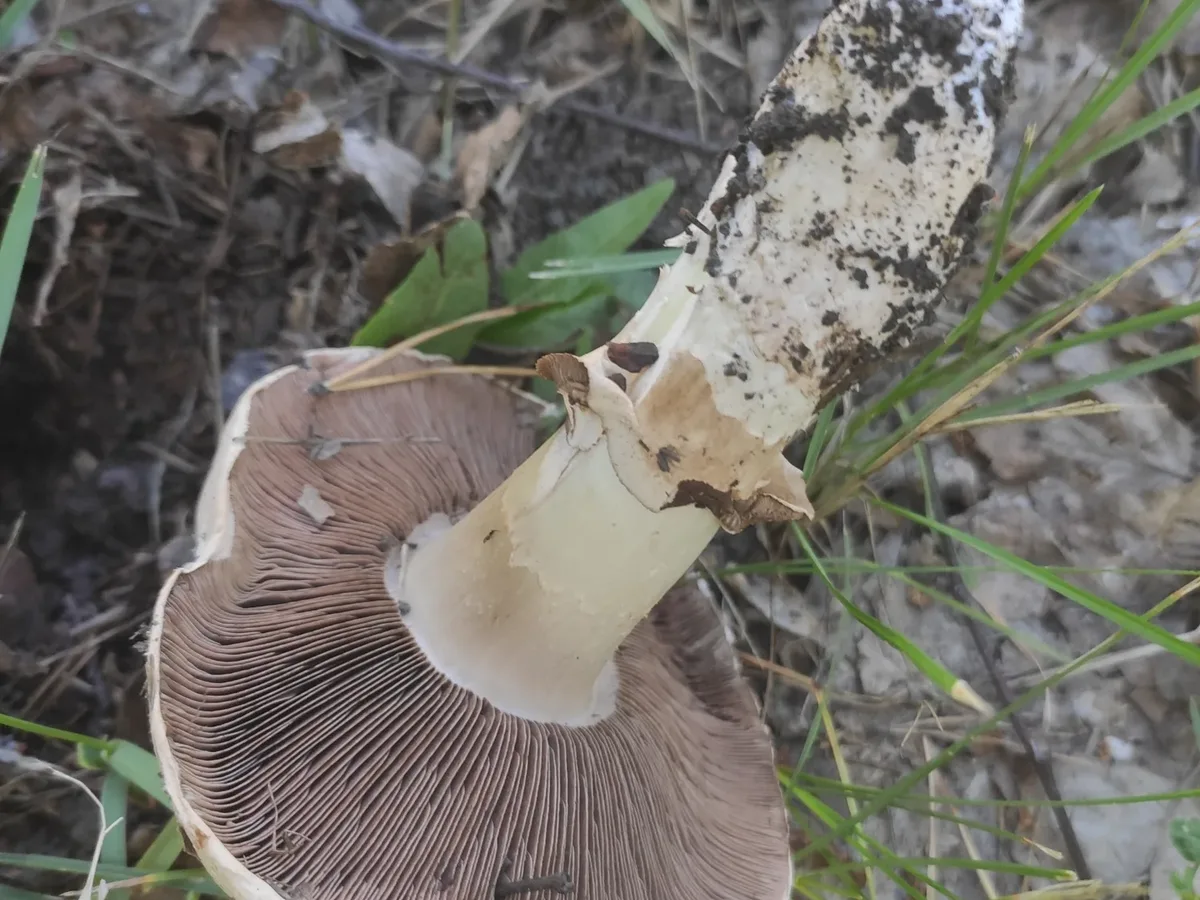 Татьяна Фирсова (CC0)
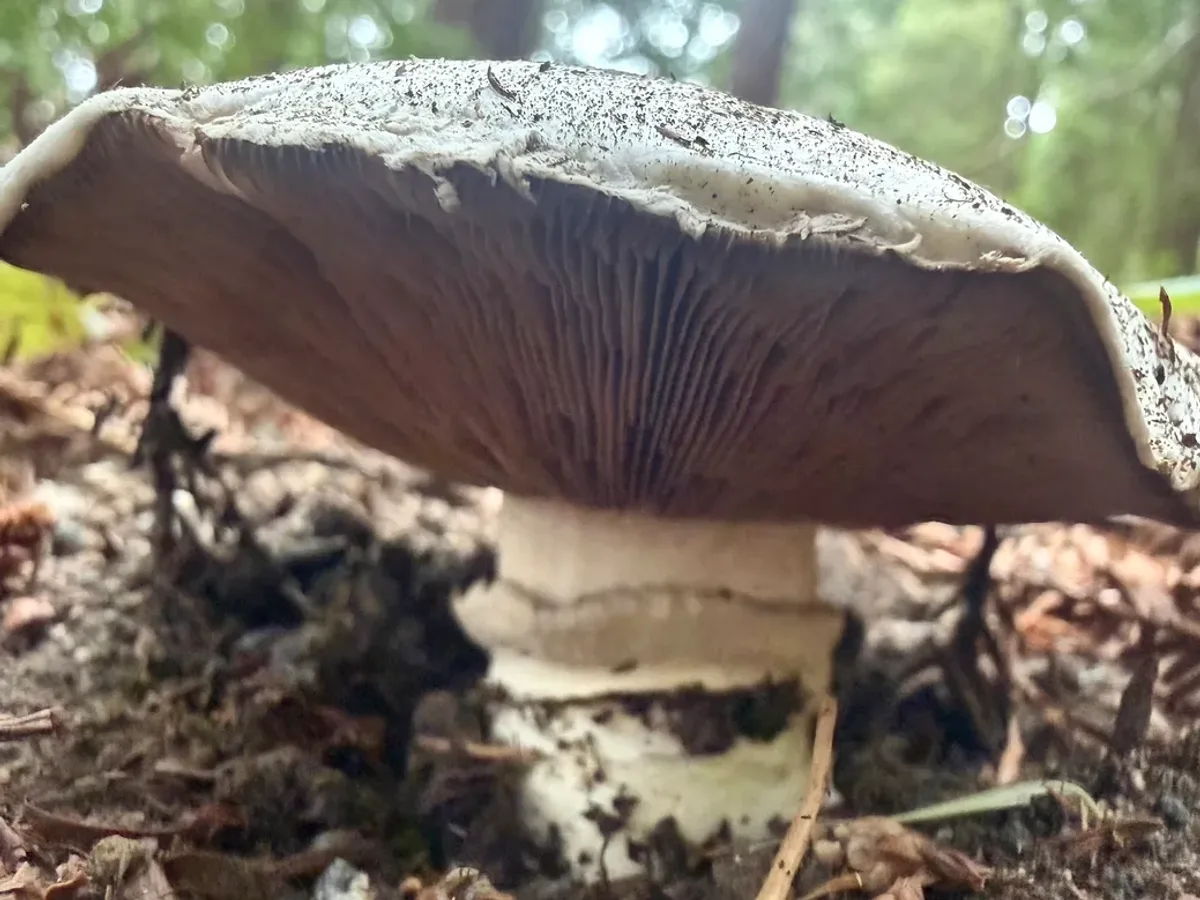 Chuck Wilson (CC0)
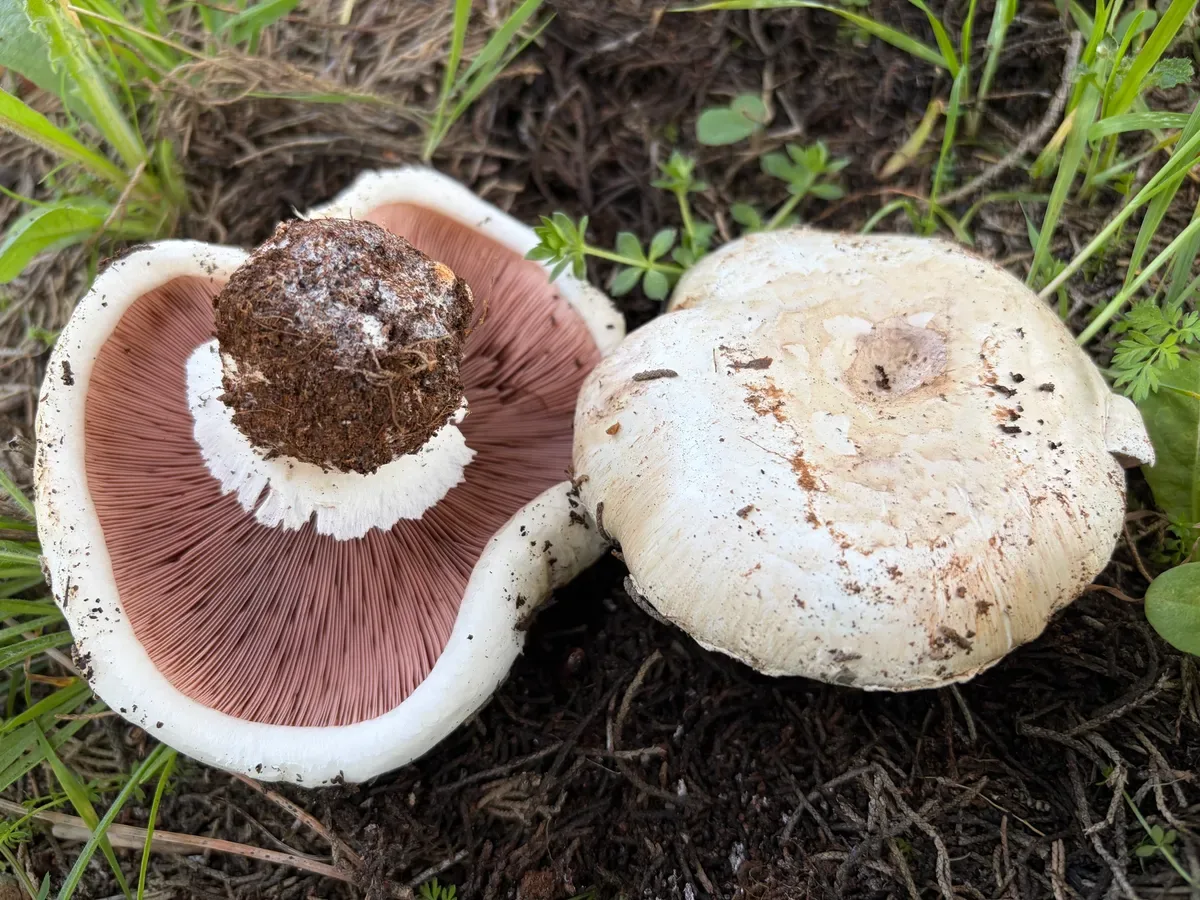 © Lucian Clanet (CC BY)
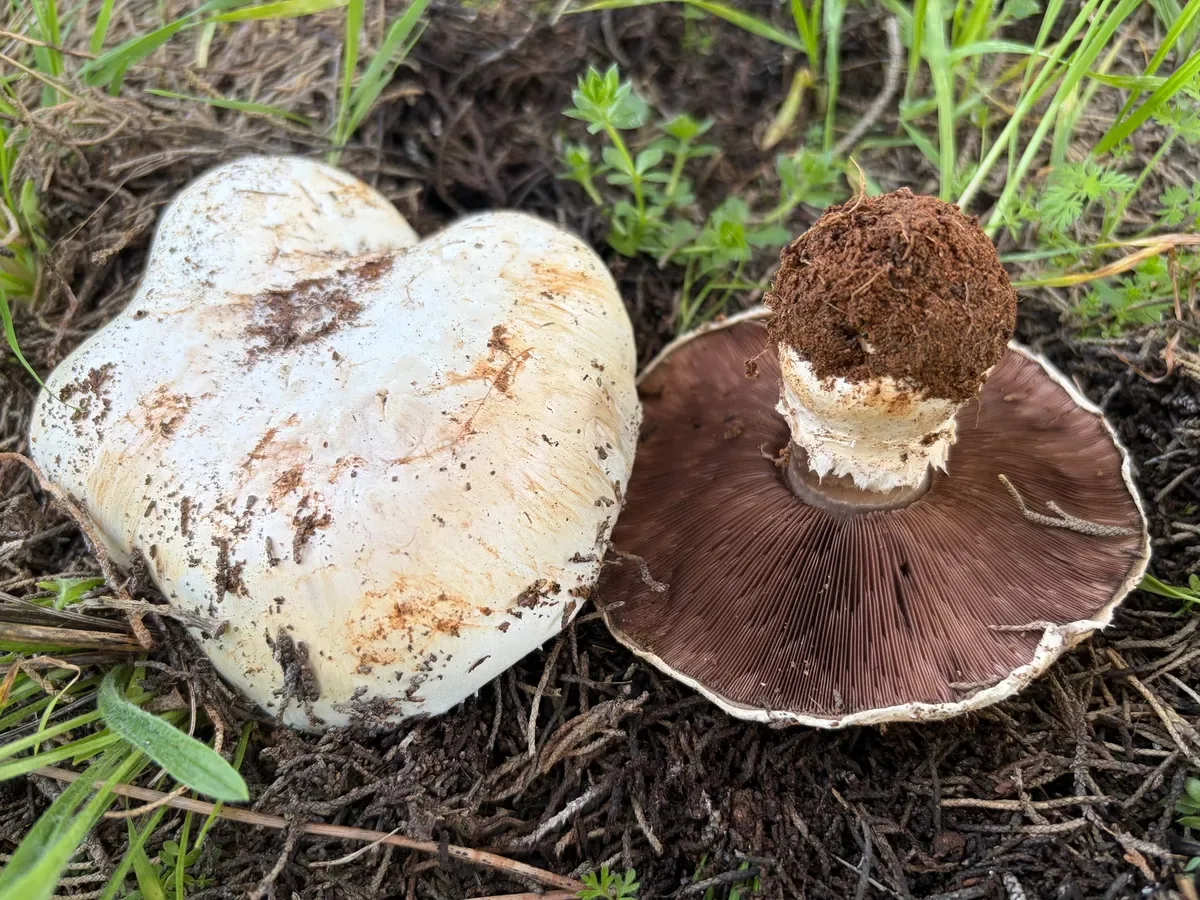 © Lucian Clanet (CC BY)
 © Annie Weissman (CC BY 4.0)Татьяна Фирсова (CC0)Chuck Wilson (CC0)
Good to eat, once you have identified it with certainty and cooked it through.
Never eat a mushroom you are not 100% sure of - check the look-alikes below, and always cook wild mushrooms.
How to recognise it
Agaricus bitorquis is a robust, chunky mushroom built for punching through hard surfaces.
Cap
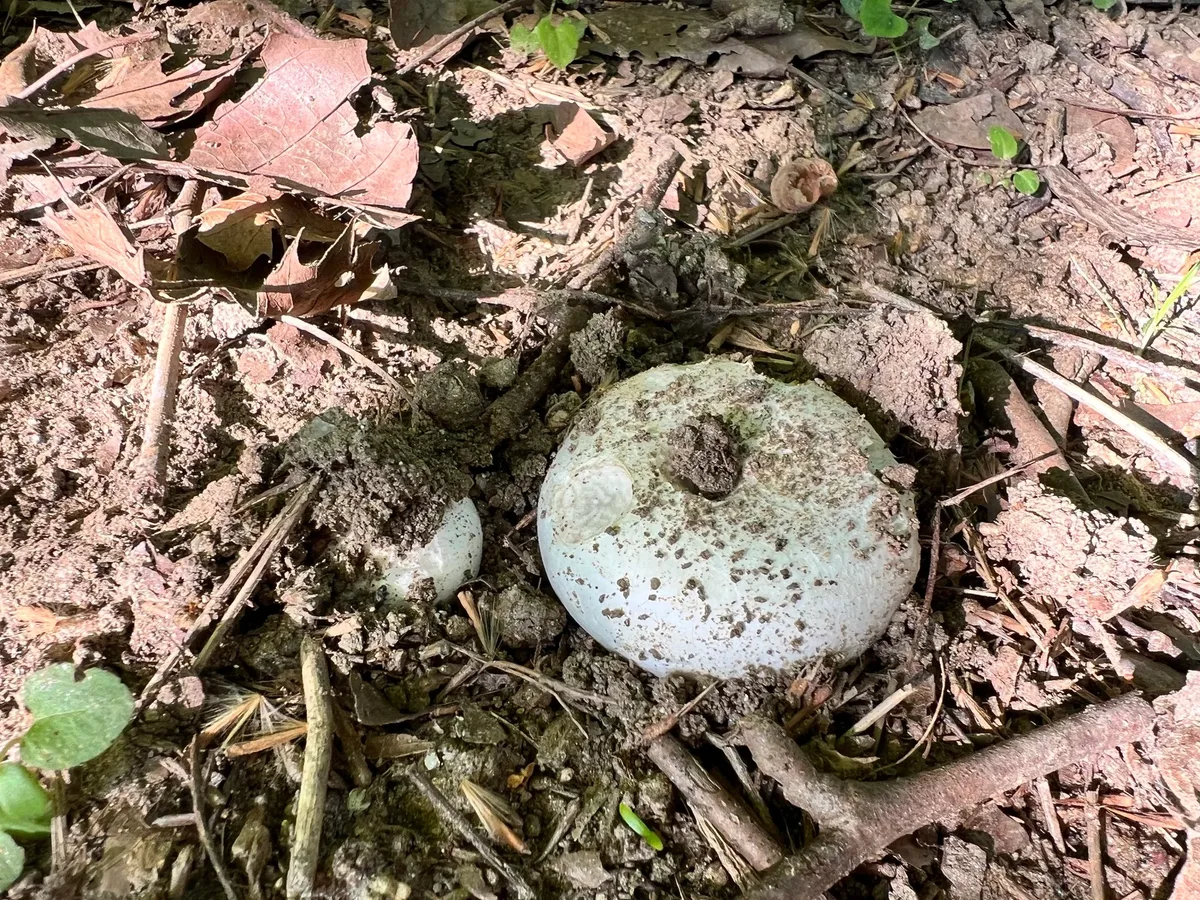
The cap begins as a firm, rounded globe - often strikingly white and polished - then expands to broadly convex or nearly flat, reaching 5-15 cm across.
The surface remains dry and smooth, white to pale cream or off-white, sometimes developing faint pinkish or tan tones with age or after handling.
Gills
The gills are free of the stem, tightly packed, and progress from pale pink in the button stage through deeper pink-brown to chocolate-brown as the spores mature. This progression mirrors the familiar field mushroom and is reassuring to experienced foragers.
Stem
The stem is short and stocky, white, solid, and smooth above the ring.
The double ring (double annulus) is the species' defining structural character: there is a firm upper skirt and a lower collarette or ridge low on the stem, giving it a distinctive double-belted appearance unlike any other common Agaricus.
Flesh
The flesh and cap surface do not turn yellow when bruised, cut, or exposed to KOH (potassium hydroxide): this is the most important safety feature separating it from the toxic yellow-staining Agaricus xanthodermus.
The flesh is thick, dense, white throughout, and does not change colour when sliced open and left for several minutes.
Where & when it grows
Habitat
This is above all an urban and peri-urban species, celebrated (and sometimes cursed) for its ability to fruit through tarmac, concrete paving, gravel, and compacted soil with extraordinary force - mature specimens have been recorded lifting paving slabs and cracking asphalt.
It thrives in disturbed, nitrogen-rich, compacted ground: footpaths, road verges, lawns, parks, playing fields, car park borders, waste ground, and garden beds.
It occurs commonly along municipal streets and in urban green spaces throughout temperate Europe and in similar habitats across North Africa, the Middle East, and North America.
In rural settings it grows in meadows, pastures, and along field margins but is far less characteristic there than the field mushroom (Agaricus campestris).
It is entirely saprotrophic, breaking down organic matter in soil, and has no association with trees.
When
In temperate northern Europe the pavement mushroom fruits from May or June through to October or November. The broad peak runs through the summer months into early autumn, when warm, moist conditions follow dry spells.
In warmer southern European and Mediterranean climates it may be found from spring well into winter.
It is notably less affected by drought than field mushrooms because it fruits from deep, compacted soils that retain moisture. Urban heat-island conditions often push the season forward in spring and extend it into late autumn.
The button stage can be entirely subterranean - the first visible sign is often a domed crack in the pavement or a slight heaving of soil.
How it grows
Agaricus bitorquis lives as mycelium threading through deep, compacted soil - often the hard-packed, nitrogen-enriched ground beneath pavements and paths that other fungi would never attempt to colonise. It is saprotrophic, quietly breaking down organic matter in the soil long before any fruiting body appears.
When conditions are right, fruiting bodies form entirely underground and push upward through the substrate. On soft ground this passes unnoticed, but on hard surfaces the emerging cap exerts substantial mechanical force - documented cases of cracked concrete and lifted paving slabs are real, not folklore.
Once the cap breaks the surface, growth is rapid, with buttons reaching harvestable size within two to four days. They appear singly or in small groups, occasionally in loose arcs.
The species has also found a place in cultivation in parts of Europe and North America, valued as an alternative to Agaricus bisporus for its firm flesh and notably longer shelf life.
Fruiting conditions
Fruiting triggered by adequate soil moisture following warm conditions. Compacted soils retain moisture longer than friable grassland soils, buffering the species against dry spells. Can fruit without recent rain if deep soil retains moisture. Urban heat-island effect lowers the effective soil temperature threshold slightly in city habitats.
Look-alikes
The pavement mushroom belongs to a genus that contains both excellent edibles and dangerous species, so careful identification is essential.
- Agaricus xanthodermus (yellow-staining mushroom) - the most important lookalike: toxic, causing significant gastrointestinal poisoning. It can be separated by the immediate and vivid chrome-yellow staining of the flesh at the cap margin and stem base when cut, and by its strong, unpleasant smell (inky, carbolic, or medicinal).
- Agaricus campestris (field mushroom) - closely related and also edible, but lacks the double ring and tends to be smaller and more delicate; it prefers open pasture.
- Agaricus bernardii - a robust, foul-smelling relative of saline or coastal soils with a much more irregular, cracking cap surface and unpleasant smell; inedible due to unpleasant taste and odour.
- Chlorophyllum molybdites (green-spored parasol) - in North American lawns and parks it causes the majority of serious mushroom poisonings. Check gill colour and take a spore print: its gills turn dull green and give a green spore print, never chocolate-brown.
- Amanita phalloides (death cap) and white-capped Amanita species (Amanita virosa, Amanita bisporigera) - could theoretically be confused with any white-capped mushroom by beginners, but Amanita species have white gills that do not turn pink or brown, a volva (cup) at the stem base, and a ring but never a double ring.
Always check for pink-to-brown gills in buttons, double ring, and no yellowing before consuming any white Agaricus.
DEADLY. Gills remain white at all stages - never pink or brown. Has a cup-like volva at the stem base (may be buried in young specimens - dig carefully to check). Single ring only, never a double ring. Any white-gilled button must be rejected regardless of odour.
DEADLY. Entirely white including gills, which remain white - never pink or brown. Has a prominent volva (sac or cup) at the stem base and a single ring. Never a double ring. Beginners should never pick white-capped mushrooms without digging to check for a volva and confirming gills are not pink.
DEADLY. The primary white Amanita Destroying Angel in North America. Gills remain pure white at all stages, has a prominent sac-like volva at the stem base, and a single delicate ring. Any all-white mushroom with white gills and a cup at the base must be discarded immediately.
Strongly unpleasant, briny or fishy smell. Cap surface much more cracked and irregular (areolate). Flesh reddens slightly when cut. Inedible due to unpleasant taste and odour.
Also edible. Lacks the characteristic double ring; has a single, often fragile ring. Smaller and more delicate overall. Prefers open pasture rather than compacted urban ground.
The most common cause of severe mushroom poisoning in North America; shares urban lawns and parks with A. bitorquis in warmer regions. Gills start whitish then turn dull GREEN; spore print is green, not chocolate-brown. Cap broadly scaly and parasol-like. Take a spore print to confirm - bitorquis gives dark brown, molybdites gives green.
Also edible. Larger, with a pleasant anise smell. Flesh yellows slowly (not vividly) in some specimens - perform cut test to be sure. Single ring with a distinctive cog-wheel pattern on the underside. Prefers open grassland rather than pavement.
Flesh turns vivid chrome-yellow immediately when cut, especially at cap margin and stem base. Smells strongly of ink, carbolic acid, or TCP. A. bitorquis flesh stays white and smells pleasantly mushroomy. A. xanthodermus causes significant gastrointestinal poisoning.
In the kitchen
Picking & cleaning
Harvest young, firm, pink-gilled specimens before the gills have darkened fully to chocolate-brown. Because the mushroom often fruits through pavement or compacted ground, extraction may require a knife to gently undercut the mycelium below the surface rather than pulling.
Check every specimen individually:
- Verify the double ring.
- Confirm the flesh and cap do not yellow when cut and exposed to air for 5-10 minutes.
- Check the smell (pleasant, mushroomy or mildly anise-like - never inky, carbolic, or medicinal).
Discard any specimen that yellows or smells unpleasant. The cap and stem are both edible. Firm-fleshed and slow to deteriorate, this species travels and stores particularly well.
Urban collection carries the caveat of soil contamination: avoid specimens from roadsides with heavy traffic, industrial areas, or sites that may have been sprayed with pesticides or herbicides, and always cook thoroughly.
Cooking
Agaricus bitorquis has an excellent flavour: rich, nutty, and distinctly mushroomy, often described as more intense than the cultivated button mushroom (Agaricus bisporus). The flesh is notably firm and holds up well to heat.
Young, closed-cap specimens are ideal for sautéing in butter with garlic and herbs, stuffing and oven-roasting, adding to risottos, pasta sauces, omelettes, soups, and stews. Larger, more open specimens with darker gills give wonderful depth to stocks and sauces.
The firm texture makes it a good choice for pickling or marinating.
Cook thoroughly - at least 5-10 minutes at full heat - as with all Agaricus species. Pairs classically with thyme, parsley, garlic, cream, and cured pork products.
Good to know
The pavement mushroom is a well-regarded edible with a long history of safe consumption, but the forager must exercise strict discipline on three safety checks before eating any specimen:
- 1CUT TEST - slice the cap at the margin and the stem base, then wait 5-10 minutes. The flesh must remain white. Any yellowing, especially the vivid chrome-yellow of Agaricus xanthodermus at the stem base, means discard the entire collection.
- 2SMELL - the aroma must be pleasant and mushroomy, possibly with a faint almond or anise note. A strong inky, phenolic, carbolic, or medicinal smell indicates a toxic species; discard.
- 3GILLS - must show a progression from pink (young) to brown (mature), never white. White gills at any stage suggest an Amanita - potentially deadly.
The double ring is highly characteristic and adds additional confidence, but the three checks above are non-negotiable.
Never eat raw - cook all specimens thoroughly. Urban specimens: avoid collection from heavily trafficked roads, industrial verges, or sprayed ground.
A reference guide - never an edibility guarantee. When in doubt, leave it out.