Button Mushroom
Agaricus bisporussyn. Psalliota bispora, Psalliota hortensis, Agaricus brunnescens, Agaricus hortensis, Pratella hortensis
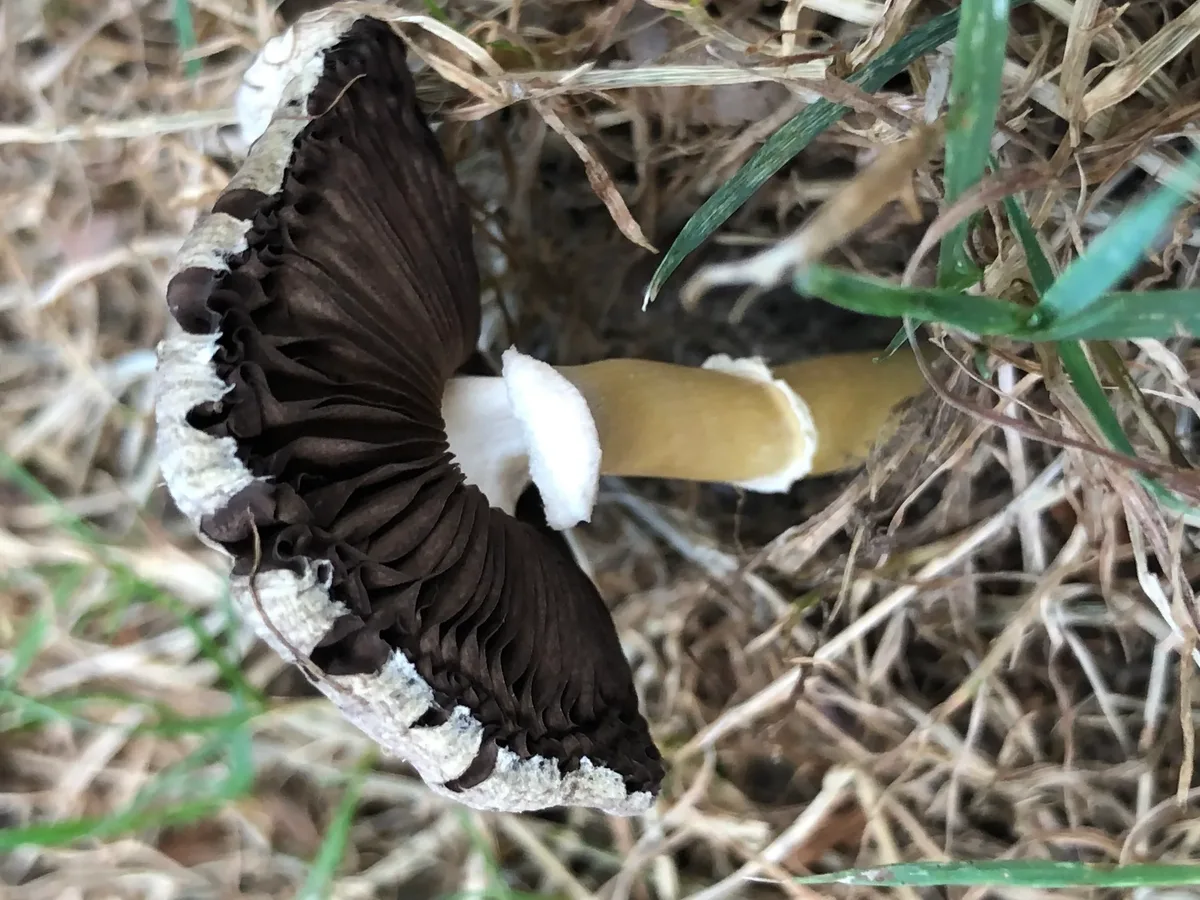 © Sus scrofa (CC BY 4.0)
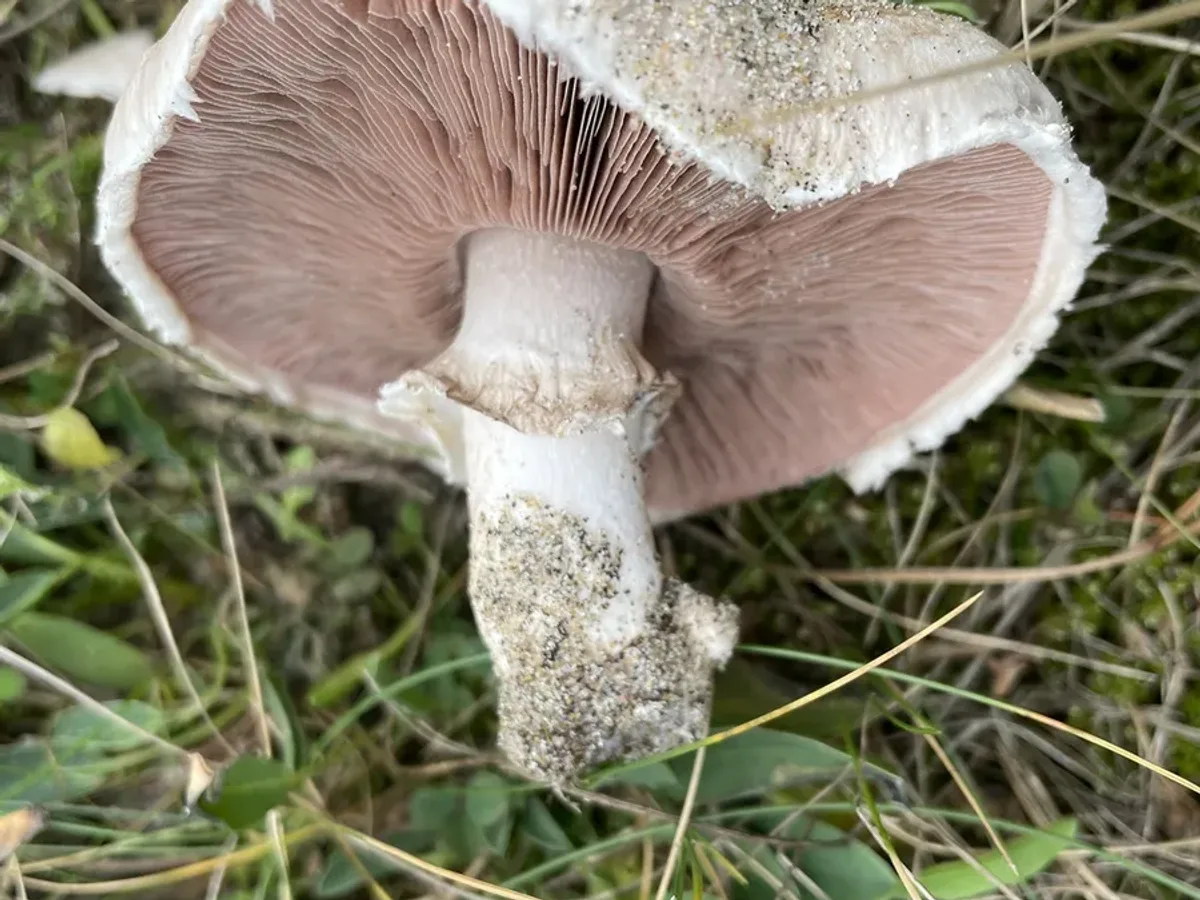 © Bjørn Eidhammer (CC BY)
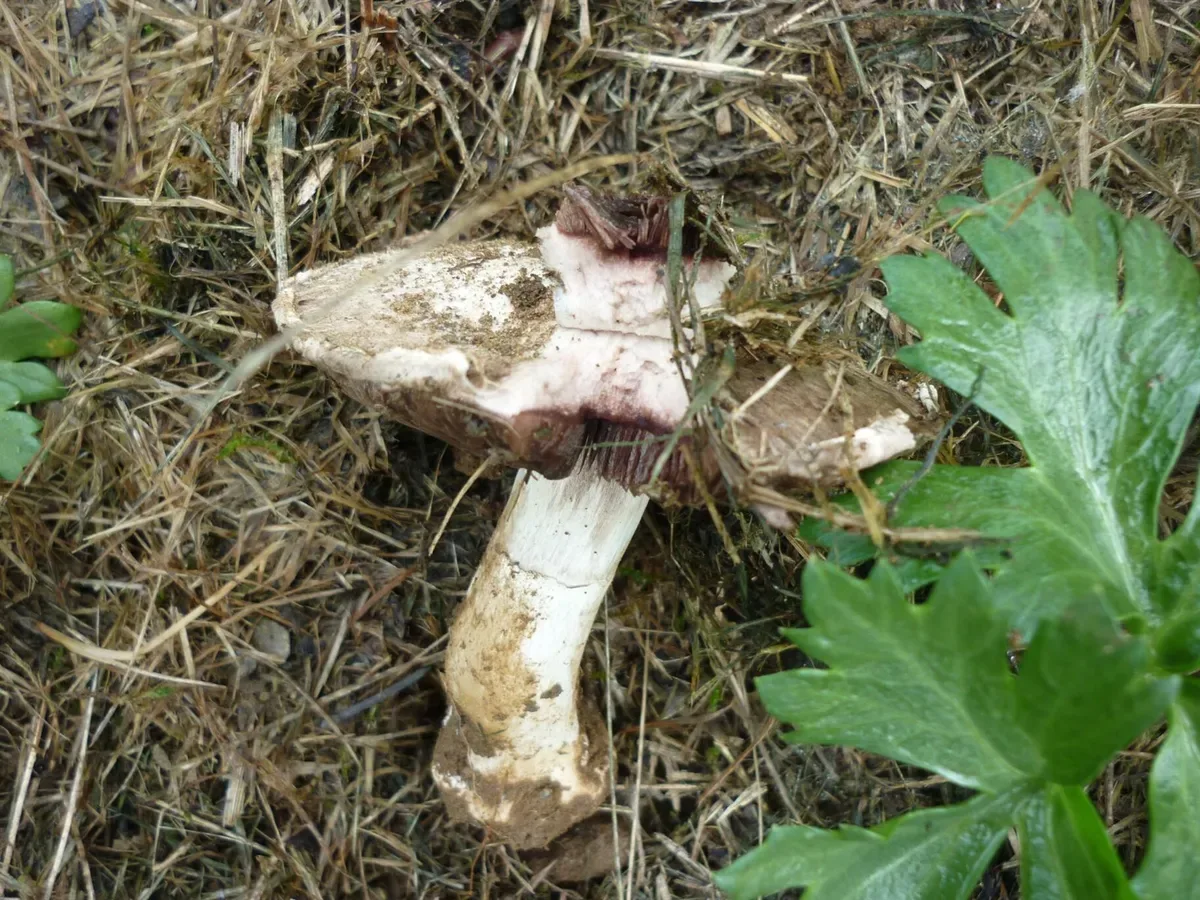 © Ole Christian Hagestad (CC BY)
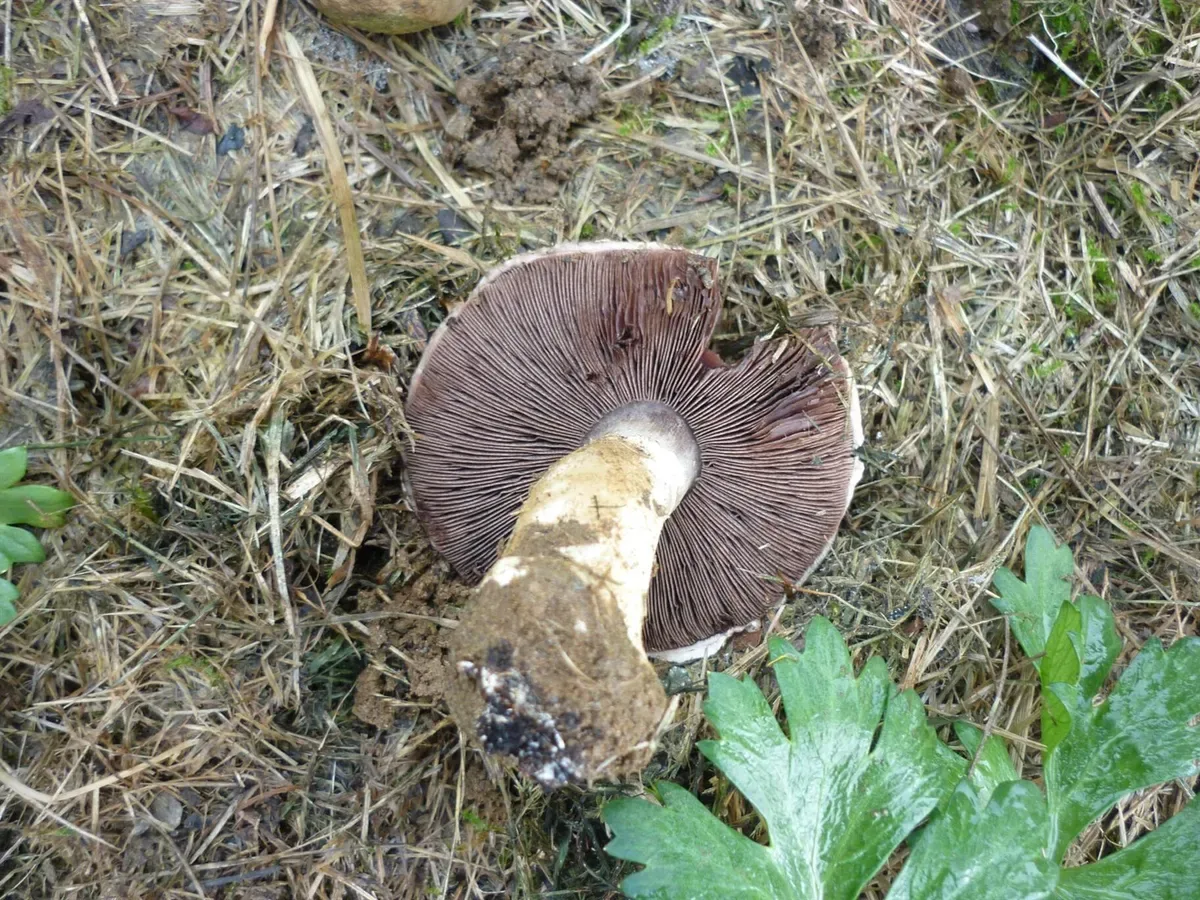 © Ole Christian Hagestad (CC BY)
 © Bjørn Eidhammer (CC BY)
 © Bjørn Eidhammer (CC BY)
 © Alex Karasoulos (CC BY 4.0)© Sus scrofa (CC BY 4.0)© Bjørn Eidhammer (CC BY)
One of the best mushrooms you can bring home - once you are certain of the identification.
Never eat a mushroom you are not 100% sure of - check the look-alikes below, and always cook wild mushrooms.
How to recognise it
Agaricus bisporus is the archetypal 'mushroom-shaped mushroom' and the one most people picture by default.
Cap
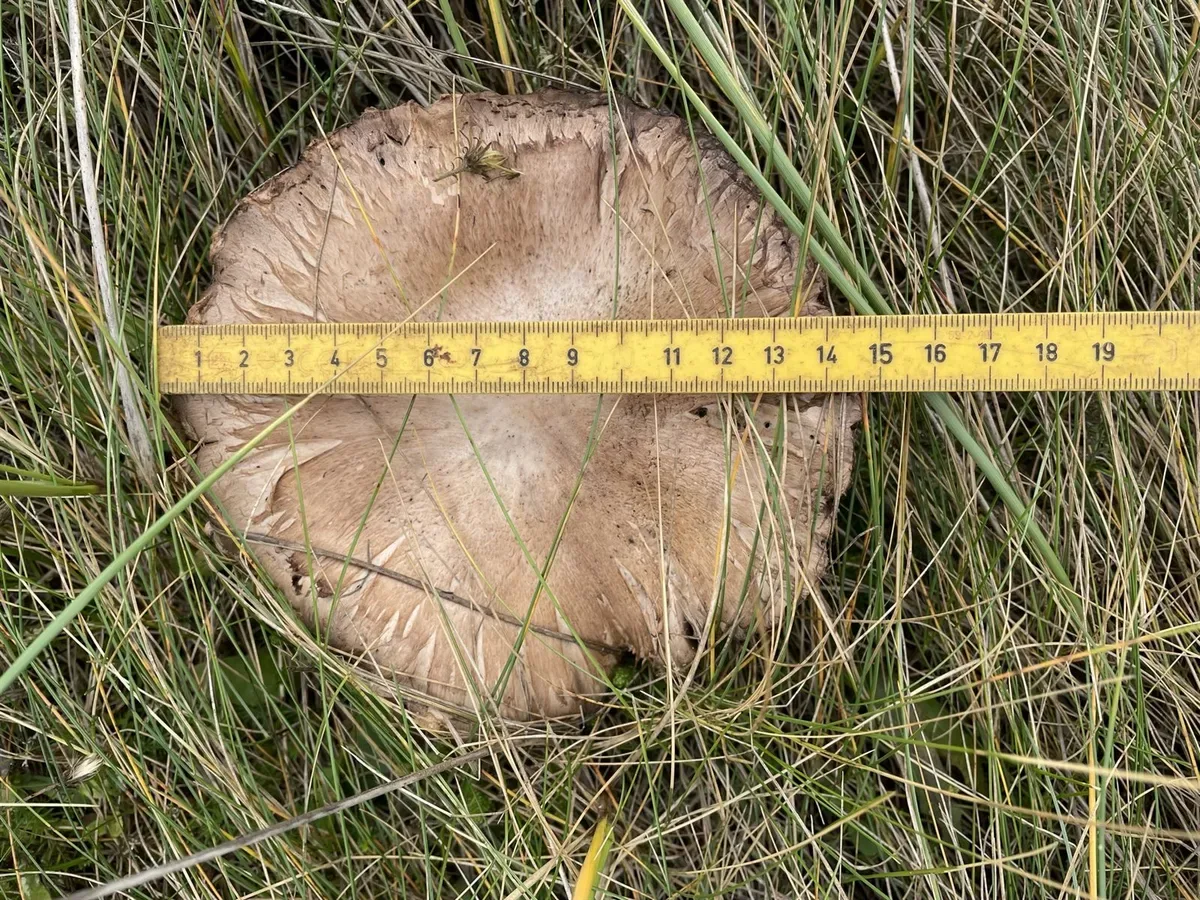
The cap begins as a tight ball, expands through a dome to a broad flattened disc 4-12 cm wide, and may reach plate size in the fully opened portobello stage.
Surface texture is dry and smooth to finely fibrous or lightly scaly, and strain determines colour - supermarket whites, the tan-to-mid-brown crimini/Swiss-brown, and the large brown portobello are all the same species.
Gills
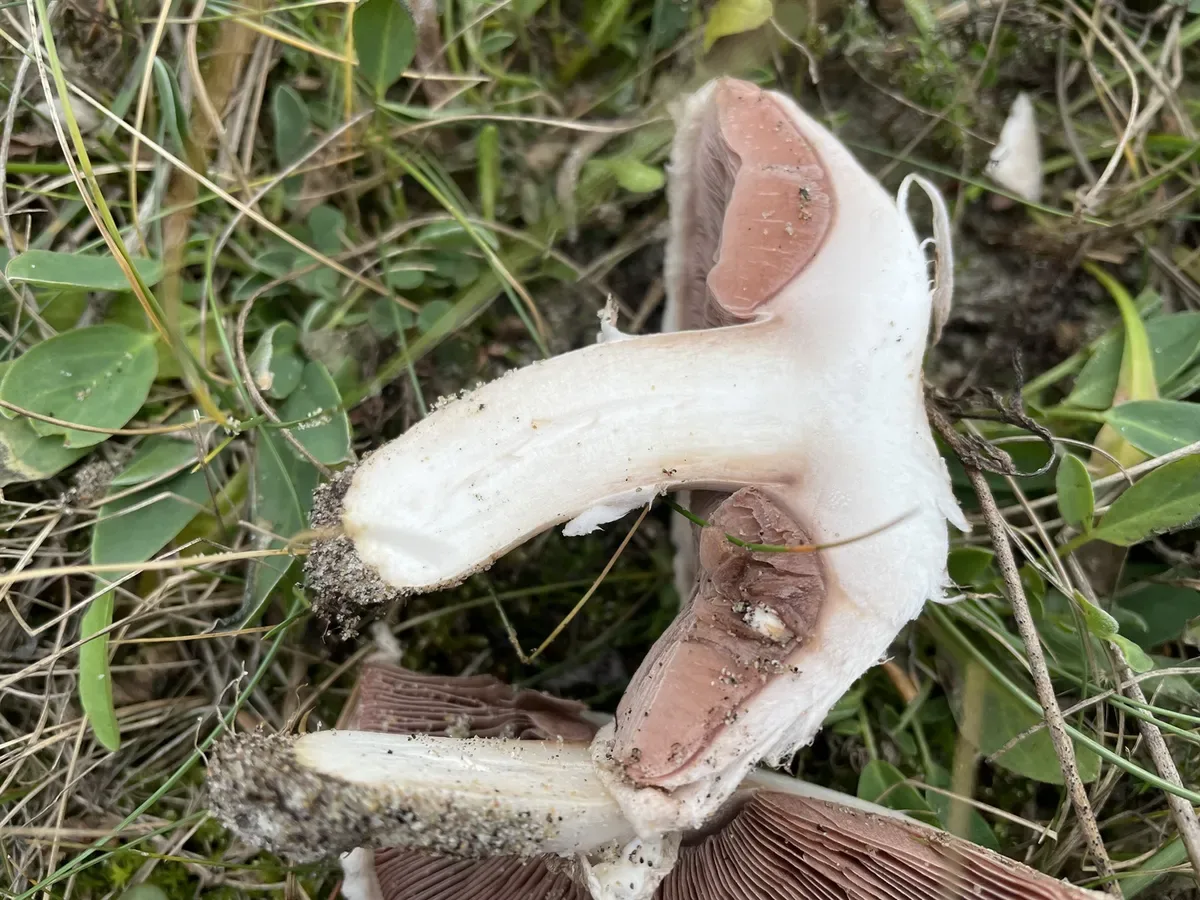
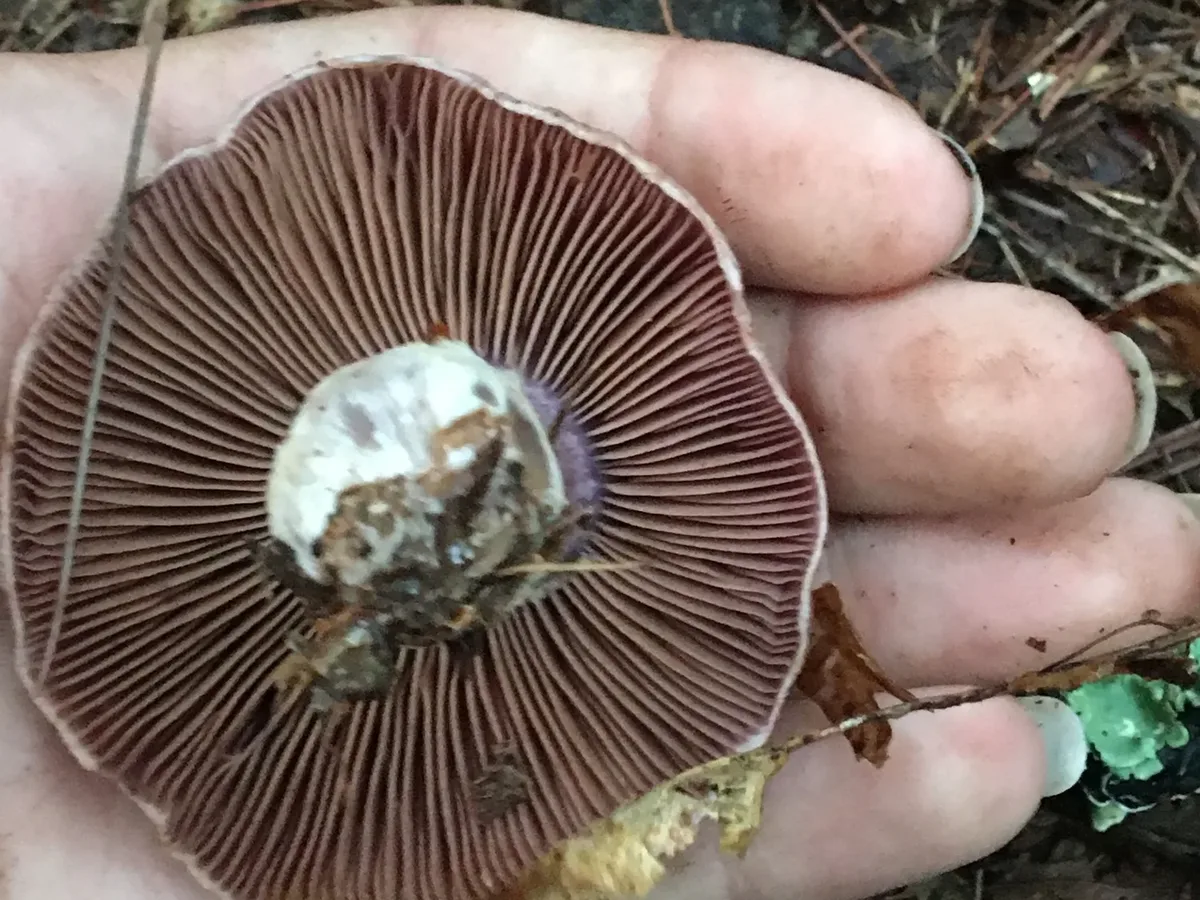
The single most useful identification feature is the gills: they are free of the stem and change colour predictably with age, from pale pink or rose-grey in the closed button, through pinkish-brown and chocolate, to almost black at maturity. They are never white.
Spore print is dark chocolate- to purple-brown.
Stem
The white stem is fairly short and stout with a thin, simple, often fragile ring high on the stalk.
Flesh
Flesh is firm and white and may slowly turn pinkish or pinkish-brown where cut or bruised, particularly in brown strains and at the stem base, but it does not flush bright yellow.
Smell & taste
The smell is a clean, pleasant 'mushroomy' aroma sometimes with a faint sweet-almond note.
Where & when it grows
Habitat
In nature this is a species of open, fertile, disturbed ground rather than forest.
Look for it in:
- grazed pastures and meadows
- lawns and playing fields
- road verges
- garden beds
- dune grassland
- especially around manure piles, compost, and other nutrient-rich, often dung-enhanced soils
It is a saprotroph that feeds on decaying organic matter and humus, so it is not associated with any particular tree, although it occasionally turns up at grassy woodland margins.
The overwhelming majority of specimens encountered today are cultivated indoors on composted manure-and-straw substrate, which is why the wild form, though widespread across the temperate Northern Hemisphere and introduced elsewhere, is far less familiar than the shop-bought one.
When
Wild fruiting bodies appear chiefly from mid or late summer through autumn, with the heaviest flushes in late summer and early autumn after spells of warm, humid, rainy weather on rich open ground. In milder climates scattered fruitings can extend into early winter.
Cultivated production runs all year because the mushrooms are grown in temperature- and humidity-controlled houses, completely independent of the outdoor season - which is why it is one of the only mushrooms reliably available fresh in every month.
How it grows
Fruit bodies arise singly, scattered, or in loose troops and arcs. On rich turf they sometimes sketch out partial fairy rings - the visible sign of a mycelium quietly radiating outward underground.
Growth is remarkably fast once warmth and moisture arrive: a tight button can open to a full cap within a day or two, as if the mushroom were in a hurry.
The fungus is saprotrophic, its unseen threads ramifying through manure-enriched soil, compost, or humus and converting that organic matter into the fruiting flush above.
Unusually for Agaricus, most basidia bear only two spores rather than four - hence the name 'bisporus'. Many cultivated lines are effectively self-fertile, a quirk of biology that turned out to be commercially invaluable.
Fruiting conditions
Wild flushes follow warm, humid spells with adequate rain on rich, often manured open ground, typically a week or two after rainfall. Cultivated production is fully controlled (compost ~24-25C for spawn run, fruiting initiated by cooling to ~16-18C) and independent of weather.
Look-alikes
The genus Agaricus contains both the finest edibles and a few toxic species, plus it is shadowed by the deadly all-white Amanita group, so careful checking is essential.
The single most dangerous confusion is with white Amanita species, which in the closed-button stage can superficially resemble a white button mushroom:
- the European Destroying Angel (Amanita virosa)
- the eastern North American Destroying Angel (Amanita bisporigera)
- the Death Cap (Amanita phalloides)
The decisive difference is the gills: Amanita gills stay pure WHITE and the spore print is white, whereas A. bisporus gills are pink to brown and its spore print is dark brown.
Amanitas also sit in a membranous sac-like cup (volva) at the swollen stem base and frequently have a skirt-like ring, features absent in true Agaricus.
Because the deadly Amanita relevant to you depends on where you are - A. virosa across Europe, A. bisporigera and A. ocreata across North America - never rely on a single named species; rely instead on the gill colour, the spore print, and the basal volva.
Within Agaricus itself the chief toxic mimic is the Yellow Stainer (Agaricus xanthodermus), which looks much like a white button but bruises bright chrome-yellow (especially at the stem base when cut) and smells of phenol/ink/chemical or 'iodine,' causing gastric upset.
Edible relatives that may be confused include the following, all good edibles with the same pink-to-brown gill rule:
- the Field Mushroom (Agaricus campestris)
- the Horse Mushroom (Agaricus arvensis)
- the Wood Mushroom (Agaricus silvicola)
Typically greenish to pale, but young or pale forms can be mistaken for a mushroom by beginners. White gills, white spore print, and a basal volva distinguish it; A. bisporus has pink/brown gills, a brown spore print, and no sac at the base. Among the most deadly fungi known - responsible for most fatal mushroom poisonings worldwide.
The European all-white deadly Amanita. Closed white buttons can superficially resemble a button mushroom, but Amanita gills stay pure WHITE and the spore print is WHITE; there is a membranous sac (volva) at the swollen stem base and usually a skirt-like ring. A. bisporus has pink-to-brown gills, a dark-brown spore print, and no volva. Causes lethal amatoxin poisoning - never confuse, and slice every white button in half to inspect the base.
The North American counterpart of A. virosa and the most commonly encountered deadly all-white Amanita across eastern North America (A. ocreata fills the same role in the west). Pure WHITE gills, WHITE spore print, and a membranous sac-like volva at the bulbous base, often with a ring on the stem. A. bisporus instead has pink-to-brown gills, a dark-brown spore print, and no volva. Contains lethal amatoxins; a single fruitbody can be fatal.
An excellent edible look-alike of grassland; very similar with pink-to-brown free gills but typically a thinner, more fragile ring and a more delicate stature. Edible, so no danger, but worth distinguishing for the record.
A larger edible relative that smells of aniseed/almond and may bruise faintly yellow when young; gills go pink to brown. Edible. The key distinction from the toxic Yellow Stainer is the pleasant anise smell (versus the Stainer's chemical/ink odour) and a faint, slow yellowing rather than vivid chrome-yellow at the base.
Edible woodland relative, slender, smelling of aniseed, with pink-to-brown gills. Easily confused with the toxic Yellow Stainer, so always apply the bruise-and-smell test before eating any pale Agaricus.
Very button-mushroom-like and the most common toxic confusion within Agaricus, causing significant gastrointestinal upset (vomiting, cramps, diarrhoea) but not death. It bruises bright chrome-yellow (vividly at the stem base when cut) and smells of phenol, ink, or chemicals, an odour intensified by cooking. A. bisporus bruises only pinkish/brownish and smells pleasantly mushroomy.
In the kitchen
Picking & cleaning
If you harvest wild specimens, take only firm, fresh caps and ALWAYS slice the whole mushroom in half from cap to stem base before keeping it - you must inspect both the gills and the stem base.
- Pink-to-brown gills are mandatory; white gills mean reject it.
- A swollen base sitting in any sac-like cup (volva), or flesh that bruises bright chrome-yellow at the stem base, also means reject it.
Cut or twist the stem at the base, leaving substrate behind, and keep your basket of Agaricus separate from other species so any single questionable specimen can be re-examined and discarded.
Avoid mushrooms growing on roadsides, recently sprayed lawns, or industrially fertilised land, since this species readily takes up heavy metals and agrochemicals from rich ground.
For most people the safest source of A. bisporus is simply the shop, where the cultivated product is unambiguous.
Cooking
An exceptionally versatile, mild, and reliable culinary mushroom and the backbone of countless dishes worldwide.
- Whites are clean and delicate.
- Brown crimini are firmer and meatier.
- Mature portobellos are dense and steak-like.
Slice and sauté in butter or oil until the released moisture cooks off and the edges brown for the best flavour, or roast, grill, stuff, and add to soups, stews, sauces, omelettes, risottos, and pasta.
Portobellos grill or roast whole as a substantial vegetarian centrepiece. They take on other flavours well and pair with garlic, thyme, cream, soy, and red meat.
They are best eaten cooked; although they are widely sliced raw into salads, thorough cooking is preferable and improves both digestibility and flavour, because raw specimens contain small amounts of the naturally occurring hydrazine agaritine which is substantially (though not entirely) reduced by heat.
Current toxicological reviews find no demonstrated risk to healthy people from normal consumption, but cooking remains the prudent default.
Good to know
Three rules keep this group safe.
- 1ALWAYS check the gills and the stem base by slicing the whole mushroom in half: in A. bisporus the gills progress pink → chocolate → blackish and are never white. White gills plus a white spore print and a bulbous sac (volva) at the base mean a potentially DEADLY Amanita (a Destroying Angel or the Death Cap) - discard it immediately and do not let it touch your edible harvest. A single such mushroom can kill, and there is no reliable home antidote.
- 2Do the bruise-and-smell test: if a 'button' bruises bright yellow at the stem base or smells of ink, phenol, or chemicals, it is most likely the toxic Yellow Stainer (Agaricus xanthodermus), not A. bisporus.
- 3Never eat a tiny all-white unopened button you cannot fully verify, because that is exactly the stage at which deadly Amanitas masquerade as button mushrooms - the volva can be buried, so dig up and inspect the entire base.
When buying cultivated stock these risks vanish, but wild collecting of small white agarics demands real caution - when in doubt, throw it out.
A reference guide - never an edibility guarantee. When in doubt, leave it out.