The prince
Agaricus augustussyn. Psalliota augusta (Fr.) Quél., Fungus augustus Fr.
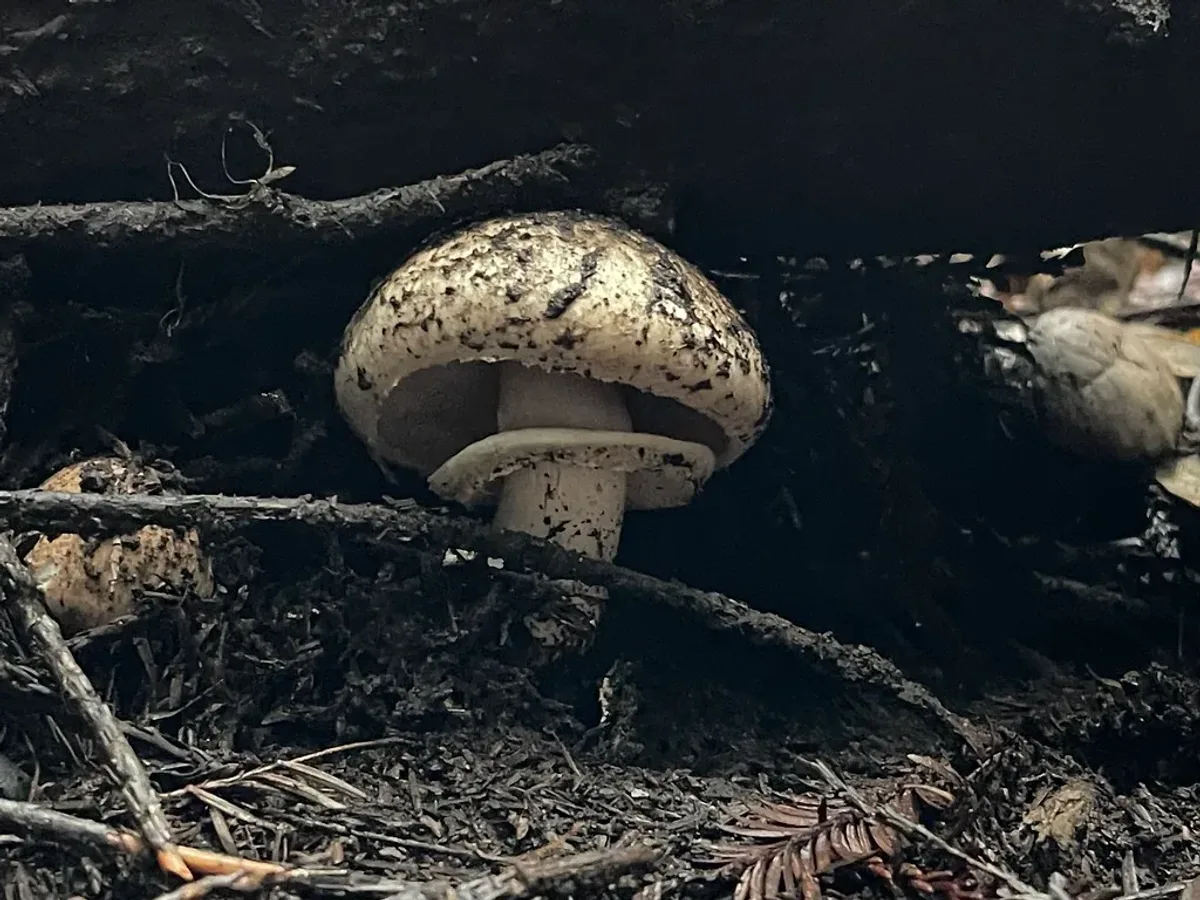 © sarahstierch (CC BY 2.0)
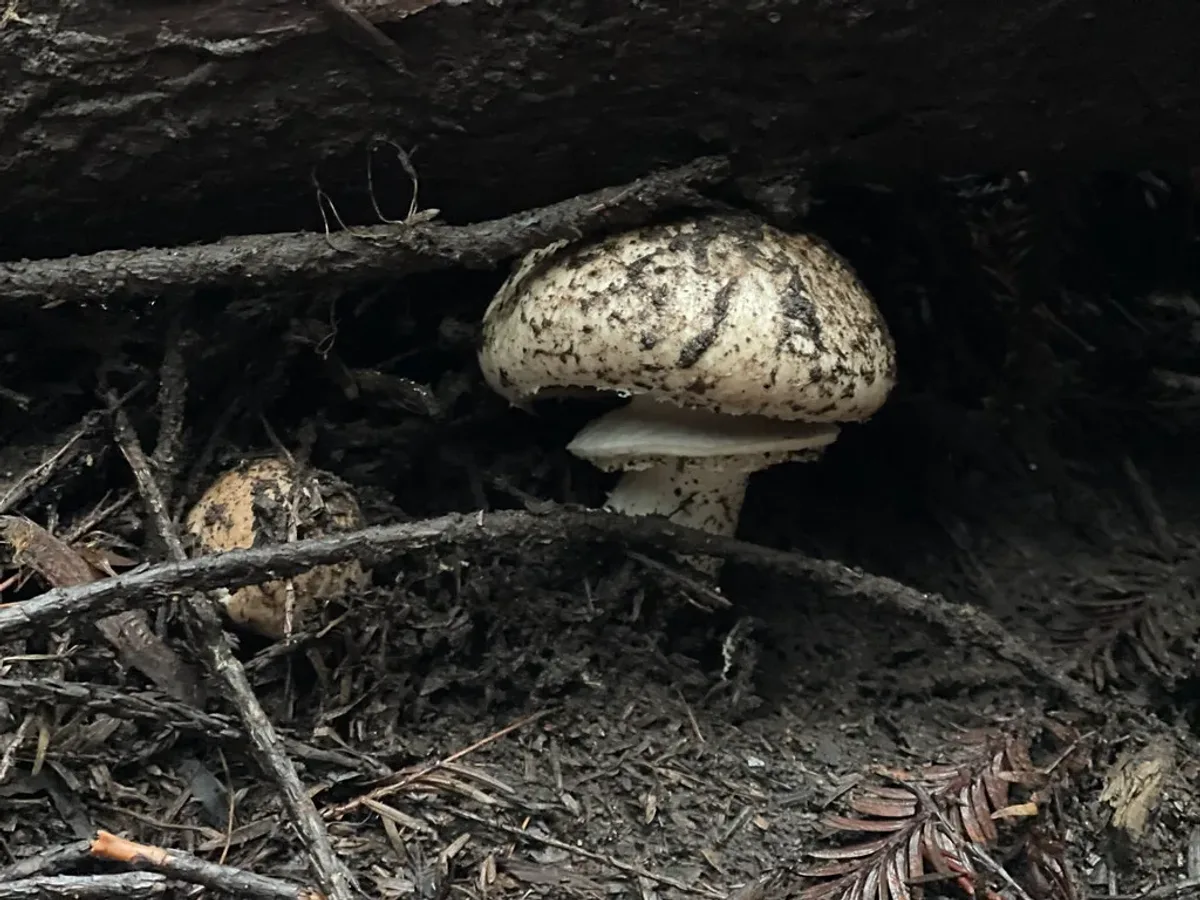 © sarahstierch (CC BY 2.0)
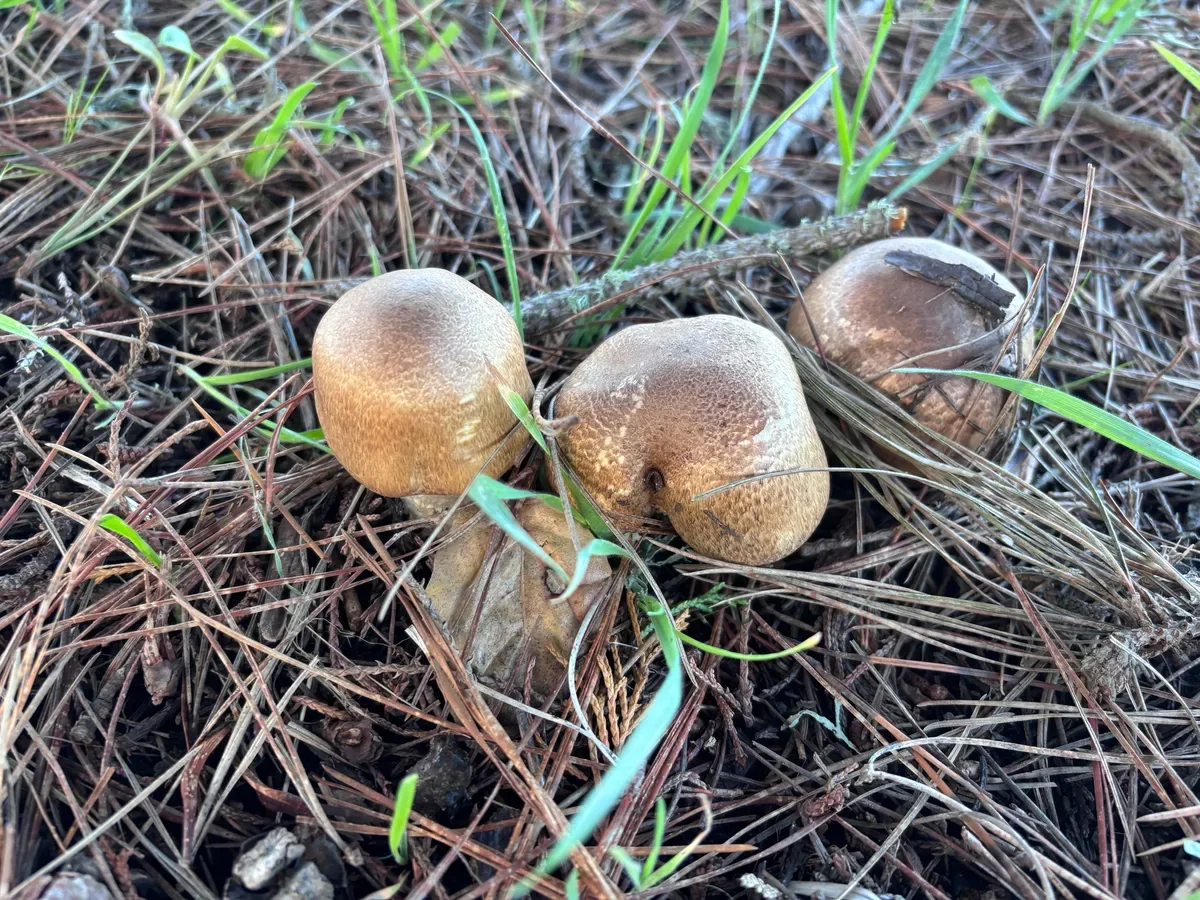 © reagan peschke (CC BY)
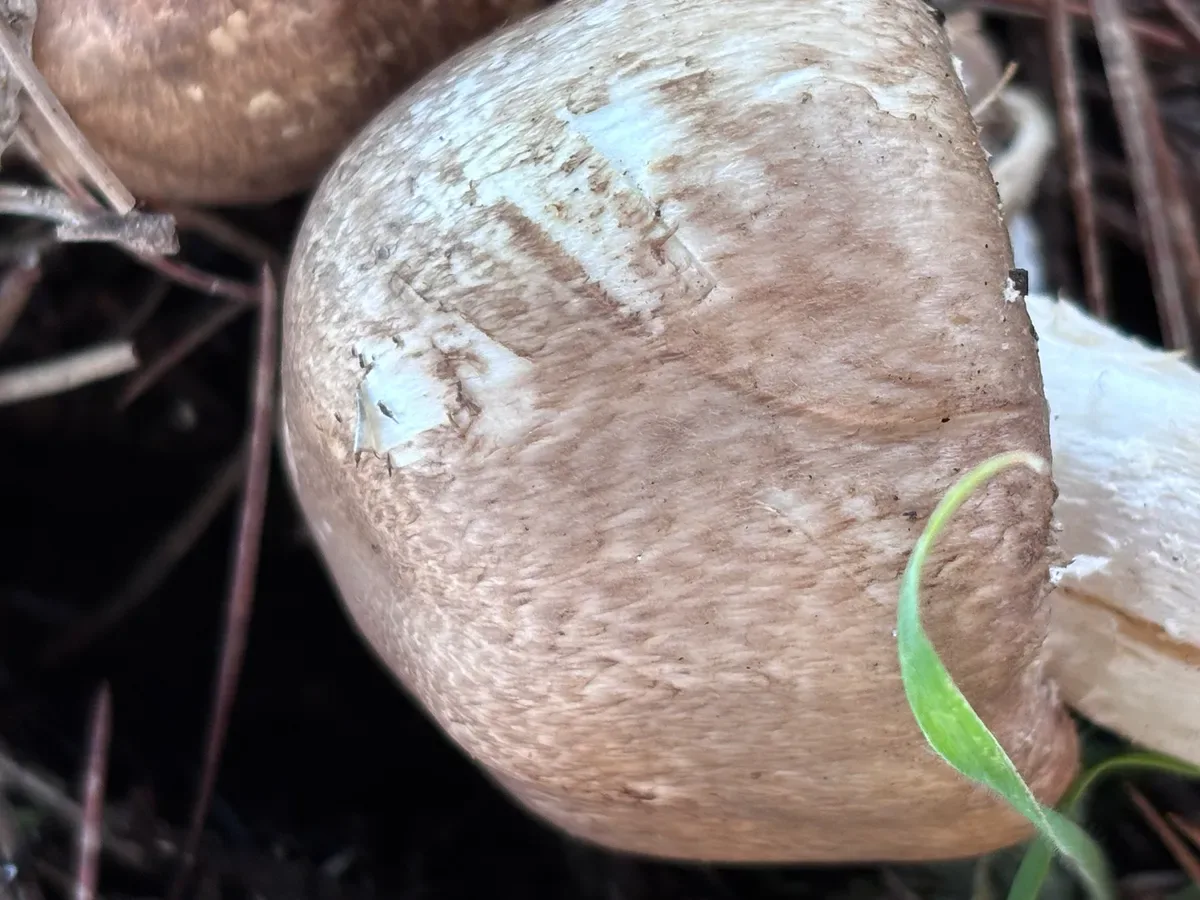 © reagan peschke (CC BY)
 © Matthew Rozanoff (CC BY)© sarahstierch (CC BY 2.0)© sarahstierch (CC BY 2.0)
One of the best mushrooms you can bring home - once you are certain of the identification.
Never eat a mushroom you are not 100% sure of - check the look-alikes below, and always cook wild mushrooms.
How to recognise it
Agaricus augustus is among the largest and most handsome of all Agaricus species - its epithet 'augustus' (Latin: majestic) is entirely apt.
Cap
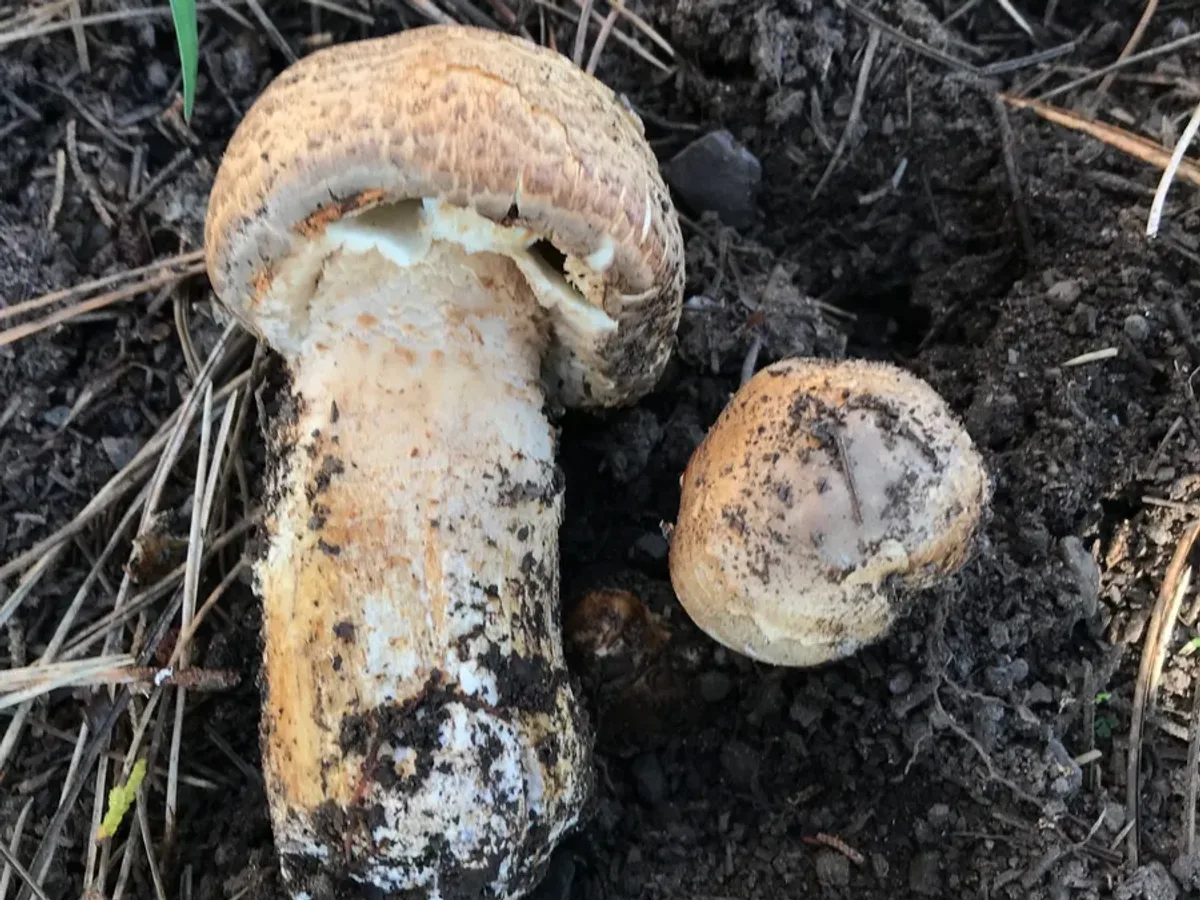
The cap in the button stage is a tight globe, pallid but covered with densely pressed, dark-brown to chestnut-fibrous scales on a straw-yellow ground, giving an immediate impression of a tawny, shaggy ball.
As it expands to full size - often 15-20 cm across and occasionally reaching 25 cm - the cap becomes broadly convex to nearly flat, the centre remaining most densely scaled while the margin shows more scattered, coarser squamules. The background cuticle is pale ochre-yellow, strongly contrasting with the dark scales.
Flesh
The most significant colour character is the flesh: cut through the cap or stem and the white flesh initially blushes very faintly pinkish but never rapidly chrome-yellow in the cap (compare Agaricus xanthodermus).
However, rub or cut the very base of the stem vigorously and a clear pale to golden-yellow staining appears - a useful diagnostic when combined with other features.
Gills
The gills begin as pale pink and cycle through deepening shades of brown as the spores mature, ending as deep chocolate-brown to near-black. The spore print is dark chocolate-brown.
Stem
The ring is a standout feature: large, skirt-like, and distinctly double-layered, the underside bearing cottony, fugitive scales arranged in a pattern.
The stem is stout and long - typically 10-20 cm tall - with recurved brownish scales below the ring mirroring the cap surface.
Smell & taste
The smell is perhaps the most reliable single field character: a warm, persistent, unmistakable odour of anise or bitter almonds (similar to marzipan), perceptible even at a distance.
This scent is very strong in fresh specimens and is entirely absent from the deadly lookalike Amanita phalloides and also absent from Agaricus xanthodermus, which smells of ink or carbolic.
Where & when it grows
Habitat
A saprotrophic decomposer of organic matter, The prince grows wherever soil is enriched with decomposing plant debris:
- beneath ornamental conifers (Sequoia, Thuja, Abies, Picea) and broadleaved trees in parks and gardens
- along hedgerows
- on compost-enriched garden soil
- in woodland edges
- along forest tracks enriched with bark-chip or leaf mould
In natural forest settings it favours the margins of conifer plantations, grassy glades in spruce or fir forest, and the bases of slopes where organic matter accumulates.
Despite its common association with trees it is strictly saprotrophic and does not form mycorrhizal bonds.
It thrives in moderately disturbed habitats and can appear in quite urban settings - suburban gardens, city parks, and road verges under ornamental plantings. The mycelium colonises the upper mineral soil and thick duff layers.
When
Fruiting occurs from June through to November in temperate Europe, with the main flush centred on August, September, and October.
In Britain and northwest Europe, August and September are typically the best months. In the Pacific Northwest of North America, the species fruits from late July into November.
Individual fruiting bodies mature slowly and the caps can persist in good condition for one to two weeks if conditions are stable.
It is unusual to find large flushes; specimens more often appear as singletons or pairs, though occasional clusters of three to five occur from a shared mycelial mat.
How it grows
The prince grows as a solitary to scattered saprotrophic species. Buttons emerge rapidly after significant rainfall following a dry spell, especially when soil temperatures remain 10-18 °C.
The fruiting body expands over 5-10 days. The initial button can be as small as 2-3 cm and is often overlooked.
Because the cap is initially tightly clasped and globose, buttons can be mistaken for small puffballs in the ground litter, which creates a critical safety concern (see Safety).
The species is not gregarious in the way Agaricus campestris can be; dense fairy rings are not formed, though it may reappear at the same spot in successive years.
Fruiting conditions
Fruiting best triggered by warm rain (≥20 mm over 14 days) after a dry interval, when soil temperatures are 9-18 °C. Buttons appear 7-14 days after significant rainfall. Warm spells in August-September following summer drought are classic trigger conditions in central and western Europe. Frost ends fruiting.
Look-alikes
The most important lookalike to understand is the Death cap (Amanita phalloides) and related deadly Amanita species in their button stage, before the cap has opened and when the whole fruiting body is enclosed in a white universal veil - at this stage they can superficially resemble small specimens of A. augustus or other Agaricus buttons.
The critical difference is that young Amanitas are enclosed entirely within a white veil, their flesh remains pure white throughout without any pinkish or yellowing tinge, and they have white gills that remain white at maturity. Slicing through an Amanita button reveals a miniature mushroom structure inside the veil sack.
Agaricus xanthodermus (the yellow-staining mushroom) is a more subtle lookalike and is widespread in the same habitats. It resembles A. augustus but has a cap surface that is grey-white and less distinctly scaly, and its flesh turns instantly and unmistakably bright chrome-yellow when cut (especially at the base of the stem and in the cap cuticle).
Critically, A. xanthodermus smells of ink, carbolic acid, or phenol - never of anise. It causes gastrointestinal poisoning in the majority of people who eat it.
Amanita virosa and Amanita verna (Destroying angels) are pure white and lack the scaled cap of A. augustus, but could be confused with albino forms or very pale immature specimens of Agaricus; they have white gills, white spore prints, a prominent volva, and no anise smell.
Lepiota species - particularly Lepiota brunneoincarnata and related poisonous species - are typically much smaller (cap under 8 cm) and lack the large double ring, the anise smell, and the pink gills.
Macrolepiota procera (Parasol) has a snakeskin-patterned stem, a moveable double ring, white gills, and a white spore print - it does not smell of anise.
In the button stage, both may appear as rounded globes in leaf litter. Slice in half: Amanita phalloides has a miniature cap-and-stem structure enclosed in a white veil sack (volva), pure white gills that remain white, and no anise smell. A. augustus buttons have visible pink gills, a ring-in-formation, no volva, and a pronounced anise-marzipan odour.
Completely white at all stages; white gills, white spore print; prominent volva at base; no scales on cap; no anise smell. Never confuse with A. augustus: slice open every button to check for the volva.
Much smaller (cap under 8 cm); no anise smell; no pink gills (gills remain white); white spore print; ring not double; some species cause deadly poisoning from amatoxins. Size alone usually sufficient but always check gills and smell.
Cap has snake-skin-patterned stem (not scaly in the same way); ring is moveable and double but slides up the stem; gills white throughout; spore print white, not brown; no anise smell; flesh does not pink or yellow. Edible and choice but easily distinguished.
Cap is greyish-white with less distinct brownish scaling; flesh instantly stains bright chrome-yellow when cut (especially at cap cuticle and stem base); smells strongly of ink or carbolic acid, never anise. Causes GI poisoning in most people.
In the kitchen
Picking & cleaning
Harvest young to medium-sized specimens whose caps have not yet fully opened and whose gills are still pale pink to light brown - these have the finest aroma and best texture.
- Use a knife to cut cleanly at the base rather than twisting, to avoid disturbing the mycelium.
- Clean the base of any attached soil and debris.
- Bring only as many as you can prepare within 1-2 days.
Crucially: before harvesting any button, slice it vertically in half and confirm that the interior flesh is pure white and that there is no cup-like volva (sack) at the base - the presence of a volva would indicate a deadly Amanita. Also confirm the characteristic anise smell is present.
Cooking
The prince is considered one of the finest European mushrooms, rivalling Boletus edulis in gastronomic esteem. Its anise-almond aroma intensifies dramatically on cooking, filling a kitchen with a rich, savoury-sweet perfume.
The firm, dense flesh holds its shape well and does not collapse.
Primary preparations:
- Slice thickly and pan-fry in butter or olive oil over high heat until golden, seasoning simply with salt and fresh thyme or rosemary - the mushroom needs little embellishment.
- Superb in risotto, cream-based pasta sauces, or sautéed on toast with a squeeze of lemon.
- Stuff the caps (with cheese, breadcrumbs, garlic, or cured meat) and bake whole.
- Slice young specimens raw into salads, where the almond perfume adds complexity.
- Dries well: slices dried at low heat retain the aroma and reconstitute with excellent texture.
Do not boil or stew at length, which dissipates the volatile aromatic compounds; use dry-heat or short, hot sauté methods to preserve the flavour.
Good to know
Agaricus augustus is a safe and choice edible when correctly identified; there are no records of toxicity from correctly identified specimens.
The critical safety steps are:
- 1Always slice each button in half before cooking to confirm white-to-pinkish flesh, no volva (sack), and no enclosed cap structure - this eliminates deadly Amanita species.
- 2Smell the cut flesh: genuine anise/marzipan aroma is required; absence of this smell or replacement by an inky/phenolic odour indicates A. xanthodermus or a related undesirable species.
- 3Observe the staining reaction: the cap flesh should not turn bright chrome-yellow when cut. A faint, slow yellowing at the very stem base is acceptable and normal for A. augustus; rapid, vivid chrome-yellow in the cap or upper stem eliminates A. augustus and points to A. xanthodermus.
- 4Confirm the spore print is dark brown (not white - white spore print would indicate Amanita or Lepiota).
Do not harvest in a hurry. Never consume any button-stage mushroom without slicing it open, regardless of habitat.
A reference guide - never an edibility guarantee. When in doubt, leave it out.