Horse Mushroom
Agaricus arvensissyn. Psalliota arvensis, Fungus arvensis, Pratella arvensis
 sarahstierch (CC0)
 sarahstierch (CC0)
 © Lucian Clanet (CC BY)
 © Lucian Clanet (CC BY)
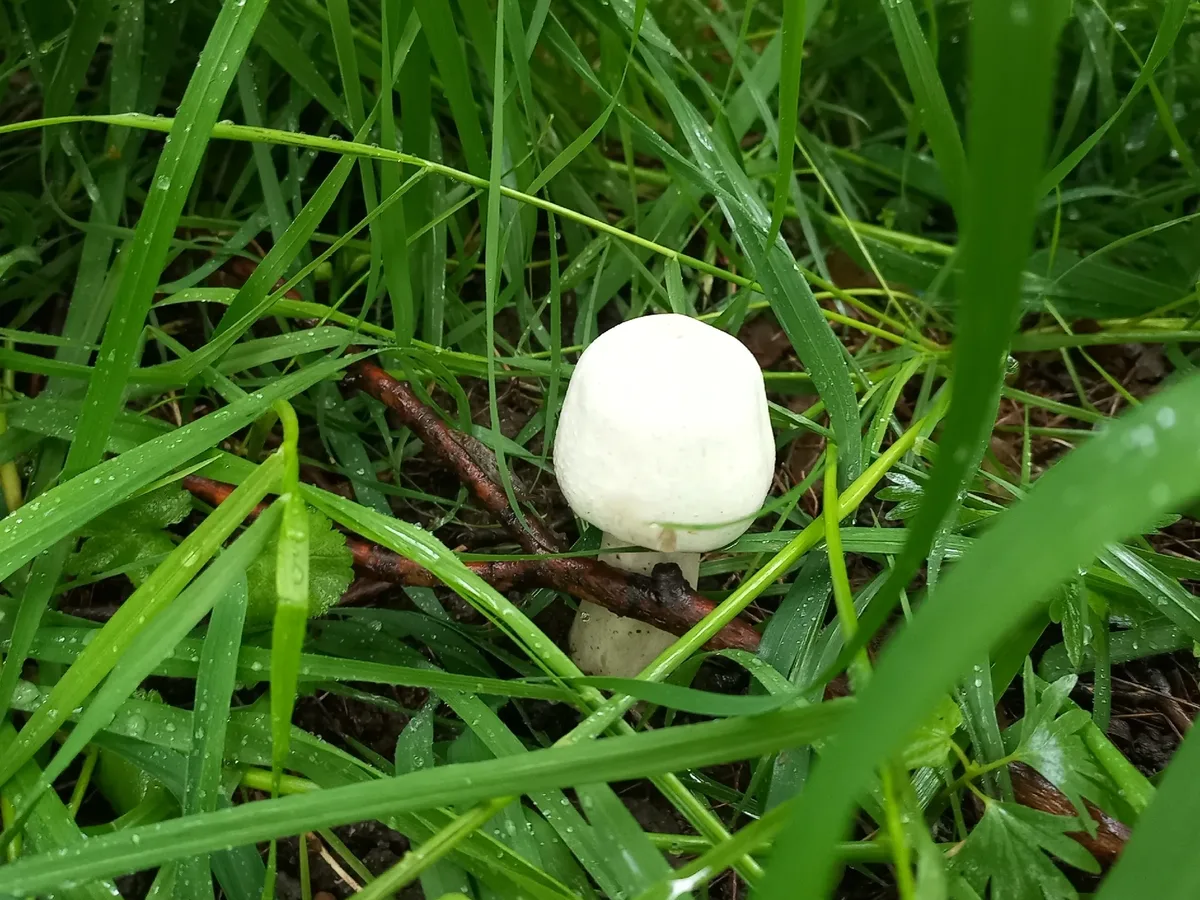 © Alexander Dubynin (CC BY)
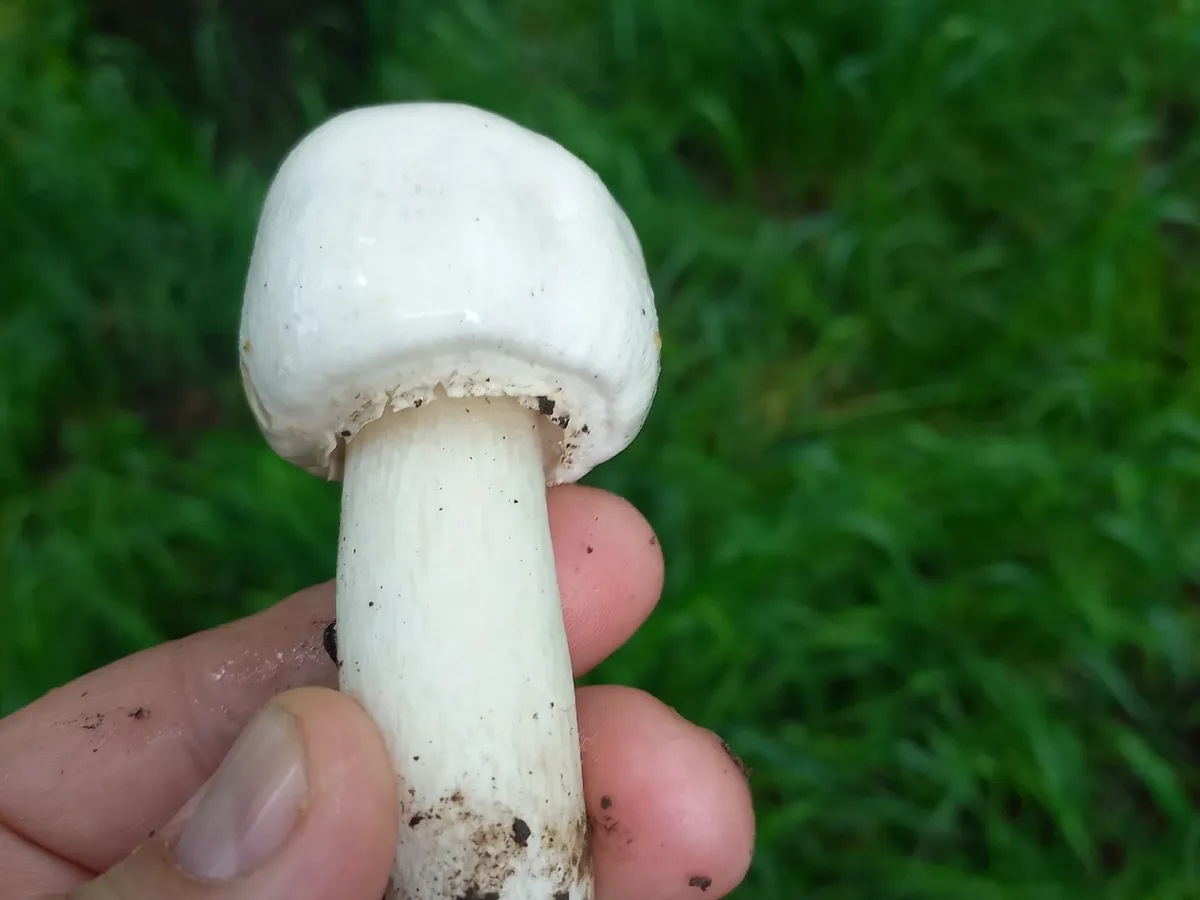 © Alexander Dubynin (CC BY)
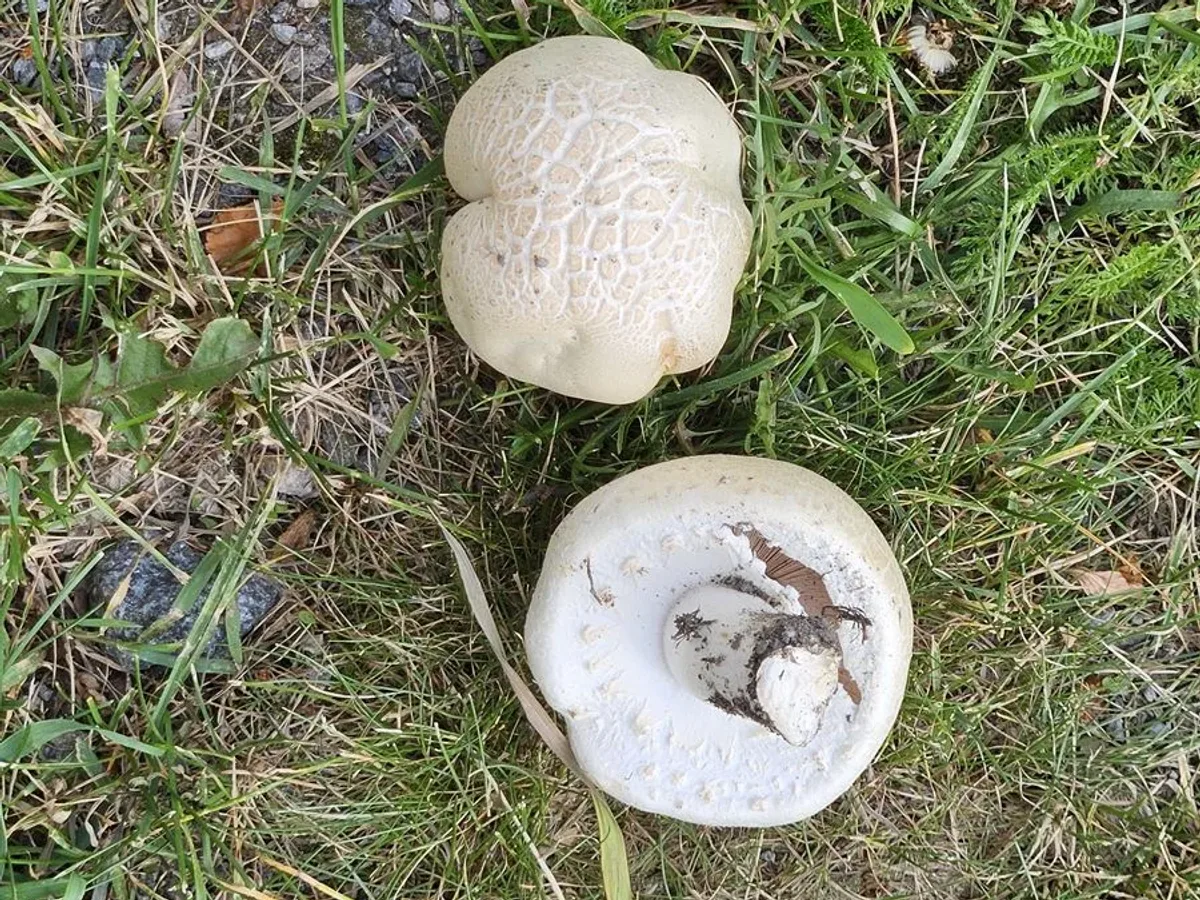 © Arvid Næss (CC BY)
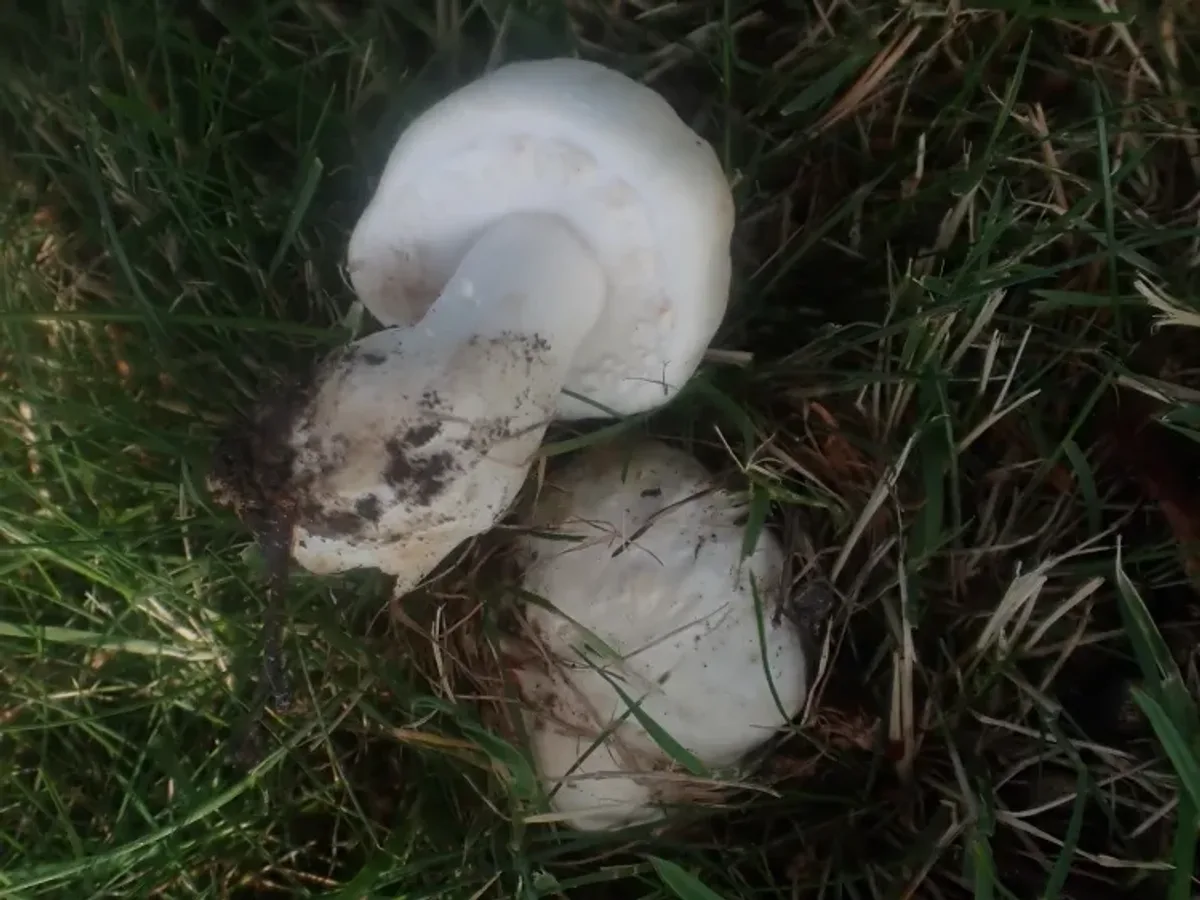 © Morten Pettersen (CC BY)sarahstierch (CC0)sarahstierch (CC0)
One of the best mushrooms you can bring home - once you are certain of the identification.
Never eat a mushroom you are not 100% sure of - check the look-alikes below, and always cook wild mushrooms.
How to recognise it
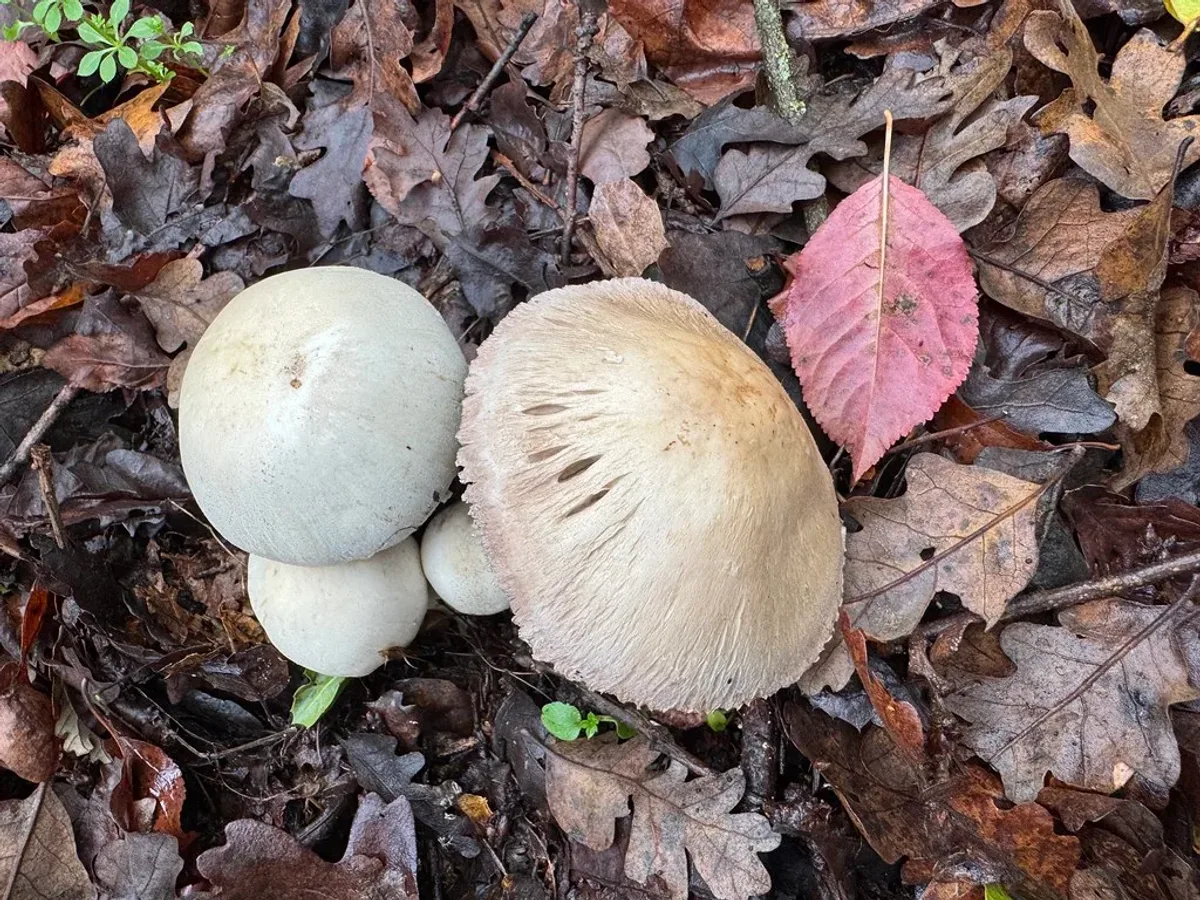
The Horse Mushroom is one of the largest and most handsome field mushrooms, frequently dwarfing the common Field Mushroom (Agaricus campestris) that grows in the same pastures.
Cap
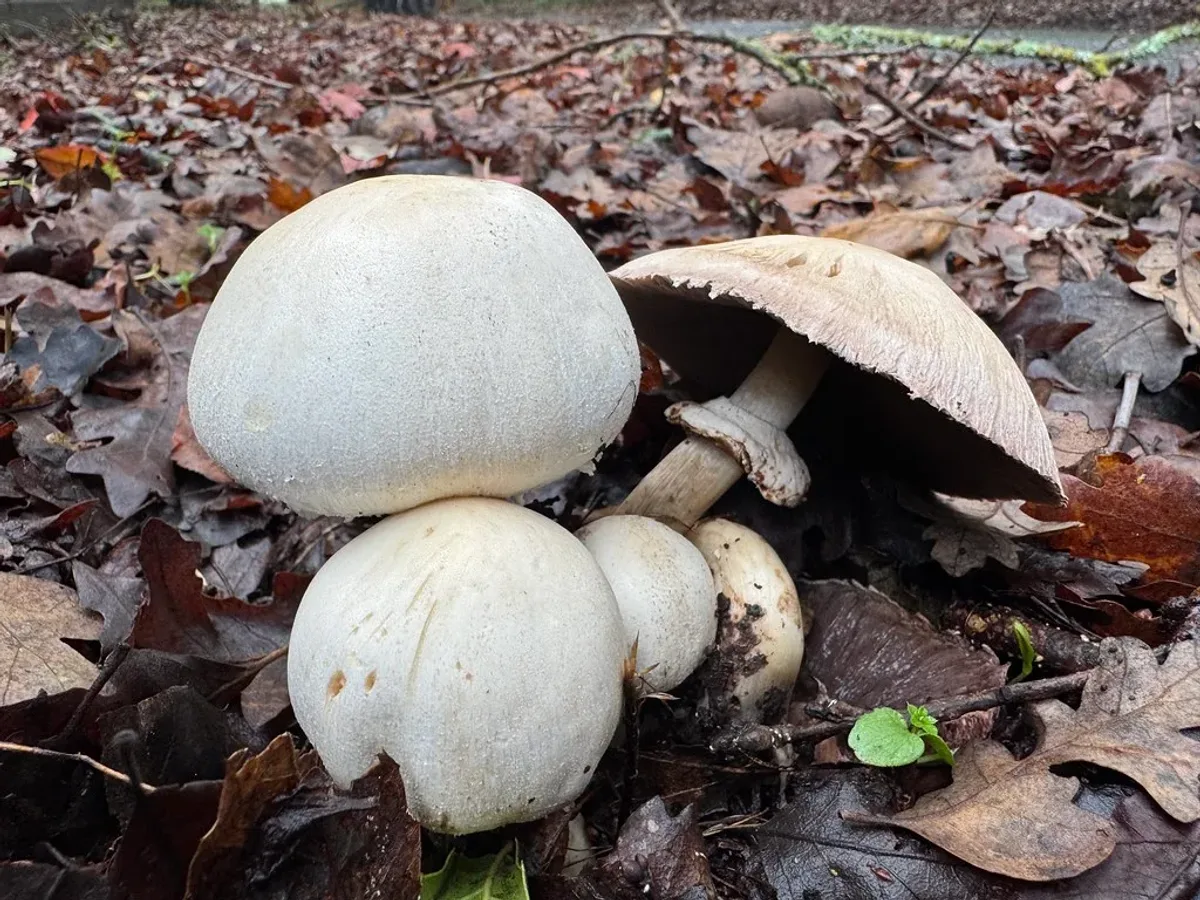
The cap begins as a tight, white, almost spherical 'snowball' (hence one of its names) before expanding to a broad convex or flattened dome 8-20 cm across, occasionally far larger. Its surface is white to cream, smooth or only faintly silky-scaly, and bruises a slow, soft yellow where rubbed, ageing overall to a dull ochre or buff.
Gills
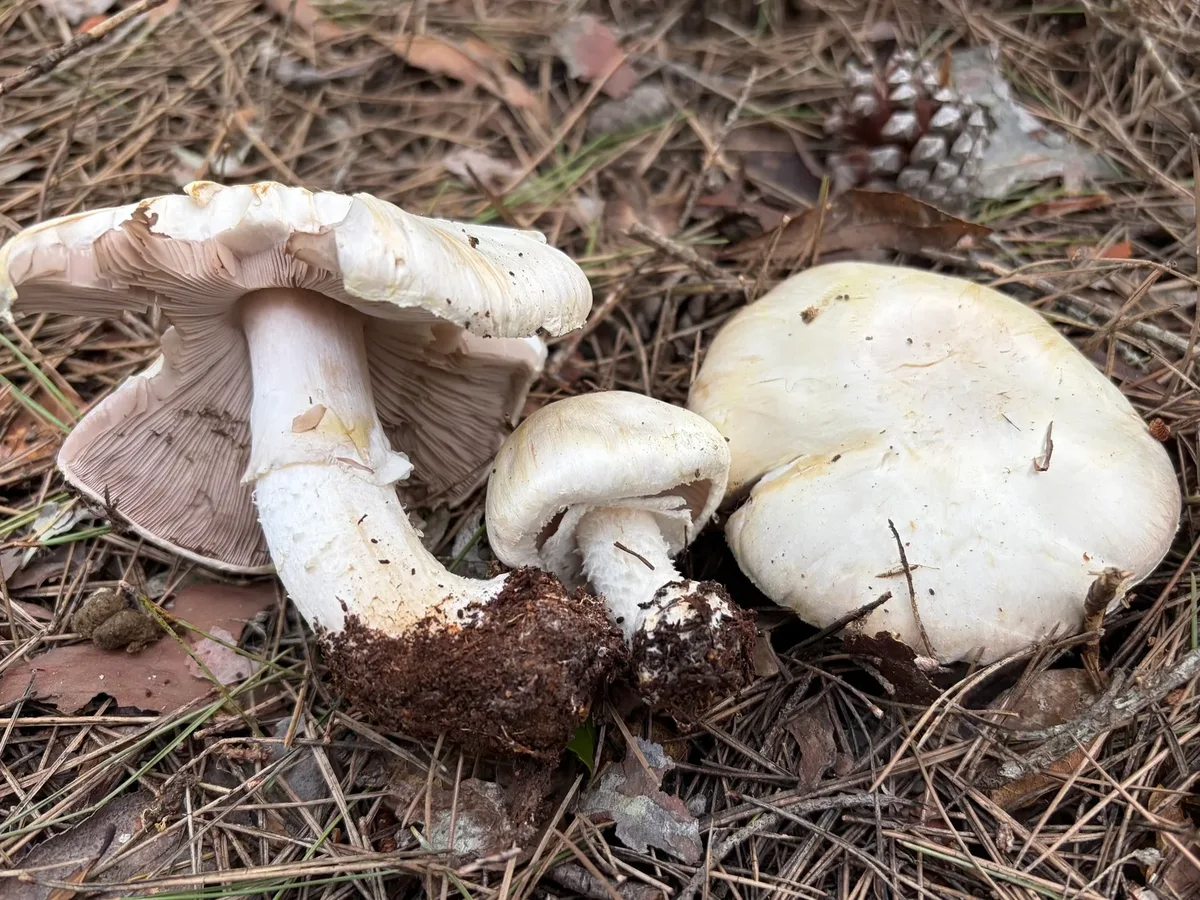
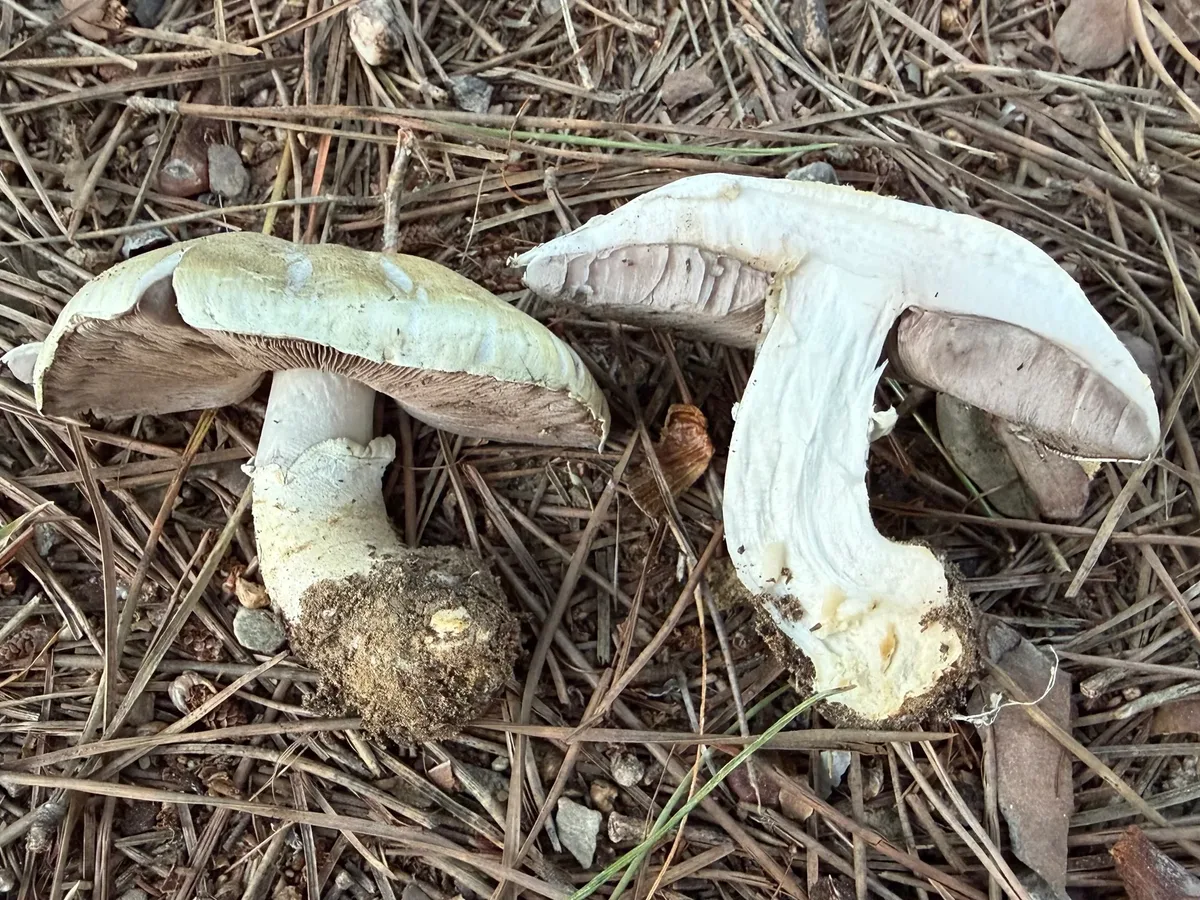
Turn a specimen over and check the gills: in the very youngest, tightly closed buttons they can look pale and almost whitish, but they very quickly take on a greyish-pink to dirty-cream tone (never the vivid clear pink of the Field Mushroom) and then darken steadily through grey-brown and chocolate to almost black as the spores ripen.
Because young white buttons are the stage most easily confused with a deadly Amanita, never rely on gill colour alone at the button stage - always dig up and inspect the base.
Stem
The stout white stem carries a large, drooping double ring; lift it and you will see the hallmark of the species - the lower face of the ring is split into a soft, ragged ring of segments resembling a cogwheel or many-pointed star, often with creamy-yellow flecks. The base is club-shaped but sits in bare soil with no sac-like cup.
Flesh
The flesh is thick, firm and white.
Smell & taste
The whole mushroom smells distinctly and pleasantly of aniseed or marzipan.
Where & when it grows
Habitat
A creature of open grassland rather than woodland. Look for it in unimproved and grazed pastures, hay meadows, paddocks, roadside verges, dunes, lawns, parkland, golf courses and woodland glades - anywhere the turf is short and the soil is rich.
It has a strong affinity for nutrient-enriched ground, classically the manured pastures grazed by horses and cattle, which is the origin of its English name.
It commonly fruits gregariously, scattered in troops or arranged in conspicuous rings and arcs that may persist in the same spot for many years.
When
Chiefly a late-summer to autumn mushroom.
The first flushes often appear from July once warm soils are dampened by rain, the species builds to a peak from late August through September and into October, and fruiting tails off with the arrival of hard autumn frosts in November.
In any given pasture it tends to follow a few days behind significant rainfall, so the best hunting is during mild, moist spells.
How it grows
Saprotrophic, feeding on the humus and decaying organic matter of grassland soils rather than partnering with tree roots. The underground mycelium spreads outward year on year, which is why fruit bodies so often appear in expanding rings and arcs.
Individual mushrooms develop quickly from buried 'eggs' to full size over a few days under favourable warm, damp conditions, and a productive site may yield repeated flushes through the season.
Fruiting conditions
Grassland saprotroph: fruits after sustained autumn rain on warm soils, typically several days to a week and a half after significant rainfall; flushing slows once soils cool below roughly 8 C and stops with hard frost.
Look-alikes
Four groups matter.
- 1Most important, the deadly Destroying Angel (Amanita virosa / A. bisporigera) and the Death Cap (Amanita phalloides) can grow in or beside grassland and, as pure-white buttons, superficially resemble a young Horse Mushroom; they are separated by their PERMANENTLY WHITE gills, a white spore print, a thin fragile ring, and a membranous sac (volva) cupping the swollen stem base - features a Horse Mushroom never shows. The single most reliable field check is to dig up the whole base and look for a volva.
- 2The Yellow Stainer (Agaricus xanthodermus) is the common poisonous Agaricus mimic: it shares a white cap and pasture habitat but bruises an INSTANT, bright chrome-yellow (especially at the very base of the cut stem) and smells unpleasantly of phenol, ink or chemicals rather than aniseed.
- 3In North America and other warm regions the Green-spored Parasol (Chlorophyllum molybdites) shares the same lawns and pastures and is the most frequent cause of serious mushroom poisoning there; it is parasol-like with a scaly cap, gills that turn dull GREEN, and a GREEN spore print, so a spore print settles any doubt.
- 4Several harmless relatives - the Field Mushroom (A. campestris, smaller, single thin ring, bright pink young gills, no anise smell), the Wood Mushroom (A. silvicola, slimmer, woodland, also anise-scented and edible) and the Macro Mushroom (A. urinascens / A. macrosporus) - are easily and safely confused with one another but require the same volva and bruising checks.
Deadly. White-to-greenish cap, permanently white gills, white spore print, and a cup-like volva around the base; more woodland-associated but can occur near grassy edges. No aniseed smell, no pink/brown gills. The buried volva is the decisive feature, so dig up the whole base; this and the white gills separate it absolutely from any Agaricus.
Deadly. As a white button it can resemble a young Horse Mushroom, and at the very youngest stage both may show pale gills, so colour alone is NOT enough then. It is separated by gills that stay PURE WHITE into maturity (never pink/brown), a white spore print, a thin fragile ring, and a swollen stem base sitting in a membranous sac-like volva. Always dig up the whole base and reject anything with a volva or with white mature gills.
Edible and harmless. Usually smaller, with a single thin ring (not a large cogwheel double ring), bright clear-pink young gills, and no aniseed smell. A good, safe lookalike.
Not deadly, but the most common cause of severe mushroom poisoning (violent vomiting and diarrhoea) in North America and other warm regions, where it shares lawns and pastures with the Horse Mushroom. Parasol-like with a coarsely scaly cap, gills that are pale then turn dull GREEN, and a GREEN spore print. The Horse Mushroom has a smooth white cap, pink-to-chocolate gills and a dark purplish-brown spore print; take a spore print whenever in doubt.
Edible. A very large grassland Agaricus that can be mistaken for a Horse Mushroom; flesh ages more strongly ochre and the smell can become ammoniacal in old specimens. Both safe once Amanita and Yellow Stainer have been excluded.
Edible. Similar aniseed smell and yellow-staining, but slimmer, more delicate, and grows in and at the edge of woodland rather than open pasture. Apply the same volva/white-gill checks against Amanita.
Poisonous (causes gastrointestinal illness, not lethal). Looks very similar but bruises INSTANTLY bright chrome-yellow, especially at the cut stem base, and smells of phenol/ink/chemicals rather than aniseed. The Horse Mushroom yellows only slowly and faintly and smells of anise or almond.
In the kitchen
Picking & cleaning
Choose firm, young to middle-aged specimens; the very young 'snowball' buttons are excellent and the fully expanded caps still good as long as the flesh remains firm and the gills have not gone soggy black.
Cut or gently twist the stem at the base, brush off soil, and check each cap individually.
Because the deadly Destroying Angel can share the same grassy habitat, NEVER gather Agaricus 'buttons' in a hurry - dig up the WHOLE base of every specimen and reject anything sitting in a sac-like volva or cup.
Do not rely on gill colour alone at the youngest button stage, where both an Amanita and an immature Agaricus can show pale gills.
Also slice the flesh: discard anything that stains bright chrome-yellow within seconds or smells of ink, phenol or chemicals (Yellow Stainer).
Avoid roadside and heavily sprayed verges, as this species readily accumulates heavy metals and other contaminants from rich or polluted ground.
Cooking
A prized edible with a fuller, slightly sweeter, more aromatic flavour than the cultivated button mushroom, carrying a gentle hint of its aniseed scent.
The firm young caps are superb fried in butter, grilled whole, stuffed, or added to stews, soups, sauces and omelettes; larger flat caps make excellent grilling or baking 'steaks'.
Clean by brushing rather than soaking, and cook thoroughly - Agaricus species should always be eaten cooked, never raw.
The mushroom dries well for storage and rehydrates into a richly flavoured ingredient for winter cooking.
Good to know
Edibility is excellent, but this is a genus that demands discipline because its grassland habitat overlaps with two of the most lethal fungi known. Adopt three non-negotiable rules:
- 1ALWAYS dig up and expose the full stem base and reject anything sitting in a sac-like volva or cup - this is the most reliable defence against a deadly Amanita, because at the youngest button stage gill colour alone is NOT a safe guide (both a Horse Mushroom and an Amanita can show pale gills then).
- 2Confirm that the gills become pink and then chocolate-brown as the mushroom matures, and reject any specimen whose gills stay pure white into maturity.
- 3Cut the flesh and reject any mushroom that stains bright yellow within seconds or smells of ink, phenol or chemicals (Yellow Stainer), keeping only those with a clean aniseed or almond aroma and at most a slow, faint yellowing.
The Horse Mushroom can also concentrate cadmium and other heavy metals from rich soil, so eat it in moderation and avoid specimens from roadsides, industrial ground and heavily fertilised land.
A minority of people experience digestive upset from Agaricus species; try a small portion first.
A reference guide - never an edibility guarantee. When in doubt, leave it out.